Biologics Safety: Infection Risk, Screening, and Vaccination Guidance for Autoimmune Patients
Why Biologics Increase Your Risk of Infections
Biologics are powerful drugs used to treat autoimmune diseases like rheumatoid arthritis, psoriasis, and Crohn’s disease. They work by targeting specific parts of your immune system to stop it from attacking your own body. But that same power comes with a cost: your body becomes less able to fight off infections. Studies show people on biologics have more than double the risk of being hospitalized for an infection compared to those on other treatments. This isn’t theoretical-it’s happening every day in clinics across the U.S. and Canada.
The biggest culprits are TNF inhibitors like adalimumab and infliximab. These make up nearly 70% of all biologic prescriptions. They’re effective, but they also raise your risk of serious lung infections, skin infections, and even tuberculosis reactivation. Newer biologics like ustekinumab and secukinumab appear safer in this regard, but they’re not risk-free. For example, IL-17 inhibitors increase the chance of candidiasis-yeast infections that can be stubborn and painful.
It’s not just the drug itself. Your age, other health conditions, and what else you’re taking matter just as much. If you’re over 50, your infection risk climbs 37% with each decade. If you’re on steroids like prednisone at doses above 10mg daily, your risk jumps 2.3 times. Diabetes, kidney disease, and COPD each add their own layer of danger. This isn’t about luck-it’s about layered risk.
What Screening Must Happen Before You Start
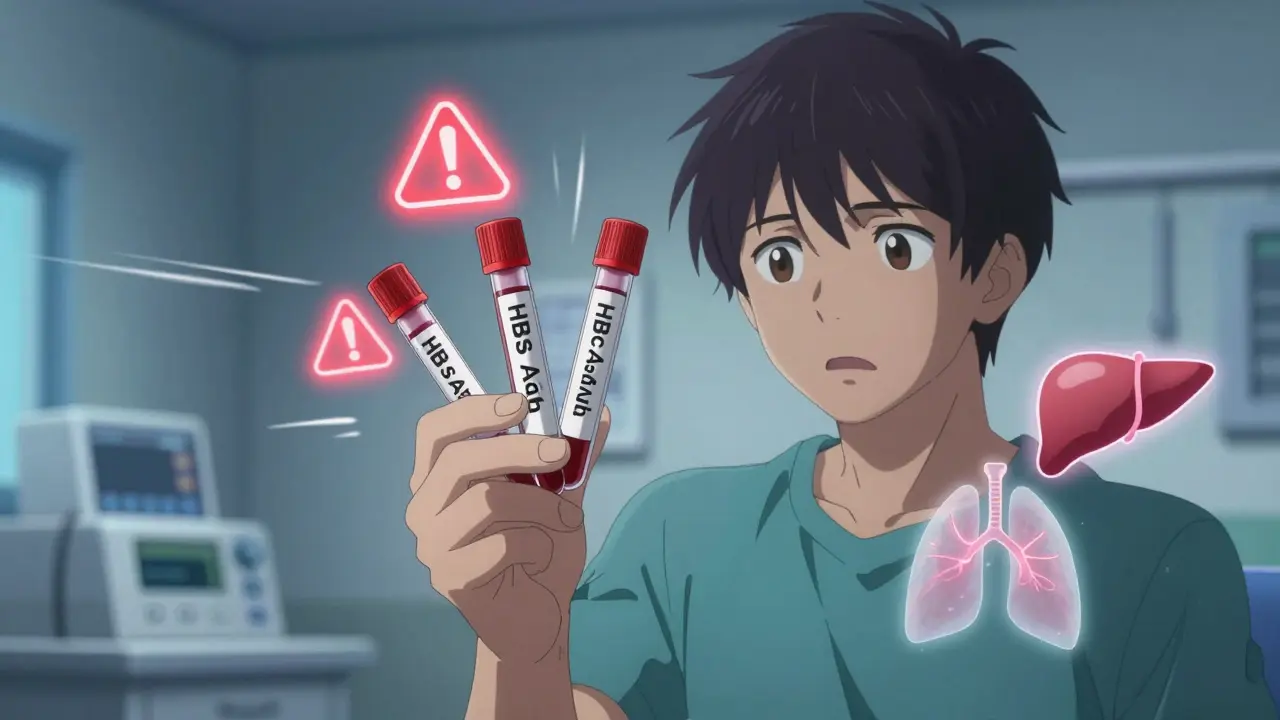
Before you get your first biologic shot or infusion, you need three critical tests for hepatitis B: HBsAg, HBsAb, and HBcAb. Skipping any one of these can be dangerous. About 4.3% of autoimmune patients carry hidden (occult) hepatitis B. Without treatment, starting a biologic can trigger a deadly liver reactivation in up to 27.6% of those cases. That’s not rare-it’s preventable.
Tuberculosis screening is another must. Most guidelines recommend an interferon-gamma release assay (IGRA), like the Quantiferon test. But there’s debate. In places like rural Alabama, where TB is rare, a positive IGRA doesn’t always mean active disease-it might just be a past exposure. Still, most clinics follow the rule: test everyone, treat latent TB before starting biologics. A 9-month course of isoniazid is standard. One patient in Minnesota shared: “They caught my latent TB before I started Humira. I finished treatment, then began my biologic. Three years later, zero infections.”
Don’t forget other screenings. A chest X-ray may be needed if your IGRA is positive. Blood tests for HIV and hepatitis C are often done too, even if not always required. These aren’t bureaucratic hoops-they’re life-saving steps. A 2023 survey found 41% of patients missed HBV core antibody testing before starting treatment. That’s one in two.
Vaccinations: Timing Is Everything
Vaccines are your first line of defense. But you can’t just get them anytime. Live vaccines-like MMR (measles, mumps, rubella) and varicella (chickenpox)-must be given at least four weeks before your first biologic dose. Why? Because biologics weaken your immune response. If you get a live vaccine after starting treatment, your body might not build protection… or worse, you could get the disease from the vaccine itself.
Inactivated vaccines like flu shots, pneumococcal (Prevnar 13, Pneumovax 23), and hepatitis B can be given as close as two weeks before starting biologics. But here’s the catch: they need to work. After the hepatitis B vaccine, your doctor should check your anti-HBs levels. You need at least 10 mIU/mL to be protected. For varicella, IgG levels must be above 140 mIU/mL. If you’re not protected, you’ll need another shot-and time to build immunity.
Shingles vaccine (Shingrix) is a game-changer. It’s not live, so it’s safe to give even close to biologic start. But too many patients miss it. One patient on HealthUnlocked wrote: “My GI doctor started me on Stelara without checking my vaccines. I got shingles four months later.” That’s preventable. Shingrix is two doses, given 2-6 months apart. Get it done before you start.

How Different Biologics Compare in Safety
Not all biologics are created equal when it comes to infection risk. TNF inhibitors-adalimumab, infliximab, etanercept-are the most studied and carry the highest risk. Network meta-analyses show infliximab at standard dosing has 22% higher infection risk than adalimumab. Why? It’s tied to how the drug is structured. Certolizumab, which lacks an Fc region, has 18% lower respiratory infection rates than other TNF drugs.
Non-TNF options offer alternatives. Ustekinumab (Stelara), which targets IL-12/23, has a much cleaner safety profile. Reactivation of hepatitis B is rare with this drug-just 1.2% versus 27.6% with TNF blockers. That’s why it’s often chosen for patients with a history of hepatitis B exposure.
IL-17 inhibitors like secukinumab (Cosentyx) are great for psoriasis but come with higher yeast infection rates. JAK inhibitors like tofacitinib aren’t technically biologics, but they’re often grouped with them. They carry a 1.33x higher risk of shingles than biologic DMARDs. That’s why the FDA added a black box warning.
There’s no perfect drug. The goal is to match the drug to your risk profile. If you’re over 65, have diabetes, or smoke, a lower-risk biologic might be better-even if it’s slightly less effective for your condition.
What Happens If You Skip the Steps
Skipping screening or vaccination isn’t just risky-it’s common. A 2023 survey of over 2,100 patients found that 63% reported at least one safety step missed before starting a biologic. The most common? No HBV core antibody test. No varicella immunity check. No pneumococcal vaccine.
Consequences are real. In one case, a 58-year-old woman with RA started adalimumab without HBV screening. Three months later, she was hospitalized with fulminant hepatitis. She survived, but barely. Her liver failed. She needed a transplant.
Even small oversights add up. A patient who skipped the flu shot ended up in the ICU with pneumonia. Another didn’t get Shingrix and developed postherpetic neuralgia-chronic nerve pain that lasted over a year.
The CDC’s 12-point infection prevention checklist, when followed fully, cuts serious infections by 31.2%. That’s not a small gain. It’s the difference between staying home and ending up in the hospital.
What You Can Do Right Now
If you’re about to start a biologic, here’s your checklist:
- Get tested for HBV: HBsAg, HBsAb, HBcAb-all three.
- Ask for an IGRA (Quantiferon or T-SPOT) for TB.
- Check your vaccination records. Do you have MMR, varicella, pneumococcal, and flu shots?
- If you’ve never had chickenpox or the vaccine, get Shingrix (two doses).
- If you need a live vaccine, get it at least four weeks before your first biologic dose.
- Ask your doctor to check your antibody levels after hepatitis B and varicella vaccines.
- Keep a printed copy of all your test results and vaccination records.
Don’t assume your doctor knows everything. Bring your own records. Ask: “Have you checked my HBV status? Did we test for latent TB? Did I get all the vaccines I need?”
Most importantly, don’t delay. If you’re on steroids or have diabetes, you’re already at higher risk. Waiting until the last minute puts you in danger.
The Future: AI, Regulations, and Better Safety
The system is improving. In 2025, the FDA started requiring real-world data on infection risk before approving new biologic uses. The CDC’s upcoming BMBL 7th Edition will include specific safety protocols for biologics-like how long pathogens survive on surfaces and what PPE staff need.
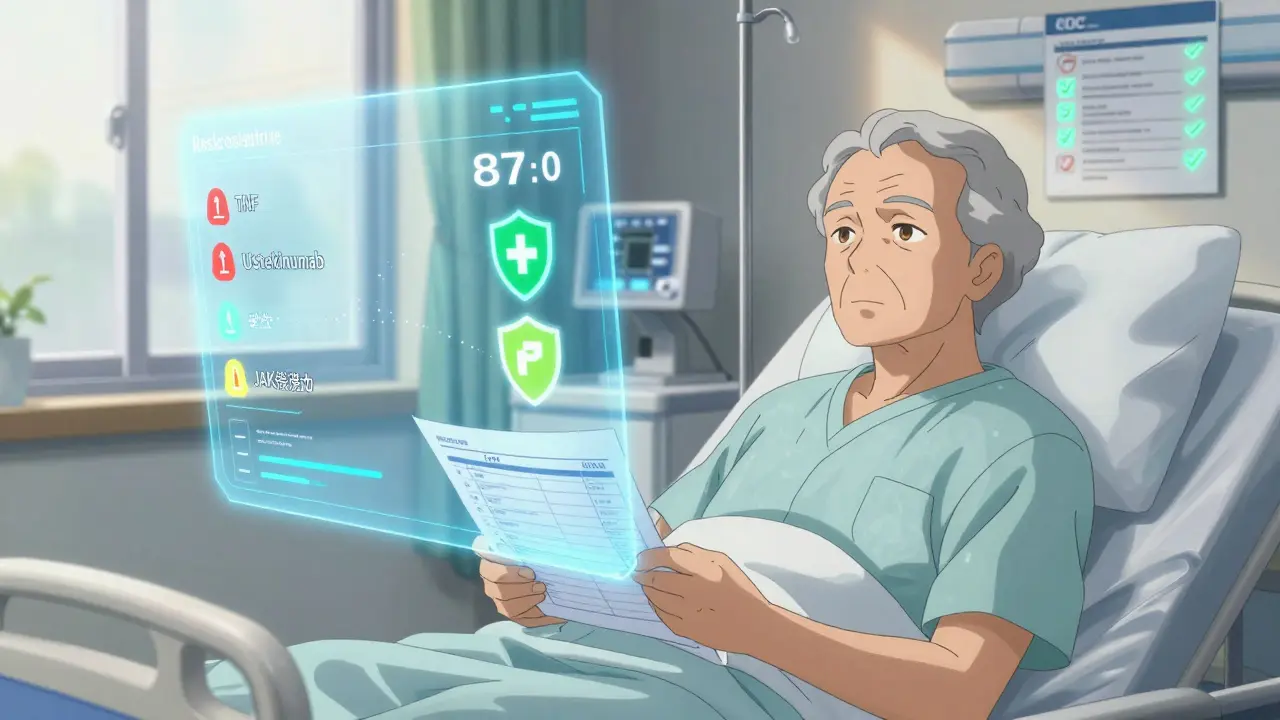
AI tools like the Cerner Biologics Safety Algorithm are now being used in major hospitals. They analyze 87 data points-your age, meds, lab values, even your zip code-to give you a personalized infection risk score. This isn’t sci-fi. It’s happening now.
Insurance companies are catching up too. Starting in 2026, CMS will tie 15% of biologic payments to whether clinics followed safety guidelines. That means doctors will have more incentive to do things right.
But progress isn’t even. In rural areas, only 28% of patients get all the required screenings. Telehealth platforms are being rolled out to fix this gap. If you live far from a specialist, ask if your clinic offers remote risk assessments.
Final Thoughts: Safety Is a Team Effort
Biologics can change your life. They can reduce pain, stop joint damage, and let you get back to your family and work. But they’re not magic pills. They require responsibility-from you and your care team.
The data is clear: proper screening and vaccination reduce infections dramatically. The stories are clear: patients who ask questions and stay organized have better outcomes.
You don’t need to be an expert. But you do need to be informed. Bring your questions. Bring your records. Don’t let a missed test or a delayed vaccine become your next hospital visit.
Do all biologics carry the same infection risk?
No. TNF inhibitors like adalimumab and infliximab carry the highest risk, especially for respiratory and reactivation infections. Newer agents like ustekinumab (IL-12/23 inhibitor) and secukinumab (IL-17 inhibitor) have lower overall infection rates, though IL-17 inhibitors increase yeast infection risk. JAK inhibitors like tofacitinib have higher shingles risk. Your doctor should match the drug to your personal risk factors.
Can I get vaccines after starting biologics?
You can get inactivated vaccines like flu, pneumococcal, and Shingrix after starting biologics-they’re safe. But live vaccines like MMR and varicella should never be given after you begin treatment. They can cause the disease in people with suppressed immunity. Always get live vaccines at least four weeks before your first biologic dose.
Why is hepatitis B screening so important before biologics?
About 4.3% of autoimmune patients carry hidden (occult) hepatitis B virus. Starting a biologic can reactivate it, leading to liver failure or death. Without treatment, reactivation happens in nearly 28% of these patients. Testing for HBsAg, HBsAb, and HBcAb catches this early. If HBcAb is positive, you need HBV DNA testing and possibly antiviral prophylaxis before starting treatment.
What if I already had chickenpox? Do I still need the shingles vaccine?
Yes. Even if you had chickenpox as a child, the virus stays in your nerves and can reactivate as shingles later in life-especially when your immune system is suppressed by biologics. Shingrix is a two-dose, non-live vaccine that reduces shingles risk by over 90% in adults over 50. It’s safe and recommended before starting biologics, regardless of your chickenpox history.
How long before starting a biologic should I get vaccinated?
Live vaccines (MMR, varicella) need at least four weeks before your first dose. Inactivated vaccines (flu, pneumococcal, Shingrix) should be given at least two weeks prior. This gives your immune system time to respond before the biologic suppresses it. Some doctors recommend starting the process 6-8 weeks ahead to ensure full protection and time for booster shots if needed.
What if my doctor didn’t check my vaccines or HBV status?
Don’t start the biologic until it’s done. Ask for the tests: HBsAg, HBsAb, HBcAb, IGRA, and your vaccination records. If your clinic won’t do them, go to a public health clinic or your primary care provider. Skipping these steps puts you at serious risk for infections you could have prevented. Your safety is non-negotiable.
Are there any biologics that are safer for older patients or those with diabetes?
Yes. TNF inhibitors carry the highest infection risk, especially in older adults and those with diabetes. Ustekinumab (Stelara) and abatacept (Orencia) are often preferred in these groups because they have lower overall infection rates. IL-17 inhibitors are good for skin conditions but increase yeast infections. Your doctor should weigh your age, comorbidities, and infection history-not just your disease severity-when choosing a biologic.
For more details, refer to guidelines from the American College of Rheumatology, CDC, and Infectious Diseases Society of America. Always confirm your screening and vaccination status with your care team before starting treatment.
Ellie Stretshberry
December 26, 2025 AT 18:06Zina Constantin
December 27, 2025 AT 00:34Dan Alatepe
December 28, 2025 AT 23:46Jay Ara
December 29, 2025 AT 03:33wendy parrales fong
December 29, 2025 AT 14:39Angela Spagnolo
December 31, 2025 AT 07:15Kuldipsinh Rathod
January 1, 2026 AT 21:49Jody Kennedy
January 2, 2026 AT 08:11SHAKTI BHARDWAJ
January 2, 2026 AT 20:23Sarah Holmes
January 4, 2026 AT 11:04Alex Ragen
January 4, 2026 AT 21:29