Citrus Fruits and Calcium Channel Blockers: What You Need to Know About the Dangerous Interaction
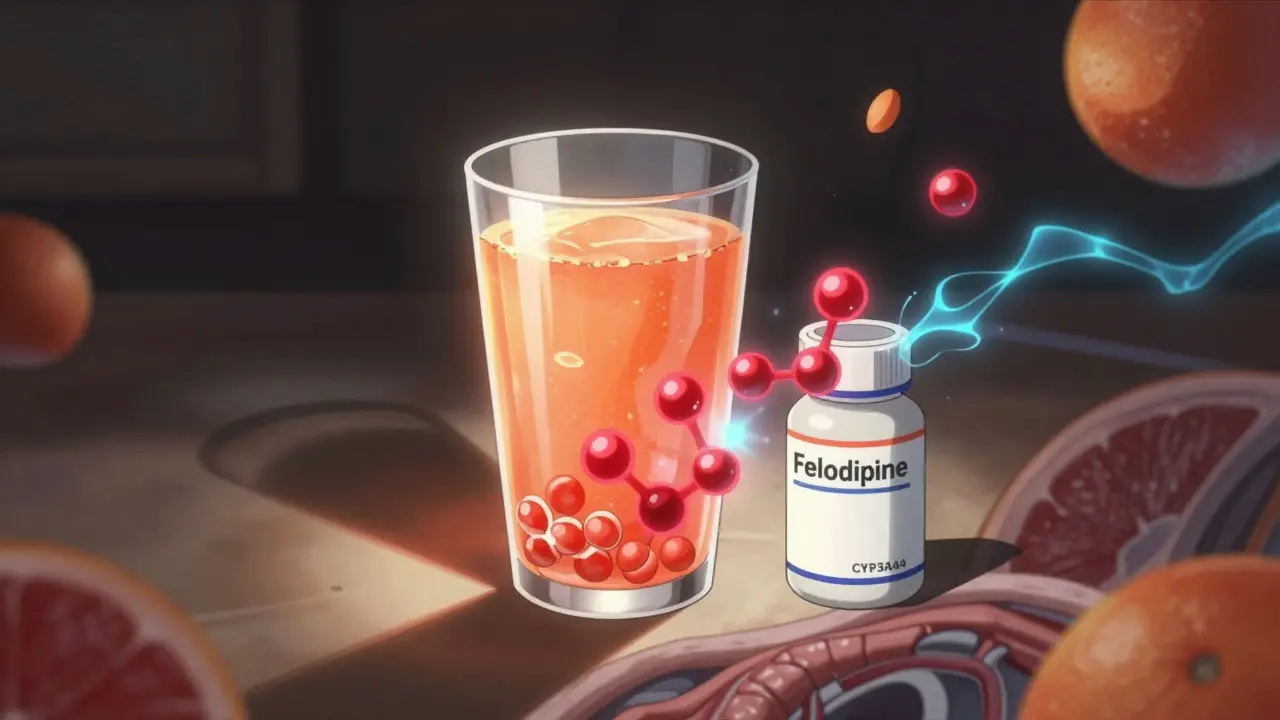
Every morning, millions of people take their blood pressure medication with a glass of orange juice or a slice of grapefruit, thinking it’s a healthy start to the day. But for those on certain calcium channel blockers, that habit could be quietly turning a safe dose into a dangerous overdose - without them even realizing it.
Why Grapefruit Is Different from Other Citrus
Not all citrus fruits are created equal when it comes to drug interactions. Sweet oranges, tangerines, and clementines are mostly safe. But grapefruit? It’s a whole different story. The reason lies in a group of chemicals called furanocoumarins, found in high concentrations in grapefruit - especially in the peel and pulp. These compounds shut down an enzyme in your gut called CYP3A4, which normally breaks down certain medications before they enter your bloodstream. When that enzyme is blocked, your body absorbs way more of the drug than it should.One 200ml glass of grapefruit juice - about one small glass - is enough to disable this enzyme for up to 72 hours. That means if you drink grapefruit juice at breakfast and take your blood pressure pill at night, you’re still at risk. The enzyme doesn’t bounce back quickly. It needs to be rebuilt by your body, and that takes days.
Which Calcium Channel Blockers Are Affected?
Not all calcium channel blockers react the same way. The ones most affected are the dihydropyridine (DHP) types - the most commonly prescribed for high blood pressure and chest pain. These include:- Felodipine - The most sensitive. Grapefruit juice can increase its levels by 3 to 5 times. A 10mg dose can act like 30-50mg.
- Nicardipine - Also highly affected. Blood levels spike dangerously with even small amounts of grapefruit.
- Nimodipine - Used for brain spasms after stroke. Grapefruit can push levels into toxic range.
- Amlodipine - Less affected than felodipine, but still risky. Some patients have reported severe dizziness and swelling after mixing it with grapefruit.
Non-dihydropyridine drugs like verapamil and diltiazem can also interact, but the effect is usually milder. Still, caution is advised.
Here’s what happens in your body: Normally, CYP3A4 breaks down about 70-80% of felodipine before it even reaches your blood. With grapefruit juice, that breakdown drops to 20-30%. The rest floods your system. That’s not just a little extra - it’s enough to drop your blood pressure too low, too fast.
What Happens When the Interaction Hits
The effects aren’t subtle. You might feel:- Sudden dizziness or lightheadedness
- Severe flushing or warmth in the face
- Swelling in the ankles or legs
- Heart palpitations or racing heartbeat
- Fainting or near-fainting episodes
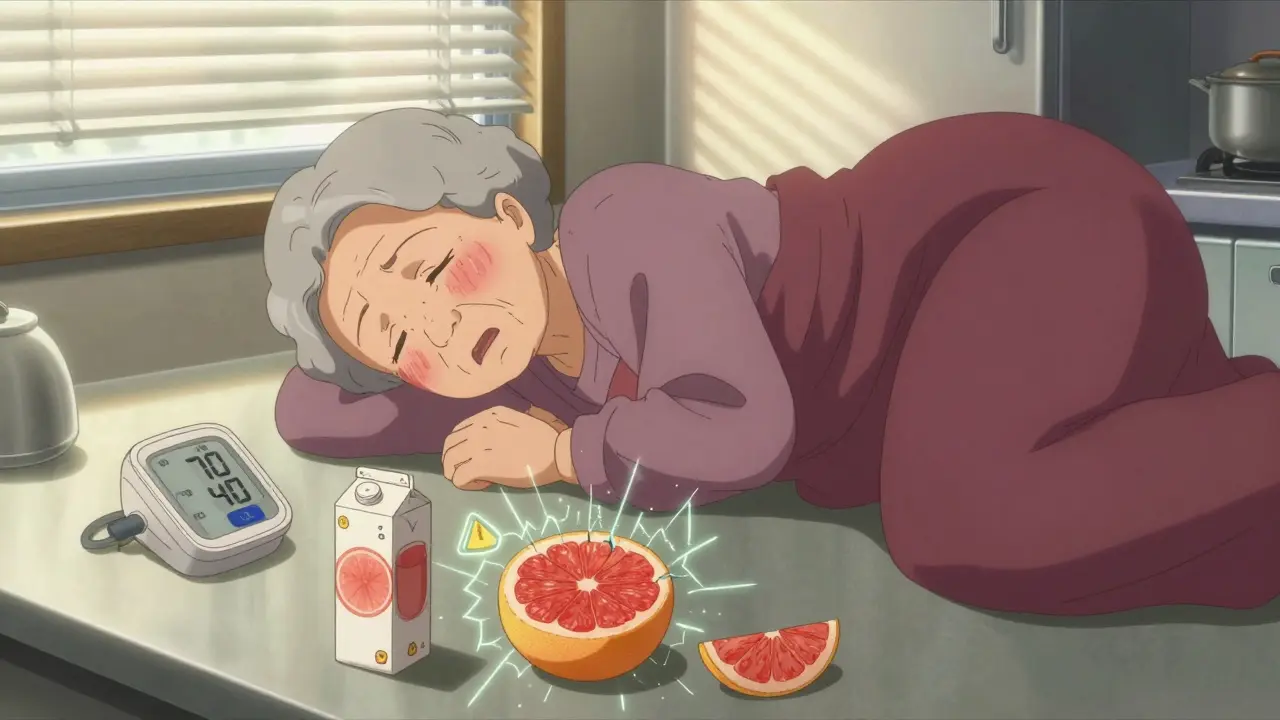
These symptoms aren’t just uncomfortable - they’re dangerous. In older adults, even a small drop in blood pressure can lead to falls, fractures, or strokes. A nurse practitioner in Las Vegas described a case where an elderly woman, taking felodipine and drinking grapefruit juice daily, collapsed in her kitchen. Her blood pressure had plummeted to 70/40. She wasn’t taking extra pills. She wasn’t dehydrated. It was the grapefruit.
And here’s the scary part: You don’t need to drink it at the same time as your pill. The interaction doesn’t care about timing. One study showed that after just one day of grapefruit consumption, 35% of the calcium channel blocker remained unmetabolized in the body. By day four, a 60mg dose was acting like 140mg.
Other Citrus Fruits to Avoid
Grapefruit isn’t the only offender. Seville oranges - the bitter kind used in marmalade - contain the same furanocoumarins. Tangelos, a cross between tangerines and grapefruit, are risky too. Even some pomelos and hybrid citrus fruits can trigger the same reaction.Regular sweet oranges (like Valencia or Navel) and clementines are generally safe. They have almost no furanocoumarins. Orange juice from concentrate? Usually fine - unless it’s made from Seville oranges. Always check the label.
But here’s the catch: Many people don’t know the difference. They see ‘citrus’ and assume it’s all the same. A 2022 survey found that 68% of patients on calcium channel blockers had no idea grapefruit could be dangerous. And only 37% of doctors routinely asked about it.
What Should You Do Instead?
If you’re on a calcium channel blocker, the safest move is to avoid grapefruit and its close relatives entirely. That includes:- Grapefruit juice (fresh or bottled)
- Grapefruit segments or whole fruit
- Seville orange marmalade
- Any product labeled ‘citrus blend’ without clear fruit types
Don’t assume ‘a little won’t hurt.’ The enzyme inhibition is irreversible until your gut rebuilds it. Even occasional use adds up.
Need citrus for vitamin C? Swap grapefruit for:
- Strawberries
- kiwi
- Red bell peppers
- Broccoli
These give you the same nutrients without the risk.

Alternative Blood Pressure Medications
If you love citrus and don’t want to give it up, talk to your doctor about switching to a blood pressure medication that doesn’t interact with grapefruit. Safe alternatives include:- ACE inhibitors like lisinopril or enalapril
- ARBs like valsartan or losartan
- Thiazide diuretics like hydrochlorothiazide
- Some beta blockers like metoprolol or atenolol
These drugs are metabolized through different pathways and don’t rely on CYP3A4. That means grapefruit won’t interfere.
There’s even promising research underway. Two new extended-release versions of amlodipine are in late-stage trials and show a 70% reduction in grapefruit interaction. But they’re not available yet. For now, stick with what’s proven safe.
What Your Doctor Should Be Asking
Doctors aren’t always trained to ask about diet when prescribing. But they should. Every patient starting a calcium channel blocker should be asked:- Do you eat or drink grapefruit, Seville oranges, or tangelos?
- Do you drink store-bought juice? What’s on the label?
- Have you ever felt dizzy after eating citrus with your pill?
If you’re on one of these drugs and your doctor hasn’t brought this up, speak up. This isn’t a rare edge case - it’s common. Around 40% of the 80 million Americans on calcium channel blockers are at risk. That’s over 30 million people. And an estimated 15,000 emergency visits each year are tied to this exact interaction.
Bottom Line
This isn’t about being perfect. It’s about being informed. Grapefruit isn’t evil. Calcium channel blockers aren’t dangerous. But together, they create a hidden risk that no one talks about enough.If you’re on felodipine, nicardipine, or nimodipine - stop grapefruit cold. No exceptions.
If you’re on amlodipine - be cautious. Talk to your pharmacist. Don’t assume it’s safe.
If you love citrus - find safer alternatives. Your blood pressure - and your safety - depend on it.
Rachel Liew
January 31, 2026 AT 16:08i had no idea grapefruit could do this. i take amlodipine and drink orange juice every morning. now im paranoid lol
Lisa Rodriguez
February 2, 2026 AT 07:27my grandma took felodipine and loved grapefruit juice. she ended up in the ER last year with a bp of 70/40. no one told her it was dangerous. doctors need to do better. this post saved my life.
Melissa Melville
February 4, 2026 AT 02:05so let me get this straight... the one fruit that tastes like sunshine and rebellion is now a silent killer? 🍊💀 i mean, i get it, but also... why does everything have to be so serious now
franklin hillary
February 4, 2026 AT 03:15this is why we need to stop treating medicine like a checklist and start treating it like a conversation. your body isn't a machine. it's a living system that talks back. grapefruit doesn't 'interact' with your meds - it hijacks your biology. and if your doctor doesn't ask about your breakfast, they're not doing their job. wake up. your health isn't a suggestion.
Ishmael brown
February 4, 2026 AT 20:24bro... what if i just drink orange juice and then grapefruit juice 3 hours later? 😏
Aditya Gupta
February 5, 2026 AT 14:51in india we use bitter orange in chutneys. i just asked my uncle. he takes diltiazem. he says he never had problem. maybe not all same?
Donna Macaranas
February 6, 2026 AT 02:04i just switched from amlodipine to losartan because of this. no more citrus anxiety. peace of mind is worth it.
Lilliana Lowe
February 6, 2026 AT 18:38While the article presents a compelling case grounded in pharmacokinetic principles, it is worth noting that the CYP3A4 inhibition by furanocoumarins is dose-dependent and exhibits interindividual variability due to genetic polymorphisms in the enzyme. Moreover, the assertion that 'one glass disables the enzyme for 72 hours' is an oversimplification - recent in vivo studies suggest a half-life of enzyme recovery closer to 24–48 hours depending on hepatic regeneration rates. Precision matters.
vivian papadatu
February 7, 2026 AT 23:49thank you for writing this. my mom is on felodipine and I just pulled all the grapefruit out of her fridge. she was crying because she loved it so much. but now she’s drinking kiwi smoothies and says she feels better already. small changes save lives.
Ed Di Cristofaro
February 9, 2026 AT 03:54if you’re dumb enough to mix grapefruit with your meds, you deserve what you get. stop being lazy and read the damn label. this isn’t rocket science. it’s basic common sense. why are we even having this conversation?
Deep Rank
February 10, 2026 AT 20:54ok but like… why do we keep letting big pharma and doctors control what we eat? i mean, sure, grapefruit might mess with your meds, but isn’t it kinda sus that they don’t warn people until someone ends up in the hospital? what if you’re poor and can’t afford to switch meds? what if you’re elderly and your kid doesn’t check your juice? this system is broken. you’re not the problem, the system is. we’re all just trying to survive.
Jamie Allan Brown
February 11, 2026 AT 17:39my dad’s on felodipine. i printed out this post and taped it to his fridge next to his pill organizer. he still eats grapefruit sometimes. i told him, 'if you die because of a fruit, i’m never making you another birthday cake.' he laughed. then he threw it out. i think he’s listening now.