Contamination Issues in Generics: Recent Cases and How to Prevent Them
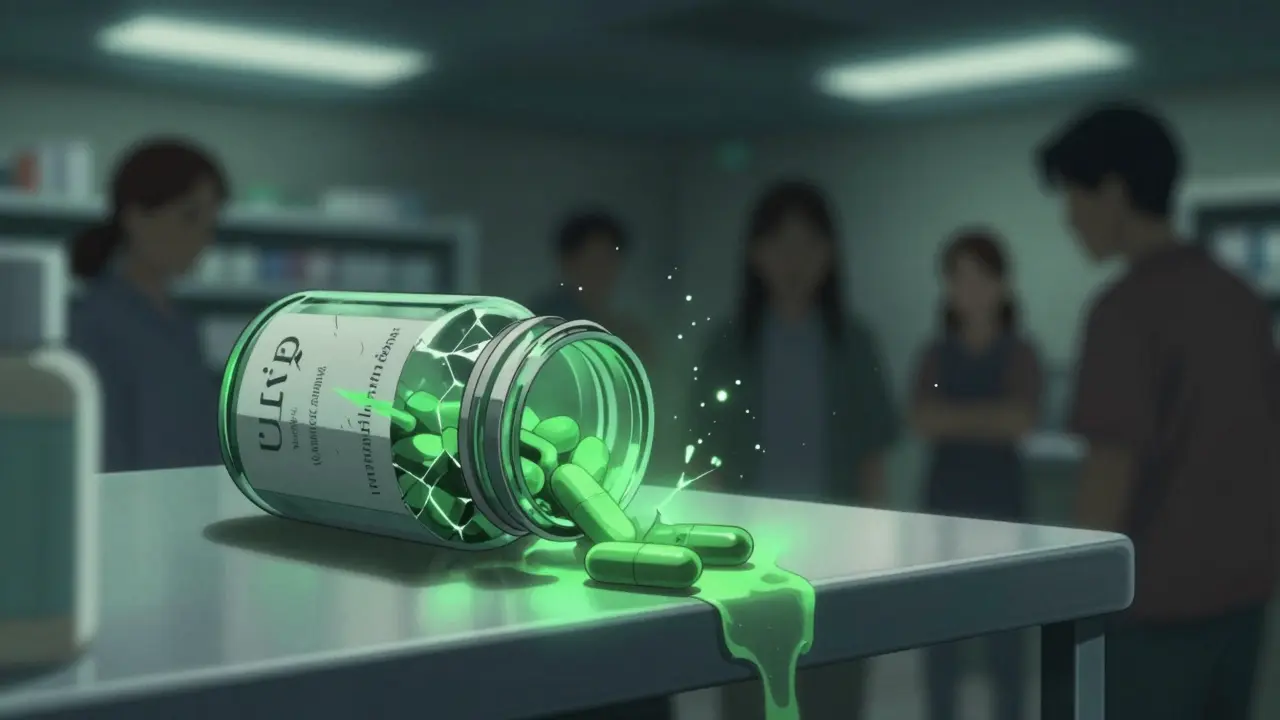
When you pick up a generic pill at the pharmacy, you expect it to work just like the brand-name version - and you expect it to be safe. But over the last few years, a growing number of cases have shown that’s not always true. Contamination in generic drugs isn’t rare. It’s systemic. And it’s putting lives at risk.
What’s Going Wrong in Generic Drug Manufacturing?
Generic drugs are supposed to be identical to brand-name drugs in active ingredients, strength, and performance. The FDA allows them to be approved under the Abbreviated New Drug Application (ANDA) process, which skips expensive clinical trials by requiring only proof of bioequivalence. That’s how these drugs save the U.S. healthcare system over $1.7 trillion in a decade. But this cost-cutting model has created a dangerous trade-off: speed and price over quality control.As of 2025, over 10,000 generic drugs are approved in the U.S., and 92% of all prescriptions are filled with them. Yet contamination-related recalls have jumped 37% year-over-year since 2021. The FDA has issued over 8,000 recalls between 2018 and 2025 - and many of these weren’t caused by random errors. They were caused by poor manufacturing practices, hidden process changes, and ignored warnings.
Real Cases: The Drugs That Got Poisoned
One of the worst cases involved valsartan, a blood pressure medication. In 2018, the FDA discovered NDMA - a known carcinogen - in batches from Zhejiang Huahai Pharmaceutical in China. The contaminant was traced to a simple change: sodium nitrite was added during production to speed up a chemical reaction. No one tested whether it would create NDMA. The result? Over 1,300 federal lawsuits, with patients developing cancer at rates 3.2 times higher than normal. Some samples contained 200 times the FDA’s safe limit of 96 nanograms per day.
Then came Mucinex. In 2025, independent testing by Bloomberg found benzene levels up to 4.7 ppm in some bottles - more than double the FDA’s 2 ppm safety threshold. Benzene is a known cause of leukemia. Lawsuits followed, with patients like Miriam Birdsong and Cheryl Mikel reporting bone marrow damage after using the product for just 18 months.
And then there’s chemotherapy. A STAT News investigation in June 2025 tested 17 generic cancer drugs from Indian manufacturers. Twelve of them contained less than 80% of the labeled active ingredient - far below the FDA’s 85-115% acceptable range. At one facility, Intas Pharmaceuticals in Ahmedabad, inspectors found quality records shredded and soaked in acid. The fallout? 92% of U.S. cancer centers ran short of critical drugs during spring 2023.
Fentanyl patches weren’t spared either. Between 2002 and 2025, 52 million patches were recalled due to seal failures. In one 2023 recall by Sandoz, 0.8% of Duragesic patches leaked more than 15% of their intended dose. That’s not a manufacturing flaw - it’s a death sentence waiting to happen.
Where Are These Drugs Made? And Why Does It Matter?
It’s not random. The contamination crisis is tied directly to where these drugs are made. India produces 40% of all finished generic drugs sold in the U.S. China makes 80% of the active pharmaceutical ingredients (APIs) that go into them. Yet the FDA inspects only 13% of Indian facilities each year - despite them supplying nearly half of the country’s generics.
Take Zee Laboratories. Since 2018, the FDA has flagged them 46 times. In 2024, inspectors found visible particulate matter - dirt, fibers, metal flakes - in 100% of sampled vials of cisplatin. No one was stopped. No one was punished. The FDA’s own data shows that 16 of the 17 substandard chemotherapy drugs came from India.
Meanwhile, U.S.-based manufacturers are largely absent from this supply chain. Senator Rick Scott pointed out in 2025 that 83% of the top 100 generic drugs consumed in the U.S. contain no American-sourced APIs. That means if a factory in Gujarat or Shanghai cuts corners, there’s no backup. No safety net.
Why Is This Still Happening?
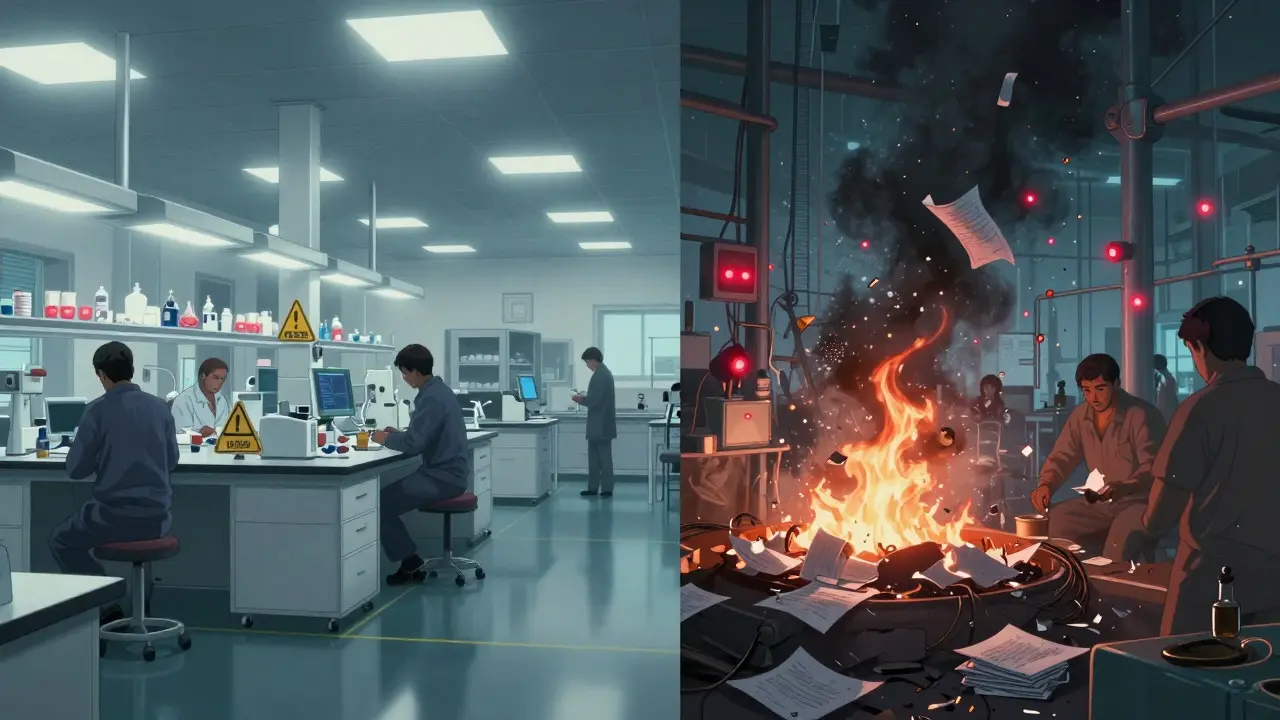
It’s not just negligence - it’s systemic. The FDA’s inspection budget for foreign facilities in 2025 was $78 million. That’s enough for 1,200 inspections. But there are over 28,000 foreign drug plants that need checking. That’s one inspection every 23 years per facility.
Some manufacturers deliberately hide problems. The FDA has long redacted drug names in inspection reports - a policy documented by ProPublica since 2008. That means doctors and pharmacists can’t know which specific drugs are risky. Patients are left in the dark.
And when problems are found, penalties are weak. A warning letter doesn’t shut down a plant. A recall doesn’t bankrupt a company. In 2025, the FDA finally began naming contaminated drugs in inspection reports - a step forward - but enforcement still lags.
What’s Being Done to Fix It?
There are some changes on the horizon. The FDA’s 2026-2030 strategic plan includes using AI to predict contamination risks and blockchain to track drug shipments from factory to pharmacy. The Generic Drug User Fee Amendments (GDUFA III), introduced in June 2025, now require real-time stability testing for high-risk drugs like chemotherapy and blood pressure medications.
Continuous manufacturing - a process that monitors drug quality in real time instead of testing batches after the fact - could cut contamination by 78%. But it costs $5 to $15 million to upgrade a facility. Only 3% of Indian plants have adopted it. In the U.S., it’s at 12%.
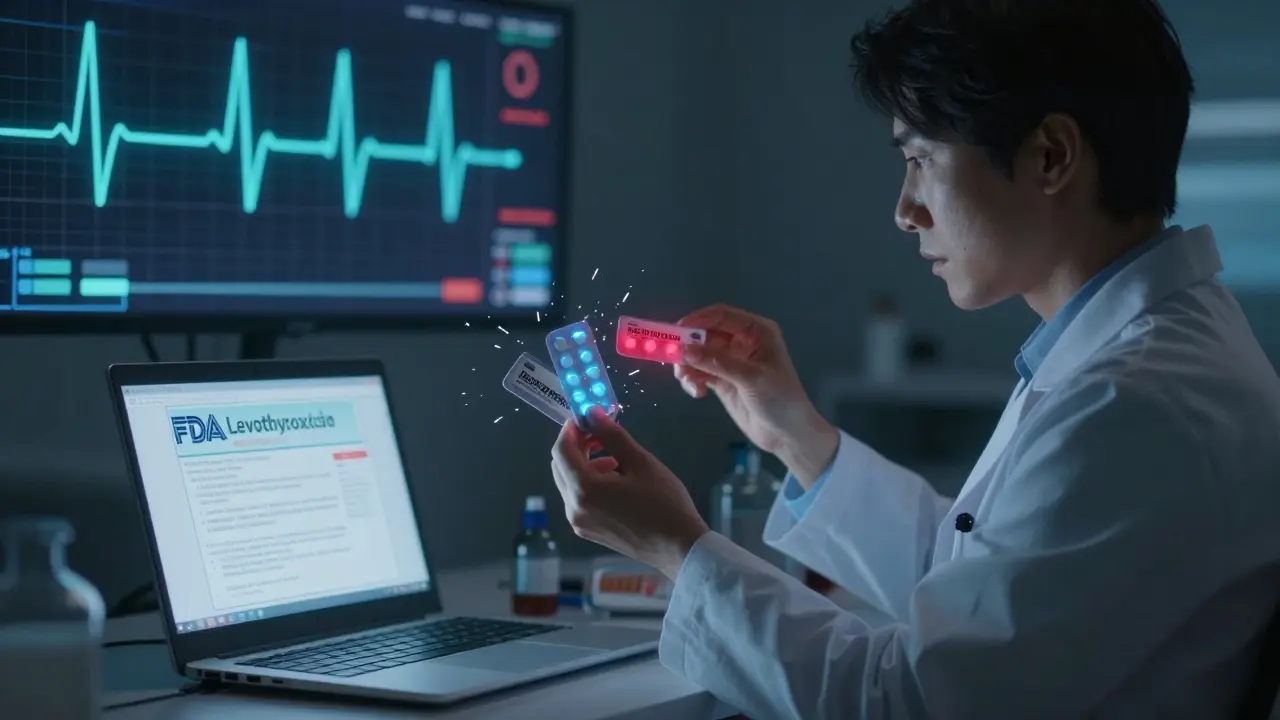
Pharmacists are doing their part too. A 2025 Pharmacy Times survey found 68% check FDA recall lists weekly. Many are spending 22% more time verifying sources. One pharmacist on Reddit, PharmTech2020, reported seeing three different batches of generic levothyroxine fail potency tests - patients’ TSH levels went haywire until they switched back to brand.
What You Can Do
You don’t have to wait for regulators to fix this. Here’s what you can do right now:
- Check the FDA’s Drug Recalls page - it’s updated daily. Look up your drug by name.
- Ask your pharmacist - if your generic was recently recalled, they’ll know. Ask where it was made.
- Track your symptoms - if you’re on long-term medication and suddenly feel off, talk to your doctor. Could it be a contaminated batch?
- Choose brand when it matters - for life-critical drugs like levothyroxine, warfarin, or chemotherapy, the price difference is often small compared to the risk.
- Report side effects - use the FDA’s MedWatch system. One report won’t change much. Ten thousand will.
Remember: just because a drug is cheap doesn’t mean it’s safe. And just because it’s generic doesn’t mean it’s the same.
What’s Next?
The Valsartan multidistrict litigation’s first test trials are scheduled for September 2025. If plaintiffs prove manufacturers knew about NDMA risks as early as 2012 - and chose to hide it - this could set a legal precedent that forces the entire industry to change.
For now, the system is still broken. But awareness is growing. More people are asking questions. More pharmacists are double-checking. More patients are refusing to accept risk just to save a few dollars.
That’s where real change starts - not in Washington, not in FDA offices, but in the pharmacy aisle, when someone asks: ‘Where did this come from?’
Michael FItzpatrick
February 21, 2026 AT 20:23Let’s be real - we’ve been sold a bill of goods on generics. I used to think ‘same active ingredient’ meant ‘same damn thing.’ Turns out, it’s like buying a ‘Nike’ sneaker from a street vendor and expecting it to carry you through a marathon. The FDA’s inspection schedule? One visit every 23 years per plant? That’s not oversight - that’s a hostage situation with a clipboard.
And don’t get me started on the redacted names. It’s like a horror movie where the monster’s face is always just out of frame. You know it’s there. You feel its breath. But no one will tell you which pill is the killer.
I work in healthcare. I’ve seen patients crash because their generic levothyroxine turned into a brick. We don’t need more studies. We need transparency. And accountability. And maybe a few CEOs in a courtroom with a gavel.
Stop treating medicine like a commodity. It’s not a commodity. It’s life.
And yeah - I buy brand now for anything that keeps me alive. Pay the extra $5. Live to pay another bill.
Nandini Wagh
February 23, 2026 AT 15:57Oh wow. So now we’re all supposed to panic because some Indian factory made a bad batch? Honey, I’ve seen my cousin’s chai filter through a sock and still called it ‘tea.’ We’ve been drinking contaminated water since birth. This is just pharma with a lab coat.
But sure, let’s blame the 1000 people in Ahmedabad who work 14-hour shifts for $3/day to make your blood pressure pill while their kids eat rice with salt because the ‘brand’ version costs 3 months’ wages.
Maybe instead of demonizing the factories, ask why the U.S. outsourced its entire medicine supply chain to a country where ‘quality control’ means ‘hope for the best.’
Also - benzene in Mucinex? Wow. Next you’ll tell me the air in LA isn’t breathable. Groundbreaking.
Kenzie Goode
February 24, 2026 AT 13:33I read this whole thing with my hands shaking. I’m not even sick. But I’ve been on meds for 12 years. I didn’t know. No one told me.
I used to think the FDA was a shield. Turns out it’s a paper umbrella in a hurricane.
My mom took generic warfarin for years. Last year, her INR spiked to 8. She nearly bled out. The pharmacist said, ‘New batch.’ No warning. No recall notice. Just… ‘try this one.’
I’m not mad. I’m just… heartbroken. This isn’t negligence. It’s a system designed to ignore the quiet people. The ones who don’t have lawyers. Or time. Or money to switch brands.
I’m telling my sister. My friends. My book club. We’re all going to start asking: Where’s this from? And I’m not stopping until someone answers.
Dominic Punch
February 26, 2026 AT 06:43You’re all missing the point. This isn’t about India. It’s not about China. It’s about capitalism that treats human life like a spreadsheet line item.
Generic drugs save billions. That’s great. But when you cut corners so hard you start cutting into people’s organs - you’re not saving money. You’re stealing lives.
Real solution? Ban the ANDA process. Force every generic to go through full bioequivalence testing. Period. No exceptions. Yes, it’ll cost more. Yes, it’ll delay production. So what? We don’t let people sell untested car parts. Why are we letting them sell untested heart drugs?
And stop pretending the FDA is powerless. They have subpoena power. They have seizure authority. They have the legal right to shut down plants. They just don’t. Because they’re scared of the pharma lobby.
It’s not a regulatory failure. It’s a moral one.
Lou Suito
February 28, 2026 AT 06:08Joseph Cantu
March 1, 2026 AT 16:05They knew. They all knew. The FDA. The manufacturers. The senators. The pharmacists. They knew about the NDMA in 2012. They knew about the shredded records in 2020. They knew about the benzene in Mucinex before it hit shelves.
And yet - nothing.
Why?
Because this isn’t an accident.
This is a plan.
The elite don’t want you healthy. They want you dependent. On pills. On doctors. On pharmacies. On the system that keeps you alive just long enough to keep paying.
Ever wonder why your thyroid meds keep changing? Why your BP pills make you dizzy? Why your chemo doesn’t work like it used to?
It’s not coincidence.
It’s control.
And they’re laughing. Right now. In their penthouses. With their imported Swiss vitamins.
Wake up. They’re not just selling bad drugs.
They’re selling your fear.
Lisandra Lautert
March 3, 2026 AT 08:37Cory L
March 4, 2026 AT 19:58Look - I get the fear. I do. But let’s not turn this into a witch hunt.
I’m a pharmacist. I’ve handled over 100,000 generic prescriptions. 99% of them? Perfect. Clean. Effective.
The problem isn’t generics. It’s the 1% that slip through - and the system that lets them slip through without consequence.
Here’s what actually works: Ask your pharmacist for the manufacturer. Look up the lot number on the FDA site. Don’t just swallow it. Check it.
Most people don’t. That’s the real crisis.
Knowledge is power. Not panic.
And yeah - if you’re on chemo? Go brand. No shame. But don’t trash the whole system because of a few bad actors.
We can fix this. Without the drama.