Dong Quai and Warfarin: What You Need to Know About the Bleeding Risk
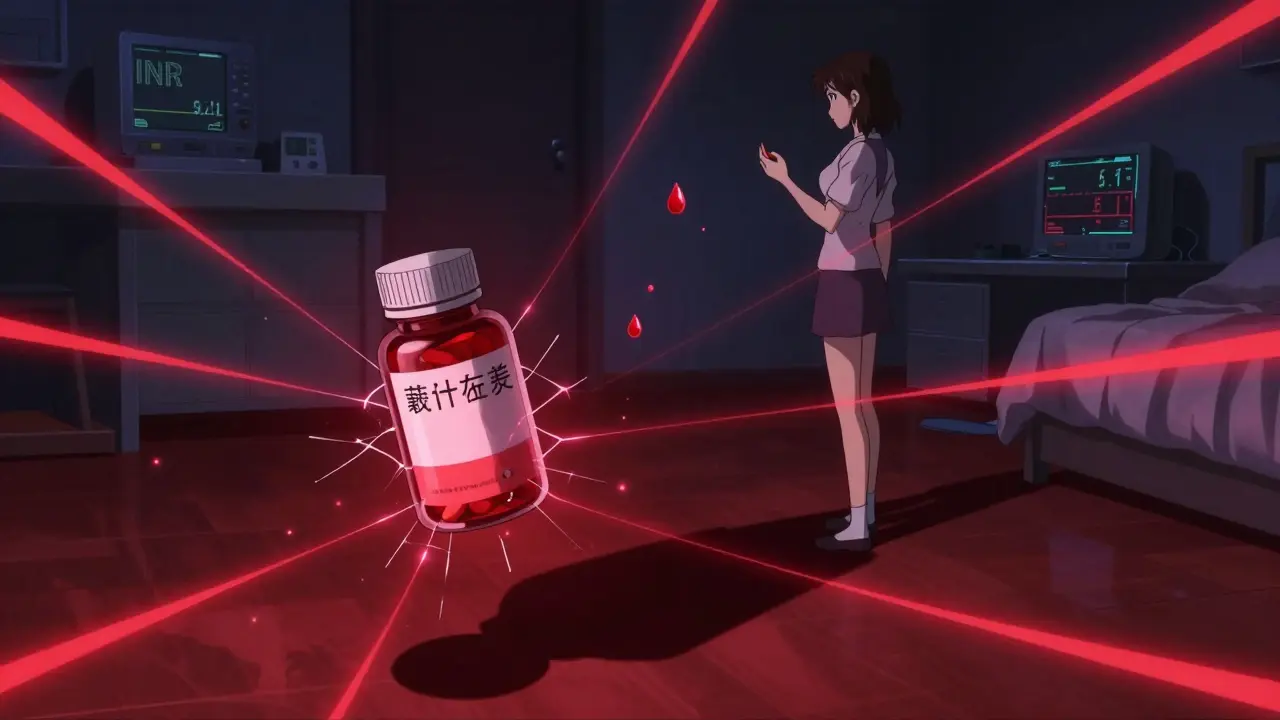
Warfarin-Dong Quai Interaction Calculator
Current INR Value
Enter your current INR level (target range: 2.0-3.0)
When you're on warfarin, even small changes in your routine can send your INR levels spiraling. You watch your vitamin K intake, avoid alcohol, and double-check new prescriptions. But what about that bottle of Dong Quai sitting in your medicine cabinet? It’s labeled as a "natural remedy" for menopause or menstrual cramps. Sounds harmless, right? Here’s the truth: Dong Quai can dangerously amplify warfarin’s effects-turning a controlled treatment into a life-threatening situation.
What Is Dong Quai, and Why Do People Take It?
Dong Quai, or Angelica sinensis, is a root used in Traditional Chinese Medicine for over 2,000 years. It’s often called "female ginseng" because it’s commonly taken to ease PMS, cramps, and menopause symptoms. Many women turn to it hoping for a natural alternative to hormone therapy. It’s sold as capsules, teas, tinctures, and powders in health stores and online. But here’s the catch: it’s not regulated like a drug. One batch might have a low dose of active compounds; another could be five times stronger. The U.S. Pharmacopeia found ferulic acid levels in Dong Quai supplements vary by up to eightfold between brands. That unpredictability is part of the danger.
How Warfarin Works-and Why It’s So Sensitive
Warfarin is a blood thinner prescribed to prevent clots in people with atrial fibrillation, deep vein thrombosis, or mechanical heart valves. It works by blocking vitamin K-dependent clotting factors. But its margin of safety is razor-thin. The target INR range for most patients is 2.0 to 3.0. Go above 4.0, and your risk of internal bleeding jumps sharply. Below 2.0, clots can form. A 2019 study in the Journal of the American College of Cardiology found that 1.5% to 2.5% of warfarin users experience a major bleeding event each year-even with careful monitoring. Now imagine adding something that makes your blood even thinner.
The Science Behind the Interaction
Dong Quai doesn’t just "add" to warfarin-it multiplies its effect. Research shows it contains coumarin-like compounds, including ferulic acid and osthole, which directly inhibit platelet aggregation. That means your blood can’t clot as easily, even before warfarin kicks in. A 2014 study in PMC4325561 showed Dong Quai increased prothrombin time (a measure of clotting speed) in animals, without changing warfarin levels in the blood. That’s key: this isn’t about how your body processes warfarin-it’s about how Dong Quai makes your blood behave differently.
There’s also evidence Dong Quai may interfere with liver enzymes (CYP2C9 and CYP3A4) that break down warfarin. If those enzymes slow down, warfarin builds up in your system. While human data on this mechanism is limited, lab studies confirm the potential. The British Journal of Clinical Pharmacology reviewed multiple studies and concluded the interaction is likely both pharmacodynamic (direct effect on clotting) and possibly pharmacokinetic (affecting drug metabolism).
Real-World Cases: It’s Not Just Theoretical
Stories aren’t just rumors-they’re documented. In 2023, a woman in Ohio started taking Dong Quai capsules for hot flashes. Within a week, she bruised easily and noticed blood in her urine. Her INR shot from 2.8 to 5.1. She was hospitalized. This wasn’t an isolated case. On HealthUnlocked forums, 23 patients between 2020 and 2023 reported unexplained INR spikes traced back to Dong Quai. The average increase? 1.7 points. One Reddit user wrote: "I thought it was safe because it’s herbal. I didn’t realize it could land me in the ER." These aren’t outliers. The PLOS ONE 2013 review found Dong Quai among the top 10 herbal products linked to dangerous interactions with anticoagulants. And in Malaysia, one in five people on blood thinners also use herbal remedies. That’s a massive population at risk.
What Major Medical Groups Say
Major institutions don’t mince words:
- Cleveland Clinic: "Avoid Dong Quai in warfarin-treated patients due to lack of data." They list it alongside ginkgo and garlic as high-risk.
- University of California San Diego: Classifies Dong Quai under "Increased Risk of Bleeding," with a clear upward arrow (↑) next to it.
- Memorial Sloan Kettering Cancer Center: Warns that Dong Quai may enhance anticoagulation and also carries estrogenic risks for those with hormone-sensitive cancers.
- American Heart Association: Labels Dong Quai a "high-risk herb" for anticoagulant users.
Dr. Catherine Ulbricht, a leading pharmacist at Massachusetts General Hospital, put it bluntly in a 2021 interview: "It can push an INR from 2.5 to over 4.0. That’s not a small change-it’s a red flag." The European Medicines Agency is now requiring warning labels on all Dong Quai products sold in EU countries, effective January 2025. The U.S. FDA hasn’t mandated this yet, but they’ve logged 142 adverse events involving herbal products and anticoagulants between 2018 and 2022.
Why Patients Don’t Know the Risk
A 2022 survey by the National Center for Complementary and Integrative Health found that 68% of warfarin users had no idea herbal supplements could interfere with their medication. Many assume "natural" means "safe." Others don’t think to mention supplements to their doctor because they’re not "medicines." But here’s the reality: your pharmacist and cardiologist need to know everything you take-even if it’s from a Chinese herbalist or bought online.
What Should You Do If You’re on Warfarin?
Here’s what works in practice:
- Stop taking Dong Quai-if you’re on warfarin, don’t start it. If you’re already using it, stop immediately and call your provider.
- Always disclose supplements-even if your doctor doesn’t ask. Bring the bottle to your appointment. Write down the brand and dosage.
- Get INR tested-if you’ve taken Dong Quai recently, ask for an INR check within 3-5 days. Monitor again at 7-14 days.
- Don’t switch brands-if you insist on using it (which we don’t recommend), know that potency varies wildly. One bottle isn’t the same as the next.
There’s no safe dose of Dong Quai if you’re on warfarin. Even small amounts have triggered bleeding. The American Society of Health-System Pharmacists says if you absolutely must use it, reduce your warfarin dose by 15-25% and check INR twice weekly for a month. But that’s a gamble. Why risk it?

What Are the Alternatives?
If you’re taking Dong Quai for menopause or cramps, there are safer options:
- For hot flashes: Black cohosh (with doctor approval), soy isoflavones, or low-dose hormone therapy if appropriate.
- For menstrual pain: Magnesium, vitamin B1, or NSAIDs like ibuprofen (if not contraindicated).
- For general wellness: Focus on diet, sleep, and stress management-these have proven benefits without bleeding risks.
None of these alternatives carry the same level of danger as Dong Quai when combined with warfarin. And unlike Dong Quai, they’re studied in clinical trials-not just anecdotal tradition.
The Bigger Picture: Regulation and the Future
The Dietary Supplement Health and Education Act of 1994 lets companies sell herbs like Dong Quai without proving safety or efficacy. That’s why you can buy it next to vitamins-even though it’s as risky as some prescription drugs. The global Dong Quai market is growing: $342 million in 2022, up from $285 million in 2020. Sales in North America rose 14.2% annually. But the Natural Medicines Database predicts a 22-35% drop in use among anticoagulated patients over the next five years as awareness grows.
A $2.1 million NIH-funded trial at the University of Illinois is currently studying this interaction in 120 volunteers. Results are expected in late 2024. Until then, the evidence we have is enough to act.
Final Takeaway
Dong Quai isn’t a harmless herb. For someone on warfarin, it’s a ticking time bomb. The combination can lead to spontaneous bleeding, emergency hospitalizations, and even death. No amount of "natural" or "traditional" justifies that risk. If you’re on blood thinners, skip Dong Quai entirely. Talk to your doctor about safer alternatives. Your next INR test could depend on it.
Neil Ellis
January 22, 2026 AT 07:43Dong Quai got me worried too - I’ve seen my grandma take it for "balance" since the 90s. She’s on warfarin for AFib, and no one ever told her this stuff could be a landmine. I showed her your post, and she actually threw out her bottle. Said she’d rather just drink chamomile tea and call it a day. Natural doesn’t mean harmless, folks. We gotta stop treating herbal stuff like it’s yoga pants for your liver.
arun mehta
January 22, 2026 AT 18:54Thank you for this meticulously researched piece. The integration of pharmacodynamic and pharmacokinetic mechanisms is particularly enlightening. I am from India, where Ayurvedic and TCM herbs are often consumed without medical consultation. This article serves as a vital public health alert. The variation in ferulic acid concentration across brands is alarming - it underscores the urgent need for standardized herbal product regulation globally.
Oren Prettyman
January 24, 2026 AT 11:04Let’s be honest - this whole post reads like a pharmacology textbook written by someone who’s never met a person who actually uses herbal supplements. You cite studies, sure, but you ignore the fact that millions of people have taken Dong Quai for centuries without incident. The real problem isn’t the herb - it’s the medical industrial complex’s obsession with reducing everything to a binary risk profile. If you’re on warfarin and you’re still drinking green tea or eating kale, you’re already playing Russian roulette. Why single out Dong Quai? It’s not the herb that’s dangerous - it’s the lack of nuance in how we talk about it.
Tatiana Bandurina
January 25, 2026 AT 14:45Did you notice how the article says "avoid" but doesn’t say "never take"? That’s the exact language used to keep people in the gray zone. I’ve had three patients in the last year come in with INR >6 after taking "a little bit" of Dong Quai. They all said they thought it was safe because it was "organic." The real tragedy isn’t the interaction - it’s that doctors don’t ask. Patients don’t tell. And then someone ends up in the ICU with a subdural hematoma. You think this is about herbs? No. It’s about systemic neglect.
Philip House
January 27, 2026 AT 09:42Look, I get it. Warfarin’s a pain. But this whole thing feels like fearmongering wrapped in science. I’ve been on it for 8 years. I take turmeric, garlic, ginger - all "natural" stuff. Dong Quai? Maybe. But if you’re scared of every herb that ever touched a Chinese temple, you’re gonna end up on a diet of nothing but pills and sterile air. The FDA doesn’t regulate food, but they regulate your medicine? That’s backwards. Natural isn’t the enemy - control freaks are.
Jasmine Bryant
January 28, 2026 AT 20:50Just wanted to add - if you’re on warfarin and you’ve ever taken Dong Quai, even once, get your INR checked ASAP. I didn’t realize until my last blood test that my INR had spiked to 4.3 after taking a capsule for cramps for two weeks. My doctor was shocked I didn’t know. I thought it was just for "women’s health." No one warned me. Please, if you’re reading this and you’ve used it - call your clinic. It’s not worth the risk. I’m lucky I didn’t bleed out.
shivani acharya
January 29, 2026 AT 02:24Oh wow, so now herbs are the new boogeyman? Next they’ll ban cinnamon because it’s "coumarin-rich" and say it’s "just like warfarin." 😂 I bet the pharmaceutical companies are high-fiving right now. You know what’s really dangerous? Not knowing your own body. I’ve been on blood thinners for 12 years and I take Dong Quai every moon cycle. My INR’s stable. My doctor’s fine with it. But hey, if you wanna live in a world where everything has to be patented and approved by some white-coated bureaucrat, go ahead. I’ll be here, breathing, bleeding, and balanced - thanks to my ancestors who didn’t need a FDA stamp to know what worked.
Sarvesh CK
January 29, 2026 AT 02:29This is a deeply thoughtful and necessary discussion. The tension between traditional knowledge and modern pharmacology is not easily resolved. While the scientific evidence presented is compelling, we must also acknowledge the cultural and historical significance of Dong Quai in many communities. Perhaps the path forward lies not in prohibition, but in education - integrating herbal practitioners into mainstream care pathways, creating standardized dosing protocols, and fostering dialogue between TCM practitioners and cardiologists. The goal should be harmony, not hostility, between systems of healing.
Brenda King
January 29, 2026 AT 19:44I’m a nurse who works with anticoagulation clinics. I’ve seen this exact scenario 17 times. People think if it’s in a bottle with a leaf on it, it’s safe. I hand out printed sheets now with the top 10 dangerous herbs for warfarin users. Dong Quai is #1. I wish more doctors would just ask, "What else are you taking?" instead of assuming the patient knows what’s dangerous. You don’t need to be a pharmacist to understand: if it changes your blood, it matters. Please - bring your supplements to your appointments. Even the "tiny" ones.
Rob Sims
January 30, 2026 AT 04:01Wow. Just wow. So now we’re criminalizing herbal medicine because some people can’t follow basic instructions? This post reads like a pharmaceutical lobby ad. If you’re on warfarin and you take Dong Quai, you deserve what you get. Stop blaming the herb. Blame the person who didn’t read the label. Or better yet - blame the doctor who didn’t ask. This isn’t about safety. It’s about control. And it’s disgusting.