Drug Shortages and Pricing Pressure: The Financial Strain on Manufacturers
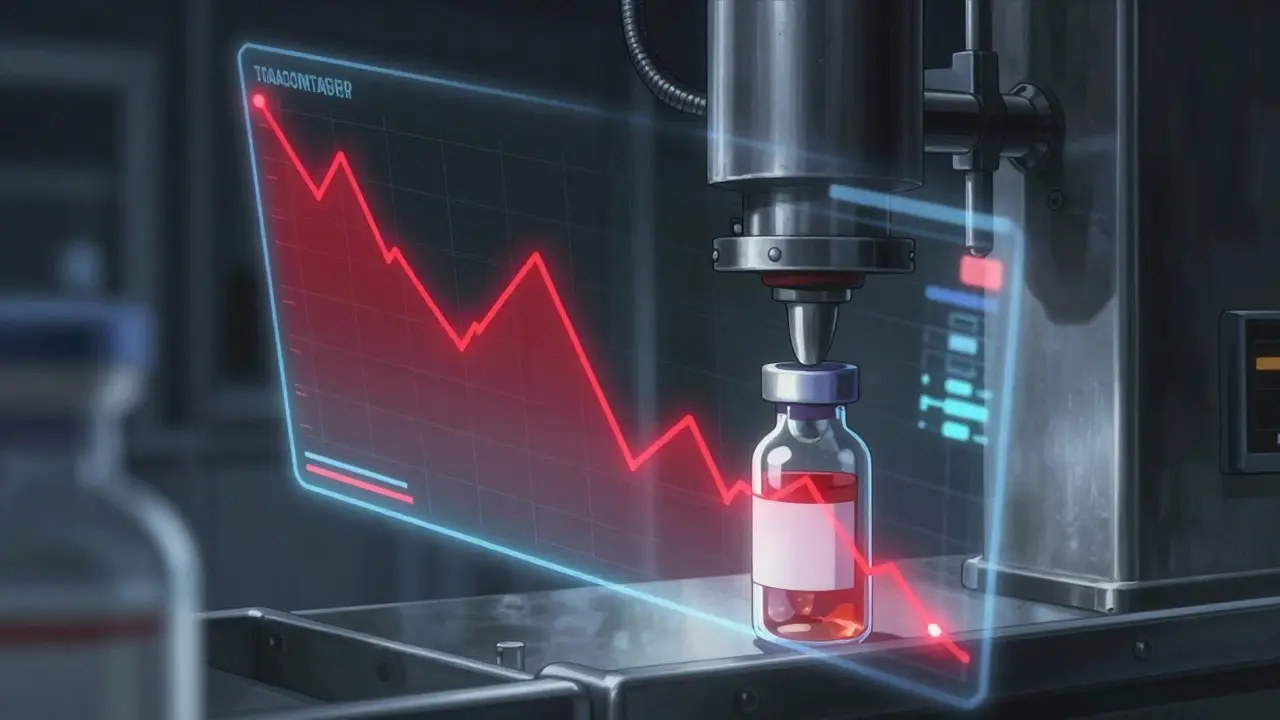
Imagine running a production line where the cost of your raw materials jumps 20% overnight, but your biggest customers refuse to pay a penny more for the finished product. For many pharmaceutical and medical device manufacturers, this isn't a nightmare scenario-it's their daily reality. We are seeing a dangerous intersection where drug shortages is a critical scarcity of therapeutic medications resulting from production failures, raw material deficits, or economic instability meets a brutal financial squeeze. When manufacturers can't make a profit on a life-saving drug, they stop making it. The result? Empty pharmacy shelves and patients who can't get their medicine.
The Perfect Storm: Why Margins are Collapsing
It's not just one thing causing the chaos; it's a combination of factors hitting all at once. Since late 2023, manufacturers have been battling rising input costs and volatile tariffs. According to data from the Yale Budget Lab, effective tariff rates surged to over 10% by mid-2025, adding billions in costs. In the pharmaceutical world, this translates to more expensive active pharmaceutical ingredients (APIs) and packaging materials.
The real problem is margin compression is the reduction in the profit margin of a product due to rising costs of production that cannot be passed on to the consumer . In the consumer goods and healthcare sectors, price sensitivity is at an all-time high. While an industrial equipment company might absorb a small cost increase before raising prices, healthcare manufacturers often face rigid contracts or government pricing caps. If they can't raise the price of a generic drug because of a competitive bid, the rising cost of steel for equipment or chemicals for medicine comes directly out of their pocket.
The Link Between Financial Strain and Medicine Shortages
Why does a CFO's balance sheet lead to a shortage at your local pharmacy? It comes down to a simple calculation: if a drug is no longer profitable, the incentive to produce it vanishes. Many manufacturers are facing a 2.7% annual growth in raw material costs, which sounds small until you realize it's compounding with geopolitical instability. When protectionist policies restrict access to rare earth metals is a group of seventeen metallic elements essential for high-tech medical electronics and diagnostic machinery or specific chemical precursors, production slows down.
This creates a vicious cycle. A manufacturer experiences financial strain, reduces capital expenditure to save cash, and neglects the maintenance of their facilities. Eventually, a plant fails an inspection or a machine breaks down, leading to a production halt. Because the profit margins are so thin, the company lacks the reserve funds to quickly fix the issue or pivot to a new supplier. Suddenly, a critical drug disappears from the market.
| Sector | Cost Absorption Limit | Primary Pressure Point | Shortage Risk Level |
|---|---|---|---|
| Consumer Healthcare | 0.7% | High Price Sensitivity | Critical |
| Industrial Equipment | 1.8% | Input Material Costs | Moderate |
| Electronics/Med-Tech | Varies | Semiconductor Scarcity | High |
The Role of Supply Chain Fragility
For too long, the industry relied on "just-in-time" manufacturing to keep costs low. But that efficiency left no room for error. When the 2024-2025 period brought fresh geopolitical conflicts and trade restrictions, the lack of buffer stocks became a liability. We've seen production delays averaging 17 days per unit in some high-tech sectors, which in the medical world can mean the difference between a patient getting treatment or waiting weeks in pain.
To fight this, some companies are moving toward nearshoring is the practice of transferring a business operation to a nearby country, often to reduce supply chain risks and transport costs . By bringing production closer to home, they reduce the risk of tariff spikes and shipping delays. However, this is an expensive transition. Moving a factory from overseas to a domestic site requires massive upfront investment-money that many struggling manufacturers simply don't have right now.

How Smart Manufacturers are Surviving
Not everyone is sinking. The companies that are maintaining their margins are moving away from "gut feeling" pricing and adopting Revenue Growth Management is a strategic framework that uses data analytics to optimize pricing, promotions, and portfolio management to maximize profit . Instead of raising prices across the board-which often alienates customers-they use dynamic pricing algorithms to adjust for specific cost increases in real-time.
Another winning strategy is digital transformation. Manufacturers investing in data foundations are seeing about 14% higher operational efficiency. By using AI to predict when a raw material price will spike or identifying a secondary supplier before the primary one fails, they avoid the panic-buying that drives prices even higher. In a recent survey, about 53% of manufacturers have already started implementing dual-sourcing strategies, meaning they no longer rely on a single country or company for their critical ingredients.
The Long-Term Outlook: Will it Get Better?
The outlook for 2026 and beyond is a mixed bag. Some economists suggest that manufacturing volatility will drop by about 2% annually as supply chains become more resilient. But there's a catch: if the industry doesn't fundamentally restructure how it handles strategic materials, inflation in manufacturing could stay 1.5% to 2% higher than it was before 2020.
The bottom line is that the era of ultra-cheap, lean manufacturing is over. The focus has shifted from "cheapest possible" to "most reliable possible." For the patient, this might mean slightly higher costs for some medications, but it's a small price to pay compared to the alternative: a pharmacy shelf that's completely empty.
Why are drug shortages increasing even if demand stays the same?
Shortages often happen because of financial strain rather than a lack of demand. When the cost of raw materials and tariffs rise, but the selling price of a drug remains fixed, manufacturers lose money on every dose. This leads them to cut production, neglect facility upgrades, or stop making the drug entirely to avoid further losses.
Do tariffs actually affect the price of medicine?
Yes. Many medications rely on active pharmaceutical ingredients (APIs) and specialty chemicals sourced globally. Tariffs on these imports increase the cost of production. While some costs are absorbed by the company, a significant portion-estimated between 61% and 80% in some sectors-eventually gets passed through to the end consumer.
What is "margin compression" and why does it matter?
Margin compression happens when the cost to make a product goes up, but the price you sell it for stays the same or goes down. In healthcare, this is dangerous because if a manufacturer's profit margin disappears, they lack the funds to maintain quality standards or invest in the capacity needed to prevent shortages.
Can nearshoring solve the shortage problem?
It can help by reducing reliance on volatile international shipping and geopolitical tensions. By producing drugs closer to the market, manufacturers can react faster to demand and avoid sudden tariff spikes. However, it requires a massive amount of initial capital to build new domestic plants.
How are companies using AI to stop these shortages?
Manufacturers are using AI for dynamic pricing to protect their margins and for predictive analytics to spot supply chain breaks before they happen. By identifying alternative suppliers through data, they can switch sources quickly if a primary supplier in another country faces a shutdown or a tariff hike.

rupa das
April 13, 2026 AT 08:53margins are fine its just bad management
S.A. Reid
April 13, 2026 AT 15:20It is truly fascinating how we are expected to believe that these "supply chain" issues are merely organic coincidences. One must consider if these strategic shortages are actually engineered to force a transition toward a centralized digital health ledger. The timing of these tariffs is far too convenient to be accidental. We are witnessing a choreographed redistribution of scarcity to ensure that only those aligned with the globalist agenda maintain access to essential therapeutics. It is a most elegant, albeit sinister, method of population control through pharmacological gatekeeping. I find the notion of "nearshoring" to be a quaint distraction from the real objective of systemic dependency. Truly, the intellectual myopia of the general public is a marvel to behold.
David Snyder
April 14, 2026 AT 06:27I really believe we can turn this around if we support local production. It's a tough road but the move toward more resilient systems will ultimately benefit everyone. We've got the tech to make this work!
Brooke Mowat
April 15, 2026 AT 23:49This whole vibe is just so heavy... like we're just cogs in a giant cosmic machine of capitalism and we're all just waiting for our meds to arrive like some kinda spiritual lottery. It's wild how a tiny bit of dust in a factory halfway across the globe makes our lives completely fall apart here. Maybe the universe is tryin to tell us that we're too dependent on the material world and need to find a more holistic way to exist in the ether of life. Totallly out of pocket that we're just numbers on a CFO's spreadsheet while we're out here tryin to just... be.
Milo Tolley
April 17, 2026 AT 17:35Absolute nightmare!!!! The volatility in the API procurement pipeline is just catastrophic!!! We're talking about a total systemic collapse of the just-in-time model!!!! This is pure chaos!!!!
Olivia Lo
April 18, 2026 AT 00:42The tension between fiscal solvency and the moral imperative of healthcare is a classic dialectic. While the logistical constraints of API sourcing are undeniable, we must ensure that the pursuit of margin protection doesn't override the fundamental human right to medicine. It is an intricate balance of socio-economic priorities.
Billy Wood
April 19, 2026 AT 17:59Get it done!!!! Build those plants!!!! Now!!!!
Anurag Moitra
April 21, 2026 AT 08:26The integration of dual-sourcing strategies is a prudent step toward stability. It is essential that we mentor the next generation of logistics managers to prioritize resilience over short-term cost efficiency.
mimi clouet
April 23, 2026 AT 01:51Actually, the AI part is the most exciting bit! 🌟 Predictive analytics can literally save lives by spotting these gaps before they happen. It's just common sense to use data to avoid pharmacy shelves being empty! 💊✨
Mark Dueben
April 24, 2026 AT 05:57It might be helpful to look at this from the perspective of the smaller manufacturers who don't have the capital for AI. They're the ones who will likely go under first, which only makes the shortage worse for everyone.
Ikram Khan
April 26, 2026 AT 04:04Oh man, this is so stressful to read! 😱 Imagine just waiting for a pill and it's just... gone? That's absolutely heartbreaking! We need a miracle to fix this fast! 😭
Randy Ryder
April 26, 2026 AT 08:01The operational efficiency gains from digital transformation are significant, but we need to talk about the interoperability of these data foundations. If the manufacturers aren't using synchronized protocols, the predictive analytics will have a massive blind spot in the mid-stream supply chain.