Fournier’s Gangrene and Diabetes Medications: Emergency Signs You Can’t Ignore

Fournier's Gangrene Symptom Checker
If you're taking SGLT-2 diabetes medications (Jardiance, Farxiga, Invokana, Steglatro), use this tool to check for emergency signs of Fournier's gangrene. This rare but life-threatening condition requires immediate ER care.
Select symptoms to see results
Most people taking diabetes meds like Jardiance, Farxiga, or Invokana never think about Fournier’s gangrene. It’s rare. It’s scary. And if you’re on one of these drugs, you need to know the signs-because waiting even a day could cost you your life.
What Is Fournier’s Gangrene?
Fournier’s gangrene isn’t just an infection. It’s a fast-moving bacterial warzone that eats away at skin, fat, and muscle in the genital and anal area. It starts small-a red patch, a bit of swelling, maybe some pain. But within hours, it can turn into a full-blown emergency. Tissue dies. Gas forms under the skin. The body goes into shock. Without surgery and IV antibiotics within 24 hours, death is likely.
For decades, this condition was seen mostly in older men with diabetes, obesity, or after trauma. But since 2013, something changed. New diabetes drugs-SGLT-2 inhibitors-started showing up in case reports. And not just in men. Women, too. Younger women. People with no other risk factors. The pattern didn’t match what doctors expected.
Which Diabetes Medications Are Linked to This?
The culprits are SGLT-2 inhibitors: drugs that make your kidneys flush out extra sugar through urine. That sounds good for blood sugar control. But here’s the catch: sugar in your urine is food for bacteria and yeast. And when those bugs get a foothold near your genitals, they can spread fast.
The FDA listed four main drugs linked to this risk:
- Canagliflozin (Invokana)
- Dapagliflozin (Farxiga)
- Empagliflozin (Jardiance)
- Ertugliflozin (Steglatro)
These aren’t rare drugs. Millions of people take them worldwide. But in a small number of cases-roughly one in 10,000 men treated-the result is Fournier’s gangrene. And it’s not just men. About one-third of reported cases in the EU were in women. That’s new. That’s alarming.
The Emergency Signs: Don’t Wait
If you’re on one of these meds, here’s what to watch for. If you notice even one of these, go to the ER now-don’t call your doctor, don’t wait until morning:
- Severe pain or tenderness in your genitals, anus, or between your legs
- Redness, swelling, or warmth in that area that spreads quickly
- Fever over 38°C (100.4°F) or chills
- Foul-smelling discharge from the genital or anal area
- A large, painful lump or abscess that feels like it’s getting bigger by the hour
- Pain that feels way worse than what you see on the surface
- General feeling of being extremely unwell-like you’re about to pass out
One case involved a 71-year-old woman on dapagliflozin who had a large abscess and foul-smelling discharge. She didn’t think it was serious until she couldn’t stand up. By then, the infection had eaten through tissue. She needed three surgeries and weeks in intensive care.
Another patient described it like this: "It felt like someone was cutting me open from the inside. I thought I was dying. I screamed for help. No one believed me until I collapsed."
These aren’t exaggerations. The FDA says patients often delay care because the symptoms start like a simple yeast infection or a pimple. But Fournier’s gangrene doesn’t wait. It spreads faster than most infections you’ve heard of.
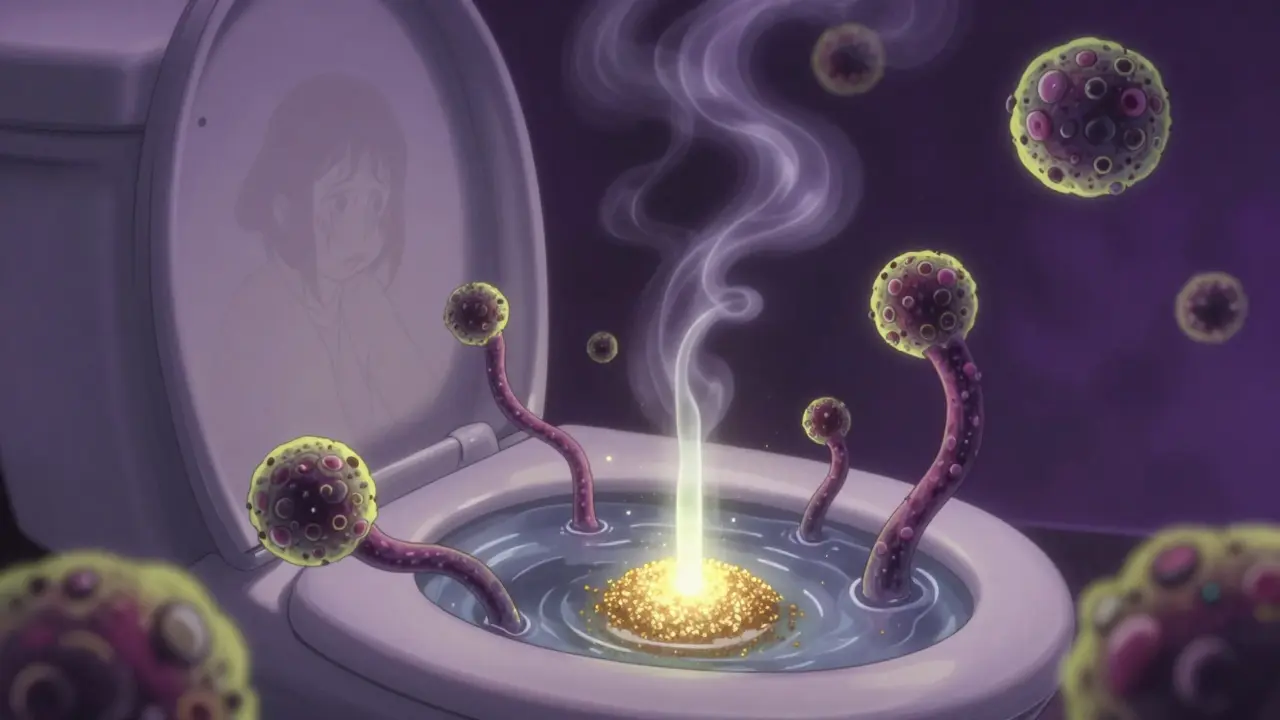
Why Does This Happen?
It’s not magic. It’s biology.
SGLT-2 inhibitors work by blocking glucose reabsorption in the kidneys. That means sugar leaves your body through pee. That’s great for lowering blood sugar. But it also means your genital area gets flooded with sugar-rich urine. That’s like leaving a buffet out for bacteria.
Normally, your body keeps those bugs in check. But if you have diabetes, your immune system is already working harder. Add in a little trauma-a scratch, a shaving cut, a yeast infection that didn’t clear-and bacteria can slip under the skin. Once they’re inside, they multiply fast. They release toxins. They cut off blood flow. Tissue dies. And the infection spreads along the fascia-the thin layer of tissue under your skin.
Dr. Elisabetta Patorno from Harvard put it simply: "The sugar in the urine creates a perfect storm. It starts as a common infection. Then it turns into a nightmare."
What Happens If You’re Diagnosed?
If a doctor suspects Fournier’s gangrene, they don’t wait. They act. Immediately.
Here’s what happens:
- The SGLT-2 inhibitor is stopped-right then.
- You get broad-spectrum IV antibiotics-often three or more at once.
- You go to surgery. Surgeons cut away all dead tissue. Sometimes they remove parts of the skin, muscle, or even genital organs.
- You’re admitted to the ICU. Many patients need breathing support, fluids, and multiple surgeries over days or weeks.
In one study of 19 cases, 78.9% ended up in intensive care. 63.2% needed more than one surgery. And 15.8% died-even with the best care.
There’s no home remedy. No cream. No waiting it out. If you have this, you’re in a race against time.
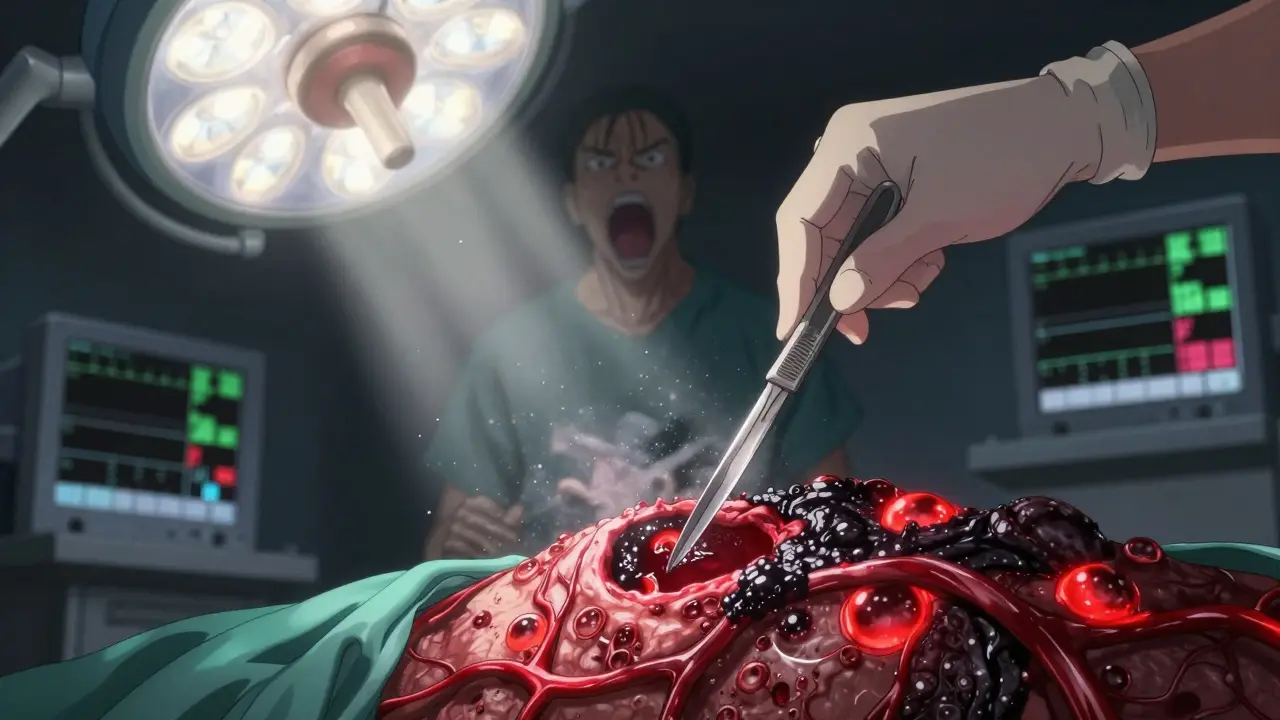
Should You Stop Taking Your Medication?
No. Not unless your doctor tells you to.
These drugs are powerful. They don’t just lower blood sugar. They protect your heart. They slow kidney damage. They reduce hospitalizations for heart failure. For many people, the benefits are life-changing.
The FDA, the European Medicines Agency, and Medsafe in New Zealand all agree: the risks are real-but rare. The benefits still outweigh the dangers for most patients.
But here’s the key: you need to be informed. If you’re on one of these drugs, you’re not just taking a pill. You’re accepting a small but serious risk. And you need to know what to look for.
What Should You Do Now?
If you’re on an SGLT-2 inhibitor:
- Read the patient leaflet. It now includes warnings about Fournier’s gangrene.
- Know the emergency signs. Print them out. Put them on your fridge.
- Talk to your doctor. Ask: "Is this drug right for me? Are there alternatives?"
- If you have a genital infection that won’t go away after a few days-get it checked. Don’t assume it’s just a yeast infection.
- Keep your blood sugar under control. High sugar = more risk.
If you’re not on these drugs but have type 2 diabetes: don’t panic. Other diabetes medications-like metformin, GLP-1 agonists, or insulin-don’t carry this specific risk.
Final Warning: This Is Not a "Maybe"
Fournier’s gangrene doesn’t care if you’re healthy, young, or think you’re fine. It doesn’t wait for a second opinion. It doesn’t care if you’re embarrassed to talk about it. It moves fast. And it kills.
People who survive often lose parts of their bodies. They need multiple surgeries. They spend weeks in the hospital. Some never fully recover.
But here’s the good news: if you catch it early, you can survive. If you know the signs, you can act. And if you’re on one of these medications, you have the power to protect yourself.
Don’t wait for someone else to tell you. Don’t hope it won’t happen to you. Know the signs. Know what to do. Your life could depend on it.
Ian Cheung
January 11, 2026 AT 16:56Man I read this and my skin crawled. I’m on Jardiance and I never knew this was a thing. Like I thought the worst was a UTI but this? This is next level scary. I printed the signs and taped them to my bathroom mirror. No more ignoring weird pain. I’d rather look like a hypochondriac than end up in the ICU.
Jaqueline santos bau
January 12, 2026 AT 07:24Wow. So now we’re supposed to be terrified of every new diabetes drug? I mean, sure, it’s rare-but why didn’t the FDA just pull these off the market if they’re that dangerous? I’m tired of pharmaceutical companies playing Russian roulette with our bodies and calling it ‘innovation.’ Someone’s making bank off this, and it ain’t us.
Jay Amparo
January 12, 2026 AT 08:48As someone who’s been on Farxiga for 3 years and still has zero complications, I get the fear-but don’t let fear silence the truth. These drugs saved my kidneys. I had stage 3 CKD. Now I’m stage 1. Yes, the risk exists. But so does the hope. Talk to your doc. Get tested. Don’t panic. Just be smart. You’re not alone in this.
Lisa Cozad
January 13, 2026 AT 11:35My mom’s on Invokana and she’s 68 with type 2. She’s been fine. But after reading this, I sat her down and we went over the signs together. She didn’t even know about the FDA warning. I printed it out in big font. She’s keeping it in her purse now. Knowledge is power. And love is action.
Saumya Roy Chaudhuri
January 14, 2026 AT 13:54Actually, this isn’t even new. I’ve been reading medical journals since 2015. The first case report was in Japan, 2013. The FDA only acted because lawsuits piled up. Also, women are getting it because their urethras are shorter and the sugar-rich urine pools differently. It’s basic anatomy. Stop acting like this is some conspiracy.
anthony martinez
January 15, 2026 AT 23:44So let me get this straight. You’re telling me the solution to a rare but deadly side effect is… keep taking the drug but be scared of your own pee? Brilliant. Just brilliant. Next up: ‘How to avoid being eaten by a shark while swimming in the ocean-just don’t swim.’
Mario Bros
January 16, 2026 AT 16:45Bro. This is real. I had a buddy who went in for what he thought was a yeast infection. 12 hours later, he was on a ventilator. Three surgeries. Lost his left testicle. Still has nightmares. If you feel even a little off down there-GO. NOW. No excuses. Your life isn’t worth the wait.
Jake Nunez
January 18, 2026 AT 02:43In India, we’ve got a different problem. People stop meds because they’re scared. Then their blood sugar skyrockets. They end up with diabetic foot ulcers or kidney failure. This post is important-but don’t let fear replace wisdom. Talk to your doctor. Don’t self-diagnose. And yes, if you’re on one of these, know the signs. But don’t panic.
Christine Milne
January 18, 2026 AT 22:19While the emotional appeal of this article is undeniable, one must consider the statistical insignificance of the incidence rate in the context of population-wide pharmacological benefit. The FDA’s risk-benefit analysis, grounded in peer-reviewed epidemiological data, continues to affirm the therapeutic utility of SGLT-2 inhibitors. Emotional anecdotes, however compelling, do not constitute evidence-based policy.
Bradford Beardall
January 20, 2026 AT 20:31Wait-so if I’m on Jardiance and I get a little redness after shaving, should I rush to the ER? Or is that overreacting? I’m trying to balance being informed without becoming paranoid. Anyone else feel this tension?
McCarthy Halverson
January 21, 2026 AT 02:49Know the signs. Don’t wait. If it hurts bad and you’re on one of these drugs-go to the ER. No second thoughts. No calls to your doctor. Just go. Your life is worth more than your pride.