Goldenseal and Metformin Interaction Risks for Blood Sugar Control
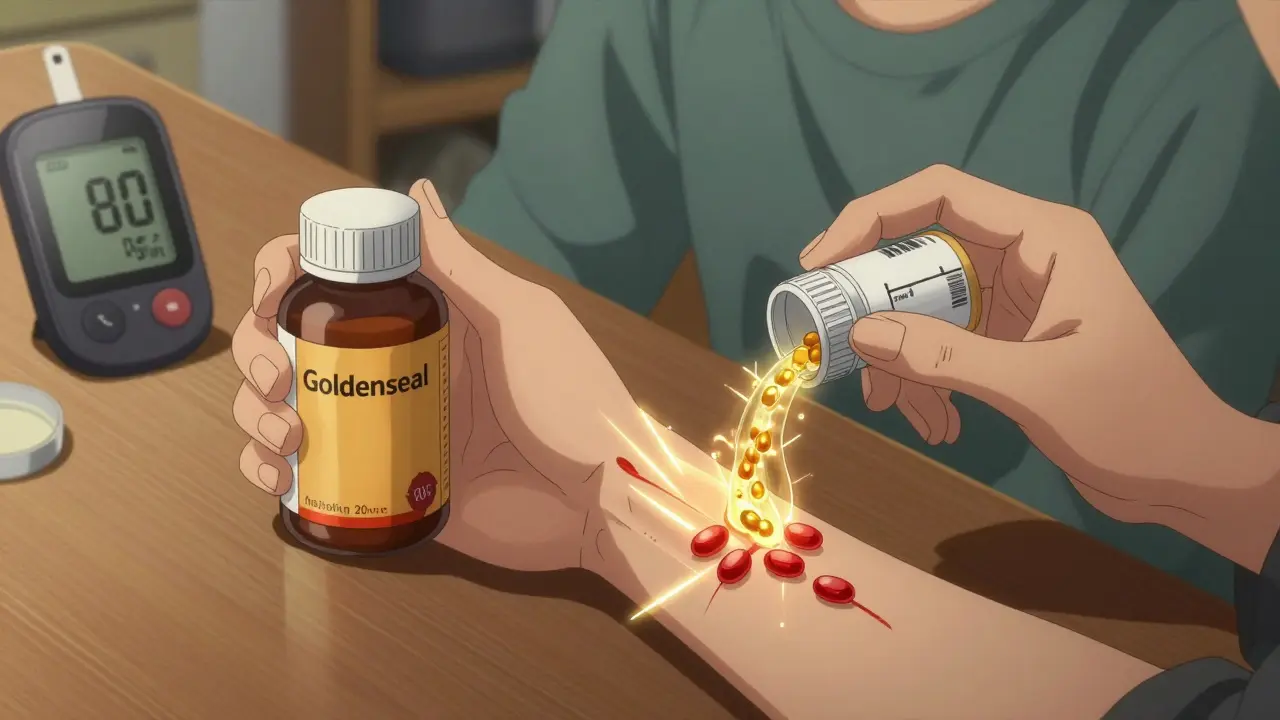
Many people with type 2 diabetes turn to herbal supplements hoping for better control over their blood sugar. One of the most popular is goldenseal-a yellow-rooted herb long used in traditional medicine. But what happens when you take it alongside metformin, the most common prescription drug for diabetes? The answer isn’t simple. It’s not just about one thing getting stronger or weaker. It’s about your body’s ability to absorb the medicine you’re counting on to keep your blood sugar stable.
How Goldenseal Interferes with Metformin
Goldenseal doesn’t work the way most people think. It’s not just a "natural remedy" that gently lowers blood sugar. Its main active ingredient, berberine, has real, measurable effects on your body’s chemistry. And when you take it with metformin, something unexpected happens: your body absorbs less of the metformin.
This isn’t speculation. A 2021 study from Washington State University, followed up by a 2025 clinical trial (NCT05081583), showed that goldenseal reduces how much metformin enters your bloodstream. At lower doses of metformin-like 500 to 750 mg per day-goldenseal cut metformin exposure by about 20% to 25%. That means less of the drug is available to do its job: reducing liver glucose production and improving insulin sensitivity.
Here’s the twist: this effect disappears at higher metformin doses. When people took 2,000 mg or more daily, goldenseal had almost no impact. Why? Because metformin’s absorption is already maxed out at those doses. The body’s intestinal transporters-specifically OCT1-are saturated. So the interaction only matters if you’re on a low or moderate dose.
Why This Matters for Blood Sugar
If you’re taking metformin and your blood sugar suddenly starts creeping up, you might blame your diet, stress, or lack of sleep. But what if it’s because you started taking goldenseal for a cold or to "boost immunity"? That’s exactly what some patients experienced.
The 2025 study tracked people with type 2 diabetes who were already stable on metformin. Some took goldenseal daily for six days. Even though their metformin levels dropped, their HbA1c (a measure of long-term blood sugar control) actually improved slightly-from 6.8% to 6.5%. At first glance, that sounds like good news. But here’s the catch: that improvement likely came from berberine itself, not metformin. Berberine has been shown in multiple studies to lower fasting glucose and HbA1c on its own. So while your numbers looked better, you weren’t getting the full benefit of your prescribed medication. That’s a dangerous trade-off.
Imagine this: you’re relying on metformin to keep your blood sugar steady. You add goldenseal thinking it’ll help. It does-but it also weakens your main treatment. Now your body is depending on an unpredictable, variable supplement instead of a carefully dosed, tested drug. That’s not safer. It’s riskier.
The Hidden Risk: Berberine’s Dual Effect
Goldenseal isn’t just a metformin thief. It’s also a glucose-lowering agent. Berberine, its active compound, works similarly to metformin in some ways: it reduces glucose production in the liver, improves insulin sensitivity, and may even slow sugar absorption in the gut. That’s why it’s being studied as a standalone treatment for diabetes.
But here’s the problem: when you combine it with metformin, you can’t predict the outcome. If your metformin levels drop but berberine is still active, you might feel fine. Or you might suddenly get hypoglycemia if you change your diet, skip a meal, or start exercising more. And if you stop taking goldenseal? Your metformin levels could suddenly rise again, leading to side effects like nausea, diarrhea, or even lactic acidosis in rare cases.
This isn’t theoretical. The MSD Manual (2024) warns that goldenseal may "decrease the blood levels of metformin, potentially hindering glucose control." But it also says berberine "may increase the hypoglycemic effects of antihyperglycemic drugs." So you’re caught between two risks: too little control, or too much.

Who’s Most at Risk?
If you’re taking 500-1,500 mg of metformin daily, you’re in the danger zone. That’s the range where goldenseal has the biggest impact. Most people start at 500 mg and work up. If you’re still on the lower end, you’re more vulnerable.
Older adults are also at higher risk. A 2023 meta-analysis of 27 trials found that berberine’s glucose-lowering effects weaken in people over 60. That means if you’re older and taking goldenseal, you’re less likely to get the benefit-and more likely to lose the metformin effect.
And here’s something most people don’t realize: you don’t need to take goldenseal every day for this to happen. The study showed the interaction became significant after just six days of daily use. So even a short-term herbal cleanse or immune boost could throw off your diabetes management.
What About Other Herbal Supplements?
Goldenseal isn’t the only one. Other supplements like bitter melon, fenugreek, and cinnamon also affect blood sugar. But goldenseal is unique because it doesn’t just add to the effect-it actively interferes with how your prescription works. Most herbs either help or don’t do much. Goldenseal does both, and that’s why it’s so dangerous.
Even more concerning: many people don’t tell their doctors about herbal supplements. A 2022 survey found that 23% of U.S. adults use them. In people with diabetes, that number jumps to 35-40%. And most assume herbal = safe. It’s not. Especially not when you’re on a drug that’s critical for your health.

What Should You Do?
If you’re on metformin and taking goldenseal:
- Stop taking it immediately and talk to your doctor.
- Don’t assume your blood sugar is fine just because your HbA1c looks good.
- Ask your doctor to check your metformin levels if you’ve had unexplained spikes.
- If you want to use berberine as a supplement, talk to your doctor about switching from metformin to a standardized berberine product under supervision-not mixing them.
If you’re not taking goldenseal but thinking about it: don’t. There’s no proven benefit to combining it with metformin. The risks outweigh any potential upside.
What’s the Alternative?
There are safer ways to support blood sugar control. Regular exercise, sleep hygiene, and a low-glycemic diet have been proven to improve insulin sensitivity. If you want a supplement, look at ones with strong evidence and no drug interactions-like magnesium or vitamin D (if you’re deficient). Berberine alone, taken without metformin, may be an option, but only under medical supervision.
The bottom line: don’t mix herbal supplements with diabetes medications unless your doctor says it’s safe. And even then, monitor closely.
Can goldenseal lower my blood sugar on its own?
Yes, the berberine in goldenseal has been shown in clinical trials to lower fasting blood glucose, post-meal glucose, and HbA1c. A 2023 meta-analysis of 27 studies found it was as effective as some conventional diabetes drugs when used alone. But it’s not a replacement for metformin unless you’re under medical supervision.
Is it safe to take goldenseal and metformin at different times of day?
No. The interaction isn’t about timing-it’s about how your intestines absorb metformin. Goldenseal blocks the transporters that pull metformin into your bloodstream. Whether you take them 2 hours apart or 12 hours apart, if both are in your system at the same time, the effect still happens. The 2025 study showed the interaction occurred even with staggered dosing.
Why doesn’t goldenseal affect metformin at high doses?
Metformin absorption is saturable-it means your body can only absorb so much at once. At doses above 2,000 mg, the intestinal transporters are already full. Goldenseal can’t block what isn’t being absorbed. That’s why the interaction disappears at higher doses, but it also means you’re taking more of a drug with potential side effects.
Are there other herbs that interact with metformin like goldenseal?
Yes, but not the same way. Bitter melon and fenugreek lower blood sugar on their own and can increase the risk of hypoglycemia when combined with metformin. But they don’t reduce metformin absorption. Goldenseal is unique because it directly interferes with how your body takes in the drug, which makes it harder to predict.
Should I stop metformin if I want to use goldenseal?
Never stop metformin without talking to your doctor. If you’re interested in berberine, ask about switching to a standardized berberine supplement under medical supervision. Some studies show it can be effective alone, but it requires careful dosing and monitoring. Mixing the two is dangerous.

Brandon Vasquez
March 1, 2026 AT 03:02Noah Cline
March 1, 2026 AT 18:58Lisa Fremder
March 2, 2026 AT 01:04Byron Duvall
March 2, 2026 AT 18:00Brandie Bradshaw
March 3, 2026 AT 07:48Martin Halpin
March 4, 2026 AT 14:39Full Scale Webmaster
March 4, 2026 AT 18:45Sophia Rafiq
March 6, 2026 AT 06:01Eimear Gilroy
March 7, 2026 AT 22:49Ajay Krishna
March 9, 2026 AT 09:17