How to Keep Travel Medications Within Shelf Life on Long Trips
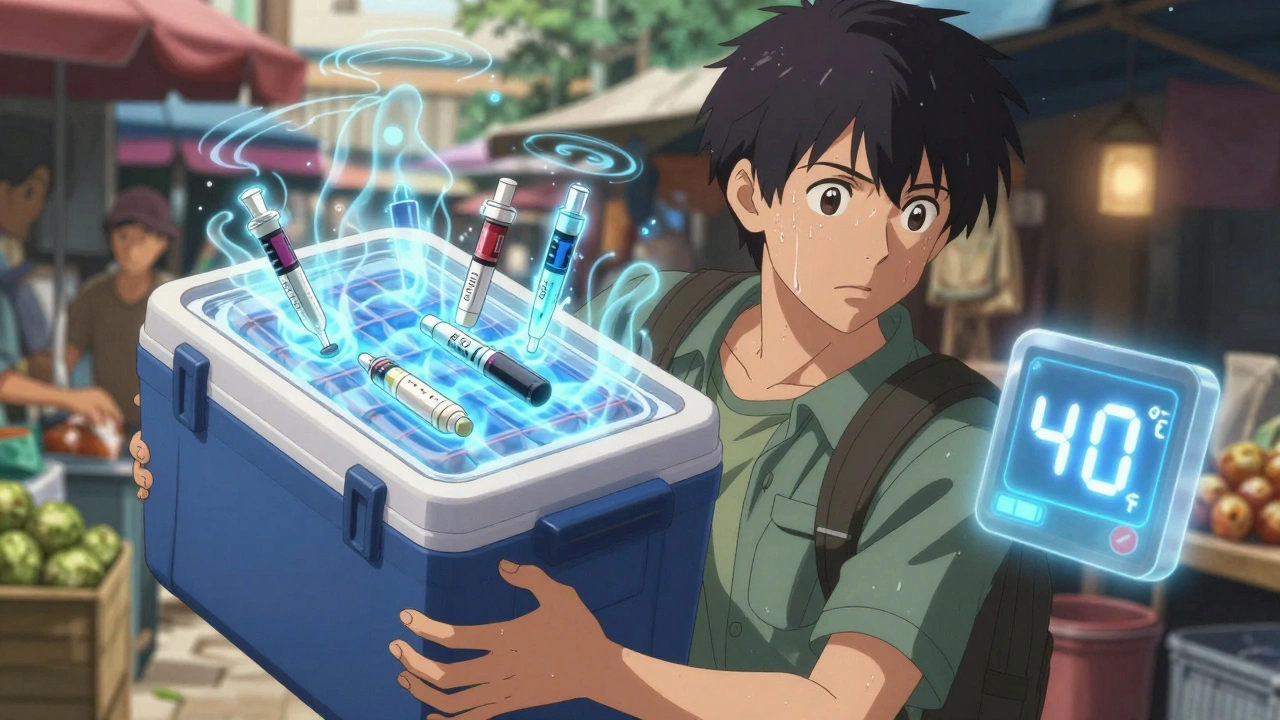
Imagine this: you’re halfway through a two-week trip in Thailand, and your insulin is warm to the touch. Your EpiPen was left in the car for an hour while you grabbed lunch. Your heart medication feels like it’s not working like it used to. This isn’t paranoia-it’s a real risk. Medication shelf life doesn’t stop when you leave home. Heat, humidity, and even sunlight can wreck your pills, pens, and inhalers faster than you think.
Why Your Medications Can Go Bad on the Road
Not all meds are created equal. About 78% of medications-like ibuprofen, blood pressure pills, or antidepressants-can handle room temperature (68°F to 77°F or 20°C to 25°C) without losing strength. But 12% of prescriptions, including insulin, EpiPens, certain biologics, and some antibiotics, need to stay cold. And 5%? Those need to be frozen. Here’s the scary part: insulin can lose over 20% of its potency after just 12 hours at 95°F (35°C). Epinephrine in an EpiPen drops 18% after 15 minutes in direct sunlight. Aspirin breaks down into vinegar-like acids that can irritate your stomach. These aren’t hypotheticals. They’re backed by FDA and European Medicines Agency data. And it’s not just heat. Moisture is a silent killer. Storing pills in your bathroom? Bad idea. Humidity turns tablets into mush and capsules into gunk. One study found 22% of medication failures during travel came from humidity exposure-not temperature.What Medications Need Special Care?
If you’re taking any of these, you need a plan:- Insulin (all types): Must stay between 36°F and 46°F (2°C to 8°C). Once opened, some can last 28 days at room temp-but only if it’s below 86°F. In hot climates? That’s not enough.
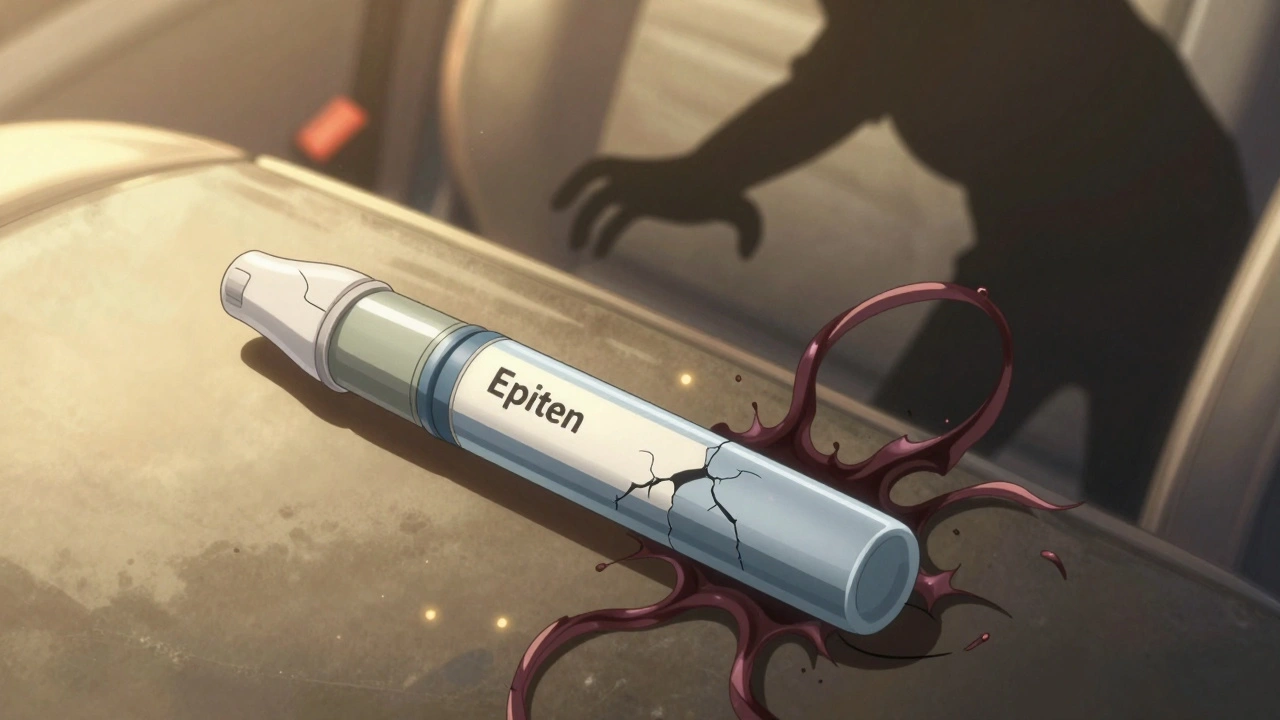
- EpiPens: Keep away from heat and light. Exposure above 86°F reduces effectiveness. Sunlight through a car window can do damage in minutes.
- Biologics (like Humira, Enbrel, Dupixent): These are the most fragile. Lose just 30% potency, and your immune system doesn’t get the control it needs.
- Antibiotics (especially liquid forms): Many need refrigeration. Leaving them out for a day can turn them into useless sugar water.
- Seizure meds (like phenytoin): Even small drops in strength can trigger breakthrough seizures.
- Thyroid meds: Heat can alter absorption, making your dose ineffective.
How to Store Medications During Travel
You don’t need fancy gear, but you do need the right tools. For refrigerated meds:- Use a medical-grade cooler (like Frio or Bocapharmacy). These aren’t your average lunchbox. They use evaporative gel packs that activate with water and hold 38°F-42°F for up to 72 hours-even in 100°F heat.
- Never use ice packs. They can freeze your meds, which destroys insulin and biologics. Gel packs are safer and more consistent.
- Keep the cooler in your carry-on. Checked luggage can sit in uncontrolled cargo holds for hours, hitting 120°F on a hot tarmac.
- Keep EpiPens and epinephrine in their original opaque vials.
- Use a small, dark pouch or wrap them in aluminum foil if you’re carrying them in a purse or pocket.
- Always keep them in original containers with prescription labels. Thailand, Dubai, and other countries have strict rules. No labels? Confiscated meds.
- Avoid bathrooms. Store meds in your hotel room’s dresser, not the bathroom cabinet.
- Use a small, dry container with silica gel packs to absorb moisture if you’re in a humid place.
What to Pack Before You Go
Start planning 14-21 days before departure. Here’s your checklist:- Call your pharmacist. Ask: "How long can this stay out of the fridge? Is there a travel-friendly version?"
- Ask for a printed copy of storage instructions. TSA and customs may ask for it.
- Bring 20% extra medication. Delays happen.
- Get a temperature monitor. Devices like TempTraq stick to your cooler and send alerts to your phone if temps go out of range.
- Bring backup meds if possible. Some pharmacies now offer travel packs with stability-tested formulations that last longer at room temp.
- Carry a doctor’s note. Especially if you’re flying internationally with injectables or controlled substances.
What Happens When You Fly
TSA allows all medications in carry-ons, but you must declare them. Here’s how to make it smooth:- Put meds in a clear, zip-top bag-like your liquids.
- Have your printed storage instructions ready.
- Don’t put insulin or EpiPens in checked bags. Ever.
- Arrive early: 2 hours for domestic, 3 for international. Security can take longer if you’re flagged for meds.
- Some airlines now let you store your cooler under the seat in front of you. Ask at check-in.
Real Stories, Real Consequences
One traveler on Reddit kept her insulin in a regular insulated bag on a 14-day trip to Southeast Asia. The gel packs lasted 24 hours. After that, her meds sat in 95°F hotel rooms. She didn’t notice the drop in effectiveness until she had a diabetic episode in Bali. Her blood sugar spiked to 500. Another family left their child’s EpiPen in a car for 90 minutes at 102°F. When they needed it weeks later, it didn’t work. A lab test confirmed 40% potency loss. On the flip side, a man with rheumatoid arthritis used a Frio wallet for his Humira. He traveled through 10 countries over 3 months. No issues. His meds stayed within range the whole time.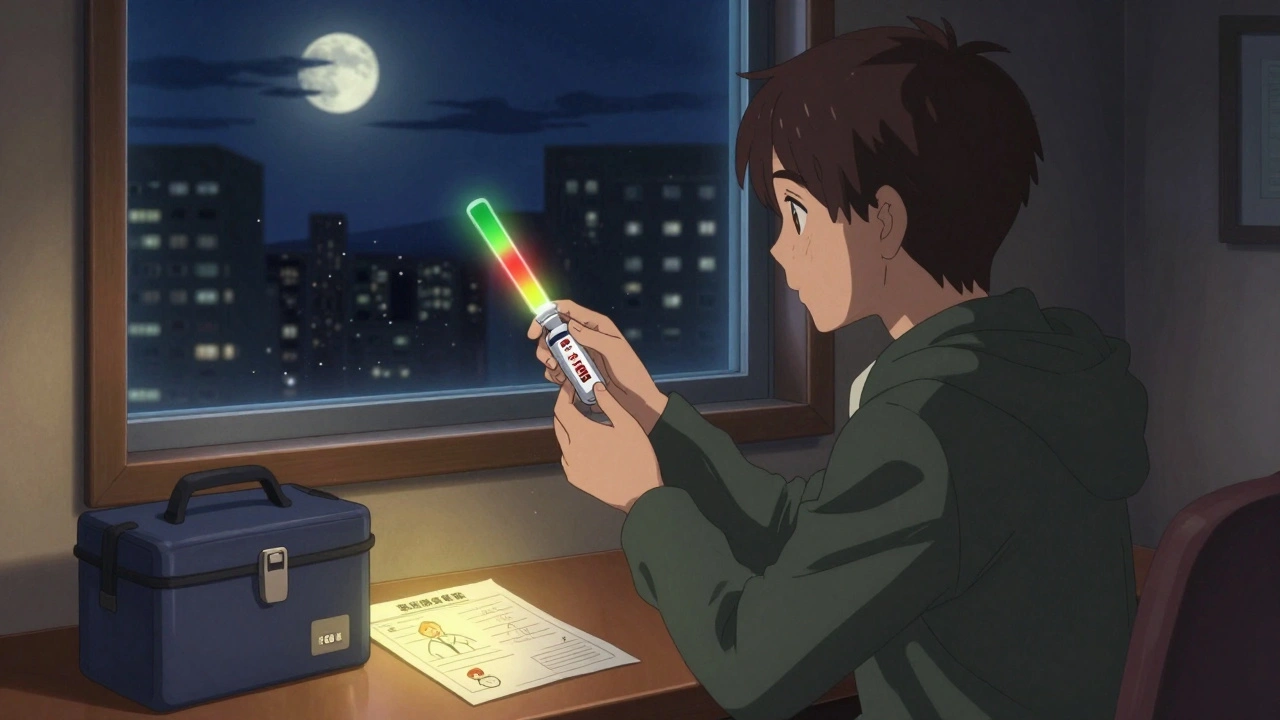
New Tech Making Travel Easier
The game is changing. In 2023, the FDA approved temperature-indicating labels from 3M. These change color if your meds overheat. You don’t need a phone app-just look at the label. Companies like Softbox now make containers that keep meds cold for 120 hours. That’s five full days without reactivating gel packs. And by 2026, 85% of temperature-sensitive meds are expected to have travel-stable versions built in. But until then? You still need to be smart.What to Do If You Think Your Meds Are Compromised
If your insulin looks cloudy, your EpiPen feels warm, or your pills smell weird or taste off-don’t risk it.- Don’t use it.
- Find a pharmacy. Many international pharmacies can test potency.
- Call your U.S. doctor. They can often call in a new prescription to a local pharmacy.
- Use your backup meds if you have them.
Final Rule: When in Doubt, Don’t Use It
Your meds aren’t like snacks. You can’t eat expired yogurt and be fine. A weakened heart med could land you in the ER. A failed EpiPen could be fatal. The cost of a new insulin pen is nothing compared to the cost of a hospital stay. Plan ahead. Pack smart. Monitor your temps. And never assume your meds are safe just because they look the same.Can I keep my insulin in my hotel mini-fridge?
It depends. Many hotel mini-fridges fluctuate between 32°F and 48°F, which is risky for insulin. They can freeze your meds or let them get too warm. Better to use a medical-grade cooler with gel packs and keep it in your room. If you must use the mini-fridge, test the temp with a thermometer first.
What if I forget my cooler?
If you’re traveling with refrigerated meds and forgot your cooler, find a pharmacy or hospital nearby. Many can store your meds in a fridge for a few hours. If you’re in a remote area, keep the meds in a cool, dark place-like a basement, a wrapped bottle in a stream (if safe), or even buried in sand. Don’t leave them in the sun or a hot car. Use your backup meds if you have them.
Can I carry liquid medications in my carry-on?
Yes. TSA allows more than 3.4 oz of liquid medications in carry-ons, as long as you declare them. You don’t need to put them in the liquids bag, but you must tell the officer. Bring printed instructions or a doctor’s note to avoid delays.
Do I need a doctor’s note for my meds when flying internationally?
It’s not always required, but it’s smart. Some countries, like Japan, the UAE, and Australia, have strict rules about controlled substances and injectables. A note from your doctor listing your meds, dosage, and condition can prevent confiscation or questioning at customs.
How do I know if my medication has gone bad?
Signs include: insulin that looks cloudy or clumpy (it should be clear), pills that are sticky, cracked, or discolored, liquids that smell sour or have particles, EpiPens that feel warm or have a cloudy solution. If you’re unsure, don’t use it. Get a replacement.
AARON HERNANDEZ ZAVALA
December 4, 2025 AT 20:56I used to think my insulin would be fine in a regular bag until I got stranded in Bangkok for 36 hours with no AC
My pen felt warm and I didn't realize until my sugars went wild
Now I carry a Frio wallet everywhere even for weekend trips
It's not expensive and it saves your life
Don't be like me and learn the hard way
Victor T. Johnson
December 4, 2025 AT 22:54Y’all are overcomplicating this 💀
Medications aren’t magic fairy dust
If it’s hot it breaks period
Stop pretending you’re a scientist and just buy a cooler
And if you’re too lazy to do that maybe you shouldn’t be traveling with life-saving drugs 🤡
Nicholas Swiontek
December 5, 2025 AT 13:58This is such an important post and I’m so glad someone put this together
I’ve been using the Frio wallet for my Humira on my 6-month backpacking trip through SE Asia and it’s been a game changer
Also bringing extra meds and a doctor’s note saved me when my flight got delayed in Vietnam
Don’t wait until you’re in crisis to prep
Do it now and sleep better at night 🙌
Robert Asel
December 5, 2025 AT 22:09While the general sentiment of this article is not without merit, it is critically lacking in nuance regarding pharmaceutical stability thresholds.
For instance, the assertion that insulin loses 20% potency after 12 hours at 35°C is based on accelerated stability studies under non-physiological conditions.
Real-world data from the WHO’s Medicines Quality Assurance program demonstrates significantly slower degradation rates under intermittent heat exposure.
Furthermore, the conflation of temperature and humidity effects without quantifying relative risk factors constitutes a misleading oversimplification.
One must also consider the pharmacokinetic variability of individual patients, which renders blanket recommendations potentially hazardous.
Therefore, while practical advice is welcome, the article’s authoritative tone risks inducing unnecessary anxiety and suboptimal decision-making among non-specialist users.
Recommendation: Consult a clinical pharmacist prior to travel, rather than relying on aggregated internet content.
Additionally, the use of the term ‘silent killer’ to describe humidity is both scientifically inaccurate and emotionally manipulative.
Shannon Wright
December 6, 2025 AT 08:49I want to thank the author for putting this together - this is the kind of information that could literally save lives, especially for people traveling with chronic conditions
Too often we treat our meds like we treat our snacks - ‘it’s probably still good’
But insulin, epinephrine, biologics - these aren’t things you can gamble with
I’ve seen friends lose weeks of stability because they thought a hotel fridge was enough
And honestly, the part about avoiding bathrooms? So important - I used to keep my thyroid meds in there until I realized how much moisture was in there after a hot shower
Also - get the temperature monitor. I bought one for $25 and it’s the best investment I’ve ever made for my health
You don’t need to be a travel expert to do this - just be smart
And if you’re scared, reach out - there are so many of us out there who’ve been there and will help you plan
vanessa parapar
December 8, 2025 AT 03:36Wow. You people are so dramatic. My insulin’s been in my purse in the sun for years and I’m still alive
Also, hotel fridges are fine - if you can’t handle a little heat, maybe don’t travel
And why do you need a doctor’s note? Like, what are you smuggling? 😏
Stop making everything a crisis. It’s just medicine.
Ben Wood
December 9, 2025 AT 02:33Let’s be real: the FDA doesn’t care about your vacation. They regulate drugs for use in controlled environments - not for people who ‘forgot their cooler’.
And let’s not forget: 90% of ‘temperature-sensitive’ meds are perfectly stable for 48 hours at 30°C - the rest is marketing.
Also, why are you carrying 20% extra? Are you planning to become a pharmacist? This isn’t a survivalist podcast.
And the part about aluminum foil? That’s not science - that’s Pinterest.
Real talk: if you’re that worried, don’t go. Stay home. Or hire a nurse. Or take a vacation that doesn’t involve risking your life because you’re too lazy to read the label.
Sakthi s
December 10, 2025 AT 22:18Simple and smart advice. I’m from India, and we deal with heat every day. This helped me plan my trip to Bali. Thank you.
Abhi Yadav
December 11, 2025 AT 16:32We are all just temporary vessels for chemical reactions anyway
What is a pill but a momentary pause in entropy?
If your body needs insulin, it will find a way
Or maybe it won't
And that's the beauty of impermanence
Still... I carry my epipen in a sock now 🤔
Julia Jakob
December 12, 2025 AT 23:19Okay but have you ever seen what happens to meds in checked luggage? I swear my cousin’s antibiotics turned into soup after a flight to Mexico
And the mini-fridge thing? Yeah I tried it once and my insulin froze solid
Now I just keep it under my seat with my hoodie wrapped around it
Also why is everyone so scared of TSA? Just say ‘medical’ and they don’t even look
Stop overthinking it
AARON HERNANDEZ ZAVALA
December 13, 2025 AT 04:07^^^ this is exactly what happened to me
I thought the mini-fridge was fine until I pulled out a frozen insulin pen
It looked like a little ice cube
Had to buy a new one in a pharmacy in Chiang Mai
Lesson learned: never trust a hotel fridge
And never trust your gut about meds