How to Prepare for a Medicare Annual Medication Review (CMR)

Imagine sitting down with a pharmacist who actually has time to look at every single pill bottle in your cabinet. They aren't just checking if you can afford the prescription; they are looking for dangerous clashes between your blood pressure meds and that new heart supplement you started taking last month. This isn't a dream scenario-it is your right under Medicare Part D.
This service is called a Comprehensive Medication Review, or CMR for short. It is part of a broader program known as Medication Therapy Management (MTM). Think of it as a deep-dive audit of your health routine. The goal? To catch errors before they send you to the emergency room and to lower your monthly pharmacy bills by switching you to cheaper, equally effective alternatives.
But here is the catch: the review is only as good as the information you bring to the table. If you show up empty-handed, the pharmacist is working with guesswork. If you prepare correctly, you walk away with a safer, cheaper, and clearer plan. Here is exactly how to get ready so you get the most out of this free benefit.
Step 1: Gather Every Single Container
The biggest mistake people make is relying on memory or a printed list from their doctor's office. Those lists are often outdated. Maybe you stopped taking that antibiotic two weeks ago, but it’s still on the sheet. Maybe you started taking an over-the-counter sleep aid, but nobody knows about it.
You need to physically gather everything. This includes:
- All prescription medications currently in use.
- Over-the-counter (OTC) drugs like ibuprofen, acetaminophen, antacids, or allergy pills.
- Vitamins, minerals, and herbal supplements (yes, even the fish oil and St. John’s Wort).
- Dietary supplements and topical creams or patches.
Why original containers? Because labels change. Dosages change. A pharmacist needs to see the exact strength written on the bottle to verify what you are actually swallowing. According to data from the Medicare Rights Center, patients typically omit 2-3 medications when asked to recall them verbally. Bringing the bottles closes that gap instantly.
Step 2: Create a 'Medication Timeline'
A simple list is okay, but a timeline is powerful. For each medication, write down three things: when you started it, why you take it, and any recent changes. Did you double the dose because it wasn't working? Did you stop taking it because it made you dizzy?
This context helps the pharmacist understand your adherence patterns. If you have been skipping your morning statin because it gives you stomach cramps, the pharmacist might suggest taking it at night instead, or switching to a different brand. Without that history, they assume you are taking it perfectly, which leads to wrong conclusions about your health progress.
Step 3: Document Side Effects and Concerns
Before the appointment, spend 15 minutes writing down specific issues. Don't just say "I feel bad." Be precise. Write things like:
- "I get headaches every afternoon after taking my diuretic."
- "This pill is too big to swallow without water."
- "I forgot my pills twice last week because the schedule is confusing."
- "My co-pay went up, and I'm considering skipping doses."
These notes turn a vague conversation into actionable data. Cost barriers are a huge reason people don't take their meds. If you tell the pharmacist money is tight, they can look for generic alternatives or manufacturer coupons during the review. Silence costs you more than speaking up.

Step 4: Bring Recent Health Updates
Your medications interact with your body's current state, not just other pills. Have you had recent lab results? Blood work showing high cholesterol or kidney function issues? Have you been hospitalized recently?
If you have had surgery or a hospital stay in the last six months, bring the discharge papers. Hospitals often add temporary medications that patients forget to stop taking when they go home. These "ghost prescriptions" are a leading cause of unnecessary drug interactions. Your pharmacist can cross-reference these with your regular meds to ensure you aren't doubling up on painkillers or blood thinners.
Who Qualifies for a Free CMR?
Not everyone gets an automatic invitation, though many do. You likely qualify for a Comprehensive Medication Review if you meet all three of these criteria set by the Centers for Medicare & Medicaid Services (CMS):
- You have three or more chronic conditions (such as diabetes, hypertension, asthma, COPD, or heart failure).
- You take eight or more covered Part D medications.
- You expect to spend more than $1,623 annually on covered Part D drugs (based on 2025 thresholds).
If you meet these marks, your Part D plan is required to offer you a CMR at least once a year. If you don't meet the strict criteria but still have concerns, ask your plan anyway. Many plans offer Targeted Medication Reviews (TMRs) or will grant a full CMR upon request if you explain your complex situation.
| Feature | Standard Pharmacy Pick-Up | Comprehensive Medication Review (CMR) |
|---|---|---|
| Duration | 2-5 minutes | 30-60 minutes |
| Scope | New prescription only | All meds, OTCs, supplements, herbs |
| Goal | Dispense drug | Optimize therapy, reduce costs, prevent interactions |
| Output | Verbal instructions | Written Personal Medication List (PML) and Action Plan |
| Cost | Covered by insurance/patient | Free for eligible beneficiaries |
What Happens During the Review?
The CMR is an interactive session. It can happen in person at a pharmacy or via telehealth (video or phone). The pharmacist will go through your gathered materials line by line. They are looking for:
- Duplications: Are you taking two different brands of the same acid reducer?
- Interactions: Does your blood thinner react dangerously with your ginkgo biloba supplement?
- Adherence Barriers: Is the dosing schedule too complex?
- Cost Savings: Is there a generic version available that saves you $50 a month?
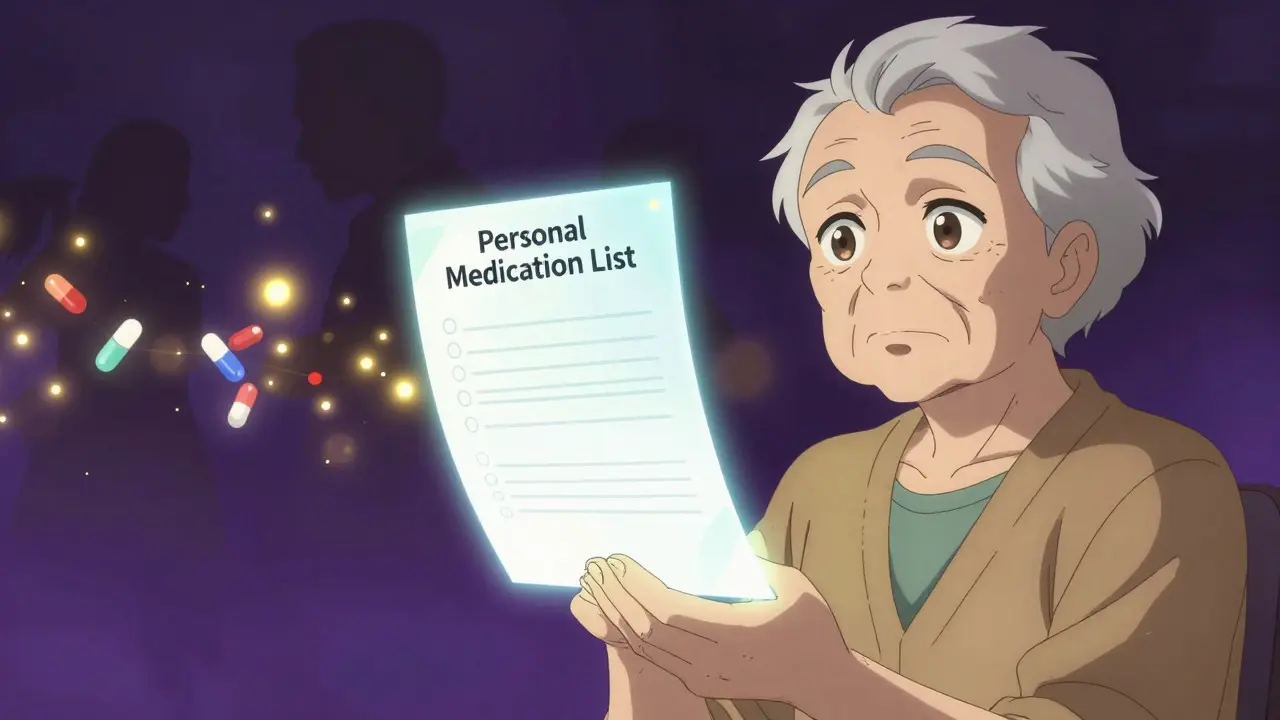
At the end, you receive a written summary. This is not just a receipt. It consists of three parts mandated by CMS: a Consultation Letter, a Medication Action Plan (MAP), and a Personal Medication List (PML). Keep this PML safe. It becomes your master reference for future doctor visits.
Pro Tips for a Successful Review
Bring a friend or family member. Having a second pair of ears helps you remember the action items discussed. It also provides emotional support if the pharmacist identifies serious issues that need immediate attention with your primary care doctor.
Ask about "deprescribing." Sometimes, the best medicine is no medicine. If a drug is no longer necessary due to age or changed health status, ask if it can be safely stopped. Studies show that reducing unnecessary polypharmacy (taking many drugs) significantly improves quality of life for seniors.
Finally, follow up. The CMR is a snapshot in time. If you start a new medication or have a major side effect, call your pharmacist. They are your accessible healthcare partner, often easier to reach than your busy physician.
Is the Medicare Comprehensive Medication Review really free?
Yes, for eligible beneficiaries, the CMR is a covered benefit under Medicare Part D. There should be no copay or out-of-pocket cost for the consultation itself. However, if the pharmacist recommends changing a medication, standard copays for the new prescriptions may apply.
Can I do the medication review over the phone or video?
Absolutely. CMS allows CMRs to be conducted via telehealth technologies, including video calls or telephone conversations. This is especially helpful for those with mobility issues or those living in rural areas. Just ensure you have your medication bottles nearby to show the pharmacist during the call.
What if I don't meet the eligibility criteria for a CMR?
You can still request one. While plans are mandated to offer CMRs to those meeting specific chronic condition and cost thresholds, many plans will accommodate requests from patients with complex regimens or significant adherence issues. Additionally, you may qualify for a Targeted Medication Review (TMR), which is shorter but still valuable.
How long does preparation take?
For most people, gathering bottles and writing down questions takes about 30-45 minutes. If you have a very complex regimen with 8+ medications, allocate 60-90 minutes to create a detailed timeline and review past records. This upfront investment saves hours of confusion later.
Does the pharmacist tell my doctor what to prescribe?
The pharmacist cannot directly change your prescription. However, they can contact your doctor on your behalf to recommend changes, such as switching to a generic or adjusting a dose based on interactions found. With your permission, they act as a liaison to optimize your care team's decisions.