How to Reduce Medication Risks with Simple Lifestyle Changes
Every year, over a million people in the U.S. end up in the emergency room because of problems with their medications. Many of these cases aren’t caused by bad drugs or careless doctors-they’re caused by lifestyle habits that make medications less effective-or more dangerous. The good news? You don’t need to rely on pills alone. Simple, daily changes to how you move, eat, and rest can cut your medication risks in half, and sometimes even reduce how many pills you need.
Why Lifestyle Changes Matter More Than You Think
Taking five or more medications at once-called polypharmacy-triples your risk of dangerous side effects, falls, confusion, and hospital stays. This isn’t rare. Nearly one in four adults over 65 are on five or more prescriptions. But here’s what most people don’t realize: many of those medications are treating symptoms, not the root cause. High blood pressure? It’s often from too much salt and not enough movement. Type 2 diabetes? It’s linked to weight, sleep, and stress-not just insulin resistance. Studies show that when people make real lifestyle changes, they can cut their medication needs by 25% to 50%. That’s not a guess. It’s from a 2023 review of 247 studies involving over 3.4 million people, published in JAMA Internal Medicine. For example, someone on blood pressure meds might drop one pill after six months of walking daily and cutting salt. Someone with prediabetes might avoid diabetes meds altogether by losing just 5-7% of their body weight. The key? These changes don’t replace your meds. They work with them. As Harvard Medical School’s Dr. Rob Shmerling says: “Medications should be in addition to lifestyle changes, not instead of.”Move More-Even Just a Little
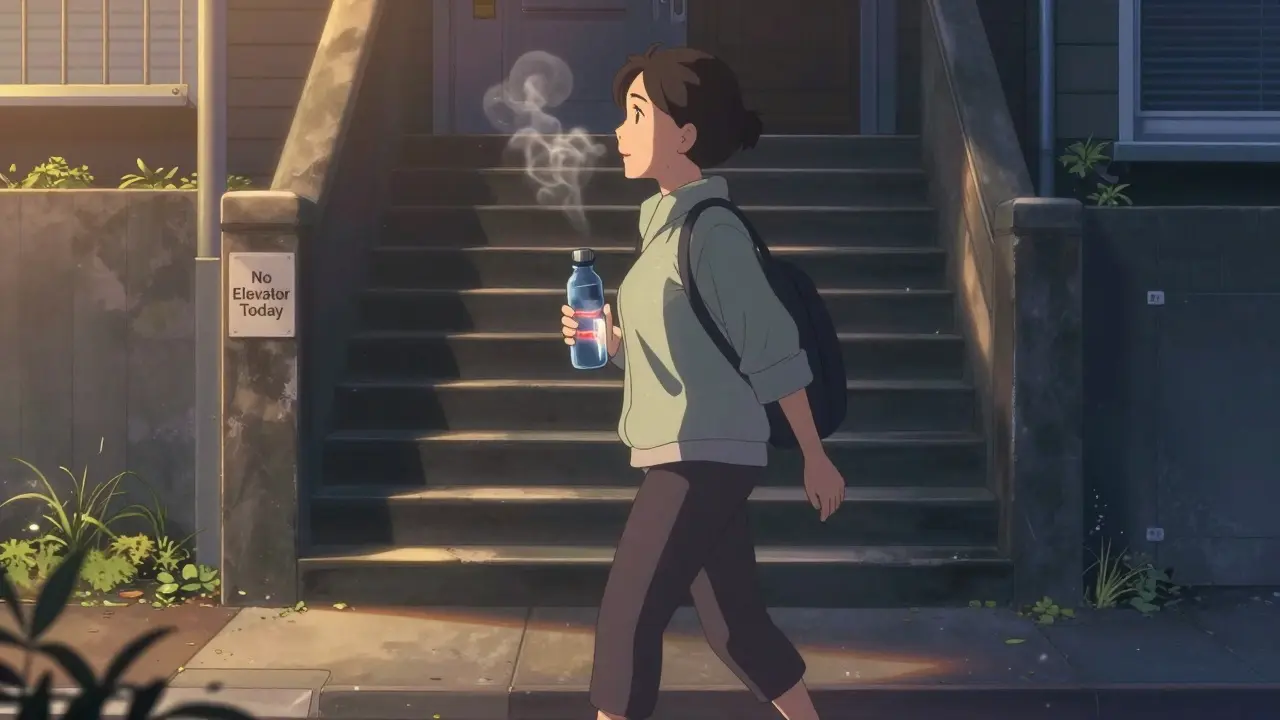
You don’t need to run marathons. You just need to move consistently. The science is clear: 30 minutes of brisk walking, three times a week, can lower your blood pressure as much as a single medication. Why? Because it makes your heart stronger. A stronger heart doesn’t have to work as hard to pump blood. That means lower pressure in your arteries. For people with type 2 diabetes, movement helps your muscles use glucose without insulin. A 2024 study at UC Davis showed that people who walked daily and did light strength training reduced their need for diabetes meds by up to 40%. The magic number? 150 minutes of moderate activity per week-that’s 30 minutes, five days a week. Add two days of light weight lifting or bodyweight exercises like squats or push-ups, and you’re hitting the sweet spot for heart and muscle health. Real-life example: One person in Hobart, Australia, reduced their blood pressure from 150/95 to 125/80 in six months by walking every morning before work and taking the stairs instead of the elevator. Their doctor took them off one pill. No surgery. No new drug. Just consistent movement.Eat Smart-Not Strictly
You don’t need to go vegan or cut out carbs completely. You need to eat food that works with your body, not against it. For high blood pressure: Cut sodium. Most people eat over 3,500 mg a day. The target? 1,500 mg. That’s like cutting out one bag of chips, one can of soup, and one serving of processed deli meat. Swap salt for herbs, lemon, garlic. Follow the DASH diet-it’s not a diet, it’s a pattern: more vegetables, fruits, whole grains, beans, nuts, and lean proteins. Research in the New England Journal of Medicine found this lowers blood pressure by 11/5 mm Hg-just like a pill. For type 2 diabetes: Focus on fiber and low-glycemic foods. Oats, lentils, broccoli, berries, and plain yogurt help stabilize blood sugar. Avoid sugary drinks, white bread, and pastries. A 2024 presentation at UC Davis showed that people who ate this way and lost 5-7% of their body weight cut their diabetes meds by 60% in the prediabetic stage. But watch out for food-drug interactions. Grapefruit can make statins too strong-leading to muscle damage. Leafy greens like spinach and kale are full of vitamin K, which can interfere with warfarin (a blood thinner). Dairy can block absorption of some antibiotics. Talk to your pharmacist before making big changes. They know what’s in your meds and what your food might do to them.Sleep Like Your Life Depends on It-Because It Does
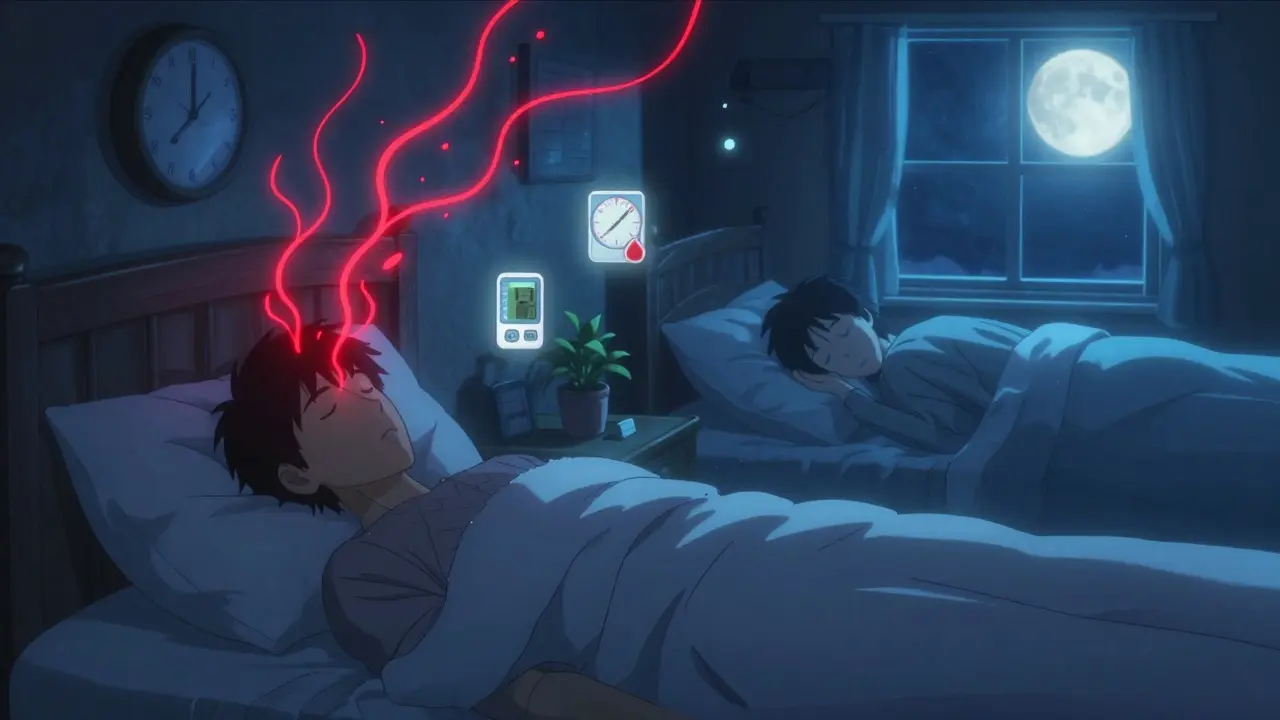
You’ve heard it before: sleep is important. But here’s the truth: sleeping less than seven hours a night isn’t just tiring-it’s dangerous. Chronic sleep loss raises your risk of high blood pressure, insulin resistance, obesity, and heart disease. All of these make your medications work harder-or fail entirely. A 2023 study found that people who slept fewer than six hours had a 20% higher chance of needing a new medication for high blood pressure compared to those who slept seven to nine hours. Why? Your body repairs itself during deep sleep. Without it, stress hormones stay high, your blood sugar goes up, and your blood pressure doesn’t drop at night like it should. Start small: Go to bed 15 minutes earlier each night. Turn off screens an hour before bed. Keep your room cool and dark. If you snore or wake up tired, get checked for sleep apnea. It’s common, treatable, and linked to heart problems.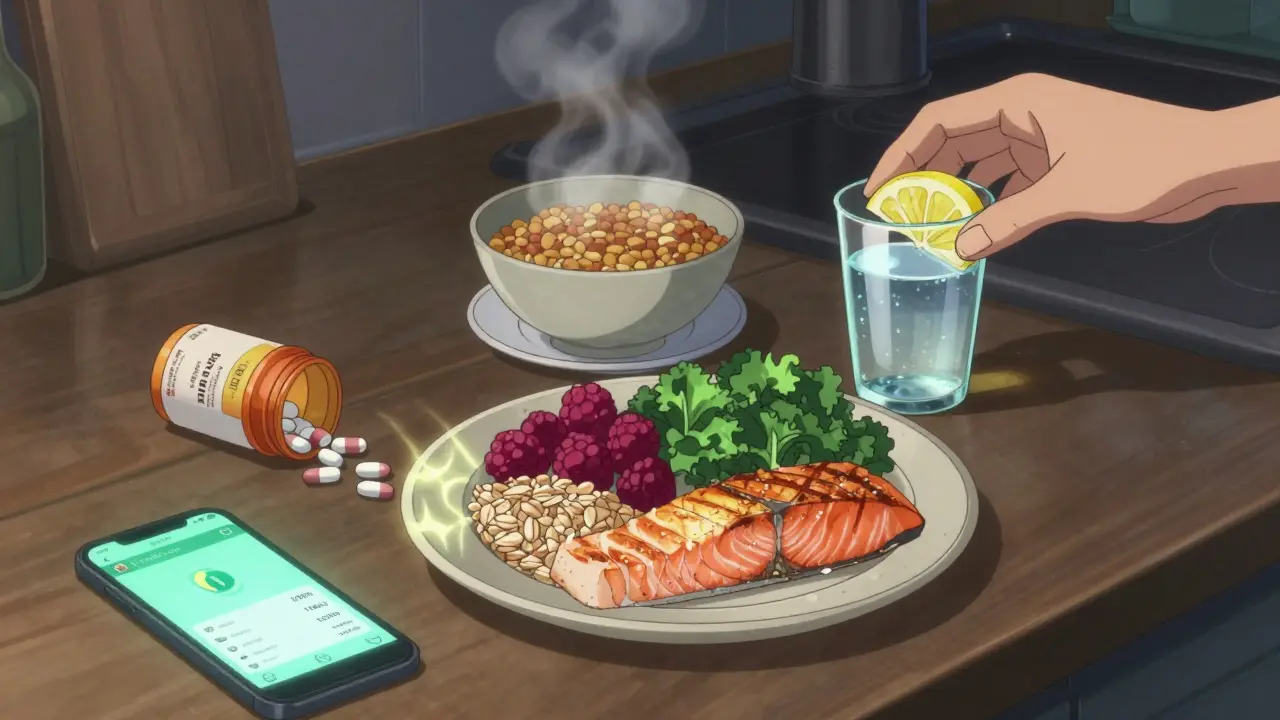
Manage Stress-It’s a Silent Med Killer
Stress doesn’t just make you feel overwhelmed. It raises your cortisol, which spikes blood sugar, increases blood pressure, and makes your body store fat around your belly-exactly where it’s most dangerous. People under chronic stress are more likely to skip meds, eat junk food, and avoid exercise. It’s a cycle. Breaking it doesn’t require meditation for an hour a day. Just 10 minutes of deep breathing, yoga, or even walking in nature can help. A 2023 study from the Department of Veterans Affairs showed that people with type 2 diabetes who practiced mindfulness or yoga daily lowered their cardiovascular risk-even if they weren’t on the newest GLP-1 drugs. Dr. Xuan-Mai Nguyen, who led the study, said: “If someone doesn’t have access to expensive meds, healthy habits can still prevent heart attacks and strokes.”Don’t Quit Your Meds-Just Improve Your Habits
This is the most important point: never stop or change your meds without talking to your doctor. Lifestyle changes take time. You won’t see results in a week. It takes 3 to 6 months for your body to adjust. But when you combine healthy habits with your prescriptions, you’re not just reducing risk-you’re healing your body from the inside out. One woman in Tasmania reduced her blood pressure meds from three pills to one after six months of walking, cutting salt, and sleeping better. She didn’t feel “cured.” But she felt stronger. More in control. Less afraid of side effects.What to Do Next: A Simple 30-Day Plan
You don’t need to overhaul your life overnight. Start here:- Walk 20 minutes, three days this week. Add a day each week until you hit five.
- Swap one processed snack for fruit or nuts every day.
- Check your sodium intake using a food tracker app for three days. Cut one high-sodium item.
- Go to bed 15 minutes earlier. No screens after 9 p.m.
- Book a chat with your pharmacist. Ask: “Are there any foods I should avoid with my meds?”
When to Expect Results
- 1-2 weeks: Better sleep, more energy, less brain fog. - 4-6 weeks: Blood pressure starts to dip. Blood sugar becomes more stable. - 8-12 weeks: Your doctor may see enough improvement to consider lowering a dose. - 6 months: Many people reduce or eliminate one medication. Some cut two.Common Mistakes to Avoid
- Thinking “I’m on meds, so I don’t need to change.” That’s the biggest mistake. Meds treat symptoms. Lifestyle treats the cause.
- Waiting for perfect conditions. You don’t need a gym membership or a chef. Start with what you have.
- Giving up after a week. Progress isn’t linear. Miss a day? Just start again tomorrow.
- Not telling your doctor. They need to know what you’re doing to adjust your treatment safely.
Why This Works-And Why It’s Growing
The American College of Lifestyle Medicine has grown from 1,000 certified practitioners in 2020 to over 12,000 in 2024. Employers are saving 18.7% on healthcare costs by offering lifestyle programs. Medicare now covers some of these programs. The FDA is starting to require lifestyle data when approving new drugs for chronic conditions. This isn’t a trend. It’s the future of medicine. Because pills can’t fix a life lived on fast food, in front of a screen, and without sleep. But your choices can.Can lifestyle changes really replace my medications?
No-not safely, and not without your doctor’s approval. Lifestyle changes don’t replace medications; they make them work better. For example, walking and eating less salt can lower blood pressure enough that your doctor may reduce your dose. But stopping meds cold turkey can cause dangerous spikes in pressure or blood sugar. Always work with your healthcare team.
How long does it take to see results from lifestyle changes?
You might feel more energy in 1-2 weeks. Blood pressure and blood sugar usually start improving in 4-6 weeks. Measurable changes in medication needs often take 3-6 months. Consistency matters more than intensity. Even small daily habits add up.
What foods should I avoid if I’m on blood pressure or diabetes meds?
Grapefruit can interfere with statins and some blood pressure meds. Leafy greens like spinach and kale can reduce the effect of warfarin. Dairy can block absorption of certain antibiotics. The best move? Ask your pharmacist to review your meds and diet. They can flag specific interactions you might not know about.
Is it worth it if I’m already on multiple medications?
Yes-especially if you’re on five or more. Taking multiple drugs increases your risk of dangerous side effects by 300%. Lifestyle changes can reduce that risk and sometimes lower your pill count. Even if you can’t cut a med, you’ll feel better, have more energy, and reduce long-term damage to your heart and kidneys.
I’ve tried diet and exercise before and failed. Why would this be different?
Most people try to change everything at once. That’s why it fails. Start with one small habit-like walking three times a week or swapping soda for water. Build from there. Success isn’t about perfection. It’s about consistency. Even 50% effort, done daily, beats 100% effort for one week. And remember: you’re not doing this to be perfect. You’re doing it to feel safer, stronger, and more in control of your health.
Austin LeBlanc
December 24, 2025 AT 13:49Look, I’ve been on 7 meds for 12 years and I still eat pizza every Friday. You think walking 30 minutes is gonna fix my kidneys? Nah. You’re just selling a wellness cult pamphlet with fancy graphs. I’ll stick to my pills and my Netflix.
Also, who the hell is this Dr. Shmerling? Did he get paid by Big Pharma to say that? Because I’ve seen this exact post 3 times this week.
And why are you telling me to talk to my pharmacist like they’re my therapist? They’re just the guy who hands me the blue pills and says ‘take two, not three’.
Save the pep talk. I’m not here to be ‘healed from the inside out.’ I’m here to not die before my kids graduate high school.
Also, I live in Detroit. It’s -15° outside. You want me to walk? In the dark? With the dogs?
Yeah. No.
niharika hardikar
December 25, 2025 AT 22:57While the proposition of integrating lifestyle modifications as adjunctive therapeutic modalities is theoretically sound, the empirical validity of the cited studies is compromised by selection bias and lack of longitudinal control groups. The JAMA Internal Medicine meta-analysis referenced employs a heterogeneous population cohort, rendering generalizability questionable. Furthermore, the DASH diet’s efficacy is contingent upon socioeconomic accessibility, which is non-uniform across demographic strata. The conflation of correlation with causation in the assertion that ‘lifestyle changes reduce medication burden’ is methodologically unsound without randomized controlled trials accounting for adherence confounders. One must also consider pharmacokinetic interactions between dietary phytochemicals and cytochrome P450 substrates - a factor conspicuously under-addressed in this discourse.
Until peer-reviewed, dose-response data is published in a controlled, blinded design, such recommendations remain speculative at best and potentially hazardous at worst.
Blow Job
December 26, 2025 AT 12:18Just wanted to say this post made me cry a little. Not because I’m sad - but because I finally feel like someone gets it.
I was on four meds for high blood pressure and prediabetes. My doctor said ‘just take your pills.’ I did. I still felt like a zombie. Then I started walking after dinner - just 15 minutes. No fancy tracker. Just me, my dog, and the streetlights.
Three months later, my BP dropped 20 points. My doctor was shocked. He said, ‘Did you change something?’ I said, ‘Yeah. I started living.’
You don’t need to be perfect. You just need to show up. Even if it’s messy. Even if it’s cold. Even if you hate it at first.
And if you’re scared to talk to your pharmacist? I was too. I went in with a list of my meds and one question: ‘What’s the one thing I should stop eating?’ He said, ‘The canned soup.’ I didn’t even know it had 1,200mg of sodium per serving.
You’re not failing. You’re just getting started. I believe in you.
Christine Détraz
December 26, 2025 AT 20:55I’m 71 and on three meds. I’ve tried ‘lifestyle changes’ before. They didn’t stick. But this time? I did one thing. I stopped eating cereal for breakfast. Just swapped it for eggs and spinach. No fancy diet. No juicing. Just… less sugar.
Three weeks later, my fasting glucose dropped 18 points. My doctor didn’t even notice - until I told him.
I didn’t do it to be healthy. I did it because I was tired of feeling like a balloon that’s about to pop.
And honestly? I still eat cookies. But now I eat them on purpose. Not because I’m bored.
That’s the difference.
EMMANUEL EMEKAOGBOR
December 28, 2025 AT 06:24Thank you for this thoughtful exposition. In Nigeria, where access to consistent pharmaceutical supply is often unreliable, lifestyle-based health management is not merely a recommendation - it is a necessity. Many of our elders have maintained excellent cardiovascular health through traditional diets rich in yam, bitter leaf, and unrefined palm oil, coupled with daily physical labor and communal walking practices.
While modern medicine has its place, the integration of culturally grounded habits with clinical guidance offers a sustainable path forward. I have shared this article with my community health group. We are now planning a weekly ‘walk and talk’ initiative at the local market. Small steps, but meaningful.
Let us not forget that healing is not a transaction with a pharmacy - it is a rhythm of daily living.
Jillian Angus
December 29, 2025 AT 00:02My grandma took garlic and lemon water every morning and lived to 98. She never took a pill for blood pressure. She also never watched TV after 8pm. She didn’t know what DASH was. She just knew when to stop eating.
Maybe we’re overcomplicating this.
Also I still eat chips. But I eat them after I walk. So it counts right?
Paula Villete
December 30, 2025 AT 01:52Oh wow. So if I just stop eating bread and walk around my apartment for 30 minutes, my doctor will magically take away my pills? And I’ll suddenly be one of those people who wakes up at 5am to do yoga and drink green juice?
Meanwhile I’m here with my 5 prescriptions, my 3 cats, and my 20-year-old microwave that still works better than my willpower.
But hey - if I cut out salt, will I get a participation trophy from the American College of Lifestyle Medicine? Or do I need to post a before-and-after selfie with my new ‘healthy’ smoothie first?
Also, I’m pretty sure grapefruit is the reason I’m alive. I’ve been eating it since 2007. My statin is my best friend.
Thanks for the guilt trip, Karen.
Lu Jelonek
January 1, 2026 AT 00:47As someone who works with immigrant communities in rural clinics, I see this daily. Many patients can’t afford their meds - so they skip doses. Others don’t speak English well enough to understand food-drug interactions. This post? It’s not just advice. It’s a lifeline.
I’ve had patients cut their meds in half after learning to swap white rice for brown, or walk with their grandkids after dinner. No fancy apps. No gym memberships. Just real life.
One woman told me: ‘I don’t need to be perfect. I just need to be better than yesterday.’
That’s the real science right there.
Adarsh Dubey
January 2, 2026 AT 23:09Agreed. Lifestyle changes aren’t magic. But they’re the only thing that actually lasts. I’ve seen too many people cycle through drugs, side effects, and doctors. Meanwhile, their habits stay the same.
One guy I know - 68, type 2, on metformin and lisinopril - started eating dal and walking after chai every evening. No big changes. Just consistency.
Now he’s off one med. And he says he sleeps like a baby.
It’s not about willpower. It’s about rhythm.
bharath vinay
January 3, 2026 AT 18:49Wake up. This is all a Big Pharma scam. They don’t want you to heal. They want you to stay sick and keep buying pills. The FDA, WHO, and CDC are all in on it. Why do you think they push ‘lifestyle changes’ now? Because they’re running out of new drugs to patent.
And who is this ‘Harvard doctor’? Probably on their payroll. The real solution? Fasting. Cold exposure. Avoiding all processed food. And never trusting a medical professional again.
Also, grapefruit is a government tool to make you compliant. Don’t eat it. Ever.
They’re watching you right now.
Dan Gaytan
January 4, 2026 AT 07:47YES. This. I was skeptical too. But I started with just walking after dinner - 10 minutes at first. Then 15. Then I swapped soda for sparkling water. That’s it.
3 months later, my A1C dropped from 6.8 to 5.7. My doctor said ‘you’re not supposed to do that.’
I didn’t do it to be perfect. I did it because I didn’t want to be the guy who dies at 52 because he ‘forgot’ to take his pills.
Also, I now take my dog with me. He’s the real MVP.
❤️
Usha Sundar
January 6, 2026 AT 03:20My husband took his meds and then ate a whole bag of chips. Then he blamed the doctor.
He’s been dead 2 years.
Don’t be him.
Spencer Garcia
January 6, 2026 AT 22:17Start small. One change. One week. Then another.
That’s how it works.
Not with a bang. With a breath.
You don’t have to be the person who runs marathons.
You just have to be the person who shows up.
Abby Polhill
January 8, 2026 AT 10:33The concept of ‘lifestyle as medicine’ is deeply rooted in Ayurvedic and Traditional Chinese Medicine - systems that have operated for millennia without pharmaceuticals. The modern biomedical model’s over-reliance on pharmacological intervention is not only economically unsustainable but epistemologically narrow.
What’s missing from this discourse is the cultural dimension: dietary norms, social support structures, and environmental determinants of health. For example, in many Indigenous communities, food is not a ‘diet’ - it’s a covenant with land and ancestors.
True healing requires reconnection - not just calorie counting.
Blow Job
January 10, 2026 AT 06:14Just read Usha’s comment. I’m so sorry for your loss.
That’s the thing no one talks about - it’s not about the pills. It’s about the people.
I lost my dad too. He thought he could ‘fix’ his diabetes with willpower. He didn’t know how to ask for help.
So now I walk every day. Not for my BP. Not for my meds.
For him.
And I talk to my pharmacist. Every time.
Because he wouldn’t have.