How to Spot Labeling Errors in AI Data and Fix Them Fast

You spend weeks training your model. You tweak the architecture. You adjust the hyperparameters. And yet, when you deploy it, the results are garbage. It’s frustrating, isn’t it? The problem might not be your code or your algorithm at all. It could be your data.
Specifically, it could be labeling errors. These are inaccuracies in your annotated datasets where the ground truth labels do not correctly represent the content being labeled. Think of them as bad instructions given to a student who is trying to learn. If the study guide says "this is a cat" but the picture is clearly a dog, the student will fail the test no matter how smart they are.
In machine learning, these errors degrade performance significantly. Research from MIT’s Data-Centric AI center shows that even high-quality datasets like ImageNet contain about 5.8% label errors. For commercial datasets, Encord’s 2023 industry report puts the average error rate for computer vision tasks at 8.2%. That means nearly one in ten pieces of data feeding your model is lying to it.
Recognizing and correcting these errors is no longer optional; it’s a critical part of building reliable AI. This guide walks you through exactly how to spot these mistakes using modern tools and how to request corrections without breaking your workflow.
The Hidden Cost of Bad Labels
Why should you care about a few wrong tags? Because label errors create a hard ceiling on what your model can achieve. Professor Aleksander Madry of MIT notes that label errors create a fundamental limit on performance that no amount of model complexity can overcome. You can build the most sophisticated neural network in the world, but if your training data is noisy, your output will be too.
Curtis Northcutt, creator of cleanlab, demonstrated this with CIFAR-10 data. By correcting just 5% of the label errors, test accuracy improved by 1.8%. That’s a massive jump for such a small cleanup effort. Gartner warns that organizations ignoring systematic label error detection end up with models that are 20-30% less accurate than their competitors’.
The cost isn’t just technical; it’s financial and reputational. In safety-critical applications like autonomous driving, a missing label for a pedestrian isn’t just a statistic-it’s a potential accident. In healthcare, misdiagnosed images due to poor annotations can lead to FDA non-compliance. The stakes are high, which is why recognizing these errors early saves you money later.
Common Patterns of Labeling Errors
Errors don’t happen randomly. They follow patterns. Understanding these patterns helps you know where to look first. Based on analyses from Label Studio and MIT, here are the most frequent culprits:
- Missing Labels (32% of object detection errors): Annotators simply forget to tag an object. In a self-driving car dataset, failing to box a stop sign is a catastrophic omission.
- Incorrect Fit (27% of cases): Bounding boxes are drawn loosely or tightly around objects. A box that cuts off half a face or includes too much background confuses the model about object boundaries.
- Misclassified Entity Types (33% in NER): In entity recognition, labeling a person’s name as an organization instead of a person breaks downstream logic.
- Ambiguous Examples (10% of text classification): Some data points genuinely fit multiple categories. Without clear guidelines, annotators pick different labels for similar examples, creating noise.
- Midstream Tag Additions (21% of projects): The taxonomy changes halfway through the project. New tags are added without re-labeling old data, causing version control chaos.
TEKLYNX found that unclear guidelines contribute to 68% of these mistakes. So, before blaming the annotators, check your instructions. Are they specific? Do they include edge-case examples?
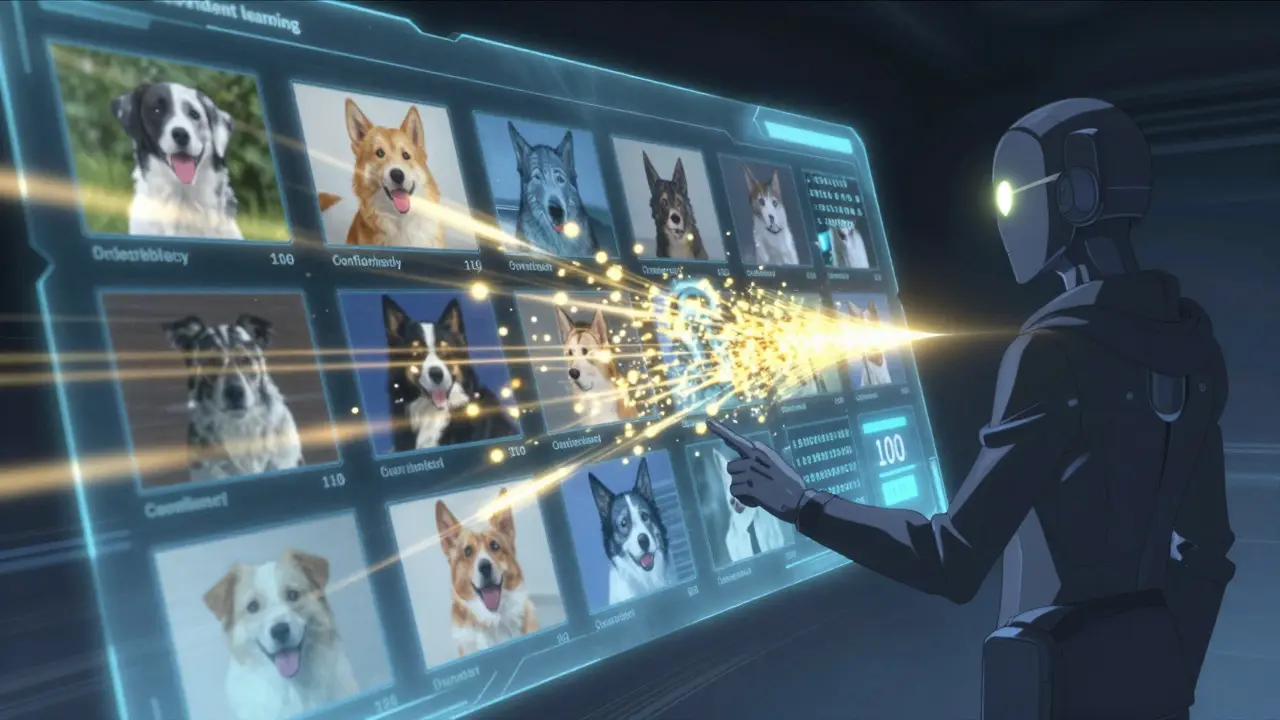
Three Ways to Detect Errors Automatically
You can’t manually review millions of records. You need algorithmic help. There are three primary methodologies used in the industry today.
1. Confident Learning with cleanlab
cleanlab uses a statistical approach called "confident learning." It estimates the joint distribution of label noise by comparing model predictions against ground truth labels. If your model is confident that an image is a "cat" but the label says "dog," and this happens consistently across similar samples, cleanlab flags it as a likely error.
This method requires programming expertise but offers high precision. Benchmarks show it identifies 78-92% of label errors with 65-82% precision. It works well for text classification, object detection (using COCO format), and multi-class problems. However, it struggles with highly imbalanced datasets (greater than 10:1 ratio) unless you tune the parameters carefully.
2. Multi-Annotator Consensus
If you have the budget, human redundancy is powerful. Label Studio’s case studies show that having three annotators per sample reduces error rates by 63% compared to single-annotator workflows. The trade-off is cost: labeling expenses increase by approximately 200%. But for high-stakes domains like medical imaging, that investment pays off. Disagreements between annotators often highlight ambiguous cases that need better guidelines rather than simple corrections.
3. Model-Assisted Validation
Tools like Encord Active use a trained model to audit the data. You run your current best model over the annotated dataset. If the model predicts a class with high confidence (e.g., 95%) but the label is different, that’s a red flag. Encord’s evaluation showed this method identifies 85% of label errors. It works best when your baseline model already has at least 75% accuracy. It’s a feedback loop: better data makes a better model, which finds more errors in the data.
Tool Comparison: Which One Fits Your Stack?
| Tool | Best For | Key Strength | Limitation |
|---|---|---|---|
| cleanlab | ML Engineers, Statisticians | High statistical rigor, open-source | Steep learning curve, requires coding |
| Argilla | NLP Teams, Hugging Face Users | User-friendly web interface, great integrations | Limited support for >20 labels in multi-label tasks |
| Datasaur | Enterprise Annotation Teams | Seamless integration with annotation platform | No object detection support, limited to tabular/text |
| Encord Active | Computer Vision Teams | Visual debugging, model-assisted validation | Requires significant compute (16GB+ RAM) |
G2’s Q4 2023 report shows cleanlab leads among ML engineers (42% market share), while Datasaur dominates enterprise teams (38%). Argilla is growing fast in academia. Choose based on your team’s technical skill level and data type.

How to Ask for Corrections Effectively
Finding errors is half the battle. Getting them fixed without slowing down production is the other half. Here is a practical workflow to manage corrections.
- Triangulate the Error: Don’t just send a list of "wrong" labels. Provide context. Show the model prediction, the original label, and the reason for the flag (e.g., "Model confidence 98%, Label mismatch"). This helps annotators understand *why* it was flagged.
- Use a Consensus Workflow: As recommended by Label Studio, have two additional annotators review each flagged error. This adds 30-60 minutes per sample but boosts correction accuracy from 65% to 89%. It prevents one annotator’s bias from becoming the new ground truth.
- Update Guidelines Immediately: If you find a cluster of errors related to a specific rule (e.g., everyone mislabels "scooters" as "bicycles"), update your labeling instructions right away. TEKLYNX found this reduces future errors by 47%.
- Maintain Audit Trails: Keep a log of every change. Who changed what and why? This is crucial for root cause analysis. If errors spike next month, you’ll know if it was a guideline change or a new annotator batch.
Dr. Rachel Thomas warns against relying solely on algorithms. Human oversight is essential, especially for minority classes. Algorithms might systematically flag rare examples as errors because they’ve never seen them before. Always have a human in the loop for final verification.
Pro Tips for Prevention
Detection is reactive; prevention is proactive. Implement these practices to reduce error rates before they happen:
- Version Control Your Taxonomy: Treat your label schema like code. Use Git or similar tools. When you add a new tag, ensure all previous data is reviewed or explicitly marked as "legacy" so models don’t get confused.
- Start Small, Scale Slowly: Pilot your annotation project with a small subset (100-500 samples). Check for inter-annotator agreement. If it’s low, refine guidelines before scaling to thousands.
- Use Active Learning: Prioritize labeling examples that your model is most uncertain about. MIT’s research shows this "error-aware active learning" speeds up correction by 25%.
- Regular Audits: Schedule quarterly audits of your dataset. Data drift happens. What was correct six months ago might be irrelevant today.
The market is moving toward integrated platforms. By 2026, Gartner expects label error detection to be a standard feature in all enterprise annotation tools. Standalone tools like cleanlab will evolve into modules within broader MLOps ecosystems. Get ahead of the curve by integrating these checks now.
What is the acceptable error rate for machine learning datasets?
There is no universal "acceptable" rate, as it depends on the application. For general consumer apps, 3-5% might be tolerable. For safety-critical systems like autonomous vehicles or medical diagnostics, error rates should be below 1%. Encord’s 2023 report shows commercial averages hover around 8.2%, which is often too high for production-grade models.
Can I use cleanlab for object detection tasks?
Yes, cleanlab supports object detection, but it requires your annotations to be in COCO format. It also needs model prediction probabilities for each bounding box. Be aware that it may struggle with datasets that have extreme class imbalance (greater than 10:1).
How much does multi-annotator consensus cost?
It increases labeling costs by approximately 200% compared to single-annotator workflows. However, it reduces error rates by 63%. For high-value projects, the ROI is positive because it saves time on re-training and debugging later.
Why do my models perform worse after correcting labels?
This usually indicates that the "corrections" introduced new biases or errors. Dr. Rachel Thomas warns that algorithmic detection can misidentify minority classes as errors. Always validate corrections with human experts, especially for rare or ambiguous cases.
Is manual review still necessary in 2026?
Yes. While tools like cleanlab and Encord Active automate detection, human judgment remains critical for ambiguous cases and guideline refinement. Automated tools are best used to prioritize which samples need human attention, not to replace humans entirely.