International Patent Expiration: How Timelines Vary Around the World
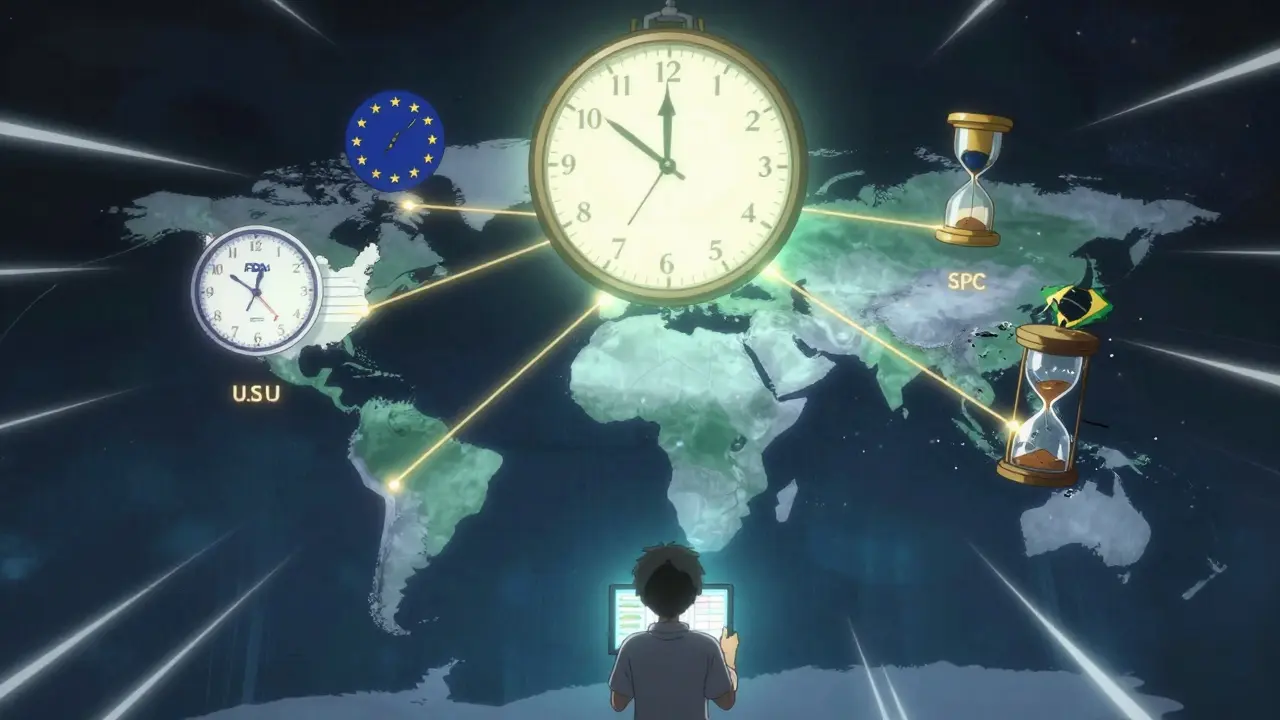
Most people think a patent lasts 20 years - and that’s true in theory. But if you’re managing a drug patent in Canada, a medical device patent in Japan, or a biotech invention in Brazil, the real expiration date could be months or even years different from what you expect. The 20-year rule isn’t a universal clock. It’s a starting point - and the clock ticks differently depending on where you are, what you’re patenting, and how the patent office handled your application.
Why the 20-Year Rule Isn’t the Whole Story
The 20-year patent term comes from the TRIPS Agreement, signed in 1994 and enforced by the World Trade Organization. Nearly every country with a functioning patent system now uses this standard. But that doesn’t mean all patents expire on the same day. The 20 years are counted from the earliest filing date - not the grant date. That’s crucial. If you file in the U.S. on January 1, 2020, and then file in Germany on December 1, 2020, claiming priority under the Paris Convention, your German patent still expires on January 1, 2040. The filing date is your anchor. But here’s where it gets messy. Before 1995, the U.S. gave patents 17 years from the issue date. Some older patents still in force today - especially in pharma - were granted under that old rule. So if a U.S. patent was issued in 1993, it might expire in 2010 under the old system, even though it was filed in 1989. That’s why you can’t just plug a date into a calculator and assume you know when a patent dies.How Countries Adjust the Clock
Most countries stick close to the 20-year baseline, but they all have ways to tweak it. The U.S. is the most complicated. The USPTO automatically adds time if they take too long to examine your patent. In 2022, the average patent got 558 extra days of protection just because of office delays. That’s almost 1.5 years. For pharmaceuticals, the Hatch-Waxman Act lets you apply for even more time - up to five years - to make up for the years lost waiting for FDA approval. That’s why some drug patents last well beyond 20 years from filing. Europe works differently. The European Patent Office grants a 20-year term, but then you can get a Supplementary Protection Certificate (SPC) if your product needed regulatory review. SPCs can add up to five years, and if your drug is meant for children, you can get an extra six months. So a drug patented in 2015 and approved by the EMA in 2022 might not lose protection until 2042 - that’s 27 years total. Japan and China both added patent term compensation rules in recent years. Japan gives extra time if examination takes more than three years. China started doing the same in 2021. Brazil doesn’t have a formal extension system, but because their patent office is backlogged by years, many patents expire before they’re even granted. That means companies lose protection long before the 20-year clock runs out.Utility Models: The Short-Term Alternative
Not all inventions get a 20-year patent. In countries like Germany, China, Japan, and South Korea, you can file for a utility model - a simpler, faster, cheaper form of protection. These usually last 6 to 10 years and don’t require a full examination. They’re perfect for mechanical devices, tools, or small tech upgrades that don’t need long-term exclusivity. But here’s the catch: utility models aren’t recognized everywhere. You can’t file one in the U.S. or Canada. So if you’re protecting a medical device, you might get 10 years in Germany but only 20 in the U.S. - and no protection at all in Australia unless you file a full patent.
When the Patent Dies Before 20 Years
A patent doesn’t just expire on its own. If you don’t pay the maintenance fees, it dies - no warning, no second chance. In the U.S., you have to pay at 3.5, 7.5, and 11.5 years after grant. Miss one, and your patent is gone. In Canada, you pay at 5, 10, and 15 years. In Mexico, you pay four times: at 5, 10, 15, and 20 years. In Switzerland, you pay just once - at grant. The fees vary wildly too. In the U.S., the 11.5-year fee is over $3,000. In India, it’s less than $100. But if you skip it in India, your patent still vanishes. This is why big pharma companies have teams dedicated to tracking renewal deadlines across dozens of countries. One missed payment in Brazil or South Korea can wipe out global exclusivity for a blockbuster drug.The PCT System: Delaying the Costs, Not the Clock
The Patent Cooperation Treaty (PCT) lets you file one application that covers over 150 countries. But it doesn’t give you a global patent. It just delays the decision. You have 30 or 31 months from your earliest filing date to enter the national phase - that’s when you pay for individual patents in each country. The 20-year term still starts from your original filing date. So if you file in Canada on March 1, 2023, and wait until October 2025 to enter the U.S. and EU, your patents still expire on March 1, 2043. You didn’t buy more time. You just bought more breathing room to decide where to spend your money. Countries like Canada, China, and most of Europe allow 31 months. The U.S. only gives 30. Japan lets you stretch to 32 months if you ask and pay a fee. Missing the deadline means losing rights in that country forever. No exceptions.The New EU Unitary Patent: Simpler, But Not Different
In June 2023, the European Union launched the Unitary Patent. It’s a single patent that covers 17 EU countries without needing separate validations in each. But here’s the key: the term is still 20 years from filing. No extension. No change. It just makes the process less messy. You still need an SPC if you’re selling a drug. You still have to pay maintenance fees. The expiration clock didn’t move - you just saved on paperwork.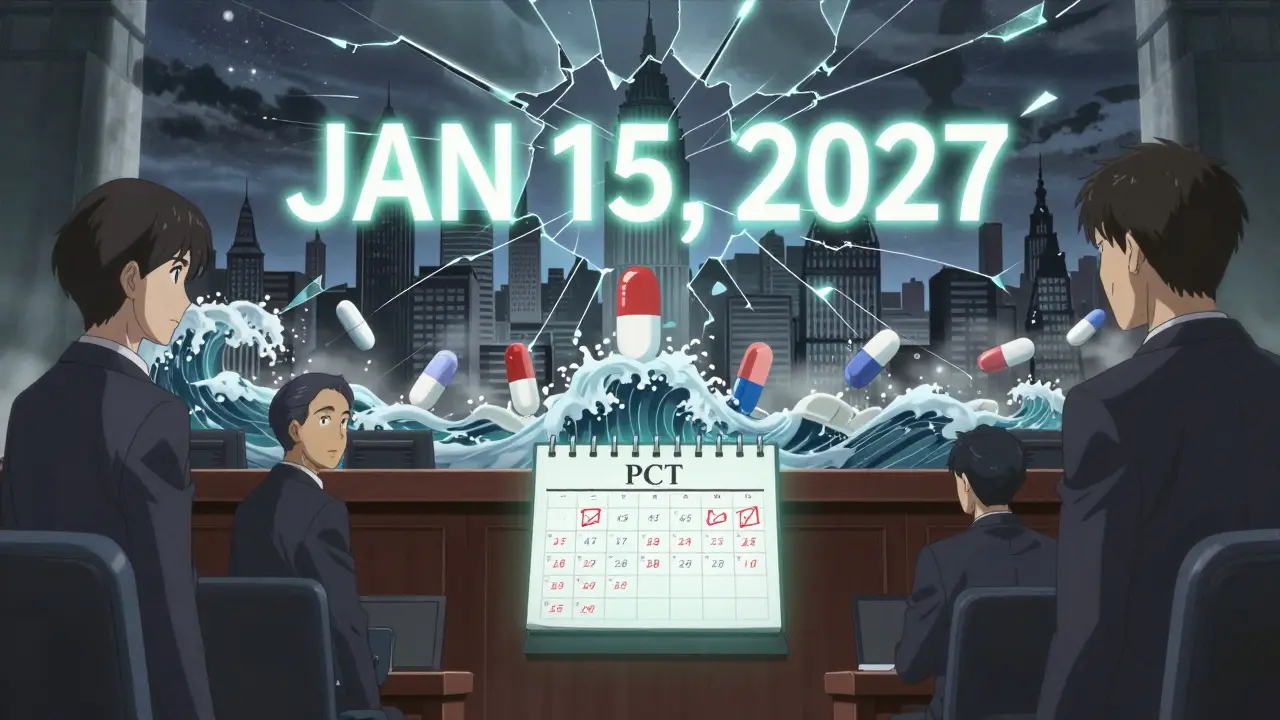
What This Means for Drug Companies and Innovators
For a pharmaceutical company launching a new cancer drug, patent strategy isn’t about one patent. It’s about a web of patents across 50+ countries. You might have a core patent in the U.S. with a 5-year SPC. A second patent in Europe with a 6-year SPC. A utility model in China for the delivery device. A pending patent in Brazil that won’t be granted until 2030 - meaning you only get 13 years of protection there. And all of them have different maintenance fee schedules. That’s why companies like Pfizer and Johnson & Johnson track expiration dates down to the day. A patent expiring in Germany on January 15, 2027, might trigger a generic competitor to launch there - even if your U.S. patent still has two years left. You can’t just wait. You need to plan for price erosion, licensing deals, or new formulations before the first patent falls.What You Need to Do
If you’re filing internationally, here’s what matters:- Record your earliest filing date - that’s your 20-year anchor.
- Know the national phase deadlines: 30 months for the U.S., 31 for Canada and most of Europe.
- Track maintenance fees in every country - set calendar alerts.
- Check if your country offers term extensions for regulatory delays (U.S., EU, Japan, China - yes; Australia - yes; India - no).
- Don’t assume a utility model gives you global protection - it doesn’t.
- Use the PCT to delay costs, not to extend protection.
Arun ana
December 16, 2025 AT 21:50Wow, this is wild 😮 I had no idea patent timelines were this chaotic. In India, we don’t get term extensions, and the backlog is insane - my cousin’s startup lost patent rights because the office took 7 years just to review it. Meanwhile, US pharma companies are raking in 25+ years of exclusivity. It’s like the system rewards rich countries and punishes everyone else. 🤷♂️
Dave Alponvyr
December 17, 2025 AT 11:14So you’re telling me I paid $10k for a patent that expires in 12 years because I forgot to pay a fee in Brazil? 😂 Classic.
Tiffany Machelski
December 19, 2025 AT 10:29thsi was so helpful!! i just filed a pct and now i get why the 30 month thing matters... i was so confused before 😅
SHAMSHEER SHAIKH
December 21, 2025 AT 04:50Let us not forget, dear innovators, that the patent system is not merely a legal construct - it is a reflection of global economic power dynamics. The disparity between nations that compensate for regulatory delays and those that do not - such as India and Brazil - reveals a deeper truth: innovation is not equally valued across borders. The 20-year rule? A mirage. The real patent life? Determined by bureaucracy, capital, and geopolitical clout. We must demand equity - not just efficiency - in intellectual property law. 🌍⚖️
James Rayner
December 22, 2025 AT 17:03It’s kind of beautiful, in a tragic way, that we’ve built this whole global system around the idea of ‘fair time’ - but time itself is manipulated by who you are, where you are, and how much money you have. A patent isn’t a right. It’s a privilege wrapped in paperwork. And the people who suffer most? The ones who can’t afford to play the game. 🤔
Kim Hines
December 23, 2025 AT 07:10So the US gets extra time for delays, but India doesn’t? Yeah. That tracks.
Cassandra Collins
December 24, 2025 AT 05:09Wait… what if the patent offices are ALL just covering up for Big Pharma? Like… what if the ‘delays’ are intentional? So they can get extra years? And the ‘maintenance fees’? That’s just a way to kill off small inventors. I’ve read about this. The WHO is in on it. They want you to pay or die. 🕵️♀️💊
Mike Smith
December 24, 2025 AT 14:34Thank you for this comprehensive breakdown - it’s rare to see such clarity on an otherwise opaque topic. For any emerging innovator reading this: your patent strategy is your business strategy. Don’t treat it as an afterthought. Map every jurisdiction. Set automated reminders. Consult local counsel. The difference between a protected asset and a public domain relic? Often, it’s a single missed payment. You’ve got the knowledge now - act on it. The world needs your innovation - don’t let bureaucracy steal it.