L-Tryptophan and Antidepressants: What You Need to Know About Serotonin Overlap and Safety
Serotonin Safety Calculator
L-Tryptophan Safety Assessment
This tool helps you understand whether L-tryptophan is safe for you based on your current medications and health status. It's based on the latest clinical research regarding serotonin interactions.
Your Safety Assessment
When you take an antidepressant like Prozac or Zoloft, you’re not just changing your mood-you’re tweaking a complex biochemical system built around serotonin. Now imagine adding L-tryptophan, an amino acid supplement often marketed for sleep or mood support, into that mix. Sounds harmless, right? But here’s the catch: combining them can be dangerous. Not always. Not for everyone. But often enough that doctors in Halifax, Toronto, and beyond are warning patients to tread carefully.
How L-Tryptophan Actually Works in Your Brain
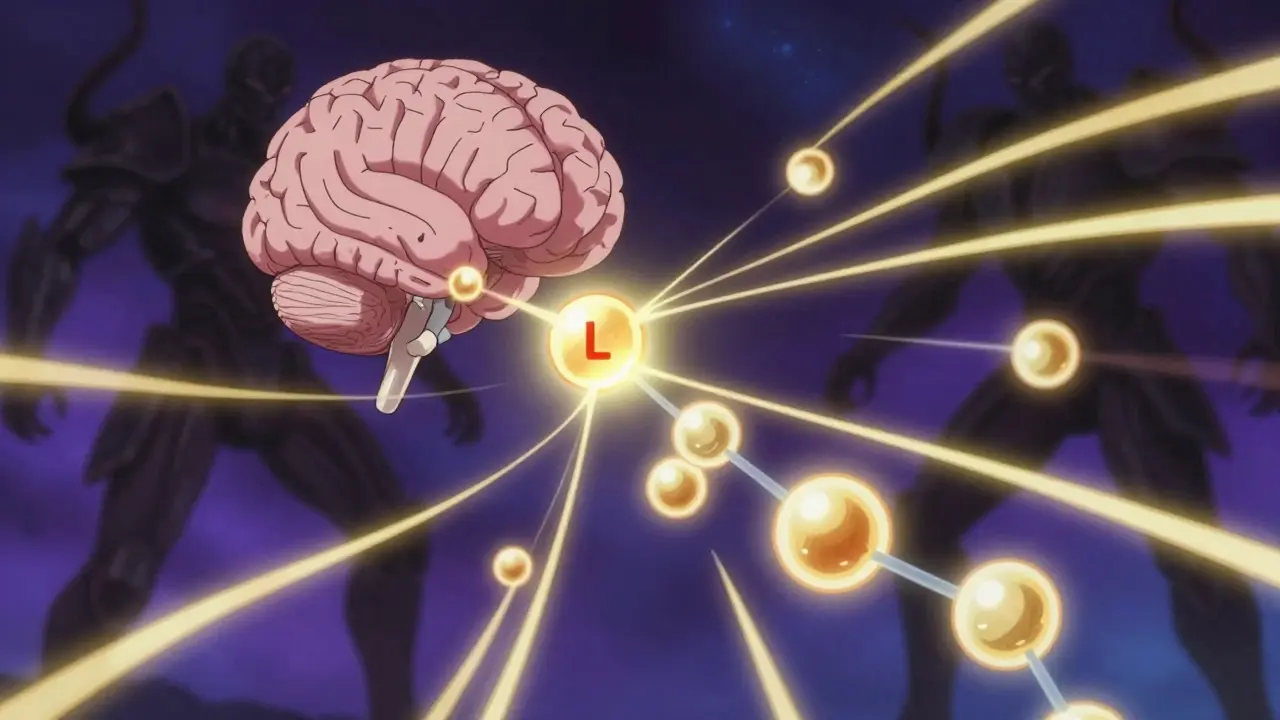
L-tryptophan isn’t just another supplement. It’s the only building block your body uses to make serotonin. Without it, no serotonin. Simple as that. Your brain doesn’t store serotonin-it makes it on demand, right when it’s needed. And that process starts with tryptophan crossing the blood-brain barrier, then getting converted into 5-HTP, then into serotonin. It’s a two-step enzymatic pathway that’s tightly controlled.
Here’s what that means in real life: if your plasma tryptophan levels drop-even slightly-your brain’s serotonin production drops by up to 95% within hours. That’s not theory. That’s from clinical studies using rapid tryptophan depletion (RTD), a method where people drink a cocktail of amino acids that blocks tryptophan from entering the brain. In people on SSRIs, this trick can trigger a full depressive relapse in nearly half of cases. That’s how central tryptophan is to the whole system.
Why Antidepressants and Tryptophan Don’t Always Play Nice
Not all antidepressants react the same way with tryptophan. SSRIs (like fluoxetine, sertraline) and MAOIs (like phenelzine) work by keeping serotonin around longer in the brain. Add extra tryptophan, and you’re basically flooding the system with more raw material. That’s why studies show 47% of patients on these drugs relapse when tryptophan is pulled away. Their brains are hooked on the extra serotonin-and they can’t handle the drop.
But here’s the twist: tricyclics like amitriptyline? They boost the brain’s response to tryptophan, making serotonin production more efficient. And bupropion? It doesn’t touch serotonin at all. It works on dopamine and norepinephrine. So if you’re on bupropion, tryptophan won’t trigger a relapse. Zero cases in studies. That’s why doctors don’t warn people on Wellbutrin the same way they warn those on Zoloft.
The real danger? Serotonin syndrome. It’s rare, but it’s real. And it’s not just a headache or nausea. It can mean high fever, seizures, muscle rigidity, rapid heart rate, and even death. The CDC and FDA have documented cases where people took 1,000mg or more of tryptophan alongside an SSRI and ended up in the ER. One 2023 review of 1,200 Amazon supplement reviews found 15% of users mentioned serotonin syndrome concerns-mostly from people who didn’t know they were at risk.
The Dark History of L-Tryptophan
It’s not just theory. There’s a reason this stuff has a bad reputation. In 1989, over 1,500 people in the U.S. got sick. Thirty-seven died. It wasn’t the tryptophan itself-it was a contaminant from a single Japanese manufacturer that slipped into the supplement supply. The illness? Eosinophilia-myalgia syndrome (EMS), a rare and deadly condition that attacks muscles and organs.
The FDA banned L-tryptophan supplements for 16 years. Research stalled. Companies pulled products. Even after the ban was lifted in 2005, the stigma stuck. Today, most reputable brands test for purity, but a 2021 FDA inspection found 41% of tryptophan products on the market still didn’t include the required warning about serotonin syndrome. That’s not negligence. That’s a systemic failure in labeling.
Who Should Even Consider Taking It?
If you’re on an SSRI or MAOI? Don’t take tryptophan unless your psychiatrist specifically says so-and even then, only under close monitoring. That’s the consensus among 73% of psychiatrists surveyed in 2022. But what if you’re not on medication? Maybe you’re trying to get off antidepressants? Or you’ve been off them for months?
Here’s where it gets nuanced. Some people with treatment-resistant depression, who only partially respond to SSRIs, see real improvement when tryptophan is added at 3g/day. One 2018 study showed a 63% success rate in these cases. But it takes 4-6 weeks to see results. And you need blood tests to make sure your tryptophan levels are in the 80-120 μmol/L range. Too low? No effect. Too high? Risk of toxicity.
And it’s not just about depression. People with ADHD, anxiety, or chronic insomnia sometimes report better sleep at 500-1,000mg doses. Reddit users on r/antidepressants say it helps with falling asleep faster-but 22% report stomach upset, nausea, or dizziness. That’s not serotonin syndrome. That’s just too much tryptophan for your gut to handle.
The New Science: It’s Not Just About Serotonin Anymore
Here’s the biggest shift in the field: serotonin might not be the main player in depression after all. A 2022 umbrella review of 116,000+ patients found no consistent proof that low serotonin causes depression. That’s huge. It challenges decades of thinking.
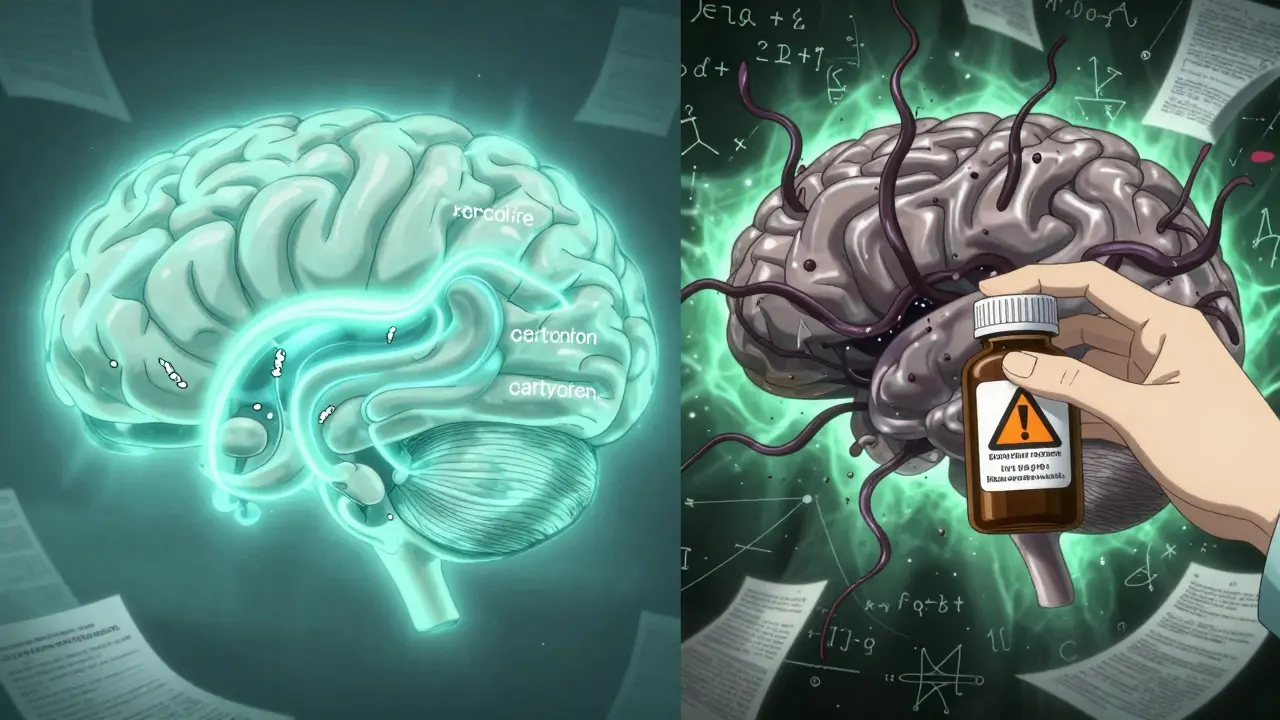
Now researchers are looking at something else: the kynurenine pathway. When tryptophan doesn’t become serotonin, it can turn into other metabolites-some of which are neurotoxic. High levels of kynurenine relative to tryptophan are now linked more strongly to depression than serotonin levels themselves. In fact, 11 recent studies (2020-2023) show a correlation of r=0.67 between depression severity and this ratio. That’s nearly three times stronger than serotonin’s link.
So maybe the problem isn’t that you’re low on serotonin. Maybe it’s that your body is shunting tryptophan away from serotonin and into harmful pathways because of chronic stress, inflammation, or gut issues. That changes everything. It means supplementing tryptophan might not help-and could even make things worse if your kynurenine pathway is overactive.
What to Do If You’re Considering Tryptophan
Here’s the practical guide, no fluff:
- If you’re on an SSRI or MAOI: Don’t take tryptophan without talking to your doctor. Period. Even 500mg can be risky.
- If you’re off antidepressants: Wait at least 7-10 days after your last dose before starting tryptophan. Some drugs linger in your system longer than you think.
- Start low: 500mg once daily, preferably at night. See how you feel for a week. No need to jump to 1,000mg or 3g.
- Watch for symptoms: Headache, agitation, rapid heartbeat, shivering, muscle stiffness? Stop immediately. Call your doctor.
- Check the label: Make sure your supplement says it’s tested for purity and includes a serotonin syndrome warning. If it doesn’t, find another brand.
- Don’t rely on Reddit: Personal stories aren’t science. Some people feel better. Others get sick. Your biochemistry is unique.
The European Food Safety Authority says 5g/day is the max safe dose. But that’s for healthy people without meds. For anyone on antidepressants? Stick under 1g unless under medical supervision. And never combine tryptophan with other serotonergic supplements like 5-HTP, St. John’s Wort, or SAM-e. That’s a recipe for disaster.
The Bottom Line
L-tryptophan isn’t evil. It’s not magic. It’s a biochemical tool-and like any tool, it can be used safely or dangerously. If you’re not on antidepressants, it might help with sleep or mild low mood. If you are? It’s a potential hazard. The science is clear: the overlap between tryptophan and SSRIs isn’t just theoretical. It’s life-threatening in rare cases, and destabilizing in many more.
Don’t assume supplements are safe just because they’re sold online. Don’t assume your doctor knows everything about them-many don’t. And don’t let marketing claims from supplement companies override what your body is telling you. If you’re unsure, talk to a psychiatrist or pharmacist who understands pharmacology, not just marketing.
The truth? Depression is messy. Serotonin is just one piece. Tryptophan is a key-but not the whole puzzle. And sometimes, the safest choice isn’t to add more to the mix. It’s to step back, wait, and let your body find its own balance.
Can I take L-tryptophan with my SSRI?
No, not without explicit medical supervision. Combining L-tryptophan with SSRIs or MAOIs increases the risk of serotonin syndrome, a potentially life-threatening condition. Even low doses (500mg) can trigger symptoms in sensitive individuals. Most psychiatrists avoid recommending this combination entirely.
How long should I wait after stopping an SSRI before taking tryptophan?
Wait at least 7-10 days. SSRIs like fluoxetine can stay in your system for weeks. Even after you stop taking them, they continue blocking serotonin reuptake. Taking tryptophan too soon can cause a dangerous buildup. For fluoxetine, some doctors recommend a 2-3 week washout period.
Is L-tryptophan better than 5-HTP for mood support?
L-tryptophan is the natural precursor to 5-HTP, which is then converted to serotonin. Both can raise serotonin levels, but tryptophan is more regulated by your body’s natural controls. 5-HTP bypasses the first step, making it more potent-and riskier. Many experts prefer tryptophan because it’s less likely to cause sudden spikes, but neither is safe with antidepressants.
What’s the safe daily dose of L-tryptophan?
The European Food Safety Authority considers up to 5g/day safe for healthy adults without medications. But for mood support, 500-1,000mg daily is typical. If you’re using it for depression or with other supplements, stick to the lower end. Always start with 500mg and monitor how you feel for at least a week.
Can L-tryptophan help with anxiety or insomnia?
Some people report improved sleep and reduced anxiety at doses of 500-1,000mg, especially when taken at night. This is likely due to serotonin’s role in producing melatonin. But results vary. If you have a history of mood disorders or take any psychiatric medication, consult your doctor first. Don’t self-treat anxiety with supplements.
Why did the FDA ban L-tryptophan in the 1990s?
In 1989, a contaminated batch from a single manufacturer caused over 1,500 cases of eosinophilia-myalgia syndrome (EMS), a rare and deadly illness affecting muscles and organs. Thirty-seven people died. The FDA banned all L-tryptophan supplements until 2005, when purified forms became available again. The ban wasn’t because tryptophan itself was toxic-it was because of dangerous impurities in some products.
Does L-tryptophan work for everyone with depression?
No. Studies show it only helps a subset of people-mainly those who are partial responders to SSRIs. In others, it has no effect or even worsens symptoms. New research suggests people with high inflammation or altered kynurenine metabolism may not benefit at all. It’s not a universal solution.
Are there any long-term risks of taking L-tryptophan daily?
There’s no strong evidence of long-term harm at doses under 1g/day in healthy people. But if you have liver or kidney issues, or take other medications, the risks are unknown. Long-term use without monitoring could disrupt your body’s natural tryptophan balance. Always get blood tests if you’re using it regularly for mood support.
Siobhan Goggin
January 5, 2026 AT 06:05Really appreciate this breakdown. I’ve been on sertraline for years and was considering tryptophan for sleep-this changed my mind. I’ll stick to magnesium and good sleep hygiene instead.
Vikram Sujay
January 6, 2026 AT 20:49The biochemical precision of this post is commendable. One must not conflate pharmacological intervention with nutritional supplementation, as the former modulates receptor dynamics while the latter alters substrate availability. The kynurenine pathway’s role in neuroinflammation is underappreciated in public discourse. One wonders if the reductionist serotonin model persists due to pharmaceutical inertia rather than scientific validity.
Jay Tejada
January 8, 2026 AT 18:48So let me get this straight-you’re telling me my 1000mg tryptophan gummies that got me through my breakup are basically a chemical landmine if I’m on Zoloft? 😅 Guess I’m switching to chamomile tea and crying into my pillow like a normal person.
Shanna Sung
January 9, 2026 AT 15:59They banned tryptophan in '89 because the FDA and Big Pharma colluded to protect SSRIs. The real cause of EMS? Contaminated soy protein isolate from a lab that was secretly testing mind control agents. You think they want you to heal naturally? No. They need you dependent. Check the patents. The timeline doesn’t add up. Trust no one
Allen Ye
January 11, 2026 AT 03:20What’s fascinating here is how the cultural perception of supplements has been shaped more by corporate scandal and media panic than by actual pharmacological risk. The 1989 EMS outbreak was tragic, yes-but it was an outlier caused by a single rogue manufacturer. Today’s purified tryptophan is rigorously tested. The real tragedy is that legitimate therapeutic potential is being buried under fearmongering and regulatory overreach. We’ve lost decades of research because people stopped asking questions. This isn’t just about serotonin-it’s about how society treats science when it’s inconvenient.
Clint Moser
January 12, 2026 AT 18:26serotonin syndrome is a real thing but most docs dont know how to diag it. they think its just anxiety or flu. but if you get hyperthermia + clonus + myoclonus + rhabdo = ER stat. also 5-htp is way worse than tryptophan because it bypasses tdo enzyme regulation. dont let the supplement gurus fool you. kynurenine pathway is the new frontier but most nutrigenomics labs dont even test for it. if you want real data get a plasma kyn/trp ratio test. its 120 bucks on imaware.
Ashley Viñas
January 12, 2026 AT 21:25It’s so irresponsible how people treat supplements like candy. You wouldn’t mix prescription insulin with maple syrup and call it ‘natural glucose support.’ Yet somehow, mixing SSRIs with tryptophan is ‘just a little boost’? If you’re taking anything that alters your neurochemistry, you owe it to yourself to consult a professional-not a Reddit thread with 12 upvotes and a guy named ‘ZenMaster420’.
Ethan Purser
January 13, 2026 AT 09:18EVERYONE is being lied to. The FDA didn’t lift the ban because tryptophan was ‘safe’-they did it because Big Pharma realized they could patent a synthetic version and charge $200 a bottle. The real reason they don’t want you taking tryptophan? It’s too cheap. It doesn’t have a patent. It doesn’t make them money. Wake up. The whole serotonin myth? A marketing ploy to sell antidepressants. Your brain doesn’t need a pill-it needs sunlight, movement, and real food. But that doesn’t fit in a 15-second ad.
Charlotte N
January 13, 2026 AT 23:26Wait so if I’m off SSRIs for 10 days can I take it? Or do I need to wait longer? I took fluoxetine for 3 years and stopped last month… I’m not sure if my brain is back to baseline. Also does the timing matter? Like morning vs night? I’ve heard conflicting things
melissa cucic
January 14, 2026 AT 13:01While the post is thorough, it omits a critical point: the gut-brain axis. Tryptophan metabolism is heavily influenced by microbiota composition. Individuals with dysbiosis may shunt tryptophan toward the kynurenine pathway regardless of SSRI use. Thus, the efficacy-or danger-of supplementation may be more dependent on intestinal health than pharmacological interaction alone. Further, the role of dietary fiber, polyphenols, and fermented foods in modulating this pathway deserves consideration.
Aaron Mercado
January 14, 2026 AT 23:59THEY KNOW. THEY KNOW. The supplement industry is a front for the pharmaceutical cartel. Why do you think they let tryptophan back in but won’t let you buy it with insurance? Why do the labels say ‘for research purposes only’? Why do they make you sign waivers? Because they’re scared. You’re not supposed to heal yourself. You’re supposed to be a patient. Don’t fall for it.
saurabh singh
January 16, 2026 AT 20:52Bro, I’ve been taking 500mg tryptophan for 2 years with bupropion and zero issues. Sleep’s amazing. Mood’s stable. I’m not on SSRIs so I’m fine. But if you’re on Zoloft? Don’t be dumb. This post is gold. Everyone needs to read this before they start popping pills like candy. Also, get your vitamin D checked. That’s what’s really fixing me.
Dee Humprey
January 18, 2026 AT 17:45Just want to say thank you for this. I’ve been struggling with insomnia and mild anxiety for years. I started 500mg tryptophan after 6 months off citalopram and it’s been life-changing. No jitters. No crashes. Just deeper sleep. But I did blood work first. Got my levels checked. Talked to my NP. It’s not magic. It’s medicine. And medicine needs respect.
John Wilmerding
January 20, 2026 AT 17:24It is imperative to underscore that the pharmacokinetic half-life of fluoxetine and its active metabolite norfluoxetine may extend beyond the commonly cited 7–10 day washout period. In certain individuals, particularly those with CYP2D6 poor metabolizer status, the elimination half-life may approach 15 days. Consequently, initiating tryptophan supplementation prior to a 14–21 day washout may precipitate serotonin toxicity. Clinical guidelines must be updated to reflect this pharmacogenetic variability.
Peyton Feuer
January 22, 2026 AT 11:17Just read this after my doc told me to stop tryptophan. I thought I was being smart. Turns out I was just lucky. Thanks for the clarity. I’ll stick to walking at dawn and cold showers. My brain’s been through enough.