Liver Disease and Drug Metabolism: How Reduced Clearance Affects Medication Safety
Liver Medication Dose Calculator
How to Use This Tool
This calculator estimates appropriate medication dose adjustments based on liver function tests and drug type. Use this tool to understand why dose adjustments may be necessary for your medications.
Adjusted Dose Recommendation
Select your liver assessment type, drug type, and specific drug to see dose recommendations.
When your liver is damaged, it doesn’t just affect digestion or energy levels-it changes how every pill you take works in your body. Many people assume that if they’re taking a common medication, the dose printed on the bottle is safe no matter what. But for someone with liver disease, that assumption can be dangerous. The liver doesn’t just process toxins-it’s the main factory for breaking down drugs. When it’s sick, that factory slows down, backs up, or even shuts off parts of the line. And that means drugs can build up to toxic levels, or worse, not work at all.
Why the Liver Matters for Every Drug You Take
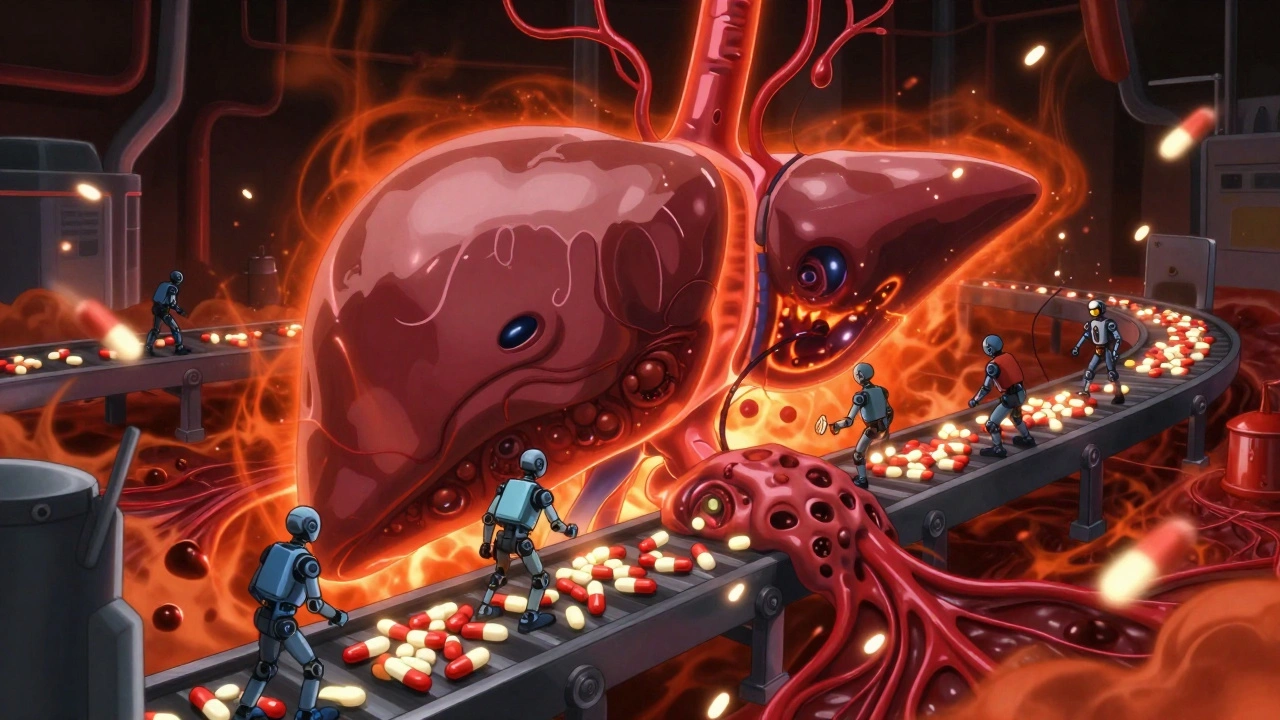
About 70% of all prescription medications rely on the liver to break them down before they leave your body. This isn’t just about alcohol or painkillers. Antibiotics, blood thinners, antidepressants, even some heart medications-all go through the liver. The liver uses enzymes, especially the CYP450 family, to chemically alter drugs so they can be excreted. In healthy people, this happens smoothly. In someone with cirrhosis or advanced liver disease, those enzymes drop by 30% to 60%. CYP3A4, which handles more than half of all drugs, can be cut in half. CYP2E1, which processes acetaminophen and some anesthetics, drops even more. It’s not just enzymes. The liver also uses transport proteins like OATP1B1 to pull drugs into liver cells. In cirrhosis, these transporters can lose up to 70% of their function. That means drugs don’t even get to the right spot to be broken down. They just stay in the bloodstream longer, increasing side effects.High-Extraction vs. Low-Extraction Drugs: What’s the Difference?
Not all drugs are affected the same way. Doctors divide them into two groups based on how easily the liver can clear them. High-extraction drugs (like fentanyl, morphine, and propranolol) rely heavily on blood flow. If the liver is scarred, blood can’t flow through it properly. Up to 40% of blood bypasses the liver entirely through shunts. That means these drugs aren’t broken down on the first pass-so more of the drug enters your system. A standard dose of morphine in a cirrhotic patient can cause extreme drowsiness or even breathing problems. Low-extraction drugs (like diazepam, lorazepam, and methadone) depend on enzyme activity, not blood flow. These are the real troublemakers in liver disease. Because they’re cleared slowly to begin with, even a small drop in enzyme function causes big changes. A 30% drop in CYP3A4 can double the half-life of these drugs. That means a single dose might stay in your body for days instead of hours.Real-World Examples: What Happens When Doses Aren’t Adjusted
Take warfarin, a blood thinner. In healthy people, the liver breaks it down quickly. In cirrhosis, clearance drops by 30-50%. If a patient gets the usual 5 mg dose, their INR can spike dangerously high-leading to internal bleeding. Studies show that reducing the dose by 25-40% keeps INR in range without increasing clot risk. Benzodiazepines are another problem. Diazepam has active metabolites that hang around for days. In liver disease, those metabolites build up, causing confusion, dizziness, and even coma. That’s why doctors switch to lorazepam, which doesn’t form active metabolites and is cleared more reliably. Even then, the dose needs to be cut by 25-40%. Antibiotics like ceftriaxone are often given at standard doses in cirrhotic patients-but research shows peak levels can be 60% higher than normal. That increases the risk of diarrhea, allergic reactions, and even kidney damage. And then there’s the silent danger: opioids. Even if liver function seems “mild,” patients with cirrhosis are 30-50% more sensitive to opioids. A dose that’s fine for a healthy person can trigger hepatic encephalopathy-a brain disorder caused by toxin buildup. One patient might seem fine on 10 mg of oxycodone. Another, with similar lab results, might slip into confusion after just 5 mg.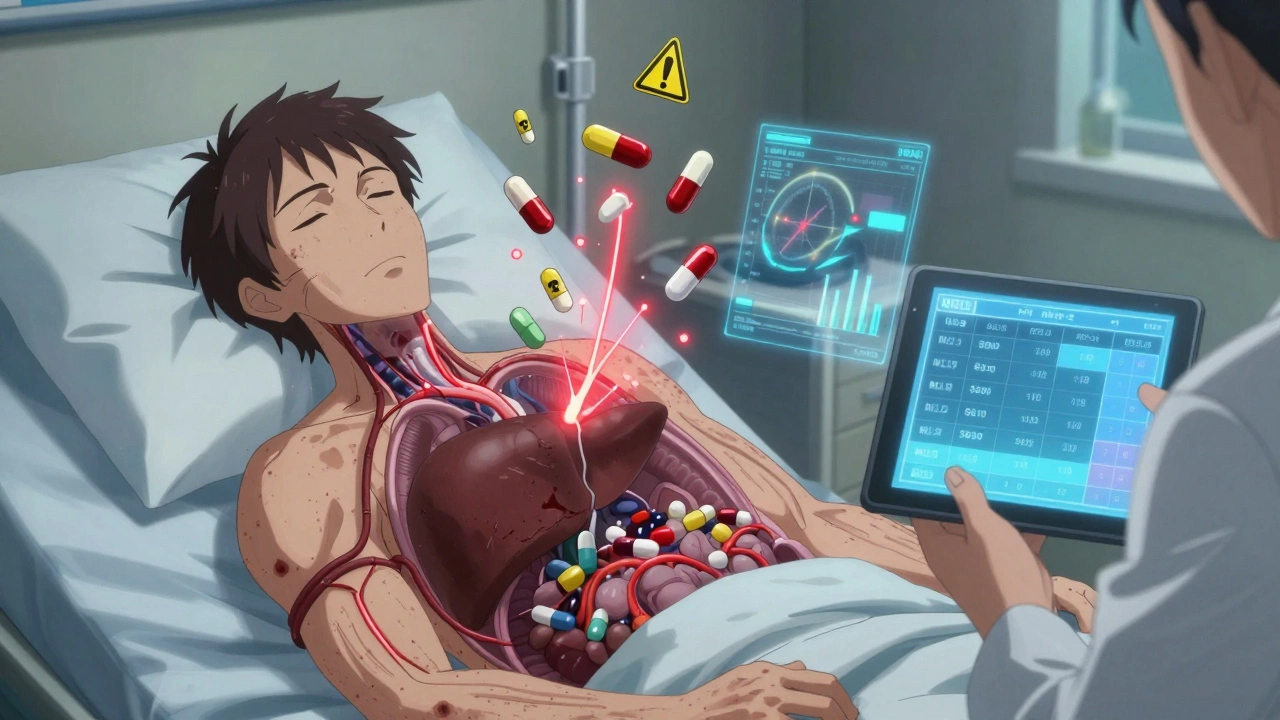
How Doctors Measure Liver Damage-And Why Lab Tests Lie
You might think: “My bilirubin is normal, so I’m fine.” But that’s not true. Liver function tests like ALT, AST, or bilirubin don’t reliably predict how well your liver can metabolize drugs. Two patients with the same bilirubin level can have wildly different drug clearance rates. That’s why doctors use tools like the Child-Pugh score and MELD score. Child-Pugh looks at five factors: bilirubin, albumin, INR, ascites, and brain function. Class A (mild), B (moderate), C (severe). In Child-Pugh B, drug clearance drops 25-45%. In Class C, it can drop by 70% or more. MELD score, based on bilirubin, INR, and creatinine, is even more precise. For every 5-point increase above 10, drug clearance drops by about 15%. A MELD of 15? Expect 30% less clearance. A MELD of 25? You’re looking at 60% less. The problem? Many doctors still rely on single numbers. A normal ALT doesn’t mean the liver is working right. A low albumin doesn’t mean the enzymes are fine. That’s why therapeutic drug monitoring-measuring actual drug levels in the blood-is critical for drugs like warfarin, phenytoin, or cyclosporine.What Drugs Are Safe? And When Can You Skip Dose Changes?
Not every drug needs adjustment. The FDA says two types are usually safe:- Drugs cleared almost entirely by the kidneys (like sugammadex, which is 96% excreted unchanged in urine)
- Drugs with minimal liver metabolism (less than 20%) and a wide safety margin (like some antihistamines or low-dose NSAIDs)

New Tools Are Changing the Game
The old way-guessing doses based on Child-Pugh-is outdated. New tools are making dosing more precise. Physiologically based pharmacokinetic (PBPK) modeling now predicts drug levels in liver disease with 85-90% accuracy. These models don’t just use lab values. They factor in blood flow, liver size, enzyme levels, shunting, and even genetic differences. A patient with a CYP2C9*3 mutation? That’s a slow metabolizer. Add liver disease? Their warfarin dose might need to be cut by 60%, not 30%. The FDA now encourages drug makers to use PBPK models in new drug applications. In 2023, 18 new drugs came with specific liver-disease dosing instructions-up 25% from the year before. By 2030, most drug labels will include model-based dosing, not just “use caution.”What You Should Do Now
If you or someone you care for has liver disease:- Ask your doctor: “Is this drug cleared by the liver?”
- Ask: “What’s my Child-Pugh or MELD score?”
- Ask: “Do I need a lower dose? Or a different drug?”
- Never take new medications without checking with your pharmacist or hepatologist.
- If you feel unusually sleepy, confused, or dizzy after starting a new drug-call your doctor immediately.
Why This Isn’t Just a ‘Liver Problem’-It’s a System-Wide Risk
Twenty-two and a half million Americans have chronic liver disease. That’s 1 in 15 people. And most of them are on at least one medication. The risk isn’t theoretical. In one study, patients with advanced cirrhosis who got standard doses of antivirals had a 22.7% chance of treatment failure-because the drugs didn’t clear properly. That’s not just a missed cure. It’s a missed life. The good news? Awareness is growing. Pharmacists are now leading dose adjustment clinics. Hospitals are using electronic alerts that flag high-risk drugs for cirrhotic patients. The global market for therapeutic drug monitoring in liver disease is set to hit $1.24 billion by 2026. But awareness isn’t enough. Action is. Every pill you take is a conversation between your body and the drug. When your liver is sick, that conversation changes. You can’t ignore it. You can’t assume. You have to ask. You have to check. You have to adjust. Because in liver disease, the right dose isn’t the one on the bottle. It’s the one your body can handle.Can liver disease make my medications less effective?
Yes, in some cases. While most drugs accumulate to toxic levels in liver disease, a few rely on the liver to turn them into active forms. For example, codeine needs to be converted to morphine by CYP2D6. If your liver can’t do that, you won’t get pain relief-even if you take the full dose. The same can happen with prodrugs like clopidogrel or tamoxifen. If your liver can’t activate them, they won’t work.
Are over-the-counter drugs safe if I have liver disease?
Not always. Many OTC drugs are processed by the liver. Acetaminophen (Tylenol) is the biggest risk-even 2,000 mg daily can harm a damaged liver. NSAIDs like ibuprofen or naproxen can worsen kidney function and increase bleeding risk. Antacids with magnesium or aluminum can build up and cause nerve or muscle problems. Always check with your doctor or pharmacist before taking anything OTC.
Why do some people with cirrhosis tolerate drugs better than others?
Because liver disease isn’t one-size-fits-all. Two people with the same Child-Pugh score can have different enzyme activity due to genetics, alcohol history, or fat buildup. A person with fatty liver disease (MASLD) might have reduced CYP3A4 even before scarring. Someone with hepatitis C might have different enzyme patterns than someone with alcohol-related cirrhosis. That’s why personalized dosing-using MELD scores, genetic testing, and drug monitoring-is becoming standard.
Can liver damage from drugs be reversed?
It depends. If the damage is mild and caught early-like from a single overdose of acetaminophen-the liver can regenerate. But in cirrhosis, the scarring is permanent. What you can reverse is drug toxicity. Stopping the harmful drug and adjusting doses can prevent further damage and let the liver stabilize. That’s why early detection and dose changes matter more than trying to fix the scarring.
How often should drug levels be checked in liver disease?
For drugs with a narrow therapeutic index-like warfarin, phenytoin, digoxin, or cyclosporine-levels should be checked every time the dose changes, and then every 2-4 weeks until stable. After that, monthly checks are often enough. But if you get sick, start a new drug, or your liver function changes, check again. Don’t wait for symptoms. By the time you feel dizzy or confused, it’s already too late.
What’s the biggest mistake doctors make with liver patients?
Assuming lab values reflect drug clearance. A normal ALT or bilirubin doesn’t mean the liver is metabolizing drugs properly. The biggest error is giving standard doses because “the numbers look okay.” Another is delaying dose adjustments until after an adverse event happens. Prevention beats reaction every time.
Is it safe to take supplements with liver disease?
Many are not. Milk thistle, green tea extract, kava, and high-dose vitamin A are all processed by the liver and can cause injury. Even “natural” doesn’t mean safe. In one study, 20% of liver injury cases in people with cirrhosis were linked to herbal supplements. Always tell your doctor what you’re taking-even if you think it’s harmless.
Can diet or alcohol affect how drugs work in liver disease?
Yes, significantly. Alcohol directly inhibits CYP enzymes and can double drug levels. Grapefruit juice blocks CYP3A4 and can cause dangerous spikes in statins, blood pressure meds, and sedatives. High-fat meals can slow stomach emptying, delaying drug absorption. Protein intake affects albumin levels, which changes how much free drug is circulating. There’s no one-size-fits-all diet, but avoiding alcohol and grapefruit is non-negotiable.
Audrey Crothers
December 12, 2025 AT 12:07My mom has cirrhosis and I didn’t realize how dangerous regular meds could be until she nearly went into a coma from a simple benzo. We switched her to lorazepam and cut the dose in half-she’s been stable since. Always ask your pharmacist. Seriously. It saved her life. 😭
Stacy Foster
December 14, 2025 AT 03:37They’re hiding this from you. Big Pharma doesn’t want you to know most drugs are poison for liver patients. The FDA? Controlled by pharma lobbyists. They keep pushing standard doses because it’s cheaper. Watch your INR. Watch your liver enzymes. They’re lying to you. You’re being experimented on. #PharmaCoverUp
Reshma Sinha
December 15, 2025 AT 20:02From a hepatology pharmacist in Mumbai-this is spot on. In resource-limited settings, we rely on MELD scores for dose titration since PBPK modeling isn’t accessible. But even with limited tools, the principles hold: low-extraction drugs = high risk, renal clearance = safer. We’ve reduced adverse events by 40% just by auditing scripts for CYP substrates. Knowledge is power. Share this.
Levi Cooper
December 16, 2025 AT 06:17Why are we letting foreigners tell us how to treat our own people? In America, we’ve got the best doctors and the best labs. If your liver’s bad, get a transplant. Don’t just cut your pills and hope. This is weak. We don’t need to baby people. Just fix the problem. Also, stop taking that green tea extract nonsense-it’s probably why your liver’s bad in the first place.
Ashley Skipp
December 16, 2025 AT 22:30My dr gave me a new script for anxiety and I felt like i was floating for 3 days. Turns out i have mild fatty liver and they never checked. Now im on lorazepam at 25% dose and im fine. Why dont they just test everyone? Its not that hard
Nathan Fatal
December 18, 2025 AT 18:24What’s striking here isn’t just the pharmacokinetics-it’s the epistemological failure of modern medicine. We treat the liver as a machine with binary states: working or broken. But it’s a dynamic, adaptive organ. Two people with identical bilirubin levels may have radically different enzyme expression due to epigenetics, diet, or even stress. The real tragedy isn’t the overdose-it’s that we’ve outsourced clinical judgment to algorithms and lab ranges that were never meant to predict drug clearance. We need to reclaim the art of medicine-not just the science.
Robert Webb
December 20, 2025 AT 06:38I’ve been a nurse in hepatology for 18 years and I can tell you, the most common mistake isn’t ignorance-it’s complacency. A patient comes in with a normal ALT, feels fine, and the doctor says, ‘You’re good.’ But that ALT could’ve been normal for three months while CYP3A4 dropped by 50%. We don’t monitor drug levels because it’s expensive, and we don’t ask about supplements because we assume patients won’t tell us. But they do-if we create space to listen. Start with: ‘What are you taking besides what I prescribed?’ and mean it. That one question has prevented more overdoses than any guideline.
nikki yamashita
December 21, 2025 AT 15:44Just told my dad to stop the Tylenol and switch to acetaminophen-free pain meds. He was taking 4000mg a day thinking it was ‘safe’. Now he’s got a list of liver-safe meds and we’re going to his pharmacist next week. Small changes save lives 💪
Adam Everitt
December 21, 2025 AT 18:46weird how the liver just... knows what to do right? like it’s this quiet little wizard in your body, processing everything, and then one day it’s like ‘nah im done’ and suddenly you’re on 1/3 your normal dose of everything. kinda humbling. also i spelled ‘cirrhosis’ wrong twice already. sorry.