Medications Requiring Refrigeration: Proper Home Storage Guide
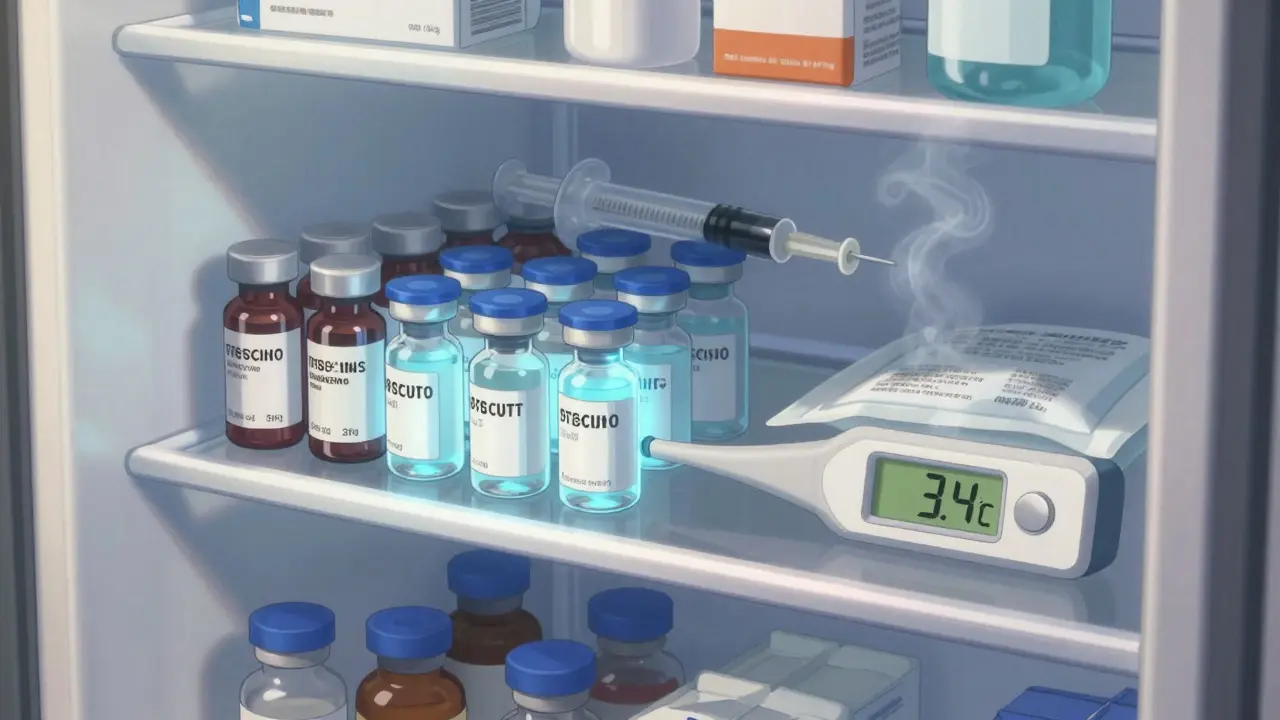
When you're managing a chronic condition like diabetes, rheumatoid arthritis, or multiple sclerosis, your medication isn't just a pill you swallow-it's a life-sustaining tool. And if that medication needs to stay cold, getting it wrong can mean the difference between control and crisis. Many people assume their kitchen fridge is good enough, but the truth is, refrigerated medications are far more sensitive than you think. A temperature spike of just a few degrees, a power outage, or leaving a syringe in a hot car can render them useless-or even dangerous.
Which Medications Need to Stay Cold?
Not all meds need the fridge. Most pills, antibiotics, and blood pressure drugs are fine at room temperature. But a growing number of treatments-especially those made from proteins or living cells-require strict cooling. These include:- Insulin (Lantus, Humira, NovoRapid, and others)
- Biologics like Enbrel, Humira, Remicade, and Copaxone
- Vaccines (including flu, shingles, and COVID boosters)
- Some antibiotics (like reconstituted Zosyn or certain IV infusions)
- Hormone injections (growth hormone, certain fertility drugs)
These aren’t optional refrigerations. They’re scientific necessities. The molecules in these drugs are fragile. Heat breaks them down. Freezing shatters them. And once damaged, they can’t be fixed-even if you put them back in the fridge.
The Right Temperature: 2°C to 8°C (36°F to 46°F)
This isn’t just a suggestion. It’s the global standard set by the U.S. Pharmacopeia (USP), the FDA, and the WHO. Anything outside this range risks losing effectiveness. Studies show some biologics lose half their potency in just 24 hours at room temperature (25°C). Insulin exposed to 37°C for two days can drop 30-40% in strength-enough to send blood sugar spiraling out of control.But here’s the catch: your home fridge isn’t designed for this. The back shelf might sit at 3.4°C-perfect. The door? It can hit 11°C on a busy day. And if the fridge cycles to defrost, it can dip below freezing. One user on Reddit shared how their insulin went cloudy after being stored on the door shelf. The next day, their blood sugar hit 450. They ended up in the ER.
Where to Store Them (and Where NOT To)
If you’re using your kitchen fridge, don’t just toss them in anywhere. Here’s how to do it right:- Avoid the door. Temperature swings here are wild. Even a quick opening can raise the shelf by 5°C.
- Use the middle shelf. This is the most stable zone. It’s farthest from the freezer and the compressor.
- Never put them in the freezer. Freezing destroys protein-based drugs. Once frozen, insulin is permanently ruined-even if it thaws.
- Keep them in original packaging. The box or carton protects from light and gives you access to expiration dates and storage instructions.
Some medications have special rules. For example:
- Insulin: Keep unopened vials in the fridge. Once opened, most can stay at room temperature (below 30°C) for 28-30 days. Check the label-some newer insulins last longer.
- Vaccines: Never leave them out. Even one hour at room temp can ruin a shingles vaccine.
- Remicade: Can be stored at room temperature (up to 30°C) for up to 6 months-but only if unopened. Once opened, it must be used immediately.
What Happens When You Get It Wrong?
You might not notice right away. But the effects are real. A 2021 FDA report documented a case where improperly stored insulin led to diabetic ketoacidosis. The patient didn’t realize their insulin had been left in a hot car for hours. Their body didn’t respond. They nearly died.More common are subtle failures: unexplained blood sugar spikes, rashes that don’t clear, or flare-ups of autoimmune symptoms. A 2023 GoodRx survey of 1,247 insulin users found that 68% had experienced at least one incident they blamed on temperature issues. Symptoms? Cloudy liquid, clumping, or sudden loss of control.
And here’s the scary part: once a medication degrades, you can’t tell by looking. It doesn’t change color dramatically. It doesn’t smell bad. It just doesn’t work. And your body pays the price.

Dedicated Medication Fridges: Worth the Cost?
A standard fridge can swing between 1.5°C and 10.2°C. That’s too wide. A dedicated medication fridge holds temperature within ±1°C. They cost between $150 and $2,500. Is it worth it?For someone on daily biologics or multiple insulin injections? Absolutely.
One user on r/Type1Diabetes reported their HbA1c dropped from 8.2% to 6.9% after buying a Whynter FM-50G. Why? Because their blood sugar stopped spiking randomly. They’d been blaming themselves for poor diet-until they installed a thermometer and realized their fridge door was hitting 12°C.
These units often come with alarms, digital logs, and even USB data export. Some newer models from Samsung now include a “medication mode” that locks the temp at 3°C-5°C. It’s not magic-it’s precision.
Traveling with Cold Medications
Airports, road trips, vacations-these are high-risk zones. Never check your meds in luggage. Never leave them in a hot car. Use a validated insulated cooler with phase-change gel packs. Brands like TempAid MediCools keep meds between 2°C and 8°C for up to 48 hours. Some come with built-in thermometers.For flights, carry your meds in your carry-on. Show the TSA agent your prescription. They’re trained to handle this. Never let them X-ray your meds-while it’s unlikely to damage them, it’s not worth the risk. Keep them in their original bottles with labels intact.
Power Outages and Emergencies
If the power goes out, you have 4-6 hours before your fridge warms up dangerously. Keep a backup plan:- Keep a small cooler with ice packs ready.
- Use a portable battery-powered cooler (like Mobicool).
- Have a list of local pharmacies that offer emergency cold storage.
- Sign up for NeedyMeds’ free thermometer program-they’ve sent over 8,500 units since 2020.
Don’t wait for an outage to think about this. Practice your plan. Test your cooler. Know your options.
Monitoring Is Non-Negotiable
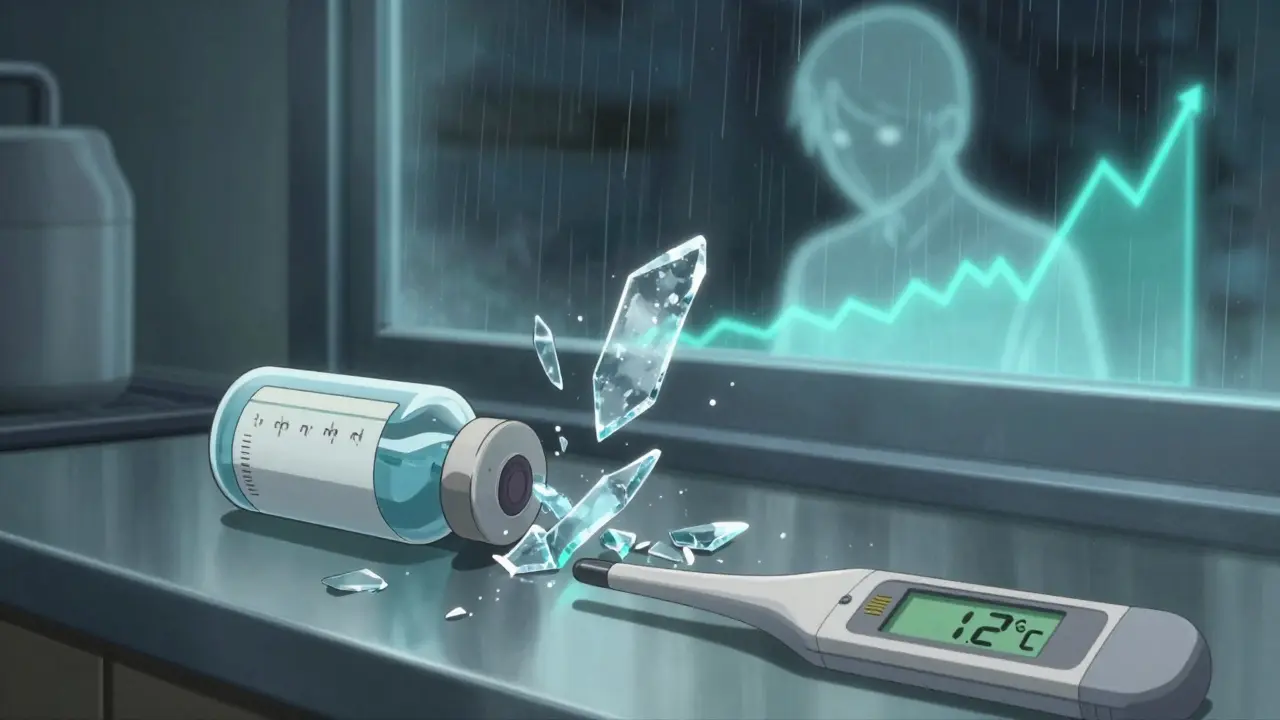
You can’t guess. You can’t hope. You need proof. A simple digital thermometer with a min/max readout costs under $30. Place it in the same spot as your meds. Check it weekly. If it hits 9°C or drops below 0°C, move your meds immediately.Some smart fridges now sync with apps. Others have alarms that text you if temps go out of range. For chronic conditions, this isn’t luxury-it’s safety.
What Pharmacists Don’t Always Tell You
Many patients say their pharmacist gave them vague instructions: “Just keep it cold.” That’s not enough. Manufacturers often provide detailed storage info on their websites or in patient guides-but you have to ask for it. Ask:- “What’s the exact temperature range?”
- “Can this be left out? For how long?”
- “What happens if it freezes?”
- “Is there a printed guide I can take home?”
Don’t assume. Don’t guess. Write it down. Keep it on your fridge.
The Future Is Smarter
By 2030, the American Society of Health-System Pharmacists predicts 30% of all prescriptions will need refrigeration. Newer insulin formulations can now handle 37°C for up to 7 days-far longer than older versions. That’s progress. But it doesn’t mean you can be careless. The rules still apply: if the label says refrigerate, follow it. Always.And as more drugs become biologic, the need for precision storage will only grow. What’s clear now: if your medication needs to be cold, your storage method needs to be smart.
Can I leave my insulin out overnight?
Most insulin can stay at room temperature (below 30°C) for up to 28-30 days after opening. If you’re using it daily, keeping it out is fine and more convenient. But if your home gets hot (above 27°C), or if you’re not using it regularly, keep it in the fridge. Never leave it in direct sunlight or a hot car.
What if my medication freezes accidentally?
If any biologic, insulin, or vaccine freezes-even briefly-discard it. Freezing permanently damages the protein structure. Thawing won’t restore it. Using frozen medication can lead to treatment failure, dangerous side effects, or hospitalization. When in doubt, throw it out and get a new one.
Do all vaccines need refrigeration?
Yes. All vaccines, including flu, shingles, and COVID boosters, require strict 2°C to 8°C storage. Even short exposure to room temperature can reduce effectiveness. Never store vaccines in a fridge door or in a mini-fridge without temperature monitoring. Always check the CDC’s Vaccine Storage Guidelines for specific requirements.
Can I use a regular cooler for travel?
Only if it’s designed for medications. Regular coolers don’t maintain consistent cold. Use a validated insulated carrier with phase-change gel packs-like TempAid or MediCool. These are tested to hold 2°C-8°C for 48 hours. Regular ice packs can melt too fast or get too cold, risking freezing.
How often should I check my fridge temperature?
At least once a week. Use a digital thermometer placed next to your meds-not on the door. Record the min/max temps. If it goes above 8°C or below 2°C, move your meds immediately. If you’ve had a power outage, check right away. Don’t wait for symptoms-check the numbers.
Marie Fontaine
February 9, 2026 AT 23:00Brandon Osborne
February 11, 2026 AT 05:35MANI V
February 11, 2026 AT 09:15Random Guy
February 12, 2026 AT 06:35Ryan Vargas
February 12, 2026 AT 13:43Tasha Lake
February 14, 2026 AT 10:03Sam Dickison
February 14, 2026 AT 17:06Brett Pouser
February 16, 2026 AT 10:27John McDonald
February 17, 2026 AT 16:56Andrew Jackson
February 19, 2026 AT 08:44John Sonnenberg
February 21, 2026 AT 03:13PAUL MCQUEEN
February 23, 2026 AT 03:12glenn mendoza
February 24, 2026 AT 18:36Marie Fontaine
February 24, 2026 AT 20:46