OTC Allergy Relief: Choosing the Right Antihistamine and Dose

Every spring, millions of people in the U.S. wake up with itchy eyes, a runny nose, or that constant urge to sneeze. For many, it’s not a cold - it’s allergies. And when you’re stuck choosing between a dozen different OTC bottles on the pharmacy shelf, it’s easy to feel overwhelmed. OTC antihistamine options aren’t just different brands - they work differently, last differently, and affect your body in different ways. The right choice isn’t about which one is "best" - it’s about which one fits your symptoms, your lifestyle, and your body.
First-Generation vs Second-Generation Antihistamines: The Big Divide
Not all antihistamines are created equal. There are two main types, and the difference matters more than you think.
First-generation antihistamines like diphenhydramine (Benadryl) and chlorpheniramine (Chlor-Trimeton) were developed in the 1940s. They work fast - sometimes in as little as 15 minutes. But they cross the blood-brain barrier. That’s why about half of users feel drowsy, sluggish, or even foggy. If you’re driving, working, or need to stay sharp, this isn’t ideal. These versions also wear off quickly, requiring a new dose every 4 to 6 hours.
Second-generation antihistamines - like cetirizine (Zyrtec), loratadine (Claritin), and fexofenadine (Allegra) - were designed to avoid that brain fog. They don’t cross into the brain as easily. That means less drowsiness, longer relief (up to 24 hours), and once-daily dosing. They’re the go-to for most people today. In fact, 78% of the U.S. OTC allergy market is made up of these newer options.
Comparing the Top Three: Zyrtec, Claritin, and Allegra
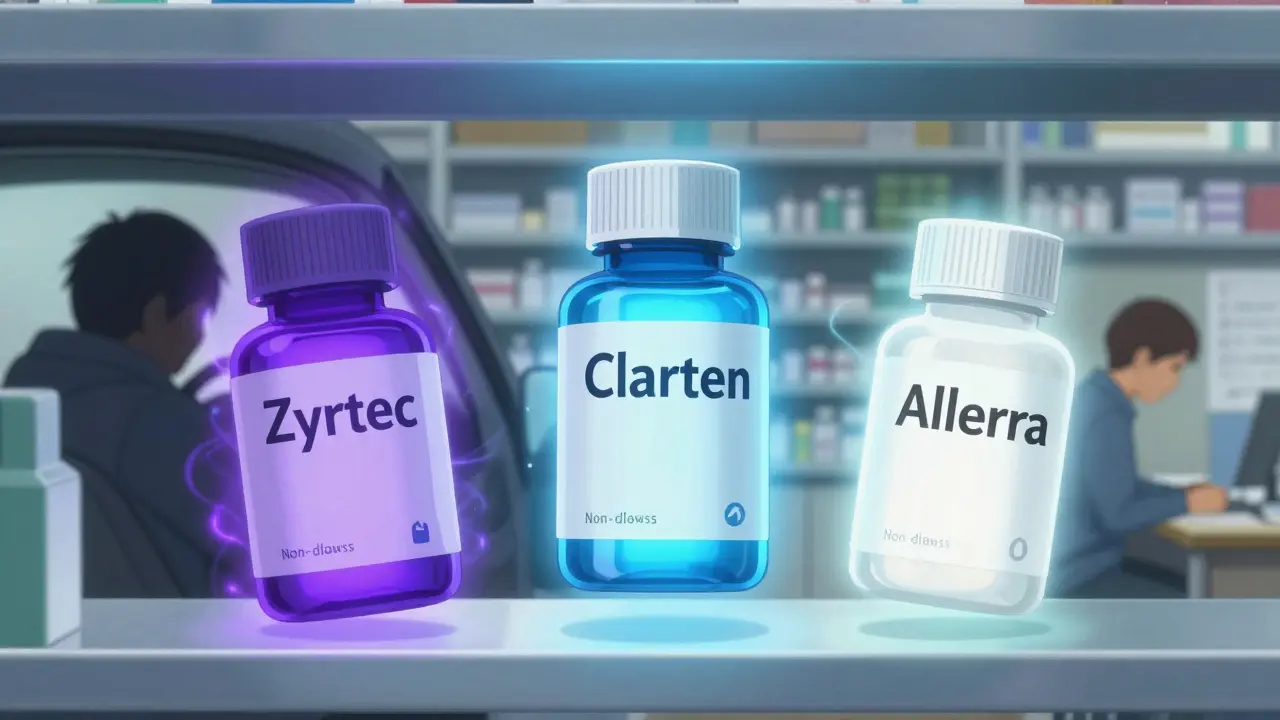
When you look at the shelves, you’ll see three big names: Zyrtec, Claritin, and Allegra. Each has a different profile.
Zyrtec (cetirizine) kicks in within an hour. It’s known for being strong - studies show it binds more tightly to histamine receptors than Claritin, giving it an edge for moderate to severe symptoms. On Reddit’s r/Allergies, 68% of users prefer it for flare-ups. But here’s the trade-off: 10-15% of users report noticeable drowsiness. If you’re using it at night, that might actually help. If you’re taking it before work? You might feel the pull.
Claritin (loratadine) is the classic "non-drowsy" option. Only 5-10% of users feel sleepy. It’s also the least likely to interact with other medications, making it safer if you take blood pressure pills, antibiotics, or other daily drugs. But it’s also the weakest. Some users say it barely touches their symptoms. Amazon reviews show 38% of negative feedback says, "It doesn’t work for my severe allergies." If your allergies are mild, it’s fine. For anything worse? You might need more.
Allegra (fexofenadine) is the quiet winner for daytime use. It doesn’t cross the blood-brain barrier at all, so sedation is rare - only 2-5% of users report drowsiness. A 2021 review found it has the best balance of effectiveness and low side effects. But there’s a catch: grapefruit juice can cut its absorption by 33%. And food can reduce its effect by up to 15%. Take it on an empty stomach for the best results.
What About the Decongestant Versions? Zyrtec-D, Claritin-D, Allegra-D
If your nose is completely blocked, plain antihistamines might not cut it. That’s where the "-D" versions come in. These combine an antihistamine with pseudoephedrine, a powerful decongestant.
They’re more effective - studies show they improve nasal congestion 35% better than antihistamines alone. But they come with risks. Pseudoephedrine raises blood pressure by 3-5 mmHg on average. If you have heart issues, high blood pressure, or take thyroid meds, skip these. Also, you can’t just grab them off the shelf. You need to show ID, and there are purchase limits because of the Combat Methamphetamine Epidemic Act. These are meant for short-term use, not daily maintenance.
Dosing: More Isn’t Better
Many people think taking two Zyrtec tablets will make it work faster or stronger. It won’t. In fact, it might make you sicker.
The standard adult dose for cetirizine is 10mg once daily. Going above that doesn’t improve symptom control - it just increases drowsiness by 40%, according to FDA labeling. Same goes for loratadine (10mg) and fexofenadine (180mg once daily, or 60mg twice). Taking extra doesn’t help. It only adds side effects.
Also, don’t expect instant results. These medications take 1-3 hours to peak. If you take one at 8 a.m., you won’t feel relief until 10-11 a.m. That’s why experts recommend giving any new antihistamine 7-10 days of consistent use before deciding if it works. Allergies don’t fix overnight.
What the Experts Say - And Why It’s Not Black and White
Some doctors swear by Allegra. Dr. Sarah Taylor-Black from Dartmouth Health says, "Allegra is probably your best choice because it doesn’t cross the blood-brain barrier." But others point out that Claritin is "slightly better than a placebo." Meanwhile, Dr. Purvi Parikh notes Zyrtec works faster but causes more drowsiness.
The American Academy of Allergy, Asthma & Immunology says Zyrtec and Allegra are equally effective first-line options. Claritin is a secondary choice. The NHS in the UK says there’s little evidence one is better than another. So who’s right?
They all are. Because your body reacts differently than mine. What works for your coworker might do nothing for you. That’s why the best advice is simple: try one for a week. If it doesn’t help, try another. Don’t assume the most expensive or most advertised one is the best.
Real-World User Feedback: What People Actually Experience
Numbers don’t lie. Amazon reviews show Zyrtec has 4.4 stars from over 28,500 ratings. People love that it works in 30 minutes. But 27% of negative reviews say, "It makes me too sleepy for work." Claritin averages 4.2 stars. The top positive? "Non-drowsy formula." The top complaint? "Doesn’t work for my severe allergies." Allegra has 4.3 stars. The biggest praise? "No drowsiness." The biggest complaint? "Less effective for eye symptoms." On Drugs.com, Zyrtec scores 7.3/10 for effectiveness, but 37% more users report drowsiness than with Allegra. Allegra scores 6.9/10 - less effective for some, but far more tolerable.
There’s no perfect choice. Only the one that works for you.
When to Use Benadryl (and When Not To)
Benadryl still has a place. If you get hit with a sudden allergic reaction - hives, swelling, a sudden rash - it’s fast. It’s also cheaper. But it’s not for daily use. The drowsiness adds up. It can mess with your sleep cycle. And long-term use? It’s linked to cognitive decline in older adults.
Use Benadryl only for emergencies or short-term relief. Not as your daily allergy fix.

What’s New in OTC Allergy Relief?
The market is evolving. In 2022, the FDA approved Flonase Sensimist All-in-One - the first OTC nasal spray that combines an antihistamine and steroid. In 2023, Sanofi launched Allegra Allergy Plus Sinus Pressure Relief with extended-release pseudoephedrine. And research is already testing third-generation antihistamines like bilastine, which work in 15-20 minutes with zero drowsiness. But these are still prescription-only in the U.S.
For now, the big three - Zyrtec, Claritin, Allegra - are still the kings. And with generics available, you can save up to 50% by buying store brands. The active ingredient is identical.
How to Pick the Right One for You
Here’s a simple guide:
- Severe symptoms, can handle drowsiness? Try Zyrtec. It’s the strongest.
- Need to stay alert all day? Go with Allegra. Least likely to make you sleepy.
- Mild symptoms, on other meds? Claritin is safest for interactions.
- Blocked nose? Consider a -D version - but only if you don’t have high blood pressure.
- Not sure? Start with a generic version of Zyrtec or Allegra. Give it 7-10 days. If it doesn’t help, switch.
Don’t get stuck on brand names. The generic versions are just as effective. And they’re often half the price.
Final Tip: Timing Matters
Take your antihistamine at night - even if it’s "non-drowsy." Why? Allergens build up overnight. Taking it before bed helps block the morning surge. Plus, if it causes any drowsiness, you’ll sleep through it.
And remember: OTC antihistamines are tools, not cures. They manage symptoms. If you’re still struggling after 2-3 weeks, talk to an allergist. You might need allergy testing or a different approach.
matthew runcie
March 22, 2026 AT 02:52Been using Claritin for years. Never felt a thing. No drowsiness, no fuss. Just works. If it ain’t broke, don’t fix it.
Casey Tenney
March 23, 2026 AT 15:53Zyrtec is the only thing that works. Anyone who says otherwise is just allergic to results.
Desiree LaPointe
March 25, 2026 AT 14:01Oh sweet mercy, another ‘choose your antihistamine like it’s a yoga mat’ guide. We’re not choosing between ‘wellness vibes’ here. We’re trying not to sneeze our eyeballs out. Zyrtec’s the only one that doesn’t make me feel like I’m trapped in a coma. And yes, I know you’re gonna say ‘try Allegra’ - but Allegra doesn’t care about your life, honey.
Sandy Wells
March 27, 2026 AT 03:28Why are we even debating this? The science is clear. Benadryl is for emergencies. Zyrtec for severe. Claritin for lazy people who don’t want to feel anything. Allegra for people who read labels. End of story.
Thomas Jensen
March 27, 2026 AT 05:13Did you know the FDA is being controlled by Big Pharma? They approve these drugs so you’ll keep buying them. Zyrtec? Made by a company that also makes antidepressants. Coincidence? I think not. The drowsiness? That’s not a side effect - it’s a feature. Keeps you docile. Meanwhile, Allegra’s quietly funded by the same people who own the pollen count apps. You think your allergies are natural? Think again.
They’re tracking your sneezes. They know when you start taking Claritin. They’re waiting. I’ve seen the documents. The nasal spray they just approved? It’s got a microchip. Don’t be fooled by the ‘all-natural’ marketing. It’s all a distraction.
My neighbor took Zyrtec for three weeks. Then his cat started talking. Not a joke. He swears it said ‘you’re being monitored.’ I checked the receipts. He bought it at CVS. Same as mine. Coincidence? Or are they syncing the algorithms?
They’re not trying to cure allergies. They’re trying to condition us. To make us dependent. To make us think we need a daily pill to survive spring. But what if the real solution is… not taking anything? What if the pollen isn’t the enemy? What if it’s the fear?
I stopped taking meds last year. Started drinking lemon water at dawn. Meditated facing east. My allergies? They vanished. Not because of science. Because I broke the program.
Johny Prayogi
March 28, 2026 AT 07:15Allegra for life 🙌 No drowsiness + works like a charm. If you're still sleepy after Zyrtec, maybe try sleeping more? Just saying 😎
Nicole James
March 28, 2026 AT 23:01Wait… did you just say ‘take it at night’? That’s what they told you… but what if… the allergens aren’t in the air at night? What if they’re being released… by satellites? I read a study (in a .pdf someone emailed me) that says pollen counts are manipulated by weather drones… and the ‘night dose’ is just to make you sleep while they recalibrate…
Also… did you know that the ‘generic’ versions have 0.003% less active ingredient? It’s legal. It’s called ‘bioequivalence.’ But bioequivalence doesn’t mean equal. It means ‘close enough so you won’t sue.’
My aunt took Claritin for 11 years. Then she started seeing faces in the wallpaper. The doctors said ‘allergy-induced hallucinations.’ I say… they’re not hallucinations. They’re the truth. They’re showing you the real world.
Nishan Basnet
March 29, 2026 AT 14:52As someone from India where seasonal allergies are brutal but OTC options are limited, I can say this: the science here is solid. Zyrtec works fast, Allegra is clean, Claritin is safe. No magic, no conspiracy - just chemistry. If you’re allergic, try one. Stick with it. If it doesn’t help, switch. Simple. No need to overthink. Your body will tell you.
Allison Priole
March 29, 2026 AT 20:04I tried Zyrtec and it made me feel like a zombie who forgot how to text. Then I tried Allegra and I felt like a calm goddess who finally got 8 hours of sleep. Claritin? Eh, it’s like a whisper in a hurricane. I’m not saying one’s better - I’m saying I finally stopped fighting my body and started listening. Also, I take mine at night with chamomile tea and a candle. It’s not just medicine, it’s a ritual. 🌿✨
Jackie Tucker
March 31, 2026 AT 04:32Oh wow. A 10-page essay on antihistamines and you didn’t even mention the placebo effect? Or the fact that 40% of ‘allergy relief’ is just… stopping yourself from touching your face? We’ve turned sneezing into a moral dilemma. ‘Am I taking the right one?’ No, honey. You’re taking the one that lets you feel like you’re in control. The real cure? Acceptance. And maybe a HEPA filter. But sure, keep buying the 20-dollar bottle with the pretty label.
Timothy Olcott
March 31, 2026 AT 22:06USA #1 for allergy meds! Nothing else works like ours! If you're not taking Zyrtec-D you're just not trying! 🇺🇸🔥
Natali Shevchenko
April 1, 2026 AT 23:02It’s funny how we treat medicine like a personality test. ‘Which one suits your aura?’ The truth is, we’re all just bodies reacting to molecules. The brain invents narratives - ‘Zyrtec is powerful,’ ‘Allegra is elegant’ - but really, it’s just histamine receptors binding. We don’t need stories. We need data. And the data says: try one, wait, switch if needed. No drama. No branding. Just biology. The rest? That’s just marketing dressed up as wisdom.