Pelvic Pain in Women: Endometriosis vs. Interstitial Cystitis - How to Tell Them Apart
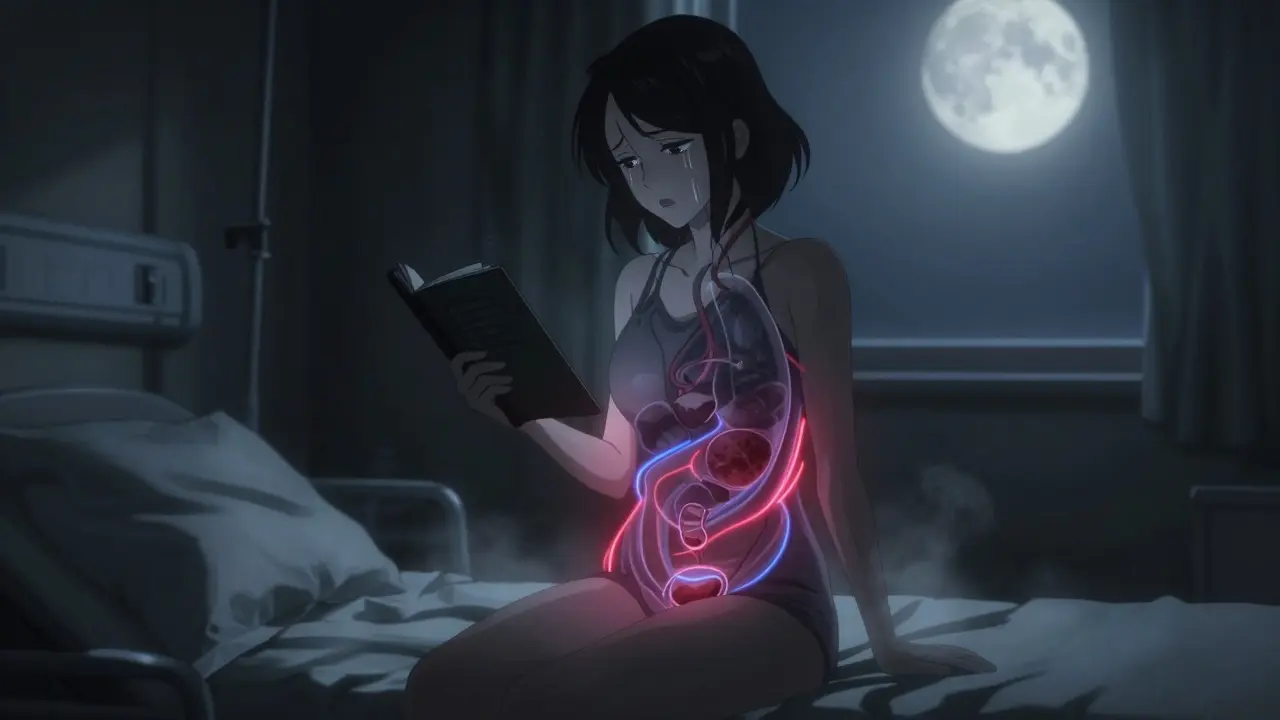
When a woman suffers from chronic pelvic pain, it’s easy to assume it’s just bad periods or a urinary infection. But if the pain sticks around for months - or years - and doesn’t respond to standard treatments, something deeper might be going on. Two conditions, endometriosis and interstitial cystitis (IC), are often mistaken for each other, even by doctors. They share nearly identical symptoms: burning during urination, frequent urges to pee, pain during sex, and deep pelvic aches. Yet their causes, treatments, and long-term impacts are completely different. Getting the right diagnosis isn’t just about naming the problem - it’s about stopping years of unnecessary suffering.
What Is Endometriosis, Really?
Endometriosis isn’t just heavy periods. It’s tissue similar to the uterine lining growing outside the uterus - on the ovaries, fallopian tubes, bowel, bladder, or even the diaphragm. This tissue still responds to hormonal cycles, bleeding and swelling each month. But unlike the lining inside the uterus, it has no way to exit the body. That leads to inflammation, scar tissue, and intense pain. The condition affects about 10% of women of reproductive age - that’s 190 million women worldwide.
One of the clearest signs of endometriosis? Pain that follows your menstrual cycle. About 92% of women with endometriosis feel their pain spike right before or during their period. Some also experience pain during bowel movements or urination that worsens with their cycle. A small number - 1% to 12% - have endometriosis directly on the bladder wall. In those cases, blood can appear in the urine during menstruation, a red flag that’s rare in other conditions.
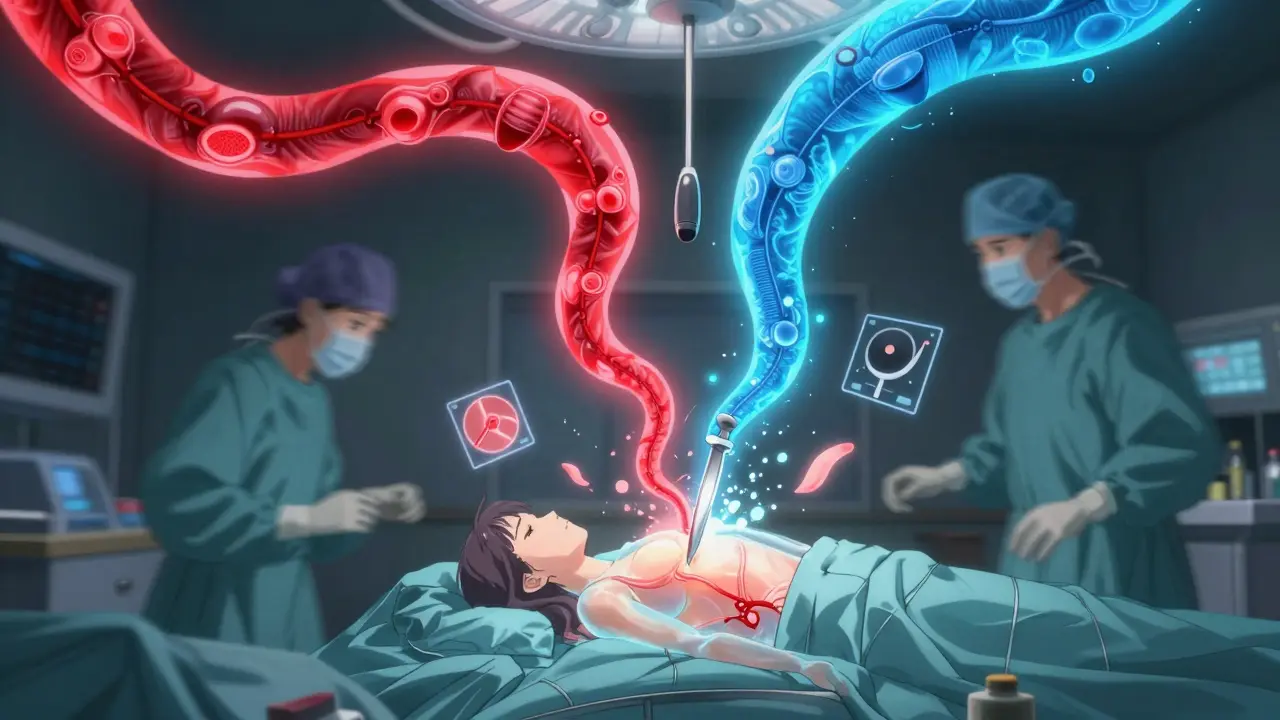
The only way to confirm endometriosis is through surgery. Laparoscopic excision, where a surgeon removes the abnormal tissue and sends it to a lab for testing, is the gold standard. It’s not a simple procedure. Costs range from $5,000 to $15,000 in the U.S., and recovery takes 2 to 4 weeks. Only about 15% of OB/GYNs in the U.S. are trained in this level of deep excision surgery. Many women wait years before seeing someone who knows how to do it right.
What Is Interstitial Cystitis?
Interstitial cystitis, also called painful bladder syndrome, is a chronic condition where the bladder wall becomes inflamed and sensitive - without any infection or obvious cause. The bladder, which normally holds 400 to 600 milliliters of urine, may only hold 300 to 400 mL in IC patients. Even small amounts of urine can trigger sharp, burning pain. The urge to urinate becomes constant - often more than 7 times a day, sometimes over 60 times.
Unlike endometriosis, IC pain doesn’t follow your period. It’s usually steady, though about 45% of women report flare-ups around menstruation. There’s no bleeding in the urine, no visible lesions, and no hormone-driven changes. Diagnosis is a process of elimination. First, doctors rule out UTIs, bladder cancer, sexually transmitted infections, and kidney stones. Then they may perform a cystoscopy - a camera inserted into the bladder - to look for Hunner’s lesions (ulcers in the bladder wall). A potassium sensitivity test (PST) is sometimes used: if the bladder stings when exposed to potassium solution, it suggests IC. But the test has a 20% false-negative rate.
There’s no single lab test for IC. No blood marker. No imaging scan that shows it clearly. That’s why it’s called a diagnosis of exclusion. Many women are misdiagnosed with recurrent UTIs and put on antibiotics for years. One study found 63% of IC patients were treated for UTIs an average of 5.3 times before getting the right diagnosis.
Why These Two Conditions Are Often Confused
Endometriosis and IC overlap so much that researchers call them the “evil twins” of pelvic pain. A landmark 2011 study of 178 women with chronic pelvic pain found that 75% had endometriosis, 89% had IC, and 65% had both. That’s not coincidence - it’s a pattern. Women with endometriosis are up to four times more likely to develop IC. And the reverse is true too: many women diagnosed with IC later turn out to have endometriosis affecting the bladder or pelvic nerves.
Here’s how they match up:
- Shared symptoms: Pelvic pain, urinary urgency, frequency, painful urination, pain during sex.
- Key difference: Endometriosis pain worsens with your period; IC pain is more constant.
- Bladder involvement: Endometriosis can cause blood in urine during menstruation; IC almost never does.
- Diagnosis: Endometriosis = surgery + biopsy. IC = rule out everything else.
One major blind spot? Pelvic floor dysfunction. A 2023 review found that 92% of women with either condition have tight, overactive pelvic muscles. These muscles don’t just react to pain - they cause more pain. So even after treating the root cause, physical therapy for the pelvic floor is often needed to fully recover.
Why Diagnosis Takes So Long - And Why It Matters
The average time to diagnose endometriosis? 7 to 10 years. For IC? 3 to 5 years. That’s not because the symptoms are subtle - it’s because the system isn’t built to handle overlapping conditions.
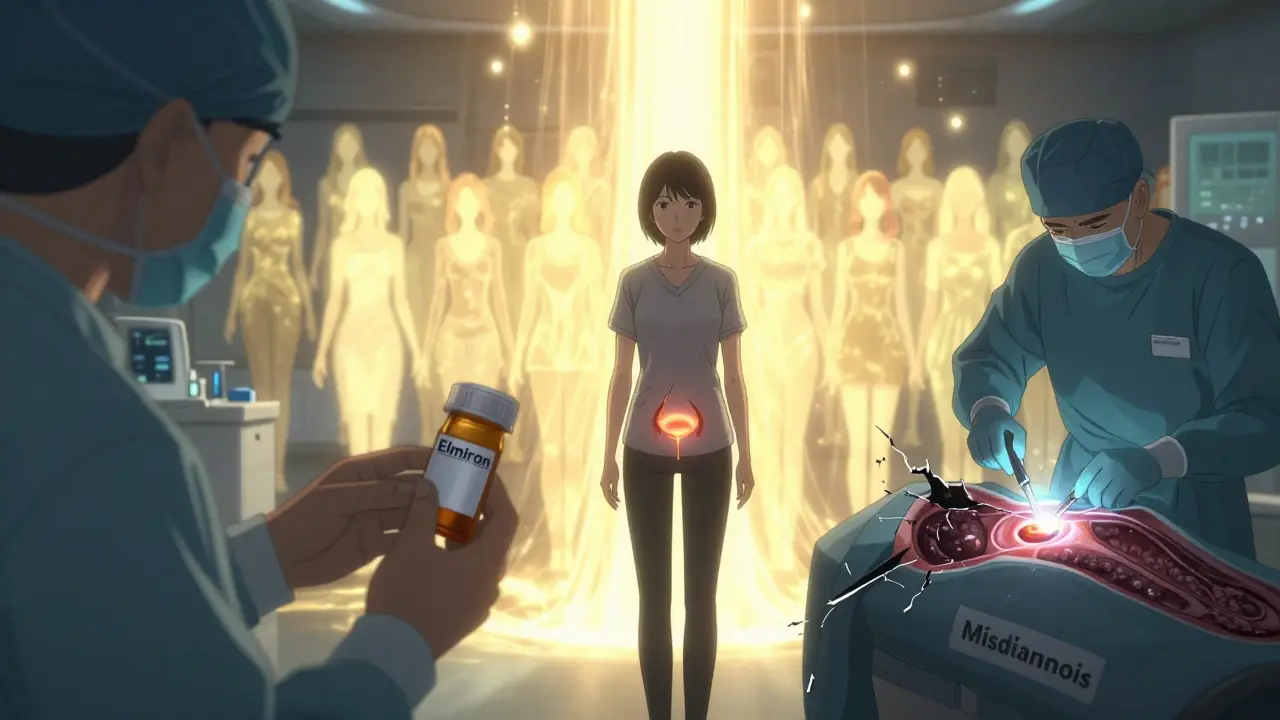
Many doctors look for one diagnosis and stop there. A woman with bladder pain might see a urologist who diagnoses IC and prescribes medications like Elmiron. But if endometriosis is also present, those meds won’t fix the real problem. And if she’s sent to a gynecologist who doesn’t do deep excision surgery, she might be told her pain is “just stress.”
One Reddit user, u/PelvicPainWarrior, spent 9 years being told she had IC - until her third laparoscopy revealed stage IV endometriosis on her bladder. Her urinary symptoms dropped 80% after surgery. She’s not alone. A 2022 review of 342 patients found that 63% saw major improvement only after being diagnosed with both conditions and treated for both.
Medical gaslighting is real. A 2023 survey of 850 IC patients found 76% were told their pain was “all in their head.” That kind of dismissal doesn’t just delay treatment - it erodes trust in the entire medical system.
How to Get the Right Diagnosis
If you’ve had pelvic or bladder pain for more than 6 months, here’s what to do:
- Track your symptoms for 3 weeks: Keep a diary of pain levels, urination frequency, timing relative to your period, and triggers (like caffeine, sex, or stress).
- Get a full pelvic exam: Ask your provider to check for pelvic floor tension and tender points.
- Rule out infection: Urinalysis and culture are essential - even if you’ve had UTIs before.
- Request cystoscopy: Especially if you have urinary symptoms. Ask if Hunner’s lesions were looked for.
- Insist on a laparoscopy if IC is diagnosed: Dr. Tamer Seckin says, “It is not possible to confirm interstitial cystitis without first excluding endometriosis.” If you have pelvic pain, endometriosis must be ruled out surgically.
- Seek a specialist: Look for a gynecologist trained in endometriosis excision and/or a urogynecologist. There are only about 350 board-certified urogynecologists in the U.S.
Insurance often denies cystoscopy or laparoscopy. Be prepared to appeal. The Interstitial Cystitis Association reports 44% of patients had their first diagnostic procedure denied. Keep records. Ask for peer-reviewed guidelines (ACOG 2023 for endometriosis, AUGS 2022 for IC) to support your case.
What Happens After Diagnosis?
Treatment depends on what’s found.
If it’s endometriosis, excision surgery is the most effective long-term solution. Hormonal treatments (like birth control or GnRH agonists) can help manage symptoms but don’t remove the tissue. Physical therapy for pelvic floor dysfunction is almost always needed afterward.
If it’s IC, treatments focus on bladder healing: dietary changes (avoiding acidic foods, caffeine, alcohol), pelvic floor therapy, bladder instillations (medication put directly into the bladder), and sometimes medications like pentosan polysulfate sodium (Elmiron). But recent studies show Elmiron can cause retinal damage in 23% of long-term users - so it’s not a first-line choice anymore.
If you have both, you need a combined approach: surgery for endometriosis, plus bladder-focused therapies for IC. A 2022 study showed patients with dual diagnoses had the best outcomes - 63% reported major symptom relief after coordinated care.
What’s Changing in 2026?
The field is finally shifting. In January 2024, the Endometriosis Foundation updated its surgical guidelines to require bladder evaluation during every excision surgery. In February 2024, the NIH awarded $4.2 million to the University of Michigan to find biomarkers that can distinguish endometriosis from IC without surgery. The International Pelvic Pain Society launched a dual-diagnosis protocol in 2023 - meaning doctors are now trained to test for both conditions at the same time.
Experts predict that by 2030, multidisciplinary pelvic pain centers - where gynecologists, urologists, and physical therapists work together - will become the standard. That’s the future. But right now, you have to be your own advocate.
Don’t wait for a doctor to connect the dots. If your pain is chronic, insist on being evaluated for both conditions. Your body is giving you clues - the timing, the triggers, the location. Listen to them. And don’t let anyone tell you it’s normal to suffer for years.
Can endometriosis cause urinary symptoms without bladder involvement?
Yes. Even if endometriosis isn’t directly on the bladder, lesions on nearby nerves, ligaments, or the ureters can irritate the bladder and cause urgency, frequency, or pain during urination. This is called referred pain. It’s not the bladder itself - it’s the nerves signaling pain from elsewhere.
Is interstitial cystitis caused by endometriosis?
Not directly, but they often coexist. Endometriosis can trigger chronic inflammation and nerve sensitivity in the pelvic region, which may lead to bladder overactivity - mimicking IC. Many women diagnosed with IC later find endometriosis on the bladder wall, and their urinary symptoms improve after surgery. So while endometriosis doesn’t cause IC, it can create conditions that make IC-like symptoms appear.
Can you have IC without bladder pain?
No. By definition, interstitial cystitis requires chronic bladder pain or discomfort that lasts at least 6 weeks. If you have urinary frequency or urgency without pain, it’s likely another condition - like overactive bladder or a neurological issue. Pain is the core symptom.
Why do some doctors still think IC is just a UTI?
Because the symptoms overlap so much. Urgency, frequency, burning - all common in UTIs. Without a cystoscopy or potassium test, it’s easy to assume infection. But if antibiotics don’t work, and urine cultures keep coming back clean, it’s time to dig deeper. IC is not an infection - it’s a chronic inflammation. Yet many providers haven’t been trained to recognize the difference.
Should I get a second opinion if I was diagnosed with IC?
Absolutely. Especially if you have pelvic pain beyond urination, pain during sex, or pain that worsens with your period. A 2022 study found that up to 80% of patients initially diagnosed with IC had undiagnosed endometriosis. A second opinion from a surgeon trained in endometriosis excision could change your life.
peter vencken
March 25, 2026 AT 04:21Also, stop drinking soda. Seriously. Caffeine and citric acid are murder on IC.
Linda Foster
March 26, 2026 AT 15:27Kevin Siewe
March 27, 2026 AT 17:23Here's the thing: if you have pelvic pain + bladder symptoms, you need BOTH evaluations. Not one or the other. I make every patient get a cystoscopy AND a pelvic exam with imaging before I even consider treating just one.
And yes - pelvic floor PT is non-negotiable. 90% of these folks have hypertonic muscles. You can fix the lesion, but if the muscles are still screaming, you're not done.
Chris Farley
March 28, 2026 AT 20:43Meanwhile, men with prostate issues get CAT scans on day one. This is why America's healthcare system is broken. Women's pain is dismissed until it's too late.
And don't even get me started on 'Elmiron causes blindness.' That's Big Pharma covering up their own mistakes. We need real solutions, not more paperwork.
Darlene Gomez
March 28, 2026 AT 22:12I was diagnosed with IC at 24. Took me 5 years to find a surgeon who knew about endo. When they found lesions on my uterosacral ligaments? My bladder pain dropped 70%.
But here's what nobody tells you: healing doesn't end with surgery. You have to relearn how to sit, how to breathe, how to not flinch when you pee. It's not just your body - it's your whole nervous system that got rewired by pain.
Be gentle with yourself. You're not broken. You're just misunderstood.
Katie Putbrese
March 30, 2026 AT 11:00Women are being told to 'track their period' and 'avoid coffee' like it's a lifestyle blog. Meanwhile, real science says: cut out the tissue.
And why are we giving money to universities to find 'biomarkers'? We already know how to fix this. It's called surgery.
Stop overcomplicating it. If you have pelvic pain + bladder issues, do the damn laparoscopy. Stop wasting years on pills and PT.
Also, stop using emojis. This is a medical crisis, not a TikTok trend.
Jacob Hessler
March 31, 2026 AT 07:21Amber Gray
April 1, 2026 AT 17:19