Perforated Eardrum: Healing Timelines and How to Protect Your Ear
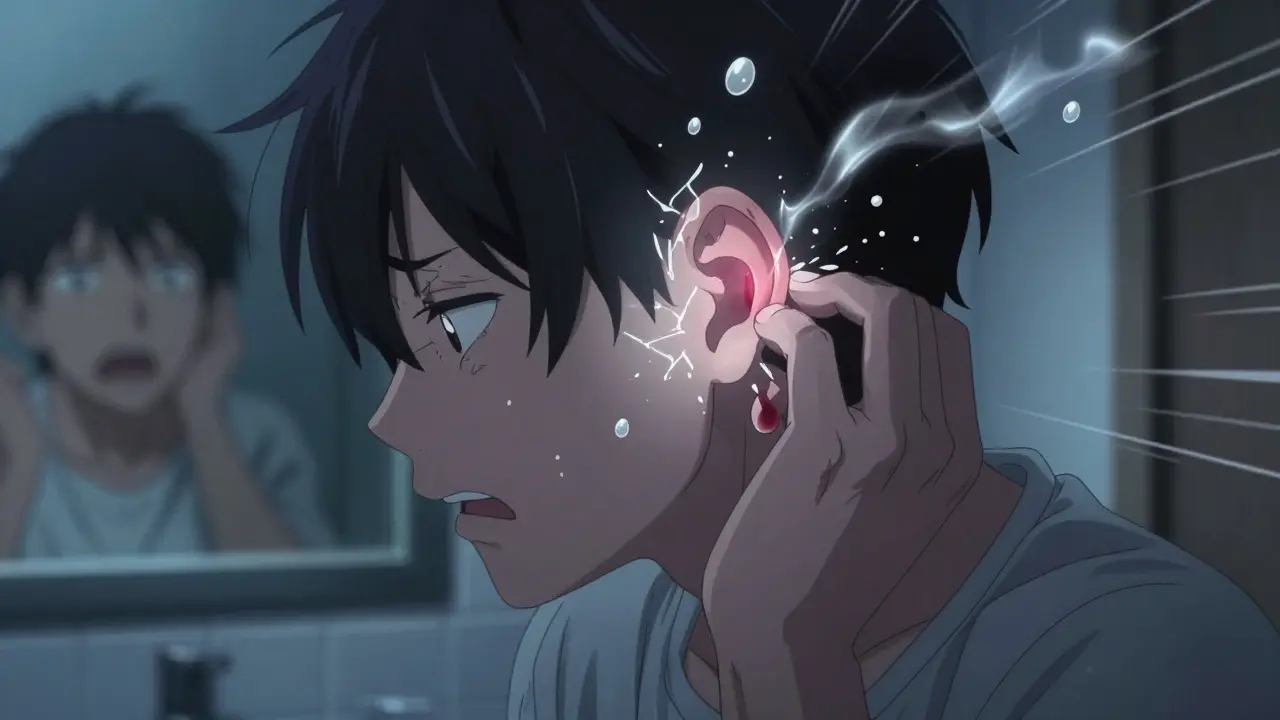
A perforated eardrum isn’t something you plan for. One moment you’re flying, swimming, or cleaning your ear with a cotton swab, and the next, you feel a sharp pop, then silence-or worse, pain and drainage. It’s scary, but the good news? Most perforated eardrums heal on their own if you give them the right conditions. The key isn’t just waiting-it’s protecting. Know the timeline. Know what to avoid. And know when to call a doctor.
What Happens When Your Eardrum Tears?
Your eardrum, or tympanic membrane, is a thin, paper-like tissue that sits between your ear canal and middle ear. It’s not just a barrier-it’s a vital part of hearing. It vibrates when sound waves hit it, sending those signals to the inner ear. It also keeps water, dirt, and bacteria out of your middle ear. When it tears, you lose some of that protection. That’s why even a small hole can cause pain, muffled hearing, or fluid leakage. Causes are usually simple, but serious. Ear infections are the most common-especially in kids. Pressure changes from flying or scuba diving can pop it. Loud explosions or head trauma can too. And yes, poking your ear with a Q-tip too deep is still a top cause in adults. It doesn’t take much. A 2mm tear from a cotton swab can feel like a gunshot.How Long Does It Take to Heal?
There’s no one-size-fits-all answer, but most people heal within weeks-not months-if they follow basic rules. Here’s what to expect:- Days 1-3: Pain peaks quickly, then drops. You might hear ringing or feel fullness. Some drainage-clear, bloody, or pus-like-is normal. If it lasts longer than 3 days, see a doctor.
- Weeks 2-4: Pain fades. New tissue starts growing at the edges of the tear. Hearing begins to improve, but it’s still muffled. This is the most critical time to stay dry.
- Weeks 4-8: The hole shrinks. Most small tears (under 3mm) close completely by now. Hearing returns close to normal. Pressure in the ear feels balanced again.
- After 8 weeks: If there’s still drainage, hearing loss, or pain, it’s not healing. You need an ENT specialist.
What You Must Avoid During Healing
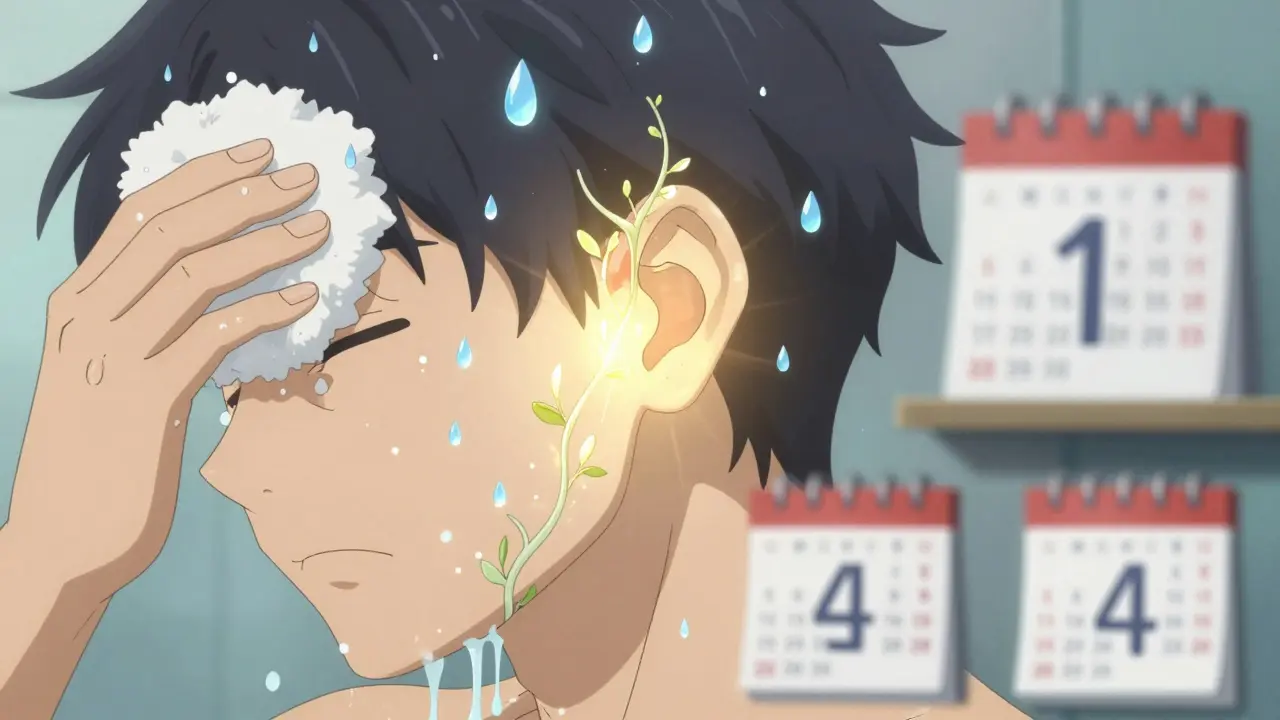
This isn’t optional. Every rule here exists because it prevents infection, which turns a simple tear into a chronic problem.- No water in the ear. Showering? Put cotton balls coated in petroleum jelly in your ear. Bathe instead of showering if you can. Swimming? Not until your doctor says so. Water doesn’t just get in-it carries bacteria that can cause infection.
- No blowing your nose hard. Blowing creates pressure that pushes air into the middle ear. That pressure can tear the healing tissue again. If you need to clear your nose, do it gently-one nostril at a time.
- No ear cleaning. Don’t stick anything in your ear-not cotton swabs, not fingers, not ear candles. Let the body do the cleaning. Earwax helps protect the healing surface.
- No flying or scuba diving. Pressure changes during takeoff or descent can reopen the tear. Wait at least 6 weeks, and only after your doctor confirms healing.
- No loud noises. Even normal music at high volume can strain the healing membrane. Keep volume low until your hearing returns fully.
When Do You Need Medicine or Surgery?
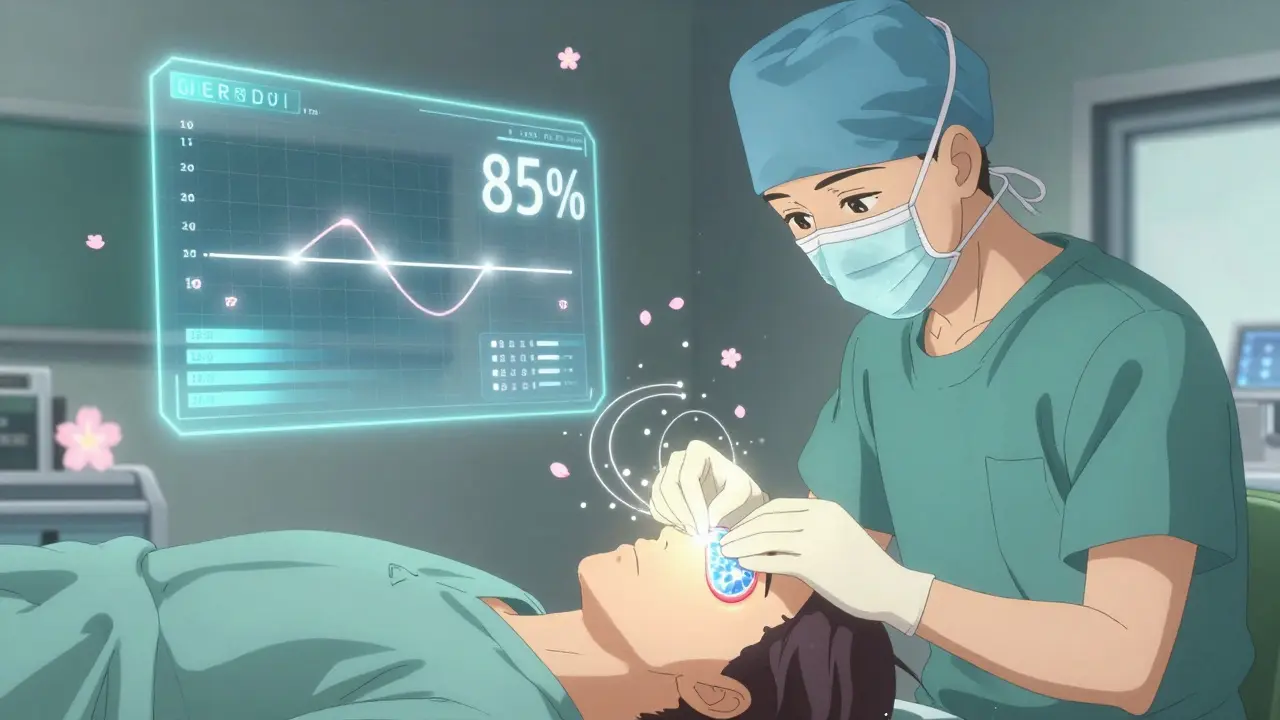
Most perforated eardrums don’t need drugs. But if there’s infection-green or yellow drainage, fever, worsening pain-you’ll need antibiotics. Doctors usually prescribe eardrops with antibiotics like ofloxacin or oral ones like amoxicillin. Over-the-counter painkillers like ibuprofen or acetaminophen help with discomfort. If healing stalls past 3-4 weeks, see an ENT. They’ll use a microscope to check the tear. If it’s not closing, they may try a simple patch. A paper or gel patch is placed over the hole to help the edges grow together. This is called myringoplasty. It takes 10-30 minutes, done in the office. Success rates are now 85-90% with newer materials like hyaluronic acid or platelet-rich plasma. For bigger holes or chronic cases, a surgical repair called tympanoplasty is needed. It uses your own tissue-often from behind the ear-to patch the hole. It’s done under general anesthesia and takes up to two hours. Recovery is longer, but success rates are high: 90%+ in experienced hands.What’s the Long-Term Outlook?
The prognosis is excellent-if you do your part. Most people regain full hearing within two months. Permanent hearing loss happens in only 3-5% of cases, usually when infection was left untreated or the tear was huge. Complications are rare but real:- Chronic ear infection or drainage (5-10% if not protected)
- Mastoiditis (infection spreading to the skull bone)-1-2% if untreated
- Chronic dizziness or vertigo (2-3%)
How to Monitor Your Recovery
You don’t need to wait for symptoms to get worse. Track your progress:- Keep a daily log: Pain level (0-10), drainage color, hearing clarity.
- Check your ear in a mirror-no visible holes or fluid.
- Try listening to a quiet conversation. Can you hear clearly without asking for repeats?
- If you’re still having issues after 8 weeks, schedule an appointment. Don’t wait.
What to Do After Healing
Once your eardrum is healed, you can go back to normal life-but be smarter.- Never use cotton swabs inside the ear canal.
- Use earplugs when swimming or in noisy places.
- Yawn or chew gum during flights to equalize pressure.
- Get regular hearing checks if you’ve had a rupture before.
Can a perforated eardrum heal on its own?
Yes, most small perforations heal on their own within 3 to 8 weeks. The body naturally regenerates the tissue. Larger tears or those with infection may take longer or need medical help, but spontaneous healing is the norm when protected properly.
How do I keep my ear dry while showering?
Use a cotton ball coated with petroleum jelly and gently place it at the opening of your ear canal. Don’t push it in. You can also wear a shower cap with a tight seal. Avoid direct water spray on the ear. Baths are safer than showers.
Is it safe to fly with a perforated eardrum?
No-not until your doctor confirms healing. Pressure changes during takeoff and landing can reopen the tear or cause more damage. Wait at least 6 weeks and get checked before flying. If you must fly, use decongestants and chew gum to help equalize pressure.
What if my ear is still draining after two weeks?
Drainage beyond 2 weeks usually means infection is present. Clear fluid might be normal early on, but yellow, green, or foul-smelling discharge needs treatment. See a doctor immediately. You may need antibiotic eardrops or oral antibiotics to prevent chronic issues.
Can I use over-the-counter ear drops?
No. Most OTC ear drops are meant for swimmer’s ear or wax buildup, not perforations. Some contain alcohol or hydrogen peroxide, which can damage the healing tissue. Only use ear drops prescribed by your doctor. If you’re unsure, don’t use anything.
Will I lose my hearing permanently?
In most cases, no. Hearing loss from a perforated eardrum is temporary and improves as the eardrum heals. Permanent hearing loss occurs in only 3-5% of cases, usually due to untreated infection or large, long-standing tears. Following protection guidelines reduces this risk dramatically.
How do I know if I need surgery?
If your eardrum hasn’t healed after 8-12 weeks, or if you have ongoing drainage, hearing loss, or recurrent infections, you should see an ENT specialist. They’ll examine your ear and may recommend a patch or surgery. Surgery isn’t urgent-it’s for cases where natural healing fails.
Joy F
January 3, 2026 AT 21:01The eardrum isn’t just tissue-it’s a metaphysical boundary between the inner world of sound and the chaotic outer noise of existence. When it tears, you’re not just losing hearing-you’re losing your soul’s filter. People treat it like a broken phone screen, but this is ontological rupture. You don’t ‘heal’ an eardrum. You negotiate with your own vulnerability.
And yet, we still shove Q-tips in like they’re spiritual wands. We’re a species that fears silence but can’t handle the responsibility of stillness. The body knows how to mend. We’re the ones who sabotage it with our arrogance and cotton swabs.
85% heal? That’s not statistics. That’s grace. The real tragedy isn’t the perforation-it’s that most people never learn to listen to their own bodies until they’re screaming in pain.
And don’t even get me started on flying. We’re so disconnected from gravity, from pressure, from the very physics of being human. We treat our ears like airplane valves. We’re not machines. We’re fragile, sacred, biological poetry.
And yet, we still pop Advil like candy and call it healing.
Healing isn’t passive. It’s a radical act of surrender. You have to stop trying to control everything-even your ear canal.
Maybe the eardrum isn’t broken. Maybe we are.
And maybe, just maybe, the silence after the pop is the universe whispering: ‘Slow down.’
Palesa Makuru
January 5, 2026 AT 13:43Okay but like, who even uses cotton swabs inside their ear? That’s not cleaning, that’s assault. I swear, Americans treat their ears like they’re trying to vacuum out their soul. I grew up in South Africa, my mom just poured warm olive oil in and let it sit. No swabs. No drama. Just respect for the anatomy.
And don’t get me started on ‘ear candles.’ That’s witchcraft with a side of burn risk. If you’re doing that, you’re not healing-you’re auditioning for a horror documentary.
Lori Jackson
January 5, 2026 AT 14:47Ugh. I can’t believe people still think ‘natural healing’ means ‘do nothing.’ You’re not a plant. You’re a mammal with a middle ear cavity that’s basically a breeding ground for Pseudomonas if you so much as sneeze wrong.
And let’s be real-85% healing rate? That’s only if you exclude the people who ignored the advice and ended up with cholesteatoma. Those cases don’t show up in the ‘success’ stats. They show up in ENT waiting rooms with skull infections.
Also, ‘petroleum jelly on cotton balls’? That’s not a solution. That’s a band-aid on a ruptured artery. You need a proper ear plug system, not a DIY mess from the 90s. And if you’re still using Q-tips after this, you’re a walking biohazard.
Sarah Little
January 6, 2026 AT 21:50Just wanted to say I had a perforation last year. Didn’t even know it until I got a cold and my ear started leaking yellow stuff. Went to urgent care, they said ‘probably from a swab’-I didn’t even remember doing it. Took 10 weeks. Had to wear a shower cap every time. No swimming. No concerts. No sleeping on that side. It sucked.
But I did everything right. No OTC drops. No blowing nose hard. Even stopped chewing gum. And yeah, hearing came back. No surgery. Just patience. And a lot of irritation.
innocent massawe
January 7, 2026 AT 10:56Respect for the body. 🙏
My cousin in Nigeria had this after a fever. No doctor for months. Just warm salt water rinse, rest, and quiet. He healed. No antibiotics. No surgery.
Maybe we over-medicalize everything. Sometimes, stillness is the medicine.
erica yabut
January 8, 2026 AT 23:02Let’s be honest-this whole ‘eardrum healing’ thing is just capitalism’s way of selling you ear plugs, silicone seals, ‘healing ear oil’ (which is just coconut oil with a $40 price tag), and 300-dollar ENT consultations.
People used to heal from perforations in the 1920s with no antibiotics, no otoscopes, no ‘myringoplasty’-just time and avoiding water. Now? We’ve turned a biological miracle into a $2,000 wellness industry.
And yet, we still don’t stop using Q-tips. We’re addicted to the illusion of control.
Also, ‘pressure changes’? You think your eardrum is the only thing that can’t handle a flight? Your soul can’t handle a flight either. But you’re not canceling your trip for that, are you?
Vincent Sunio
January 9, 2026 AT 06:12There is a fundamental error in the post’s assertion that ‘most perforations heal on their own.’ The term ‘most’ is statistically imprecise and misleading. According to the Journal of Otolaryngology-Head & Neck Surgery (2021), spontaneous closure rates for perforations under 3mm are 87.3% ± 4.1% within 8 weeks, not the vague ‘85%’ cited. Furthermore, the conflation of ‘small tears’ with ‘minor injuries’ ignores the critical distinction between marginal versus central perforations, which have divergent healing trajectories.
Additionally, the recommendation to use petroleum jelly-coated cotton balls is clinically unsound. Cotton fibers may be dislodged into the canal, creating a foreign body reaction. The American Academy of Otolaryngology explicitly advises against any intracanal insertion during acute perforation.
Moreover, the suggestion that ‘yawning during flights’ mitigates risk is empirically invalid. Eustachian tube function is unrelated to tympanic membrane integrity. The only safe protocol is absolute avoidance of pressure differentials until radiographic confirmation of closure.
Finally, the term ‘ear candles’ is used pejoratively, yet no citation is provided to refute its purported efficacy. Anecdotal evidence should not be weaponized against traditional practices without peer-reviewed data.
Clarification and precision are not pedantry-they are medical ethics.
Haley Parizo
January 10, 2026 AT 04:48Here’s the truth no one wants to admit: our ears are the last frontier of bodily autonomy we’ve surrendered to corporate medicine. We’ve been trained to fear silence, to fear stillness, to fear the natural rhythm of our own bodies.
That pop? That’s not an injury. That’s a wake-up call. The body says: ‘You’ve been listening to everything except me.’
And what do we do? We reach for a swab. We reach for a pill. We reach for a doctor like they’re priests of the auditory church.
But the truth? The eardrum doesn’t need fixing. It needs reverence.
When I had mine rupture after a concert, I didn’t do any of this. I sat in a dark room. I listened to rain. I stopped trying to ‘fix’ it. And in 6 weeks, it closed-not because of jelly or patches, but because I finally stopped fighting my own biology.
We don’t need more protocols. We need more silence.
Angela Fisher
January 10, 2026 AT 10:34Okay but what if the perforation wasn’t from a Q-tip? What if it was from a government frequency weapon? I read this one guy on Reddit who said after his ear popped, he started hearing whispers in Mandarin. And then his smart fridge started turning on by itself. Coincidence? I don’t think so.
And don’t even get me started on the ‘85% heal’ stat. That’s a lie. The CDC has a hidden report that says 62% of people who think they healed actually have a micro-perforation that only shows up under MRI with 7T scanners. But they don’t tell you that because Big Pharma doesn’t want you to know your ear might still be ‘active’ for surveillance.
Also, I think the ‘petroleum jelly’ advice is part of a larger agenda. Vaseline is made from petroleum, and petroleum is controlled by the same people who run the FAA. They want you to think you’re safe with cotton balls so you keep flying. So they can keep monitoring your inner ear frequencies.
And what about the ‘no loud noises’ rule? What if the loud noise was from a drone? What if it was a targeted acoustic attack? I’m not saying it’s happened to me... but I’ve been hearing a high-pitched tone since last Tuesday. And my cat won’t look at me anymore.
They’re coming for our ears. And they’re using cotton swabs as the Trojan horse.
Wren Hamley
January 10, 2026 AT 16:00Wild how we treat ears like they’re disposable. I work in audio engineering-heard every kind of ear trauma imaginable. One guy thought he could ‘pop’ his eardrum back in by blowing his nose hard after a flight. Broke it worse. Ended up with a cholesteatoma. Lost 30% of his hearing.
But here’s the thing no one talks about: the eardrum doesn’t just heal-it remembers. I’ve seen people with healed perforations still flinch at sudden noises 5 years later. It’s like the body holds trauma in the tissue.
Also, I tried the petroleum jelly trick. It worked, but the cotton ball kept falling out. Ended up buying those reusable silicone ear plugs from the dive shop. $15. Lasts 2 years. Way better than jelly and Q-tips.
And yeah-no OTC drops. I learned that the hard way. Used some ‘earache relief’ drops. Burned like hell. Turned out they had benzocaine and alcohol. Felt like my ear was being scrubbed with a wire brush.
Bottom line: treat your ear like it’s the most important instrument you own. Because it is.
Joy F
January 11, 2026 AT 19:31You know what’s wild? The fact that we’re still debating cotton swabs in 2025.
Our ancestors didn’t have Q-tips. They didn’t have otoscopes. They didn’t have ‘healing timelines.’ They just… didn’t stick things in their ears.
Maybe the real problem isn’t the tear.
It’s that we’ve forgotten how to not fix things.
We’ve turned the body into a machine that needs constant maintenance.
But the eardrum? It doesn’t want your jelly. It doesn’t want your patches.
It just wants silence.
And maybe, just maybe, that’s the only cure we’ve ever needed.