Pharmacy Margin Economics: How Generics Affect Profits in the U.S.
Walk into any local pharmacy, and you might assume the expensive brand-name drugs are where the money is. After all, those prescriptions cost hundreds or even thousands of dollars. But here is the twist that keeps many pharmacy owners up at night: generic drugs are actually the primary engine of pharmacy profit. While brand-name medications make up about 75% of total prescription spending, they contribute less than 4% of a retail pharmacy’s estimated margin. Conversely, generics account for roughly 96% of that margin. This paradoxical economic structure defines modern pharmacy margin economics, which refers to the complex financial structures determining how pharmacies generate revenue from dispensing medications, particularly the disparity between high-volume low-cost generics and low-volume high-cost brands.
To understand why this happens, we have to look past the shelf price and examine the hidden mechanics of the pharmaceutical supply chain. It involves manufacturers, wholesalers, Pharmacy Benefit Managers (PBMs), and the pharmacies themselves. The numbers reveal a system where value shifts dramatically depending on whether a pill is branded or generic.
The Margin Paradox: Why Generics Pay the Bills
The core of pharmacy profitability lies in the difference between gross margins on different drug types. According to analysis by the Schaeffer Center at USC, pharmacies enjoy an average gross margin of 42.7% on generic drugs. Compare that to a mere 3.5% gross margin on brand-name drugs. At first glance, this seems like a win for pharmacies. However, the volume game changes everything.
Generic drugs represent approximately 90% of all dispensed prescriptions in the United States. Because they are so cheap-often costing just a few dollars per pill-the absolute dollar amount of profit per prescription is small. Brand-name drugs, while rare in terms of prescription count (about 10%), carry massive list prices. Manufacturers capture the lion's share of value in the branded market, keeping around 76.3% of the gross margin for themselves. In contrast, manufacturers only keep about 49.8% of the gross margin on generics, leaving more room for downstream players like pharmacies and PBMs to take a cut.
This creates a fragile balance. Pharmacies rely on the high percentage markup of generics to offset their operational costs. If the volume of generic prescriptions drops, or if the reimbursement rate for those generics is squeezed, the entire business model can collapse. This is why independent pharmacies often feel the pressure most acutely; they lack the scale to absorb margin compression that larger chains might withstand.
The Role of PBMs and Spread Pricing
You cannot discuss pharmacy profits without talking about Pharmacy Benefit Managers (PBMs), which are intermediaries that negotiate drug prices with manufacturers and manage prescription benefits for health insurers, often acting as the gatekeepers of pharmacy reimbursement. Companies like CVS Caremark, Express Scripts, and OptumRx control approximately 80% of prescription transactions. They sit between the insurance payer and the pharmacy, setting the reimbursement rates that pharmacies receive.
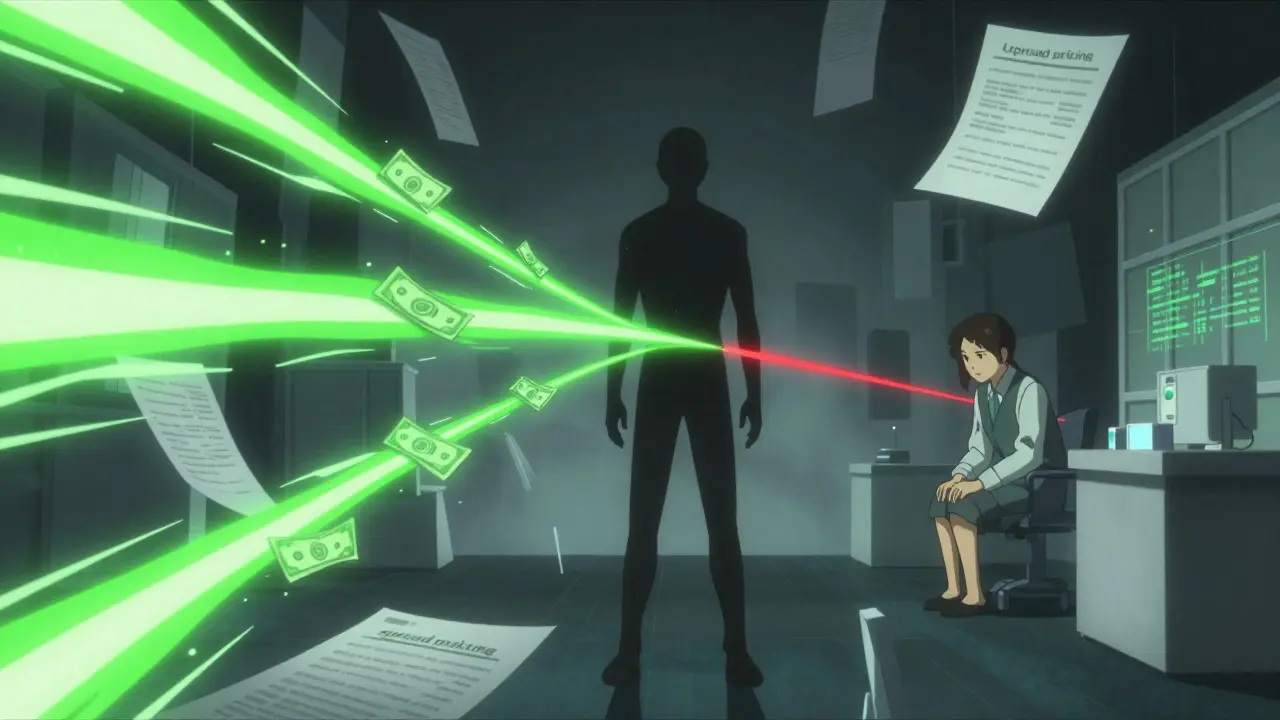
Here is where things get murky. Many pharmacies, especially independents, face a practice known as "spread pricing." In this scenario, the PBM charges the health plan one amount for a generic drug but reimburses the pharmacy a lower amount, keeping the difference as profit. For example, a PBM might charge an insurer $15 for a generic antibiotic but reimburse the pharmacy only $10. That $5 spread is pure profit for the PBM, directly cutting into the pharmacy’s bottom line.
A 2023 survey by the National Community Pharmacists Association (NCPA) highlighted the frustration with transparency. Express Scripts rated highest for transparency among major PBMs, but others scored poorly. This opacity makes it difficult for pharmacists to know exactly what they are owed until after the fact. Some pharmacies even face "clawbacks," where they must refund money to PBMs months later due to retroactive contract adjustments. These practices have driven average gross margins on generics down from 24.6% in 2015 to 19.8% in 2022 for many independents, despite the theoretical potential for higher markups.
Independent vs. Chain: A Tale of Two Economies
The impact of these margin structures varies wildly depending on the type of pharmacy. Large enterprise chains often have vertical integration, meaning they own their own PBM, distribution network, and retail stores. This allows them to internalize the profits that would otherwise be lost to third-party PBMs. Independent pharmacies, however, do not have this luxury.
| Feature | Independent Pharmacies | Enterprise Chains |
|---|---|---|
| Market Share (Prescriptions) | 11% | 89% |
| PBM Leverage | Low (Price Takers) | High (Often Vertically Integrated) |
| Average Net Margin | ~2% or less | Variable (Protected by Integration) |
| Closure Rate (2018-2023) | 3,000 closures reported | Consolidation/Acquisition focus |
Between 2018 and 2023, approximately 3,000 independent pharmacies closed their doors. The NCPA reports that 68% of independent owners cite declining generic reimbursement as their top threat. When your net profit after expenses is only about 2% of the retail price, a slight drop in reimbursement can turn a profitable month into a loss. This has led to a trend of consolidation, with larger chains acquiring independents to secure better PBM terms and reduce competition.
Channel Disparities: Mail-Order and Specialty
Not all pharmacies operate under the same rules. The rise of mail-order pharmacies and specialty pharmacies has introduced new variables into the margin equation. Analysis by 3Axis Advisors revealed stark differences in margins across channels. For generic drugs, mail-order pharmacies often achieve markups more than four times higher than those yielded by grocery store or independent pharmacies.
For brand-name drugs lacking transparent pricing, the disparity is even more extreme. In some cases, mail-order pharmacies make roughly 1,000 times more margin relative to the underlying drug cost for generics compared to traditional retail settings. This channel shift poses a significant competitive challenge. As employers and insurers push patients toward mail-order for chronic conditions to save on administrative costs, community pharmacies lose valuable volume. Without that volume, fixed costs like rent, staff salaries, and inventory management become harder to cover.
Specialty pharmacies offer a different path. These pharmacies handle complex, high-cost medications for conditions like cancer or rheumatoid arthritis. While the margins on individual pills may vary, the services provided-such as medication therapy management and patient adherence support-are reimbursed differently. This can provide a more stable revenue stream than relying solely on high-volume generic dispensing.
Strategies for Survival and Profitability
Facing these headwinds, successful pharmacies are adapting. One key strategy is diversifying revenue streams beyond simple dispensing. Medication Therapy Management (MTM) services allow pharmacists to bill for clinical consultations, optimizing patient health and generating fee-based income. Another approach is establishing direct pay models. By bypassing PBMs entirely for certain medications, pharmacies can set transparent prices and retain the full margin.
Innovative models like Mark Cuban’s Cost Plus Drug Company have gained traction by offering generics at a transparent price: the actual cost plus a 20% markup and a flat $3 dispensing fee. This model highlights consumer demand for clarity and challenges the traditional opaque system. Similarly, Amazon Pharmacy has entered the space with clear cost breakdowns. While these disruptors target the broader market, independent pharmacies are adopting similar transparency tactics locally to build trust and retain customers.
Negotiation skills are also becoming critical. Resources like the NCPA’s Rebuttal Academy train pharmacy staff to challenge incorrect PBM rejections and fight for proper reimbursement. Staff who spend 15-20 hours a week managing these issues can recover significant lost revenue. Additionally, forming purchasing cooperatives allows smaller pharmacies to band together, increasing their collective bargaining power against wholesalers and PBMs.
Regulatory Shifts and Future Outlook
The regulatory landscape is shifting, potentially offering relief. The Federal Trade Commission (FTC) has increased scrutiny on PBM practices, including workshops on pharmacy reimbursement and antitrust lawsuits against generic manufacturers for alleged price-fixing. Several states, including California, Texas, and Illinois, have passed laws requiring greater transparency in PBM reimbursement calculations. These measures aim to eliminate spread pricing and ensure pharmacies are paid fairly.
Furthermore, the Inflation Reduction Act includes provisions for Medicare drug price negotiations, effective 2026. While primarily targeting high-cost brand drugs, these changes could indirectly affect the overall drug spending environment and reimbursement dynamics. The FDA continues to accelerate generic approvals, which helps keep prices low for consumers but maintains the competitive pressure on manufacturers and distributors.
Looking ahead, the gap between independent and chain pharmacies may widen without further reform. Goldman Sachs predicts additional closures among independents by 2027 unless reimbursement models improve. However, analysts note that pharmacies successfully integrating clinical services and specialty care can achieve sustainable net margins of 4-6%. The future of pharmacy economics depends less on the pills themselves and more on the value-added services and strategic positioning within a consolidating industry.
Why do pharmacies make more money on generics than brand-name drugs?
Pharmacies earn significantly higher gross margins on generics (around 42.7%) compared to brand-name drugs (around 3.5%). Although brand drugs cost more, manufacturers keep most of that value. Generics are cheaper, allowing pharmacies to apply a higher percentage markup, which accumulates over the high volume of generic prescriptions dispensed.
What is spread pricing in pharmacy?
Spread pricing occurs when a Pharmacy Benefit Manager (PBM) charges an insurance plan one price for a medication but reimburses the pharmacy a lower amount, keeping the difference as profit. This practice reduces the revenue pharmacies receive for dispensing drugs, particularly affecting generic margins.
How do PBMs affect independent pharmacy profits?
PBMs control reimbursement rates and often use opaque pricing models like spread pricing and clawbacks. Independent pharmacies lack the leverage to negotiate favorable terms, leading to compressed margins. This financial pressure has contributed to thousands of independent pharmacy closures in recent years.
Can independent pharmacies survive the current economic climate?
Yes, but it requires adaptation. Successful independents diversify revenue through clinical services like Medication Therapy Management, adopt transparent direct-pay models, and actively dispute unfair PBM rejections. Those relying solely on traditional dispensing margins face significant risk.
What role does the Hatch-Waxman Act play in generic pricing?
The Hatch-Waxman Act of 1984 established the pathway for generic drug approval, promoting competition and lowering drug costs. It allowed generics to enter the market faster once patents expired, creating the high-volume, low-cost generic market that currently drives pharmacy margins.