Placebo Effect with Generics: Why Brand Psychology Impacts Your Health
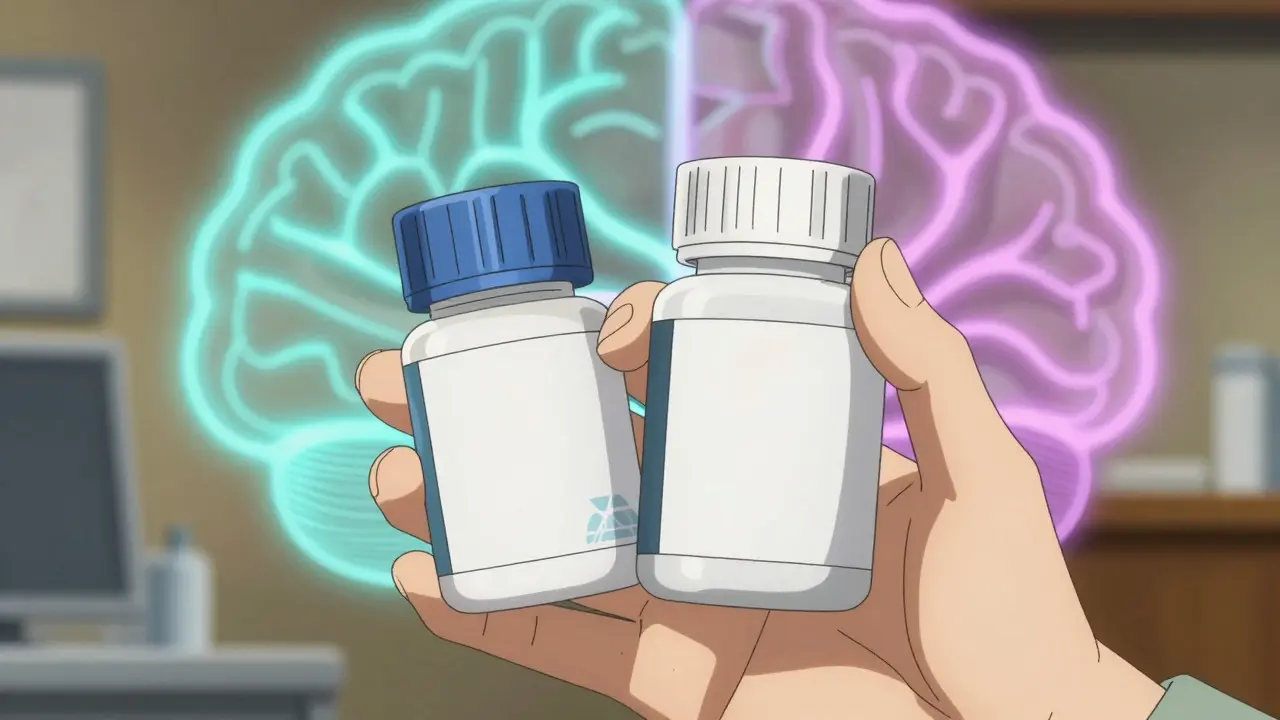
You take your pill, but does the label on the bottle change how it works in your body? It sounds like a trick, but for millions of patients, the answer is yes. Even when the active ingredients are identical, the placebo effect can make a brand-name drug feel more effective than its generic counterpart. This isn't just about feeling better; it’s a measurable physiological response driven by your brain's expectation of quality.
We often assume that medicine is purely chemical. If the molecule is the same, the result should be the same. But human biology doesn't work in a vacuum. Your beliefs, the price you paid, and even the color of the pill cap play a role in how your nervous system reacts to treatment. Understanding this dynamic helps explain why some people swear by their expensive prescriptions while others find their affordable alternatives disappointing, despite receiving the exact same medication.
The Science Behind the Label
To understand why a generic might seem less effective, we have to look at how the brain processes information before the drug even hits the bloodstream. The placebo effect is a real biological phenomenon where the mind triggers physical changes based on expectation. When researchers at the University of Auckland tested this specifically with painkillers, they found something surprising. In a study involving 87 students with headaches, those given a placebo labeled with a famous brand name reported pain reduction similar to actual ibuprofen. However, those given the exact same inactive pill with a generic label reported significantly less relief.
This wasn't just a matter of opinion. The difference was statistically significant. The brand-labeled placebos achieved nearly 87% of the pain-relief efficacy of the real drug, while the generic-labeled versions only reached about 49%. Your brain creates a heuristic, or a mental shortcut, linking "brand" with "quality" and "generic" with "cheap." This association primes your nervous system to respond differently, even if the chemistry is identical.
Price as a Quality Signal
Money talks, and your brain listens. A landmark study from Harvard Medical School applied electric shocks to volunteers to measure pain tolerance. Some participants were told they received a $2.50 painkiller, while others were told they received a $0.10 version. Both pills were actually placebos. Yet, the group believing they took the expensive drug reported 37% less pain intensity. The price tag acted as a signal of potency, triggering a stronger endogenous opioid response in the brain.
This price conditioning extends to serious conditions like Parkinson's disease. Researchers at the University of Cincinnati found that patients receiving a placebo injection labeled as costing $1,500 showed 28% greater improvement in motor function compared to those told the identical injection cost $100. Brain scans revealed 53% greater dopamine release in the high-cost group. For chronic conditions where symptom management is daily, these psychological boosts can mean the difference between a manageable day and a difficult one.
The Nocebo Effect: When Doubt Hurts
If the placebo effect is the flip side of hope, the nocebo effect is the flip side of doubt. This occurs when negative expectations lead to actual adverse symptoms. With generic drugs, the nocebo effect can be particularly potent. A meta-analysis published in JAMA Internal Medicine looked at statin trials and found that patients taking generic-labeled placebos reported muscle pain at twice the rate of those taking brand-labeled placebos. There was zero pharmacological difference between the two groups, yet the label changed their experience.
This matters because side effects drive discontinuation. If you believe your cheap alternative is causing joint pain or nausea, you’re more likely to stop taking it or go back to the expensive option. In psychiatric medications, where the line between side effect and symptom fluctuation can be blurry, this perception gap leads to higher dropout rates. Studies show that discontinuation rates for psychiatric generics can be 18-24% higher, largely driven by these nocebo-driven reports rather than actual chemical incompatibility.

Why Perception Matters More in Certain Conditions
Not all diseases are affected equally by psychology. If you have a bacterial infection, the antibiotic kills the bacteria regardless of what the bottle looks like. The outcome is binary: the bug dies or it doesn't. However, conditions like migraine, depression, and chronic pain rely heavily on the body's internal regulation systems, which are highly susceptible to expectation.
In migraine treatment, the gap is stark. Patients using brand-labeled placebos experienced a 41% reduction in pain, compared to just 22% for generic-labeled placebos. For antidepressants, trials with generic labeling showed 11% lower response rates than brand-labeled equivalents. This suggests that for subjective, self-reported symptoms, the packaging and branding do more than just sell the product-they actively modulate the therapeutic outcome.
| Factor | Brand-Name Drug | Generic Drug | Psychological Impact |
|---|---|---|---|
| Active Ingredient | Specific Molecule | Identical Molecule | No Difference |
| Average Cost (US) | Higher | $312/year savings | Price cues influence perceived quality |
| Pain Relief (Placebo Test) | ~87% efficacy of active drug | ~49% efficacy of active drug | Brand label enhances placebo response |
| Reported Side Effects | Lower baseline | Up to 2x higher reports | Nocebo effect amplifies discomfort |
| Patient Adherence | Higher initial trust | Requires education to match | Education increases acceptance to 89% |
Breaking the Cycle: The Power of Information
Good news: the placebo/nocebo effect is not destiny. It is malleable through communication. The most powerful tool against the generic stigma is knowledge. A study from the University of Chicago found that when doctors spent just seven minutes explaining bioequivalence-the scientific standard ensuring generics work the same way-patient acceptance jumped from 58% to 89%. Those who understood the science were far more likely to stick with their medication six months later.
How you frame the conversation matters too. Instead of saying, "This is the cheaper version," try, "This is the same medicine that saves you money." Positive framing shifts the focus from loss (quality) to gain (savings). Physicians trained in this "positive generic messaging" technique saw patient adherence rates climb to 85%, compared to 63% with standard explanations. It’s a simple shift in language that aligns the patient's expectation with the reality of the drug.

Navigating Your Own Experience
If you've switched to a generic and felt worse, pause before assuming the drug failed. Ask yourself: Did I expect it to work less well? Did I read online reviews complaining about side effects? These inputs feed the nocebo loop. While individual reactions to inactive ingredients (like dyes or fillers) are possible, they are rare. In most cases, the "difference" you feel is your brain reacting to the label, not the molecule.
For vulnerable populations, such as low-income patients, this effect can be stronger due to a "cost-quality attribution." They may unconsciously equate lower price with lower safety. Addressing this requires more than just handing over a prescription; it requires reassurance. Knowing that regulatory bodies like the FDA require generics to meet strict bioequivalence standards (within an 80-125% range) can help ground your expectations in fact rather than fear.
Frequently Asked Questions
Are generic drugs really chemically identical to brand names?
Yes, regarding the active ingredient. Regulators like the FDA require generics to contain the same active pharmaceutical ingredient in the same dosage form and strength. They must also demonstrate bioequivalence, meaning they reach the bloodstream at a similar rate and extent as the brand-name drug. Only the inactive ingredients (fillers, dyes) may differ.
Can my belief in a drug change its effectiveness?
Yes. Research shows that expectations modulate neurotransmitter activity. Believing a drug is high-quality can increase dopamine release or endogenous opioid production, enhancing pain relief or mood stabilization. Conversely, doubting a drug can trigger stress responses that amplify side effects, a phenomenon known as the nocebo effect.
Which conditions are most affected by the placebo effect?
Conditions with subjective symptoms are most affected. This includes chronic pain, migraines, depression, anxiety, and fatigue. Objective conditions like bacterial infections or fractures are less influenced by perception because the outcome depends on physical healing or pathogen elimination rather than neural modulation.
What should I do if my generic seems to cause side effects?
Don't panic or stop the medication immediately. Talk to your doctor or pharmacist. They can check if you are sensitive to specific inactive ingredients. Often, simply discussing the science of bioequivalence reduces the nocebo effect. If side effects persist, switching to a different manufacturer's generic or returning to the brand name can help isolate whether the issue is psychological or physiological.
Does the price of a drug affect how well it works?
Indirectly, yes. Price acts as a cue for quality. Studies show that patients who believe they are taking an expensive drug often report better outcomes than those taking a cheap one, even when both are placebos. This is because the brain uses price as a heuristic to predict efficacy, influencing physiological responses accordingly.