Printing Medication Guides at Pharmacies: Your Rights and Requests
Medication Guide Rights & Action Tool
Result Title
Description goes here.
Action steps go here.
Regulation details.
Select your options and click "Check My Rights" to see what you are entitled to.
Imagine picking up a prescription for a medication that carries serious risks. You walk out the door, but you never received the specific warning sheet required by law to help you use it safely. This isn't just an inconvenience; it’s a potential health hazard. For decades, Medication Guides are FDA-mandated patient information documents required for certain prescription drugs when the U.S. Food and Drug Administration determines that patient labeling is necessary for the safe and effective use of the drug product. These aren't optional brochures or marketing fluff. They are legal requirements designed to prevent adverse reactions and ensure you understand critical safety information.
If you’ve ever wondered why some prescriptions come with a folded paper insert while others don’t, or if you’ve been denied this document because the pharmacist was too busy, you have rights. The rules around these guides are strict, but enforcement can be spotty. Understanding what you are entitled to-and how to ask for it-can literally save your life.
What Exactly Is a Medication Guide?
Not every pill bottle comes with a guide. As of October 2023, approximately 150 prescription drugs require them, representing about 5% of all prescription medications on the market. The U.S. Food and Drug Administration (FDA) is the federal agency responsible for protecting public health by ensuring the safety, efficacy, and security of human and veterinary drugs, biological products, and medical devices. mandates these guides only when one or more specific conditions exist:
- Patient labeling could help prevent serious adverse reactions.
- The drug has serious risks relative to its benefits that could affect your decision to continue using it.
- Your adherence to directions for use is crucial to the drug's effectiveness.
These guides are distinct from standard pharmacy leaflets. They are developed by drug manufacturers, approved directly by the FDA, and subject to specific formatting requirements outlined in 21 CFR §208.20. Think of them as the "final boss" of drug warnings-they appear only when the stakes are highest.
Your Legal Right to Receive the Guide
According to FDA regulations (21 CFR §208.24), the medication guide must be dispensed to you-or your agent-in paper form when the product is dispensed. This is non-negotiable. However, the landscape shifted slightly in May 2023. Following a Federal Register Notice (88 FR 34898), patients may now request electronic delivery of the Medication Guide in lieu of the printed form.
Here is the catch: pharmacists cannot force you to take a paper copy if you prefer an email or digital version. But they also cannot skip giving it to you entirely unless you explicitly opt for electronic delivery. If you want the paper guide, you have the right to demand it. If you prefer digital, you have the right to request it. The choice is yours, not the pharmacy's convenience.
The American Society of Health-System Pharmacists (ASHP) confirms that these requirements are contained in the Code of Federal Regulations. If the FDA says a guide is needed, the pharmacy must provide it compliant with content and format rules. No excuses.
Why Compliance Fails: The Reality on the Ground
So, if the law is so clear, why do people miss out? The gap between regulation and reality is wide. A 2022 survey by the National Consumers League of 1,200 patients revealed that 43% reported never receiving a Medication Guide when filling prescriptions for drugs requiring them. That’s nearly half of all patients.
Pharmacists are often overwhelmed. A thread on Reddit’s r/Pharmacy community showed that 63% of pharmacists report inconsistent distribution due to overwhelming workload and lack of clear tracking systems. During peak hours, verifying and distributing a guide takes an estimated 15-20 seconds per prescription. In a rush, that extra time is often cut.
A 2022 audit by the Department of Health and Human Services Office of Inspector General found that 31% of pharmacy sites inspected had inadequate systems for tracking Medication Guide distribution. Community pharmacies averaged 2.7 compliance deficiencies per site compared to 1.4 at chain pharmacies. Independent pharmacies, which often rely on direct manufacturer shipments rather than integrated electronic systems, are particularly vulnerable to running out of stock or forgetting to print them.
How to Request and Verify Your Guide
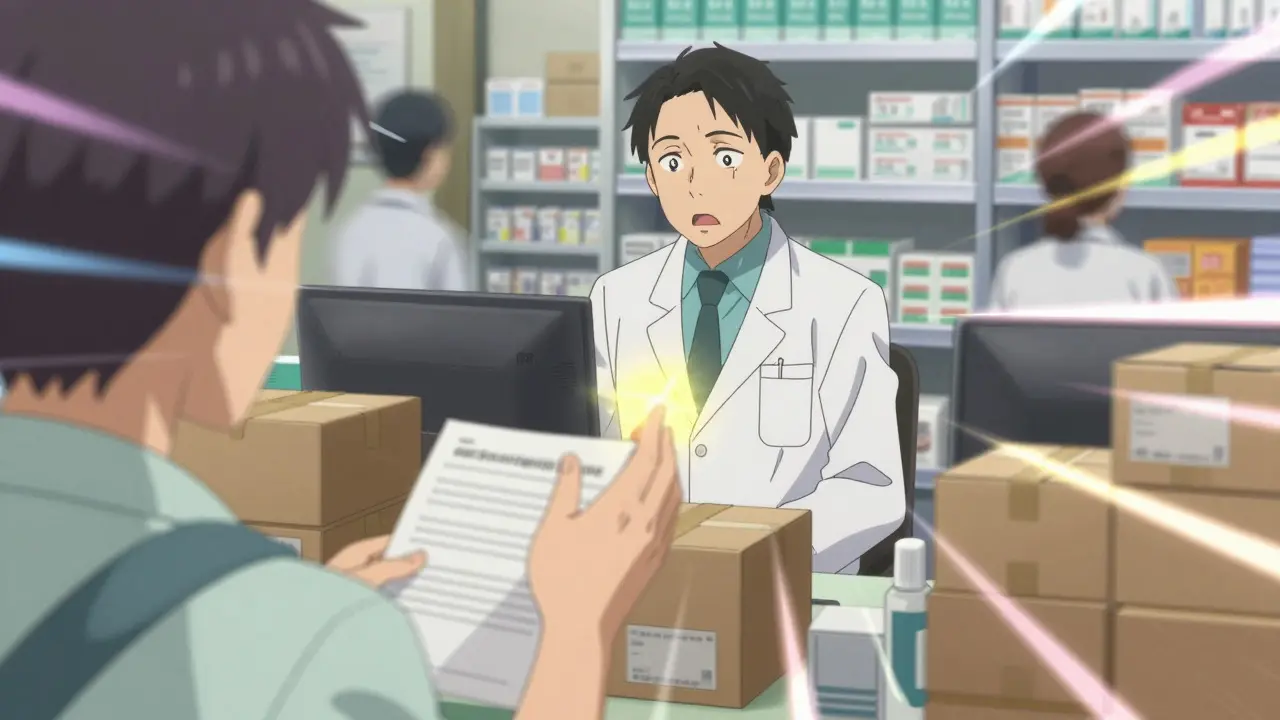
You are your own best advocate. Here is how to ensure you get the information you need:
- Ask Proactively: When dropping off or picking up a prescription, ask, "Does this medication require a Medication Guide?" If the answer is yes, request it immediately.
- Check the Label: While the guide itself is separate, the prescription label should often indicate if special instructions apply. If you know your drug is high-risk (e.g., blood thinners, biologics), assume a guide is required.
- Opt for Electronic Delivery: If you hate paper clutter, tell the pharmacist, "Please send the Medication Guide to my email." This creates a digital record and ensures you receive it even if the printer jams.
- Verify Content: Look for the words "Medication Guide" prominently at the top of the first page. At the bottom, it must state verbatim: "This Medication Guide has been approved by the U.S. Food and Drug Administration." If it’s missing, it’s not the official guide.
If a pharmacist refuses, politely remind them that 21 CFR §208.24 requires distribution at the time of dispensing. Most will comply once reminded of the regulatory weight behind the request.
The Upcoming Shift: Patient Medication Information (PMI)
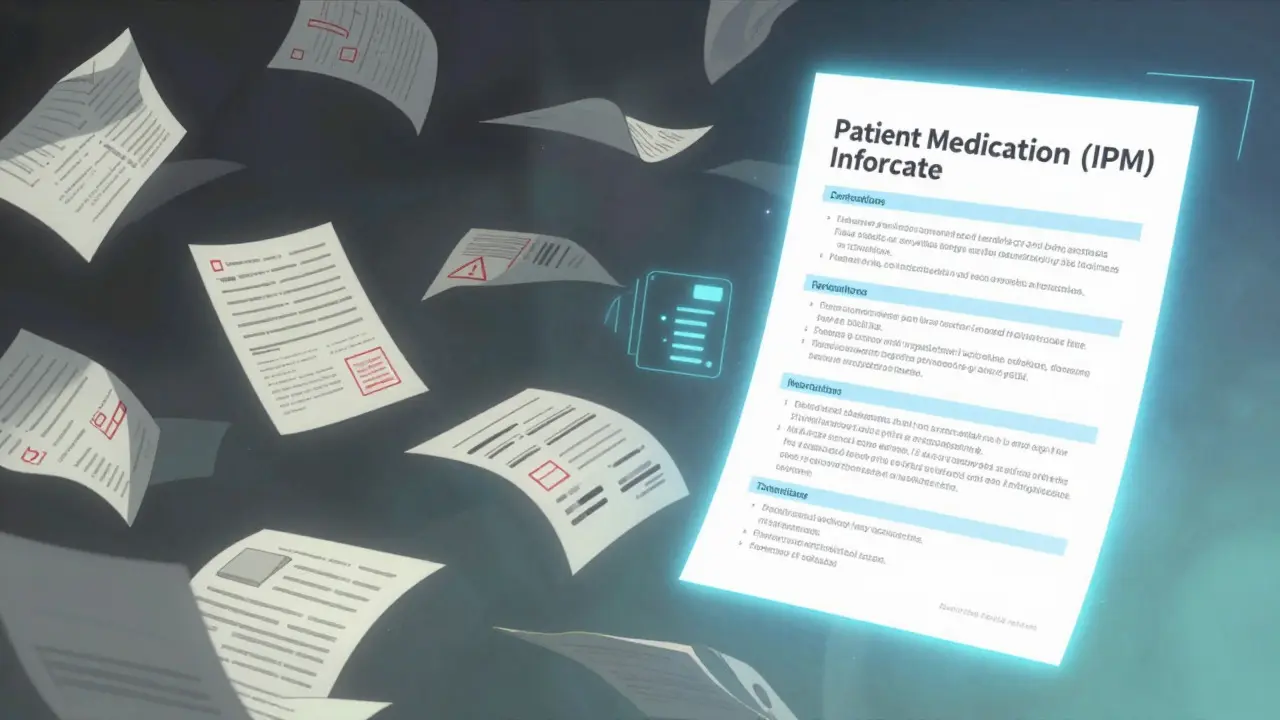
The system is changing. The FDA’s current Medication Guide framework is being replaced by a new initiative called Patient Medication Information (PMI) is a standardized single-page document with consistent formatting across all drugs, replacing the current variable-format Medication Guides.. Proposed in May 2023, this transition aims to complete by 2027.
Why the change? A 2019 Government Accountability Office report found that inconsistent formatting and presentation of current Medication Guides contribute to low patient comprehension. Many guides exceed an 11th-grade reading level, making them hard to understand for the average person. The PMI system will feature standardized, concise, and accessible content. FDA usability studies in 2022 showed prototypes improved patient comprehension by 37% compared to current guides.
For pharmacies, this means significant costs. The American Pharmacists Association estimates the transition will require $450-600 million in industry-wide system updates. Individual independent pharmacies might face implementation costs ranging from $2,500 to $15,000 for large chains. Until 2027, however, the old rules still apply. You still have the right to the current Medication Guides.
| Feature | Current Medication Guides (21 CFR Part 208) | Future Patient Medication Information (PMI) |
|---|---|---|
| Format | Variable length, manufacturer-specific design | Standardized single-page document |
| Language Level | d>Often exceeds 11th-grade reading levelDesigned for broader accessibility and comprehension | |
| Regulatory Status | Active until 2027 | Proposed replacement, expected completion by 2027 |
| Comprehension Impact | Inconsistent results; 28% find them unhelpful | FDA studies show 37% improvement in comprehension |
| Implementation Cost | Low (existing systems) | High ($450-600 million industry-wide update) |
Do Medication Guides Actually Help?
Skeptics argue these guides are redundant. A Pharmacy Times reader survey from June 2022 showed that 28% of patients considered them "not helpful at all," citing repetitive information already on the label and small font sizes. Critics like Professor Carl H. Pierce note that legally, these guides rarely overcome the "learned intermediary rule" in product liability cases, meaning they don't always protect patients in lawsuits.
However, the data suggests they matter for safety. Patients for Safer Drugs collected 347 testimonials in their 2022 Impact Survey. Of those, 78 respondents (22.5%) credited the guides with preventing potential adverse events. In 17 specific cases, patients avoided dangerous drug interactions after reading the guide. Dr. Janet Woodcock, former FDA Center for Drug Evaluation and Research Director, stated in 2020 that "Medication Guides have prevented countless adverse events by ensuring patients receive critical safety information at the point of dispensing."
The key is engagement. If you ignore the guide, it serves no purpose. If you read it, it becomes a powerful tool. The goal isn't just compliance; it's informed consent.
Troubleshooting Common Issues
"The printer is broken." Under 21 CFR §208.24(b), manufacturers must provide means to produce guides in sufficient numbers. If the pharmacy printer is down, they should have backups or access to electronic versions. Ask for the electronic option immediately.
"We ran out of copies." Chain pharmacies typically receive guides through wholesalers, while independents rely on direct shipments. Running out is a failure of inventory management, not a valid excuse. Call the pharmacy manager or switch locations if this happens repeatedly.
"It’s too technical." While regulations require nontechnical language, many guides fail this test. Use the guide as a starting point, then ask your pharmacist to explain specific terms. Don't hesitate to say, "Can you clarify what this side effect means?"
What is a Medication Guide?
A Medication Guide is an FDA-approved patient information document required for certain prescription drugs that pose serious public health concerns. It provides critical safety information to help prevent adverse reactions and ensure proper use.
Do I have the right to refuse a paper Medication Guide?
Yes. Since May 2023, patients may request electronic delivery of the Medication Guide instead of a printed paper copy. Pharmacists cannot force you to accept paper if you prefer digital.
Which drugs require a Medication Guide?
Approximately 150 prescription drugs require Medication Guides, including those with serious risks, those where adherence is crucial for effectiveness, and those where patient labeling can prevent severe adverse reactions.
What happens if a pharmacy fails to provide a Medication Guide?
Failure to provide a required Medication Guide is a regulatory violation under 21 CFR §208.24. Patients can complain to the pharmacy manager, the state board of pharmacy, or the FDA. Consistent failures may lead to fines or operational penalties for the pharmacy.
When will Patient Medication Information (PMI) replace Medication Guides?
The FDA plans to complete the transition from traditional Medication Guides to the standardized Patient Medication Information (PMI) system by 2027. This change aims to improve readability and consistency.