REM Sleep Behavior Disorder: Medications and Neurological Assessment

REM Sleep Behavior Disorder is a parasomnia where the brain fails to paralyze muscles during REM sleep, causing people to physically act out vivid dreams. Imagine waking up not from a nightmare, but because you just punched your partner or jumped out of bed running. For those with this condition, that isn't a metaphor; it's their nightly reality. It is a serious medical issue that goes far beyond simple bad dreams.
Understanding the Loss of Muscle Paralysis
To understand why this happens, we need to look at how normal sleep works. During Rapid Eye Movement (REM) sleep-the stage where most dreaming occurs-your brain sends signals to your spinal cord to shut down muscle activity. This is called muscle atonia. It’s a safety mechanism designed to keep you from acting out your dreams. In REM Sleep Behavior Disorder (RBD), this switch breaks. The paralysis doesn't kick in, so if you dream about fighting a bear, your body might actually swing its fists.
This condition was first formally described by Dr. Carlos Schenck and colleagues in 1986. Since then, researchers have linked it closely to deeper neurological issues. About 90% of people with idiopathic RBD (where no other cause is immediately obvious) eventually develop a neurodegenerative synucleinopathy. These include conditions like Parkinson's disease, dementia with Lewy bodies, or multiple system atrophy. A study published in the Journal of Clinical Sleep Medicine noted that roughly 73.5% of patients with idiopathic RBD developed one of these disorders within 12 years. This makes early detection and management critical.
The Diagnostic Process: Polysomnography and ICSD-3 Criteria
You can't diagnose RBD just by asking someone if they move in their sleep. Many people toss and turn without having the disorder. The gold standard for diagnosis is polysomnography (PSG), often called a sleep study. During this overnight test, electrodes monitor your brain waves, eye movements, and muscle tone.
The key finding doctors look for is REM sleep without atonia (RSWA). According to the International Classification of Sleep Disorders, Third Edition (ICSD-3), a patient must show excessive muscle tone during REM sleep in at least 15% of REM epochs to meet the diagnostic criteria. Studies in Sleep Medicine Clinics show that untreated patients may exhibit complex behaviors averaging 4.2 times per hour during REM stages. Without this objective data, treatment decisions are essentially guessing games.
| Medication | Efficacy Rate | Common Side Effects | Key Risk Factor |
|---|---|---|---|
| Melatonin | 62.5% | Headache, dizziness (8%) | Lower efficacy than clonazepam |
| Clonazepam | 88.7% | Dizziness (22%), unsteadiness (18%) | Fall risk increases by 34% in elderly |
| Pramipexole | ~60% | Nausea, daytime sleepiness | Mixed results; best for comorbid RLS |
First-Line Medications: Melatonin vs. Clonazepam
When it comes to treating symptoms, two medications dominate the landscape: melatonin and clonazepam. The American Academy of Sleep Medicine (AASM) gives conditional recommendations for both, but they work very differently.
Clonazepam is a benzodiazepine. It’s powerful. Research cited by WebMD and Olson et al. shows it reduces symptoms in nearly 89% of cases. However, power comes with a price. Because it affects the central nervous system, it can cause dizziness, unsteadiness, and daytime sleepiness. For older adults, this is dangerous. A 2018 meta-analysis in JAMA Internal Medicine found that fall risk increased by 34% in patients over 65 taking clonazepam. If you’re already prone to tripping, adding a sedative to your routine requires careful consideration.
Melatonin, on the other hand, is a hormone naturally produced by the body to regulate sleep-wake cycles. While it’s slightly less effective-reducing symptoms in about 62.5% of patients according to a 2010 randomized controlled trial-it has a much better safety profile. Only about 8% of users report mild side effects like headaches. Many neurologists now start with melatonin, especially for elderly patients, to avoid the fall risks associated with benzodiazepines.

Dosing Strategies and Titration
Getting the dose right is crucial. You don’t just take a pill and hope for the best. Both medications require a slow titration process.
- Melatonin: Doctors typically start with immediate-release melatonin at 3 mg taken 1-2 hours before bedtime. If that doesn’t control the episodes, the dose is increased gradually to 6 mg, then 9 mg, and potentially up to 12 mg. Each step usually takes 2-4 weeks to assess effectiveness. High doses are often necessary because the goal is to suppress the motor activity, not just induce sleep.
- Clonazepam: Starting doses are low, usually 0.25 mg to 0.5 mg at bedtime. The maximum dose rarely exceeds 2.0 mg. It often works faster than melatonin, showing effects within the first week. However, stopping it abruptly is risky. Withdrawal can cause nightmares (in 38% of patients who stop suddenly) and agitation. Tapering should be done slowly, reducing by 0.125 mg every 1-2 weeks.
Emerging Therapies: Orexin Antagonists and Dopamine Agonists
Science is moving forward. Researchers are looking for alternatives that offer the efficacy of clonazepam without the fall risk, or the safety of melatonin with higher potency. One promising area is dual orexin receptor antagonists. Orexin is a neurotransmitter involved in wakefulness. Recent research from Mount Sinai (October 2023) showed that blocking orexin receptors could reduce dream enactment behaviors by 78% in animal models. Companies like Neurocrine Biosciences are testing drugs like NBI-1117568, which received FDA Fast Track designation in 2023.
Another option is pramipexole, a dopamine agonist used for Parkinson’s. It’s particularly useful if the patient also suffers from Restless Legs Syndrome (RLS). However, results are mixed. A 2006 study by Schmidt et al. found it effective in only 60% of idiopathic RBD cases. Dr. Michael Howell from the University of Minnesota notes that while evidence is limited, the cost of pramipexole is small compared to the potential high cost of injury from untreated dream enactment.
Neurological Assessment and Long-Term Monitoring
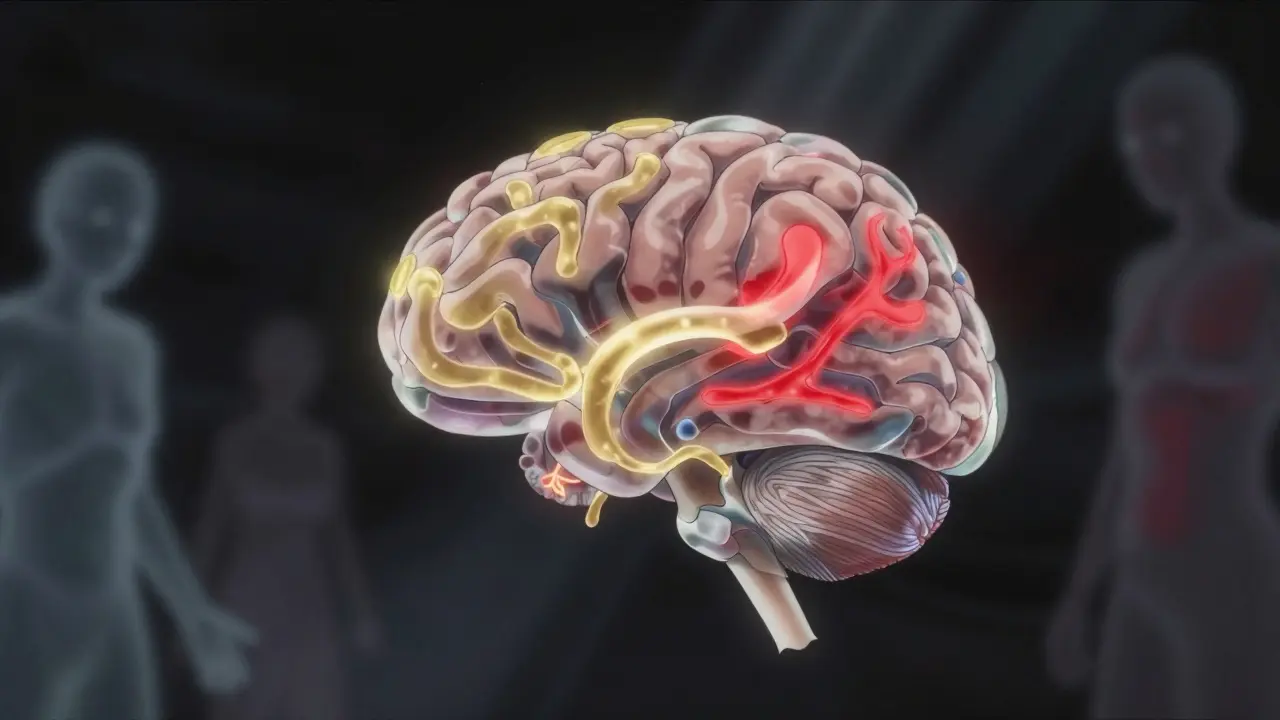
Treating the symptoms is only half the battle. Because RBD is a strong predictor of neurodegenerative disease, ongoing neurological assessment is vital. The American Academy of Neurology recommends annual checks for patients with idiopathic RBD. Why? Because the annual conversion rate to diseases like Parkinson’s is around 6.3%, as documented in a 2019 Lancet Neurology review.
What does this assessment involve? It’s not just a chat. Neurologists look for subtle signs that might precede major motor symptoms:
- Olfactory function: Loss of smell is an early marker for Parkinson’s and Lewy Body Dementia.
- Cognitive screening: Tests to detect mild cognitive impairment or changes in attention and executive function.
- Motor examination: Checking for rigidity, tremors, or gait disturbances that might indicate early Parkinsonism.
- Autonomic function: Assessing blood pressure regulation and bowel/bladder control, which can be affected in Multiple System Atrophy.
Catching these changes early allows for better planning and potentially earlier intervention with disease-modifying therapies, which are currently in development. Dr. Ronald Postuma from McGill University suggests that the next five years may see the first therapies targeting the underlying neurodegenerative process itself, rather than just the sleep symptoms.
Bedroom Safety Modifications
Medication helps, but it doesn’t always eliminate the risk entirely. Physical safety measures are non-negotiable. A 2019 study in the Journal of Clinical Sleep Medicine found that 78% of patients implemented bedroom modifications. Here is what that looks like in practice:
- Remove hazards: Take all weapons, sharp objects, and fragile items out of the bedroom.
- Pad surfaces: Cover sharp furniture edges with foam padding. Install corner guards on nightstands.
- Floor protection: Place thick carpets or mats beside the bed. If the patient falls out, they need cushioning.
- Bed rails: For moderate to severe cases, install bed rails. However, ensure they are secure and do not create a trap where a patient could get stuck.
- Separate sleeping arrangements: If safety cannot be guaranteed, consider sleeping in separate rooms. The American Brain Foundation reports that 42% of patients eventually do this to protect their partners.
Avoid alcohol completely. Even moderate consumption (1-2 drinks) can trigger RBD episodes in 65% of patients, according to Sleep Medicine research. Alcohol disrupts sleep architecture and can worsen the loss of muscle atonia.
Quality of Life and Patient Experiences
Living with RBD is stressful for both the patient and their partner. But treatment works. A case study from the Cleveland Clinic describes a 68-year-old man who went from seven weekly episodes to just one after starting 6 mg of melatonin. His morning grogginess faded after two weeks. Conversely, another patient had to stop clonazepam because his balance worsened, leading to more falls during the day.
Partners often report immense relief once treatment starts. One spouse noted in a 2022 survey that after her husband started 0.5 mg of clonazepam, she could finally sleep in the same bed without fear of being kicked or punched. This improvement in relationship dynamics and sleep quality is a significant, though often overlooked, benefit of proper medical care.
Is REM Sleep Behavior Disorder curable?
Currently, there is no cure for RBD. Treatment focuses on managing symptoms to prevent injury and improve sleep quality. However, since RBD is often a precursor to neurodegenerative diseases, research is actively seeking disease-modifying therapies that could slow or halt the underlying progression.
Can stress cause REM Sleep Behavior Disorder?
Stress alone does not cause RBD. RBD is primarily linked to neurological damage in the brainstem areas that control muscle atonia. However, stress, sleep deprivation, and certain medications (like some antidepressants) can exacerbate symptoms or trigger episodes in people who already have the disorder.
How long does it take for melatonin to work for RBD?
Melatonin often requires a titration period. Doctors usually start at 3 mg and increase the dose every 2-4 weeks until symptoms are controlled. Some patients notice improvement within the first few days, while others may take several weeks to find the optimal dose, which can range from 3 mg to 12 mg.
Is clonazepam safe for elderly patients with RBD?
Clonazepam is effective but carries significant risks for the elderly, including increased fall risk, dizziness, and cognitive impairment. Due to these side effects, many specialists prefer melatonin as the first-line treatment for older adults, reserving clonazepam for cases where melatonin fails and safety precautions are strictly enforced.
What is the link between RBD and Parkinson's Disease?
RBD is considered a prodromal marker for alpha-synucleinopathies, a group of diseases that includes Parkinson's Disease, Dementia with Lewy Bodies, and Multiple System Atrophy. Up to 90% of people with idiopathic RBD will develop one of these conditions over time, often decades before other motor symptoms appear.
Do I need a sleep study to diagnose RBD?
Yes, a polysomnography (sleep study) is the gold standard for diagnosis. It confirms the presence of REM sleep without atonia (RSWA), which distinguishes RBD from other sleep disorders like sleep apnea or periodic limb movement disorder. Visual observation by a bed partner is helpful but not sufficient for a definitive medical diagnosis.
Can antidepressants cause REM Sleep Behavior Disorder?
Yes, certain antidepressants, particularly SSRIs and SNRIs, can induce or worsen RBD-like symptoms. If you start experiencing dream enactment after beginning a new medication, consult your doctor. They may adjust the dosage or switch to a different class of drug that has less impact on REM sleep architecture.
Are there any new treatments for RBD coming soon?
Research is focusing on dual orexin receptor antagonists, which target the wakefulness system. Early studies show promise in reducing dream enactment with fewer side effects than current options. Additionally, trials are underway for disease-modifying therapies aimed at slowing the neurodegeneration associated with RBD, with results expected in the coming years.
Lisa Thomas
May 31, 2026 AT 16:29my husband has this and it is terrifying honestly. one night he thought he was fighting off a burglar and nearly broke my nose. we had to move him to the guest room with a mattress on the floor because the bed rails were not enough. melatonin helped a bit but clonazepam was the only thing that stopped the thrashing completely. just be careful with the balance issues if you are older
Nicholas Bowling
June 1, 2026 AT 13:08you people are so dramatic about sleeping. its just dreams why do you need all these meds. probably just stress or too much coffee before bed. stop whining and go to sleep earlier. most of this medical jargon is just to scare you into buying pills. i never heard of anyone dying from acting out a dream unless they were already weak
Jay Foreman
June 1, 2026 AT 20:30actually nicholas you are wrong and here is why. rbd is a serious neurological marker for parkinsons disease which is not something to joke about. the loss of muscle atonia is a physiological failure in the brainstem not a lifestyle choice. ignoring it can lead to severe injury or death for both the patient and their partner. we need to take this seriously instead of dismissing valid medical concerns with lazy assumptions
Cathy N
June 3, 2026 AT 01:23i work in a sleep clinic and seeing patients come in after injuring themselves is heartbreaking. the bedroom safety modifications listed here are crucial. padding the corners of nightstands and removing sharp objects is basic common sense but many families overlook it until someone gets hurt. please dont wait for an emergency to act
Adelaide Motata
June 4, 2026 AT 20:27look i know better than most doctors on this. the real issue is that big pharma wants you on clonazepam for life. natural remedies like magnesium and herbal teas work just as well if you actually listen to your body. all this talk about neurodegenerative diseases is fear mongering designed to sell more tests. trust me ive seen it all
Mike Crump
June 4, 2026 AT 21:52hey adelaide while i appreciate your perspective the science behind rbd is quite robust and well documented in peer reviewed journals. the link between idiopathic rbd and synucleinopathies like parkinsons is established through longitudinal studies spanning decades. dismissing this connection ignores the potential for early intervention which could significantly improve quality of life. lets keep the discussion grounded in evidence based medicine
Samantha Arbuckle
June 5, 2026 AT 13:54the orexin antagonists mentioned in the article give me so much hope 🌟. its amazing how fast research is moving forward. blocking wakefulness signals during rem sleep seems like such a logical approach compared to heavy sedatives. fingers crossed these trials show positive results soon 💤✨
Stephanie Francis
June 7, 2026 AT 01:32it is imperative that individuals diagnosed with rbd adhere strictly to the prescribed treatment protocols. deviation from medical advice can have catastrophic consequences. the statistical data regarding fall risks associated with benzodiazepines in the elderly population is alarming and demands rigorous attention. one must prioritize safety above all else
Jonathan Paul
June 7, 2026 AT 21:00why does nobody talk about the spiritual aspect of this. maybe your soul is trying to escape the body during sleep. all this science stuff is just a distraction from the real truth. you need to cleanse your energy field not take pills. i can help you with that if you want just send me your birth chart and ill tell you whats really going on