Sleep Medications: Safety Risks, Dependence, and Proven Alternatives
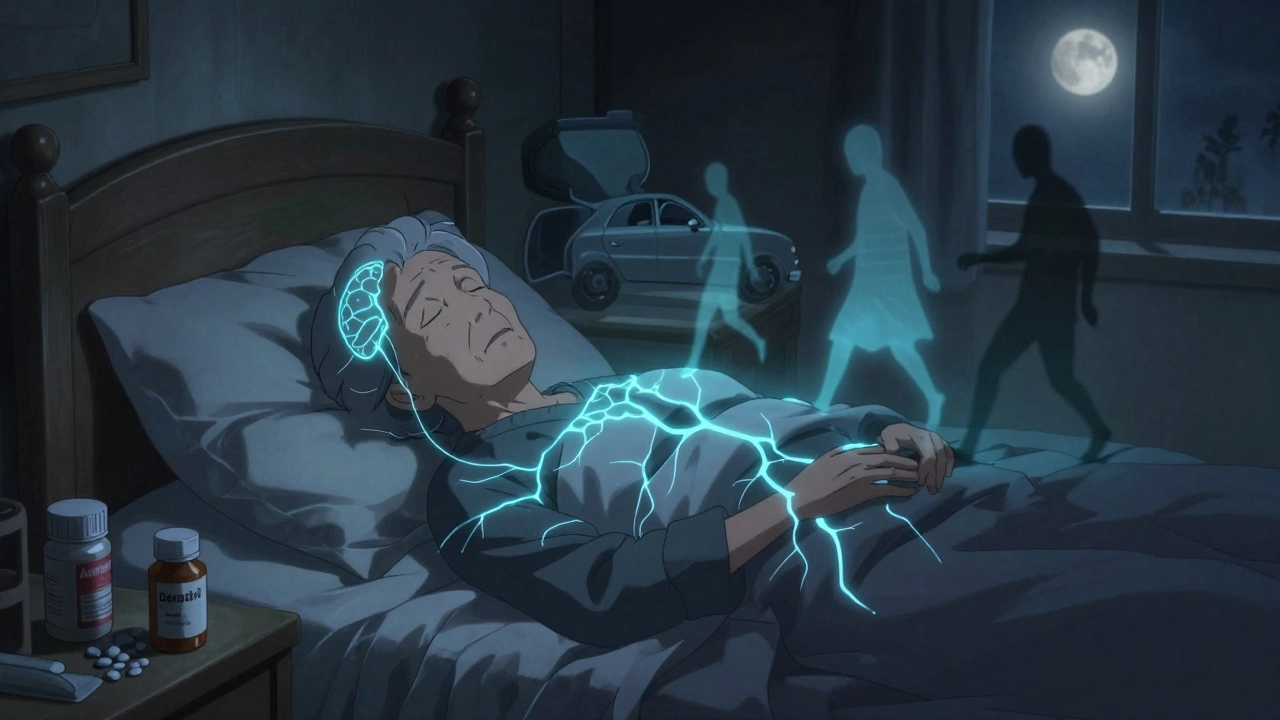
More than 1 in 10 adults over 80 in the U.S. are taking prescription sleep pills. But for every person who finds relief, another wakes up confused, groggy, or worse-having no memory of driving home the night before. Sleep medications might seem like a quick fix for insomnia, but the risks often outweigh the benefits, especially when used long-term. The truth is, these drugs don’t cure sleep problems. They mask them. And when you stop taking them, the insomnia often comes back harder than before.
How Sleep Medications Really Work
Sleep meds don’t help you fall asleep naturally. They depress your central nervous system, forcing your brain into a sedated state. There are several types, each with different risks. Benzodiazepines like lorazepam and diazepam were the first big wave of sleep drugs, introduced in the 1970s. They work by boosting GABA, a calming brain chemical. But they’re highly addictive. Studies show up to one-third of people who take them daily for just 4 to 6 weeks develop dependence.
Then came the Z-drugs-zolpidem (Ambien), eszopiclone (Lunesta), and zaleplon (Sonata). Marketed as safer alternatives, they target the same brain receptors but more selectively. Still, they carry serious risks. The FDA added a boxed warning to Ambien in 2019 after reports of people sleepwalking, cooking meals, or even driving while not fully awake. Women are especially vulnerable: the recommended starting dose for zolpidem was cut from 10mg to 5mg because women metabolize it slower, leading to dangerous next-day impairment.
Then there are the off-label prescriptions: trazodone (an antidepressant), doxepin (a low-dose antihistamine), and even anticonvulsants like pregabalin. These aren’t approved for sleep, but doctors use them because they’re cheap. Trazodone can cause priapism-a painful, prolonged erection. Doxepin, even at low doses, can affect heart rhythm in older adults.
And don’t forget the OTC stuff. Diphenhydramine (Benadryl) and doxylamine (Unisom) are everywhere. They’re cheap, easy to buy, and widely misunderstood. These are anticholinergics-drugs that block acetylcholine, a key brain chemical for memory and focus. A 2015 JAMA Internal Medicine study found people who took these nightly for three years had a 54% higher risk of developing dementia. That’s not a side effect. That’s brain damage.
The Hidden Dangers: Dependence, Withdrawal, and Next-Day Impairment
Most people don’t realize how quickly dependence forms. It’s not about cravings or needle marks. It’s about your brain forgetting how to sleep without the drug. You start needing a higher dose to get the same effect. You panic when you run out. You skip meals or cancel plans just to make sure you can take your pill on time.
When you try to quit, rebound insomnia hits hard. Your sleep doesn’t just return to normal-it gets worse. A 2021 study in Sleep Review found that 70% of long-term users experienced severe insomnia for 3 to 7 nights after stopping. Many go right back on the pills because they think, “I can’t live without this.” That’s the trap.
And it’s not just about sleep. The next-day fog is real. A 2015 study in PMC found that 25% of users had impaired focus, memory, and motor skills the morning after taking sleep meds. That’s equivalent to having a blood alcohol level of 0.05% to 0.08%. In other words, you’re legally impaired. You might not feel drunk, but your reaction time is slowed. Your coordination is off. You’re more likely to fall, especially if you’re over 65.
That’s why the American Geriatrics Society’s Beers Criteria (2023) says: never prescribe these drugs to older adults. The risk of falling and breaking a hip is 50% to 60% higher. Hip fractures in seniors often lead to permanent disability or death. And yet, 13% of people over 80 are still taking them.
Why CBT-I Is the Only Real Solution
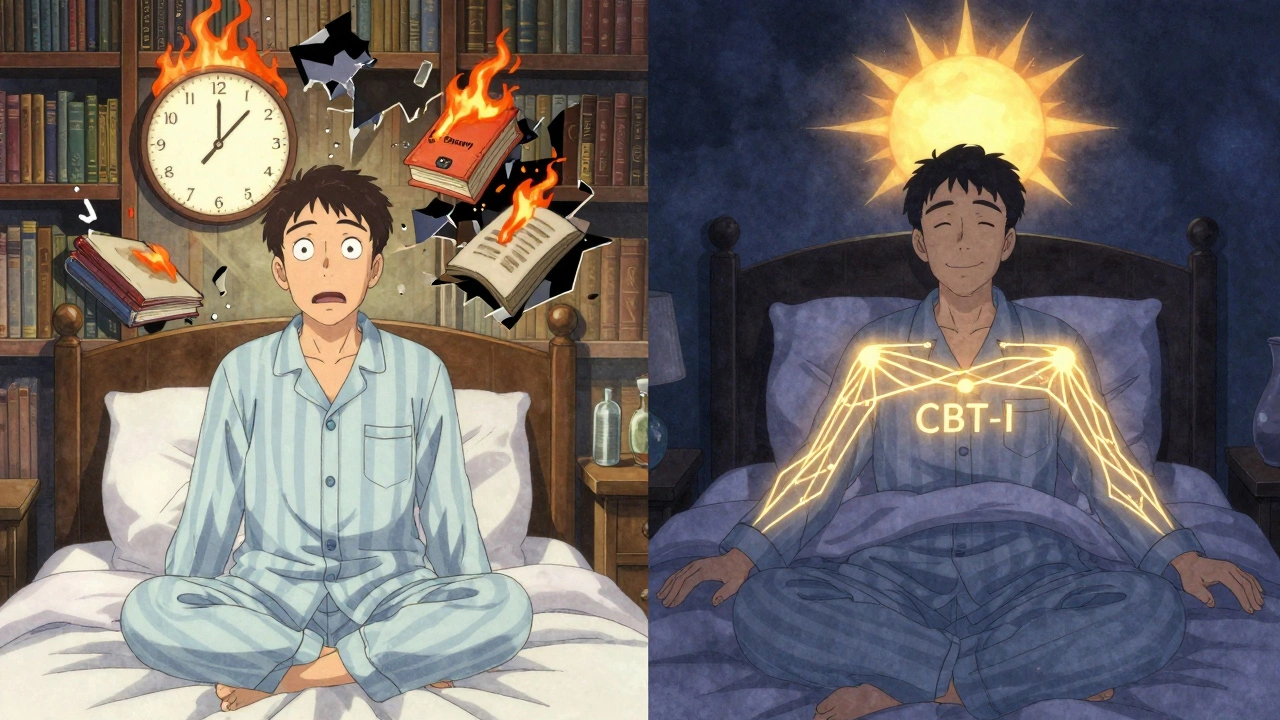
There’s one treatment that works better than any pill-and has no side effects. It’s called Cognitive Behavioral Therapy for Insomnia, or CBT-I. It’s not a quick fix. It takes 4 to 8 weeks. But it changes how your brain thinks about sleep. You learn to break the cycle of anxiety, lying awake, and stressing about not sleeping.
CBT-I doesn’t use drugs. It uses techniques like sleep restriction (limiting time in bed to match actual sleep), stimulus control (only using the bed for sleep and sex), and cognitive restructuring (challenging thoughts like “If I don’t sleep tonight, I’ll be useless tomorrow”).
The data is overwhelming. A 2017 guideline from the American Academy of Sleep Medicine gave CBT-I a strong recommendation as the first-line treatment for chronic insomnia. Why? Because it works in 70% to 80% of cases. And the results last. Five years later, most people still sleep well. Compare that to sleep meds, where effectiveness drops off after 4 weeks and dependence sets in.
WebMD found that 78% of people who tried CBT-I had better long-term results than those who relied on pills. Yes, it’s harder. You have to change habits. You have to sit with discomfort. But you’re not trading one problem for another. You’re fixing the root cause.
What About Melatonin and Natural Remedies?
Melatonin gets a lot of hype. It’s a hormone your body naturally makes to signal sleep. But most people don’t need more of it. Melatonin supplements are useful only for specific cases-jet lag, shift work, or delayed sleep phase disorder. For general insomnia? The evidence is weak. A 2020 meta-analysis found melatonin only improved sleep onset by about 7 minutes on average.
But it’s safe. No dependence. No next-day grogginess. And at $5 a month, it’s cheaper than most prescriptions. If you want to try something natural, melatonin is the least risky option. Start with 0.5mg to 1mg, 30 minutes before bed. Don’t go higher unless advised by a doctor.
Other supplements like valerian root or magnesium have anecdotal support, but no strong clinical backing. Some people swear by them. Others feel nothing. They’re not dangerous, but they’re not magic either.
The New Frontiers: Digital Therapies and Next-Gen Drugs
Technology is finally catching up to the science. In 2020, the FDA approved the first digital therapeutic for insomnia: Somryst. It’s a prescription app that delivers full CBT-I through guided sessions, sleep tracking, and personalized feedback. In clinical trials, 60% of users achieved remission-meaning they no longer met the criteria for insomnia. And it’s covered by some insurance plans now.
There’s also Quviviq (daridorexant), a new orexin receptor antagonist approved in 2022. Unlike sedatives, it doesn’t shut down your brain. It blocks the wakefulness signal. Early data shows less next-day impairment than zolpidem. It’s not a cure, but it’s a step toward safer pharmacological options.
But here’s the catch: these aren’t replacements for behavioral change. They’re tools. The best outcomes happen when you combine them with CBT-I principles.
How to Get Off Sleep Medications Safely
If you’re on sleep meds and want to stop, don’t quit cold turkey. That’s how rebound insomnia turns into a crisis. Work with your doctor to taper slowly-usually 25% every two weeks. For example, if you take 10mg of zolpidem, drop to 7.5mg for two weeks, then 5mg, then 2.5mg.
Start CBT-I while you taper. It gives your brain a new strategy. Use melatonin if needed. Keep a sleep diary. Avoid alcohol and caffeine after noon. Make your bedroom dark, cool, and quiet. Get sunlight in the morning. Move your body during the day.
A 2021 JAMA Internal Medicine study found that 40% of people trying to quit needed extra support-like counseling or a sleep coach. That’s normal. You’re retraining your brain. It takes time.
Who Should Avoid Sleep Medications Altogether?
Anyone over 65. People with a history of depression, substance use, or sleep apnea. Anyone who drives or operates machinery. Pregnant or breastfeeding women. People with liver or kidney disease.
If you’re taking one of these drugs, ask yourself: Is this helping me sleep better, or just helping me feel less tired the next day? If it’s the latter, you’re not healing. You’re masking.
The real goal isn’t to fall asleep faster. It’s to wake up feeling rested-without a pill.
Can sleep medications cause dementia?
Yes, long-term use of certain sleep medications-especially OTC antihistamines like diphenhydramine and doxylamine-has been linked to a 54% higher risk of dementia, according to a 2015 study in JAMA Internal Medicine. These drugs block acetylcholine, a brain chemical critical for memory. Even short-term use in older adults can impair cognition. Prescription sleep aids like benzodiazepines and Z-drugs carry a lower but still present risk, especially with prolonged use.
Is melatonin safer than prescription sleep aids?
Yes, melatonin is far safer than prescription sleep medications. It doesn’t cause dependence, next-day grogginess, or complex sleep behaviors. It’s a hormone your body naturally produces. But it’s not a magic cure. For most people with chronic insomnia, melatonin only helps by a few minutes. It’s best for jet lag, shift work, or delayed sleep phase-not general insomnia. Start with 0.5mg to 1mg, and avoid doses above 3mg unless directed by a doctor.
What is CBT-I, and why is it better than pills?
CBT-I stands for Cognitive Behavioral Therapy for Insomnia. It’s a structured program that teaches you how to change thoughts and habits that keep you awake. Unlike pills, it doesn’t sedate you-it fixes the root cause of insomnia. Studies show it works for 70% to 80% of people, and the results last for years. Pills only work while you take them, and they come with risks like dependence, falls, and memory problems. CBT-I has no side effects.
How long can you safely take sleep meds?
Clinical guidelines recommend using prescription sleep medications for no more than 2 to 5 weeks. After that, effectiveness drops and dependence risk rises. Even if you feel fine, your brain is adapting to the drug. Long-term use increases fall risk, cognitive decline, and rebound insomnia. If you’ve been on them longer than a month, talk to your doctor about tapering and switching to CBT-I.
Can I quit sleep meds cold turkey?
No. Quitting cold turkey can cause severe rebound insomnia, anxiety, tremors, and even seizures in rare cases. Withdrawal symptoms can last days or weeks. Always taper slowly under medical supervision-usually reducing the dose by 25% every two weeks. Combine tapering with CBT-I to give your brain a healthy alternative to sleep meds.
If you’re tired of relying on pills to sleep, you’re not alone. And you don’t have to keep going down this path. The science is clear: the safest, most effective way to sleep better isn’t in a bottle. It’s in your mind-and with the right tools, you can reclaim your nights without a single pill.
Stephanie Bodde
December 5, 2025 AT 09:17I was on Ambien for 3 years and thought I couldn't sleep without it... until I tried CBT-I. It was HARD. Like, crying-in-the-dark-hard. But after 6 weeks, I actually started looking forward to bed. No more groggy mornings. No more panic when I forgot my pill. I'm 2 years clean and sleeping better than I did in my 20s. 🙌
Philip Kristy Wijaya
December 6, 2025 AT 09:13Let me be clear this is not science this is fearmongering dressed as journalism the FDA has approved these drugs for a reason and if you want to sleep then take a pill dont lecture people about brain damage when your so called CBT I is just behavioral manipulation with a fancy acronym
William Chin
December 7, 2025 AT 18:33While I acknowledge the concerns raised regarding pharmacological interventions for insomnia, I must emphasize that the clinical data supporting cognitive behavioral therapy for insomnia is not universally applicable. Patient heterogeneity, comorbid psychiatric conditions, and socioeconomic barriers to access render CBT-I an impractical first-line intervention for a substantial subset of the population. Furthermore, the assertion that pharmacotherapy is inherently deleterious ignores the palliative benefit conferred upon individuals with acute, situational insomnia.
Ada Maklagina
December 9, 2025 AT 09:34Been off zolpidem for 8 months. Still wake up some nights. But now I just lie there. No panic. No pills. Just breathing. Feels weird. Good weird.
Katie Allan
December 9, 2025 AT 17:42There's a quiet revolution happening in sleep medicine, and it's not in a pill bottle. It's in the quiet moments before bed when someone chooses to turn off the screen, sit with their thoughts, and trust that their body knows how to rest. CBT-I isn't a quick fix because sleep isn't a problem to be solved-it's a rhythm to be reclaimed. And that takes patience, not pharmaceuticals.
James Moore
December 11, 2025 AT 07:58Look, I get it, the woke medical establishment wants us to believe that sleep is just a mindset, but let's be real-when you're 72 and your body is falling apart, and you've got arthritis in your spine and your knees and your back and you're trying to sleep on a mattress that feels like a concrete slab, and you've been awake since 2 a.m. because your bladder is screaming at you and your neighbor's dog is barking every 17 minutes-you don't want to do "stimulus control" you want a pill that makes you pass out so you don't have to think about it for eight hours, and if that means you're "dependent" then fine, I'll take my dependency over the alternative, which is sitting there watching the clock tick until sunrise, and no, I don't care about your 70% success rate, I care about getting through the night without screaming.
Chris Brown
December 12, 2025 AT 15:14It is morally indefensible to prescribe benzodiazepines to elderly patients. The data is irrefutable. The American Geriatrics Society’s Beers Criteria exists for a reason. To continue this practice is not medical care-it is negligence dressed in white coats. And those who defend it are complicit in the silent epidemic of geriatric falls and fractures that plague our nursing homes. Wake up.
Stephanie Fiero
December 14, 2025 AT 07:25just tried melatonin and it made me feel like a zombie for 5 hours the next day i dont trust this stuff anymore. cbt-i sounds like a cult but i might try it. anyone know a good app?
Laura Saye
December 15, 2025 AT 03:59The neurochemical recalibration required to restore endogenous sleep architecture is a profound physiological reorganization-one that pharmacological suppression actively impedes. CBT-I facilitates neuroplastic reconditioning of the hypothalamic-pituitary-adrenal axis and modulates cortical arousal thresholds through circadian entrainment and cognitive reappraisal. The persistence of efficacy beyond treatment cessation suggests durable synaptic remodeling, a phenomenon absent in GABAergic agonists, which induce tolerance via receptor downregulation. In essence, we’re not treating insomnia-we’re restoring the brain’s innate capacity for rest.