Sugar Intake and Diabetes Medications: How Diet Affects Your Control
Diabetes Medication & Diet Interaction Checker
Configure Your Profile
Analysis Results
Select your medication and sugar intake, then click "Analyze Impact" to see potential effects.
You take your diabetes medication is a pharmaceutical treatment designed to manage blood glucose levels in individuals with diabetes every morning. You believe it’s doing the heavy lifting. But what if I told you that one sugary drink could undo hours of careful dosing? It’s not just about willpower; it’s about biology. Your pills don’t work in a vacuum. They interact directly with the food on your plate. Understanding this relationship isn't optional-it’s the difference between stable health and dangerous spikes or crashes.
We often treat diet and medicine as separate tracks. One is handled by your doctor, the other by your grocery list. This separation is dangerous. Research shows that intensive glycemic control through combined medication and dietary management reduces microvascular complications by 40-76%. That is a massive margin of safety you are leaving on the table if you ignore how sugar interacts with your specific prescription. Let’s break down exactly how different meds handle sugar, what to avoid, and how to eat for better results.
How Sugar Sabotages Metformin
Metformin is the first-line pharmacological treatment for Type 2 diabetes, functioning by decreasing hepatic glucose production and improving insulin sensitivity. It is the most prescribed drug for diabetes worldwide, used by roughly 150 million people. It works by telling your liver to stop dumping extra sugar into your bloodstream and helping your muscles use insulin more efficiently. It is robust, but it has limits.
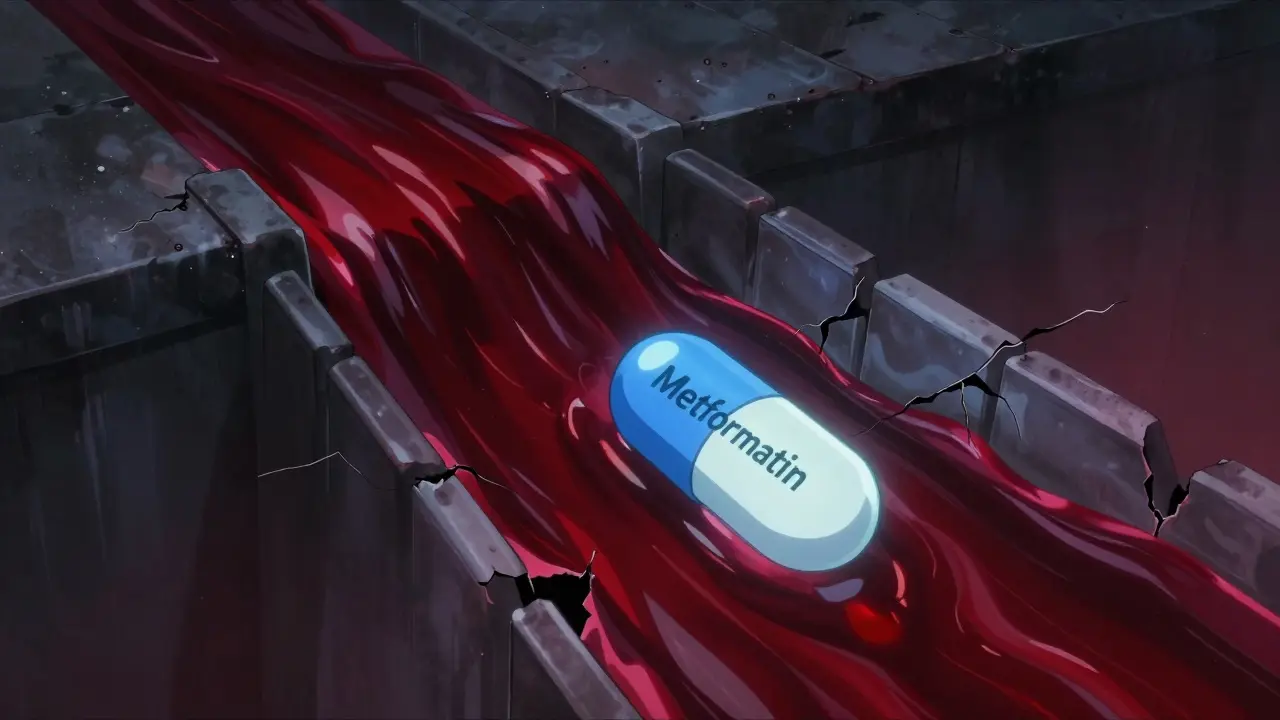
Think of Metformin like a dam holding back water. If the river (your sugar intake) stays at a normal level, the dam holds fine. But if you flood the system with high-sugar foods, the pressure becomes too great. A 2022 clinical analysis found that patients consuming more than 100g of added sugar daily needed 28% higher doses of Metformin to achieve the same control as those limiting sugar to under 25g. That means you might be taking more medication than necessary simply because of your breakfast choice.
High-fat and high-sugar meals also change how fast your stomach empties. This delays the absorption of Metformin, potentially reducing its peak effectiveness by up to 30%. So, eating a greasy, sugary burger doesn't just spike your blood sugar; it makes your pill less effective at fighting that spike. The National Health Service (NHS) guidelines warn that if you do consume sugary beverages while on Metformin, you should check your blood glucose every two hours for six hours afterward. Why? Because the combination can cause unpredictable swings that standard monitoring misses.
The Hypoglycemia Risk with Sulfonylureas
If you take Sulfonylureas are a class of diabetes medications including glyburide and glipizide that stimulate the pancreas to release more insulin, the stakes are different. These drugs force your pancreas to pump out insulin regardless of your current blood sugar level. This makes them powerful but risky when paired with inconsistent eating habits.
The Cleveland Clinic notes that these medications carry the highest risk of hypoglycemia (dangerously low blood sugar) when carbohydrate intake is irregular. Patients who eat inconsistently experience 15-20 hypoglycemic episodes per year, compared to just 3-5 for those who keep their carb intake steady. Here is the tricky part: a single high-sugar meal can trigger a crash 3 to 5 hours later. In fact, 68% of patients on Glyburide experienced this delayed hypoglycemia after eating a meal with over 75g of carbohydrates.
To stay safe, consistency is key. Try to keep the amount of carbohydrates similar from meal to meal. Variations should be limited to no more than 15g of carbohydrate between equivalent meals. If you skip a snack or eat a huge dessert, your medication will still push insulin into your system, leading to a potential crash. This isn't just uncomfortable; it can be life-threatening if left unchecked.
Newer Drugs: SGLT2 Inhibitors and GLP-1 Agonists
Newer classes of drugs offer a bit more flexibility, though they aren't magic bullets. SGLT2 inhibitors are medications like canagliflozin and dapagliflozin that promote urinary glucose excretion to lower blood sugar work by flushing excess sugar out through your urine. Because they don't rely solely on insulin action, they maintain 85-90% of their efficacy even if your dietary sugar intake varies. Similarly, GLP-1 receptor agonists are injectable medications such as semaglutide and dulaglutide that enhance insulin secretion and slow gastric emptying help regulate appetite and slow digestion.
However, don't get complacent. Even these advanced agents show a 15-20% reduction in effectiveness if you consume more than 100g of added sugar daily. No medication eliminates the need for dietary management. The American Diabetes Association (ADA) emphasizes that medication efficacy cannot be accurately assessed without concurrent attention to dietary patterns. You can have the best drug on the market, but if you drown it in soda, it will struggle to keep up.

Foods to Avoid While Taking Diabetes Medication
Knowing what to avoid is just as important as knowing what to take. Based on clinical analyses from GoodRx and ADA standards, here are seven categories that interfere with your medication's ability to control blood sugar:
- Sugary Drinks: Soda and fruit juices with more than 20g of sugar per serving hit your bloodstream instantly, overwhelming any medication effect.
- High-Sugar Fruits: While fruit is healthy, mangoes and grapes contain over 20g of sugar per serving. Pair them with protein or fat to blunt the spike.
- Processed Foods: Packaged snacks often hide more than 15g of added sugar per serving, along with refined carbs that digest quickly.
- High-Fat Foods: Meals with over 20g of saturated fat delay gastric emptying, altering how your body absorbs oral medications like Metformin.
- Sweetened Dairy: Yogurts with more than 15g of sugar per serving combine dairy fats with rapid-absorbing sugars, creating a complex glycemic challenge.
- Alcohol: Sweetened cocktails with over 25g of sugar can cause erratic readings, especially if mixed with sulfonylureas.
- Refined Carbohydrates: White bread and pastries with over 30g of refined carbs per serving cause sharp spikes that are hard to bring down quickly.
The Hidden Culprits: Other Medications
Your diabetes meds aren't the only things affecting your sugar. Other common prescriptions can exacerbate metabolism issues. For example, steroid tablets like Prednisolone is a corticosteroid medication that can increase blood glucose by 50-100 mg/dL within 24 hours can raise your blood sugar significantly within a day. Diuretics like furosemide may require adjustments to your Metformin dose in nearly a third of patients. Even hormonal contraceptives alter glucose metabolism in 27% of users. Always tell your doctor about every supplement and pill you take, as these interactions can silently undermine your diabetes control.

Glycemic Index: A Tool for Stability
Not all sugars are created equal. A 2025 review in the *International Journal of Molecular Sciences* highlighted that low-glycemic-index (GI) foods (GI <55) enhance insulin sensitivity by 25-40% compared to high-GI foods (GI >70). When you choose low-GI options, you create a synergistic effect with medications like Metformin. This combination reduces post-meal glucose spikes by an average of 35-50 mg/dL. Instead of white rice, try quinoa. Swap candy for berries. Small swaps lead to significant stability.
| Medication Class | Mechanism of Action | Dietary Sensitivity | Key Risk with High Sugar |
|---|---|---|---|
| Metformin | Reduces liver glucose output | Moderate | Reduced efficacy; requires higher doses |
| Sulfonylureas | Stimulates insulin release | High | Delayed hypoglycemia (low blood sugar) |
| SGLT2 Inhibitors | Excretes sugar via urine | Low | Minimal impact on efficacy |
| GLP-1 Agonists | Slows digestion, boosts insulin | Low-Moderate | Nausea if meals are too rich/sugary |
Real-World Results: Why Diet Counseling Matters
Data supports the idea that education changes outcomes. An analysis by the American Association of Clinical Endocrinologists found that patients who received structured dietary counseling alongside medication initiation reached target HbA1c levels (<7.0%) in 6.2 months on average. Those who just got the prescription took 11.7 months. That is a 47% faster achievement of health targets. Furthermore, patients in structured nutrition programs required fewer medication adjustments (1.2 vs 3.7) and had 63% fewer emergency room visits. Yet, only 39% of primary care providers routinely refer new patients to dietitians. Don't wait for the referral. Take charge of your nutritional knowledge now.
Can I eat any fruit if I am on Metformin?
Yes, but portion control matters. Berries and apples have lower glycemic impacts. Avoid large servings of high-sugar fruits like mangoes or grapes without pairing them with protein or healthy fats to slow absorption.
How much added sugar is too much for someone with Type 2 diabetes?
The American Diabetes Association recommends limiting added sugars to less than 10% of total daily calories. For a 2,000-calorie diet, this is approximately 50 grams. Keeping it under 25 grams yields significantly better medication efficacy.
Why does my blood sugar drop hours after a sweet meal?
This is common with sulfonylureas. The medication forces insulin release. After the initial sugar spike, your body may overcorrect, leading to hypoglycemia 3-5 hours later. Consistent carbohydrate intake prevents this rollercoaster.
Do SGLT2 inhibitors allow me to eat freely?
No. While they are more resilient to dietary variations, consuming over 100g of added sugar daily still reduces their effectiveness by 15-20%. They are not a license to ignore diet.
What should I do if I accidentally consume a high-sugar meal?
If you are on Metformin, monitor your blood glucose every two hours for six hours. If you are on sulfonylureas, be vigilant for signs of hypoglycemia several hours later. Stay hydrated and consider a light walk to help stabilize levels.
victoria catharinaa
May 17, 2026 AT 16:24i am so sick of people saying just take the pill and ignore what you eat. it is literally biology 101 that food interacts with meds. you cannot out-medicate a bad diet period. if you are on metformin and drinking soda you are wasting your time and money. stop blaming the pharma companies for your own choices. we need to be more honest about how hard it is to change habits but also stop making excuses.
Glen Speck
May 19, 2026 AT 14:07the idea that medicine and diet are separate tracks is a philosophical error in modern healthcare we often treat the body as a machine where parts can be fixed independently without considering the whole system this separation creates a false sense of security for patients who believe their prescription is a shield against poor dietary choices when in reality the two are deeply intertwined in a complex biological dance
Sam Mackellar
May 20, 2026 AT 08:59It is quite fascinating to observe the statistical correlation between dietary adherence and medication efficacy. The data presented regarding Sulfonylureas is particularly concerning due to the risk of hypoglycemia. One must consider that consistency in carbohydrate intake is not merely a suggestion but a critical component of safety for those on such regimens. It would be prudent for individuals to consult their endocrinologist before making significant changes to their diet while on these specific medications.
Justina Ingram
May 21, 2026 AT 16:35lol omg i had no idea that high fat foods make metformin less effective like really?? i always thought it was just about sugar. this explains why my levels were all over the place after eating greasy pizza. thanks for sharing this info cause i was gonna blame my doc but now i know its me :P
amit kumar
May 22, 2026 AT 19:02This is very helpful information for everyone managing diabetes 🩸 I have been taking Metformin for years and always struggled with post-meal spikes. Reading about the gastric emptying delay makes so much sense now. I will try to pair my fruits with some protein or nuts as suggested. Small changes really do lead to big results over time 💪 Keep sharing such useful tips!
Lori Wildrick
May 24, 2026 AT 05:35I really appreciate how this article breaks down the different types of medications. It feels overwhelming sometimes to keep track of everything. Knowing that GLP-1 agonists might help with appetite could be a game changer for some people. I think we should support each other in making these small swaps like quinoa instead of white rice. Every little bit helps us feel better and stay healthier.
Emma Olliff
May 24, 2026 AT 14:32It is absolutely pathetic how many people refuse to accept personal responsibility for their health outcomes. You can buy the most expensive, cutting-edge pharmaceuticals available on the market, but if you choose to drown them in cheap, processed sugar and refined carbohydrates, you deserve the consequences. This is not a victimhood narrative; it is basic metabolic science. The fact that anyone believes they can cheat their biology through sheer willpower or medical intervention alone is laughable. True discipline involves understanding that your diet is the foundation upon which all other treatments rest. If you cannot manage your plate, you cannot manage your disease.
Diana Wiechecka
May 25, 2026 AT 09:31Great read! 👀