Team-Based Care: How Multidisciplinary Teams Improve Generic Prescribing Outcomes
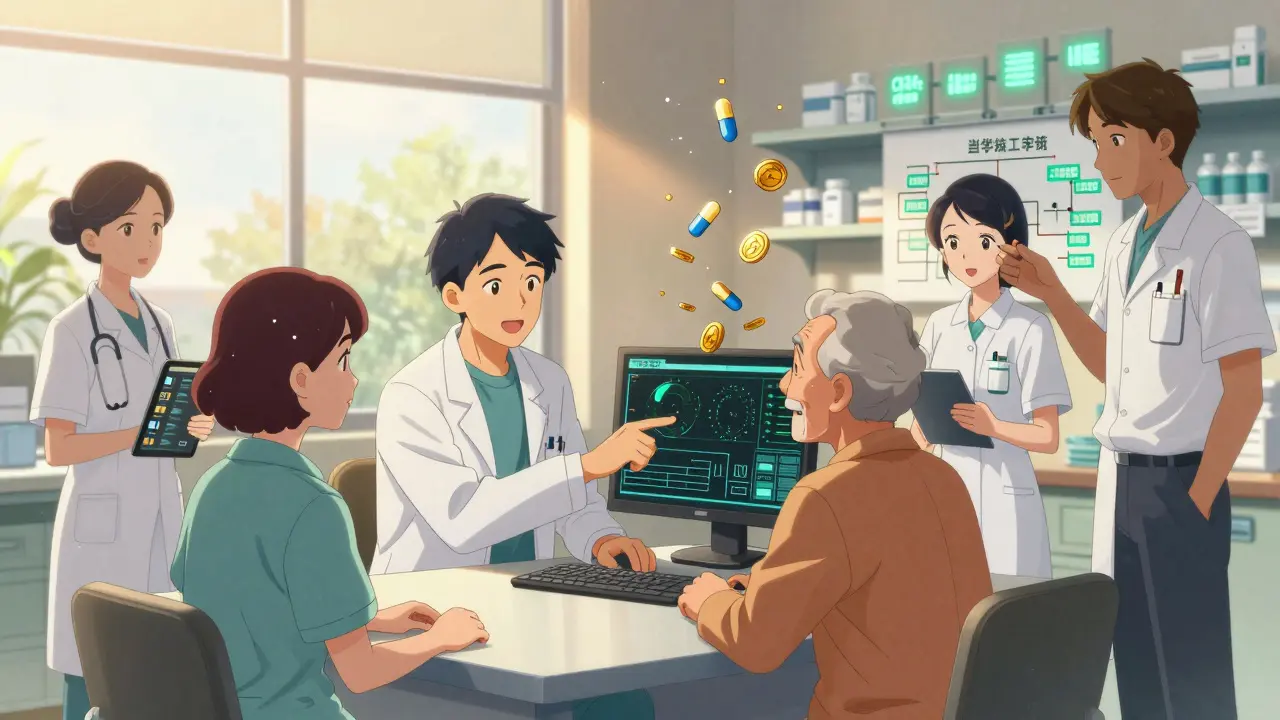
When a patient walks into a clinic with five chronic conditions and a stack of prescriptions, who’s really in charge of their meds? It’s not just the doctor anymore. In today’s healthcare system, generic prescribing is no longer a solo decision made behind closed doors. It’s a team sport - and the results are changing lives.
Why Team-Based Care Matters for Medication Decisions
For decades, prescribing was seen as a physician’s exclusive domain. But the data doesn’t lie: fragmented care leads to errors, wasted money, and avoidable hospital visits. The Institute of Medicine flagged this back in 2001, and since then, the shift toward team-based care has been steady - and necessary. Now, teams include pharmacists, nurses, care coordinators, and sometimes even patients and family members. Each person has a defined role. Physicians handle complex diagnoses and high-risk decisions. Pharmacists dig into every pill in the bottle - checking for interactions, duplicates, and cheaper alternatives. Nurses monitor blood pressure, blood sugar, and adherence. Care coordinators make sure no one falls through the cracks. This isn’t theoretical. In practices using this model, medication errors drop by 67%, according to the American Pharmacists Association. Adherence improves by nearly 30%. And patients pay less - often hundreds of dollars a month less - because pharmacists are actively recommending generic substitutes that work just as well.How Pharmacists Drive Generic Prescribing
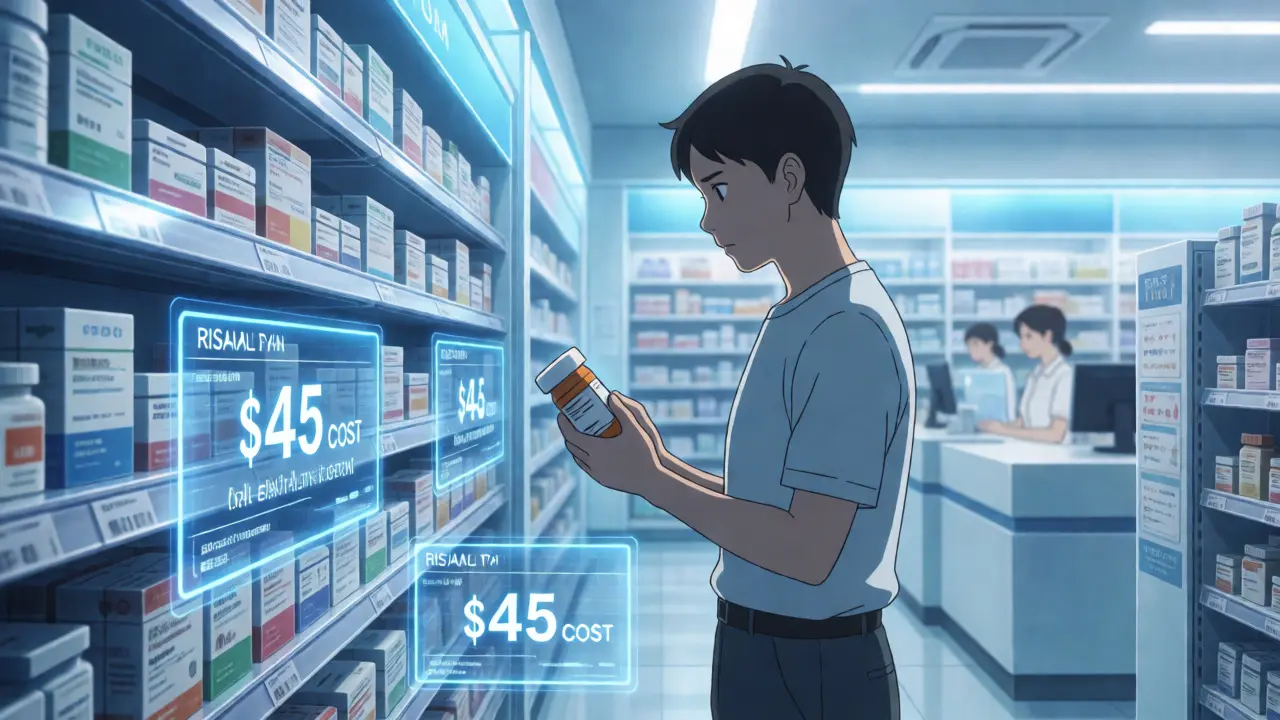
Pharmacists aren’t just dispensers. They’re medication experts with clinical training. Most hold a Pharm.D. and complete at least one to two years of residency. In team-based models, they’re embedded in clinics, not tucked away in the back of a pharmacy. Their role in generic prescribing is direct and powerful. When a patient comes in with a brand-name statin costing $150 a month, the pharmacist checks: Is there a generic? Is it bioequivalent? Is the patient’s kidney function stable enough to switch? Then they communicate with the prescriber - often in real time via electronic health records. One study from the National Center for Biotechnology Information showed that in patients with diabetes, hypertension, and high cholesterol, pharmacist-led reviews led to a 42% increase in appropriate generic substitutions - with zero drop in effectiveness. That’s not luck. It’s protocol. Medicare Part D’s Medication Therapy Management (MTM) program, launched in 2003, formalized this. Today, 12.3 million beneficiaries get MTM services. Eligibility? Three or more chronic conditions, five or more medications, and annual drug costs over $4,000. But in 2023, CMS lowered the threshold to four medications - adding millions more to the program.The Roles: Who Does What in a Medication Team
A well-functioning team doesn’t just have more people. It has clear boundaries.- Physicians: Set diagnosis, manage complex cases, approve major changes. They focus on what only they can do.
- Pharmacists: Conduct full medication reviews, identify therapeutic duplications, recommend generics, counsel on side effects, track adherence.
- Nurses & Medical Assistants: Monitor vital signs, educate patients on taking meds correctly, flag missed doses, manage chronic disease logs.
- Care Coordinators: Link the team together. They schedule follow-ups, coordinate with specialists, ensure paperwork flows between systems.
- Patient & Family: Not passive recipients. They’re part of the team. Their input on cost, side effects, and daily routines shapes what gets prescribed.
Real Results: Cost Savings and Health Improvements
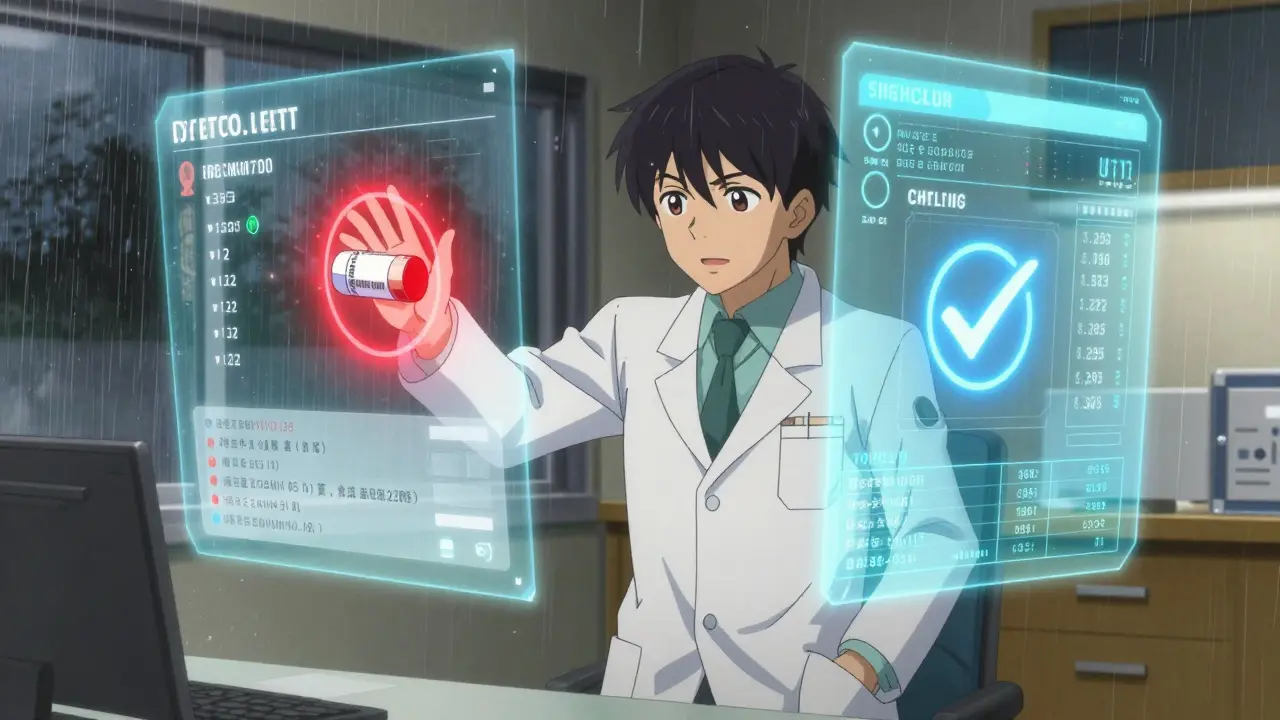
Numbers don’t lie. Team-based care saves money - and lives. At PureView Health Center, team-based medication management cut annual healthcare costs by $1,200 to $1,800 per patient. How? By eliminating duplicate tests, preventing hospital readmissions, and switching patients to generic drugs. One patient switched from a brand-name blood pressure med to its generic equivalent and saved $200 a month. The pharmacist caught three dangerous interactions his doctor missed. Hospital readmissions dropped by 17.3% in practices using this model, according to ThoroughCare’s 2022 analysis. Duplicative testing fell by 22.8%. That’s not just efficiency - it’s safety. And the benefits aren’t just financial. In patients with heart failure, team-based care improved ejection fraction scores by 8% over six months. In diabetics, HbA1c levels dropped by 0.9% on average. These aren’t small gains. They’re clinically significant.Challenges: Why It’s Not Everywhere Yet
It sounds perfect - but adoption is still uneven. Setting up a team costs between $85,000 and $120,000 per practice. That’s a big hurdle for small clinics. Training staff takes time - 16 to 24 hours per person. Electronic health records often don’t talk to each other. And some doctors resist giving up control. One physician on Doximity reported his administrative load increased by 2.5 hours a week during the first three months of implementation. That’s normal. Teams don’t click overnight. It takes 3 to 6 months to smooth out workflows. Communication breakdowns still happen. The Commonwealth Fund found 12% of patients reported confusion when prescriptions changed between specialists and primary care. That’s why standardized protocols and daily 15-minute huddles are non-negotiable. And while pharmacists are trained, they’re not infallible. A 2021 JAMA study found a 5.2% error rate in non-physician medication recommendations - mostly in complex cases with multiple organ failures. That’s why physician oversight remains critical. Team-based doesn’t mean physician-free.How Practices Are Implementing It (Step by Step)
You can’t just hire a pharmacist and call it a day. Implementation is methodical.- Month 1-2: Define roles. Who does what? Draft collaborative practice agreements (CPAs) that legally allow pharmacists to adjust doses or switch generics under protocol.
- Month 3-4: Configure the EHR. Make sure alerts for drug interactions, refill requests, and generic alternatives pop up for the whole team.
- Month 5: Train everyone. Pharmacists learn clinic workflows. Nurses learn how to flag potential issues. Physicians learn how to delegate.
- Month 6: Pilot with 10-20 patients. Track outcomes: adherence rates, cost savings, error rates. Refine.
The Future: AI, Telepharmacy, and Expanding Access
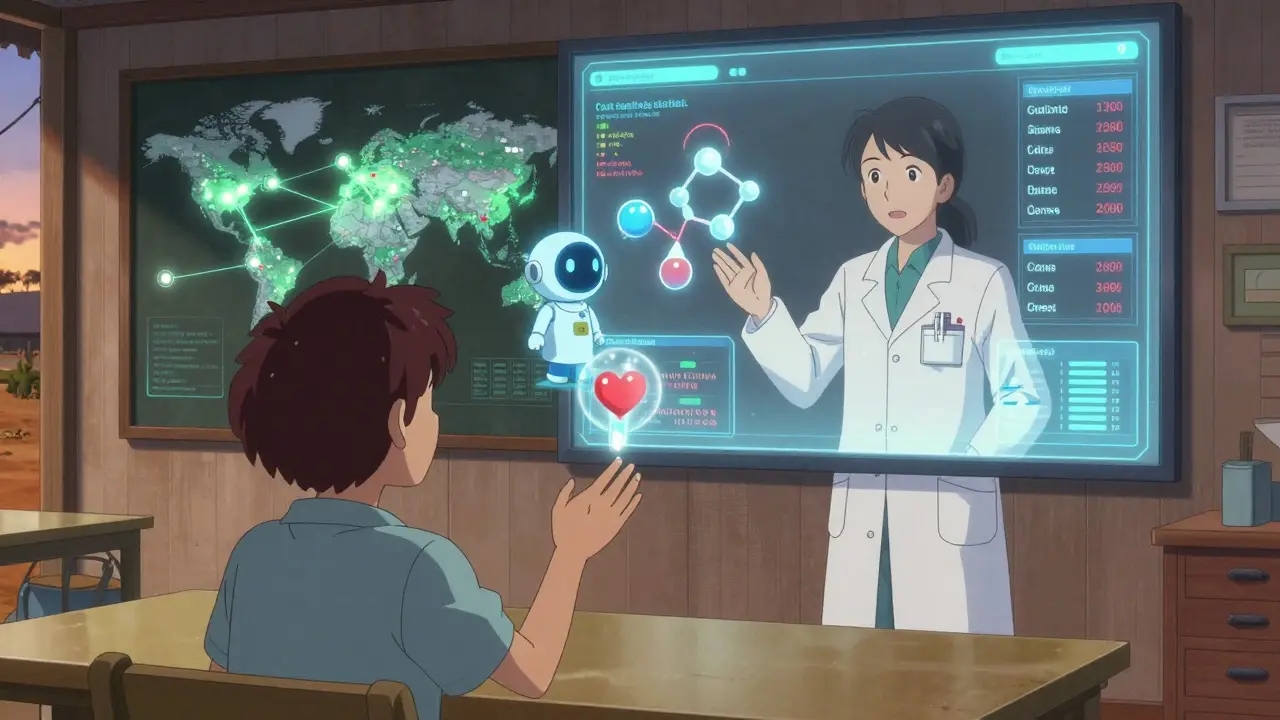
The next wave is digital. Telepharmacy is exploding. Between 2020 and 2023, telepharmacy services grew by 214%. Now, a rural patient in Tasmania can get a virtual medication review from a clinical pharmacist in Hobart - no travel needed. At Mayo Clinic, AI tools are now suggesting generic alternatives based on patient history, lab values, and cost data. In pilot programs, AI boosted appropriate generic use by 22% and cut adverse events by 9.3%. The AI doesn’t decide - it advises. The team still approves. Medicare is expanding eligibility. CMS now includes patients on four or more meds - not five. That means over 4 million more people will qualify for team-based medication management. And the market is responding. The global team-based care market is projected to hit $53.2 billion by 2027. Sixty-eight percent of large health systems already use it. The question isn’t if it will grow - it’s how fast.What Patients Are Saying
On Healthgrades, practices using team-based care average 4.7 out of 5 stars. Comments like this are common: > “The pharmacist noticed I was taking two drugs that did the same thing. She switched me to a generic and saved me $200 a month. My doctor never caught it.” > “I used to forget to take my pills. The nurse called me every week. Now I don’t miss a dose.” > “I thought generics were cheap and weak. The pharmacist showed me the science. I’m healthier now, and my wallet too.” But not all feedback is glowing. Some patients report confusion when multiple people are involved. That’s why clear communication - and a single point of contact - is essential.Bottom Line: Team-Based Care Isn’t Optional Anymore
Generic prescribing isn’t about cutting corners. It’s about smart, safe, patient-centered care. And in a world where drug costs keep rising and chronic disease keeps growing, no single provider can do it alone. The evidence is overwhelming: when pharmacists, nurses, and physicians work together - with the patient at the center - outcomes improve, costs drop, and trust grows. The model works best for diabetes, hypertension, heart failure, asthma, and high cholesterol. It’s less critical for acute issues like a broken bone or a sudden infection. But for the millions managing long-term conditions? This is the standard of care. It’s not about replacing doctors. It’s about empowering teams. And for patients? That’s the difference between surviving - and thriving.What is team-based care in medication management?
Team-based care in medication management is a collaborative model where physicians, pharmacists, nurses, and care coordinators work together with patients to optimize drug therapy. Each member has a defined role: physicians diagnose and oversee, pharmacists review medications and recommend generics, nurses monitor adherence and symptoms, and coordinators ensure communication. This approach reduces errors, improves adherence, and lowers costs through coordinated decision-making.
How do pharmacists help with generic prescribing?
Pharmacists identify opportunities for generic substitution by reviewing all medications for therapeutic duplication, cost, and bioequivalence. They use clinical guidelines and patient history to recommend lower-cost alternatives that are just as effective. They then communicate directly with prescribers, often through electronic health records, to make the switch. Studies show this increases generic use by up to 42% without compromising outcomes.
Is team-based care only for Medicare patients?
No. While Medicare Part D’s MTM program is a major driver - serving over 12 million beneficiaries - team-based care is used by private insurers, VA hospitals, and community clinics. Many private health plans now cover similar services, especially for patients with multiple chronic conditions. The model is expanding beyond Medicare due to proven cost savings and improved outcomes.
Can nurse practitioners and physician assistants prescribe generics in team-based care?
Yes. In many states, NPs and PAs have full prescribing authority and often lead medication management within teams. In team-based models, they frequently manage routine adjustments to chronic meds, including switching to generics, under established protocols. Their role complements pharmacists’ reviews and physicians’ oversight, creating a layered safety net.
What are collaborative practice agreements (CPAs), and why do they matter?
Collaborative Practice Agreements (CPAs) are legal documents that outline the scope of practice for pharmacists and other non-physician providers within a care team. They specify what actions pharmacists can take - like switching to generics, adjusting doses, or ordering labs - under physician supervision. CPAs are essential because they reduce legal risk, clarify roles, and allow pharmacists to act quickly, improving efficiency and patient outcomes.
Why is AI being used in team-based medication management?
AI tools analyze patient data - including labs, medications, and costs - to suggest appropriate generic substitutions and flag potential interactions. At Mayo Clinic, AI increased appropriate generic use by 22% and reduced adverse drug events by 9.3%. It doesn’t replace clinicians; it supports them by surfacing options faster, reducing cognitive load, and helping teams make data-driven decisions.
What’s the biggest barrier to adopting team-based care?
The biggest barrier is upfront cost and workflow disruption. Setting up a team requires $85,000-$120,000 in initial investment for staffing, training, and EHR integration. Many small practices struggle with this. Resistance from providers used to working alone and poor communication between team members also slow adoption. But once systems are in place, savings and efficiency quickly offset the initial burden.
Does team-based care work for patients with mental health conditions?
Yes. Teams that include psychiatric pharmacists, case managers, and therapists are increasingly common for patients with depression, bipolar disorder, or schizophrenia. These patients often take multiple psychotropic drugs with high interaction risks. Pharmacists play a key role in monitoring side effects, adjusting doses, and switching to generics to reduce cost burdens - improving both adherence and quality of life.
Lindsey Kidd
December 24, 2025 AT 05:56Isaac Bonillo Alcaina
December 24, 2025 AT 18:43Bhargav Patel
December 26, 2025 AT 03:44Steven Mayer
December 27, 2025 AT 09:36Charles Barry
December 29, 2025 AT 00:07Rosemary O'Shea
December 29, 2025 AT 16:26Joe Jeter
December 31, 2025 AT 03:31Sidra Khan
January 1, 2026 AT 05:07Lu Jelonek
January 1, 2026 AT 18:42Ademola Madehin
January 1, 2026 AT 23:20suhani mathur
January 2, 2026 AT 12:15bharath vinay
January 2, 2026 AT 18:33Delilah Rose
January 3, 2026 AT 08:26