The Purple Book: Understanding Biosimilars and Interchangeability from the FDA
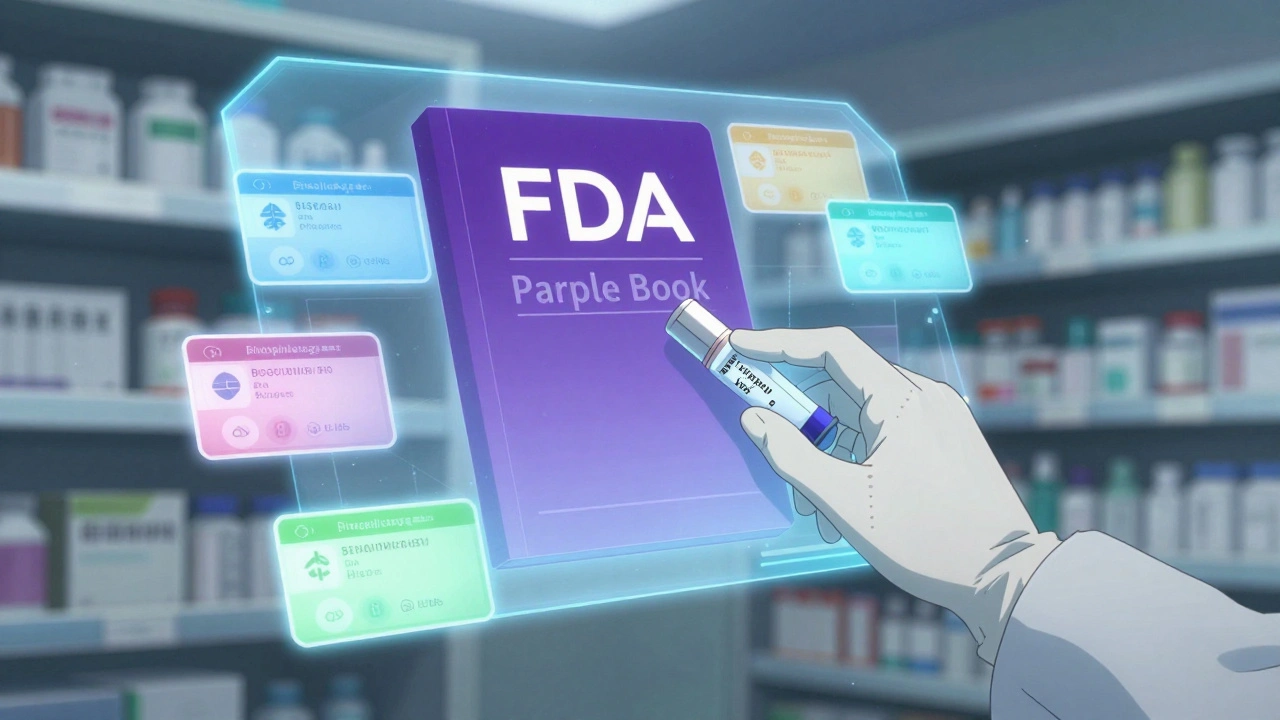
The Purple Book isn’t a novel you read for fun-it’s a critical tool used by pharmacists, doctors, and patients to understand which biological medicines can be safely swapped out in the pharmacy. Think of it as the FDA’s official directory for biosimilars and interchangeable products. If you’ve ever wondered why some biologic drugs can be substituted without a new prescription while others can’t, the Purple Book holds the answer.
What Is the Purple Book, Really?
The Purple Book is a searchable online database run by the U.S. Food and Drug Administration (FDA). It lists every approved biological product in the U.S., including the original reference drugs and their biosimilar and interchangeable versions. Before 2020, this information was split between two separate lists-one for drugs handled by the Center for Drug Evaluation and Research (CDER) and another for biologics managed by the Center for Biologics Evaluation and Research (CBER). That made it confusing. Now, it’s one clean, unified system.
Each product in the database gets a color-coded card. Matching colors mean the products are linked-like a biosimilar tied to its original reference medicine. You’ll see the brand name, generic name, whether it’s a reference product (licensed under section 351(a)), a biosimilar (351(k)), or an interchangeable biosimilar (also 351(k)). There are even icons showing if the drug comes in an autoinjector or pre-filled syringe. It’s designed to be practical, not academic.
Biosimilars vs. Interchangeable Products: The Key Difference
Not all biosimilars are created equal. Every interchangeable product is a biosimilar, but only a few biosimilars earn the interchangeable label. Here’s why that matters.
A biosimilar is a biological product that’s highly similar to its reference drug-no clinically meaningful differences in safety, purity, or potency. That’s the baseline. To get there, manufacturers run extensive lab tests and clinical trials proving their product behaves just like the original.
An interchangeable product goes further. It must prove that switching back and forth between the biosimilar and the original drug won’t increase risk or reduce effectiveness. That means if a patient gets the reference drug one month and the biosimilar the next, their body responds the same way every time. These are called “switching studies,” and they’re harder to run than standard biosimilar trials.
The FDA makes it clear: interchangeable doesn’t mean better. It just means you can swap it in without a doctor’s approval-assuming your state lets you.
Why Interchangeability Matters for Pharmacists
Pharmacists are on the front lines when it comes to substitutions. But they can’t just swap a biologic unless it’s labeled interchangeable-and even then, state rules apply.
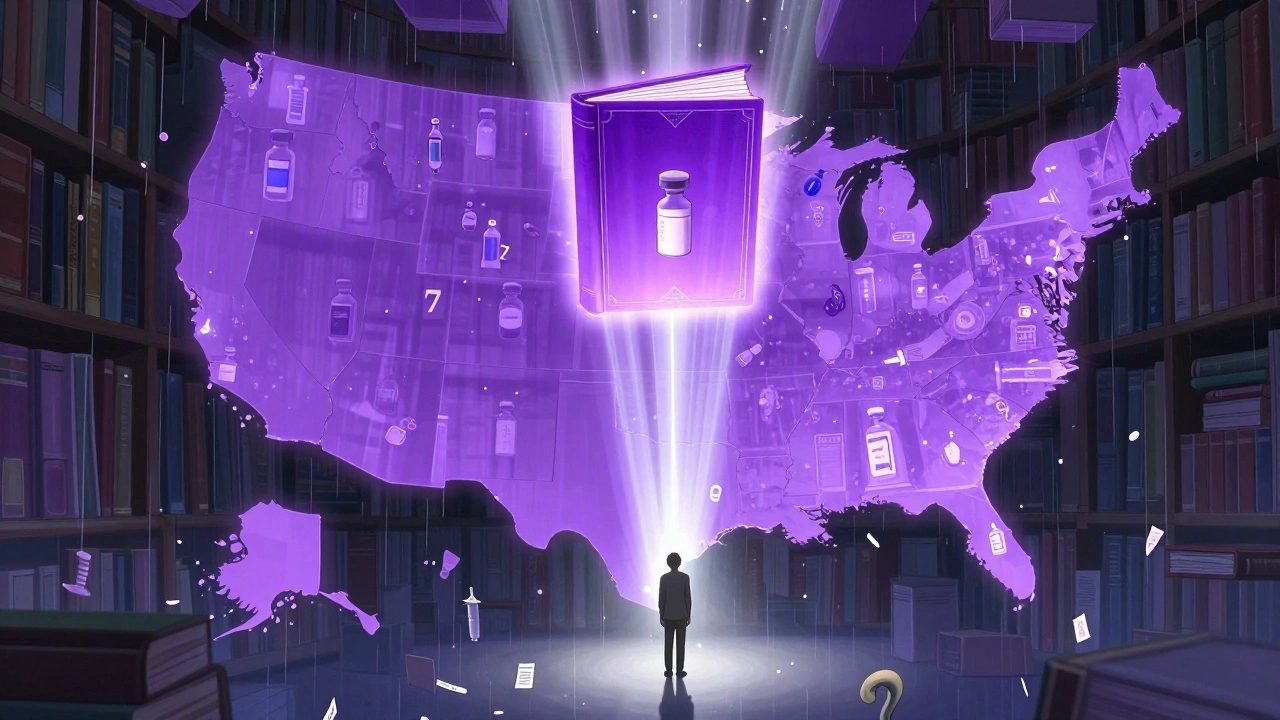
As of 2023, 47 states and Puerto Rico allow pharmacists to substitute an interchangeable biosimilar for the prescribed reference drug without contacting the prescriber. In the other three states, pharmacists need permission first. Some states also require the pharmacist to notify the patient or document the substitution in writing.
This patchwork of state laws creates real-world confusion. A patient in New York might get an interchangeable biosimilar automatically. A patient in California might get the brand-name drug unless they specifically ask for the cheaper version. The FDA’s Purple Book tells you what’s federally approved-but it doesn’t override state pharmacy boards.
What’s Actually in the Purple Book Right Now?
As of late 2023, only seven biosimilars had earned the interchangeable designation. That’s out of dozens of approved biosimilars. Most are still labeled as biosimilars only, meaning they can’t be substituted without a new prescription.
Those seven interchangeable products fall into a few categories:
- Two insulin products (used for diabetes)
- Three treatments for inflammatory conditions like rheumatoid arthritis or Crohn’s disease
- Two therapies for eye conditions like macular degeneration
Each of these has passed the extra hurdle of switching studies. For example, an interchangeable insulin product has been tested in patients who switched between the original and the biosimilar multiple times over months-with no drop in blood sugar control or increase in side effects.
The Purple Book updates regularly. New products get added as they’re approved. You can search by brand name, active ingredient, or manufacturer. If you’re looking for a specific drug, just type it in-you’ll see its status, its reference product, and whether substitution is allowed at the federal level.
How the FDA Uses the Purple Book to Guide the Market
The FDA doesn’t just publish this list-it uses it to shape how biologics enter the market. By clearly labeling which products are interchangeable, the agency encourages competition. Biosimilars cost less than the original biologics-sometimes 30% to 50% cheaper. That’s billions in savings over time.
But the FDA is also careful. They know patients and providers need trust. That’s why they’ve published draft guidance on labeling, so biosimilar packaging clearly shows it’s not the original drug. They’ve also made sure the Purple Book doesn’t confuse “unbranded biologics” with interchangeable products. An unbranded biologic might be chemically identical, but without FDA’s interchangeability stamp, pharmacists still can’t substitute it.
The agency is watching closely. More companies are applying for interchangeable status. The pipeline is growing, especially for insulin and autoimmune disease drugs. But the FDA won’t rush. Every application gets the same rigorous review.
What This Means for Patients
If you’re on a biologic-say, for arthritis or diabetes-you might be offered a biosimilar. But unless it’s interchangeable, your doctor has to write a new prescription. Even if the biosimilar is cheaper, your insurance might not cover it unless you get the original.
Ask your pharmacist: Is this interchangeable? Can I switch without calling my doctor? What does my state allow?
Don’t assume all biosimilars are the same. Some are approved for the same use as the original. Others have narrower approvals. The Purple Book tells you exactly what each product can and can’t do.
And if you’re switching from one drug to another, ask about the history. Has this product been used in multiple switches? Is there data showing it’s safe over time? That’s what the interchangeable designation is built on.
What’s Next for the Purple Book?
The FDA is working on improving the database’s search tools and adding more context. They’re also planning to include more data on product availability, like whether a biosimilar is in short supply.
More interchangeable products are expected in 2025 and beyond. Insulin is a big focus-because millions of people use it, and cost is a major barrier. If more insulins get interchangeable status, more patients could get affordable treatment without extra paperwork.
But the real challenge isn’t science-it’s policy. Until state laws align, the system will stay messy. The Purple Book gives you the facts. It’s up to states, insurers, and providers to make those facts work in real life.
Is the Purple Book only for U.S. drugs?
Yes. The Purple Book is specific to the U.S. Food and Drug Administration’s approvals. Other countries have their own systems-for example, the European Medicines Agency (EMA) maintains its own biosimilar registry. If you’re outside the U.S., the Purple Book won’t help you determine substitution rules in your country.
Can a pharmacist substitute a biosimilar without the interchangeable label?
No. Only interchangeable biosimilars can be substituted at the pharmacy level without a new prescription. Biosimilars without the interchangeable designation require the prescriber to specifically authorize them. Even if they’re cheaper or just as effective, the law doesn’t allow substitution unless the FDA has granted interchangeability.
Does the FDA approve interchangeable biosimilars because they’re safer?
No. The FDA doesn’t say interchangeable biosimilars are safer or more effective than non-interchangeable ones. They’re just proven to be just as safe when switched back and forth with the original drug. The designation is about predictability in switching, not superiority.
How often is the Purple Book updated?
The Purple Book is updated weekly. New biosimilars and interchangeable products are added as soon as they’re licensed. The FDA also updates product status if exclusivity periods end or if a product is withdrawn. You can check the official FDA website for the latest version.
Can I use the Purple Book to find cheaper alternatives to my biologic?
Yes. If you’re taking a brand-name biologic, you can search the Purple Book to see if there’s a biosimilar or interchangeable version. If it’s interchangeable and your state allows substitution, you might be able to get a lower-cost option without a new prescription. Always check with your pharmacist or doctor before switching.
What to Do Next
If you’re a patient, ask your pharmacist to check the Purple Book for your current biologic. See if there’s an interchangeable version available. If your insurance denies coverage for the cheaper option, ask why-sometimes it’s just a formulary issue, not a safety one.
If you’re a provider, make sure your staff knows how to use the Purple Book. Don’t assume a biosimilar is interchangeable. Always verify the status before prescribing or dispensing.
If you’re a pharmacist, know your state’s substitution laws. Keep a printed or digital copy of the Purple Book handy. When in doubt, refer to the official FDA site-it’s the only source that’s always current.
The Purple Book isn’t flashy. But it’s the quiet backbone of a system that’s saving patients money without sacrificing safety. It’s not perfect. But it’s the best tool we have to make biologics more accessible-and that matters.
Paul Dixon
December 11, 2025 AT 21:51Man, I never realized how messy the biosimilar system was until I had to switch my dad's arthritis med last year. The pharmacy tried to swap it out, but the script didn't say 'interchangeable' so they had to call the doctor. All that paperwork for a drug that's basically the same? Crazy.
Courtney Blake
December 12, 2025 AT 02:27So the FDA just keeps adding more interchangeable biosimilars while states keep playing jurisdictional hot potato. Of course the three states that still require prescriber approval are the ones with the highest insulin costs. Coincidence? I think not.
matthew dendle
December 12, 2025 AT 14:01interchangeable my ass. if it was really the same why do they need a whole extra study? just call it a copy and be done with it. the fda is just milkin the pharma bucks with all this red tape
Lisa Stringfellow
December 14, 2025 AT 10:27Let’s be real-this whole Purple Book thing is just a distraction. The real problem is that insurance companies still won’t cover biosimilars unless the patient jumps through ten hoops. The FDA can label it all day, but if the pharmacy won’t dispense it without a 3-page form, what’s the point?
Monica Evan
December 14, 2025 AT 14:06As a nurse who’s helped patients switch to biosimilars for years, I can tell you the fear isn’t about safety-it’s about trust. People hear ‘biosimilar’ and think ‘cheap knockoff.’ The Purple Book helps, but we need better patient education. Maybe a simple one-pager with icons like the FDA uses? I’ve made my own and patients love it.
Also-insulin interchangeables are a game changer. My diabetic patients are crying over savings. One guy went from $500/month to $120. That’s not just a drug change, that’s life change.
And yes, the updates are weekly. I check every Monday. Bookmark the FDA page. It’s the only thing that won’t lie to you.
Mia Kingsley
December 15, 2025 AT 17:14Wait so only 7 interchangeable products total? after all this time? the fda is so slow. they approved 30 biosimilars but only 7 can be swapped? what even is the point of the purple book if it's just a list of 'almosts'?
Katherine Liu-Bevan
December 16, 2025 AT 17:19Monica’s point about patient education is spot on. I’ve seen providers assume a biosimilar is interchangeable because it’s cheaper. It’s not. The Purple Book isn’t just a tool-it’s a legal document. Misreading it can lead to liability. Always verify the 351(k) status and the interchangeability flag. Don’t guess.
Also, the color-coded cards? Genius. I print them out for my clinic’s wall. Patients point to them. It’s the easiest way to explain why we’re switching.
Kristi Pope
December 16, 2025 AT 22:34Just wanted to say thank you for writing this. My mom’s on an autoimmune biologic and we spent months trying to figure out why her pharmacy wouldn’t swap it. Found the Purple Book, saw it wasn’t interchangeable, and called the doctor. He had no idea either. We got it sorted. This info saves lives.
And to the person who said the FDA is slow-don’t give up. More are coming. Insulin’s next wave is huge. I’m hopeful.
Eddie Bennett
December 18, 2025 AT 11:18So the FDA’s doing their job, states are being idiots, and patients are stuck in the middle. Classic. I work in a rural clinic-we don’t even have a pharmacist on staff. How’s someone supposed to check the Purple Book if they’re 40 miles from the nearest pharmacy?
Maybe the answer isn’t more lists. Maybe it’s federal override. If a drug’s interchangeable federally, let it be interchangeable everywhere. End of story.
Aman deep
December 19, 2025 AT 04:06As someone from India, I’m fascinated by this. We don’t have a system like this-biosimilars are just labeled as ‘similar’ and pharmacists swap them freely. But I’ve seen patients get confused because the packaging looks different. Maybe the U.S. system is overcomplicated, but at least it’s clear who’s who. Respect.
Vivian Amadi
December 20, 2025 AT 17:30Everyone’s acting like this is a breakthrough. It’s not. The FDA just gave seven companies a monopoly on substitution. Meanwhile, patients still pay more because insurers won’t budge. This isn’t progress-it’s a PR stunt with extra steps.
Sylvia Frenzel
December 21, 2025 AT 09:41My pharmacy still won’t substitute even when it’s labeled interchangeable. Said it’s ‘company policy.’ So now I have to call the doctor every time. The Purple Book doesn’t mean squat if the system’s broken.