30-Month Stay: How Litigation Delays Generic Drug Approval
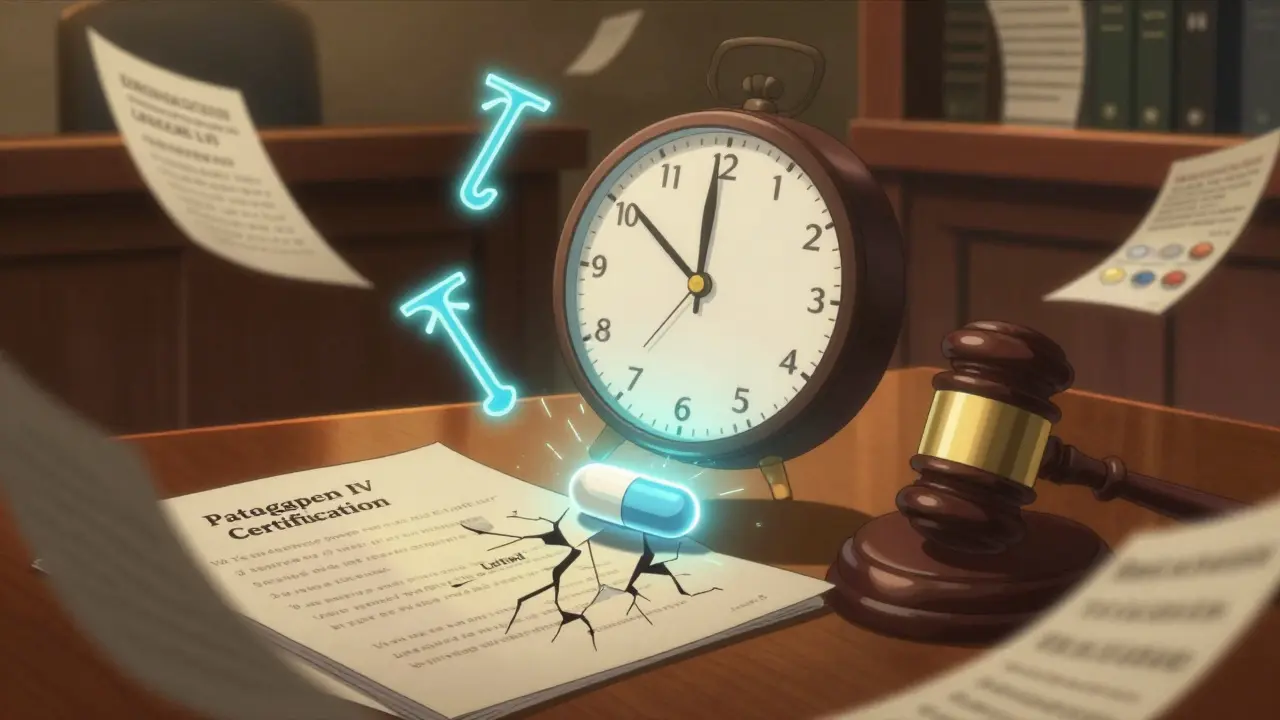
When a brand-name drug hits the market, it doesn’t just enjoy a monopoly because of its patent-it also gets a legal shield called the 30-month stay. This isn’t a loophole. It’s a rule baked into U.S. drug law since 1984, and it’s one of the biggest reasons why generic versions of life-saving medications often take years longer to reach patients-even after the patent expires.
What Exactly Is the 30-Month Stay?
The 30-month stay comes from the Hatch-Waxman Act, a law designed to balance two goals: letting generic drugs enter the market quickly to cut costs, while still protecting the original drugmakers’ investments. Here’s how it works in plain terms.
When a generic company wants to sell a cheaper version of a brand drug, they file what’s called an Abbreviated New Drug Application (ANDA) with the FDA. But if the brand drug is still under patent, the generic maker has to say so outright-this is called a Paragraph IV certification. It’s basically a legal challenge: "We think your patent is invalid, or we’re not infringing it."
Once they file that, they must notify the brand company. If the brand company sues within 45 days, the FDA is legally blocked from giving final approval to the generic drug for up to 30 months. That’s the stay. It doesn’t stop the FDA from reviewing the application. In fact, they often give what’s called "tentative approval"-meaning, "You passed all our tests. We’re just waiting on the courts."
So here’s the catch: the 30-month clock starts ticking the day the last patent holder gets the notice. But if the lawsuit drags on past 30 months? The stay can extend. Courts can shorten it. Sometimes, they do. Other times? The generic drug still can’t launch until the legal mess clears.
Why This Matters: The Real Delay Isn’t the 30 Months
Most people think the 30-month stay is the main reason generics are late. But data shows otherwise. According to a 2021 study from the University of Southern California, there’s a median gap of 3.2 years between when the 30-month stay ends and when the generic drug actually hits shelves.
So what’s happening in those extra years? It’s not the law holding things up-it’s business.
- Generic manufacturers need to ramp up production. Scaling from lab batches to millions of pills takes time.
- They often wait to launch until after the brand company’s exclusivity period ends, even if the patent is gone.
- Some companies delay launch to avoid price wars or to coordinate with other generics for maximum profit.
One regulatory affairs specialist at Teva told a pharmaceutical forum: "We’ve seen cases where the stay expired months ago, but the generic still didn’t launch because the commercial team wasn’t ready."
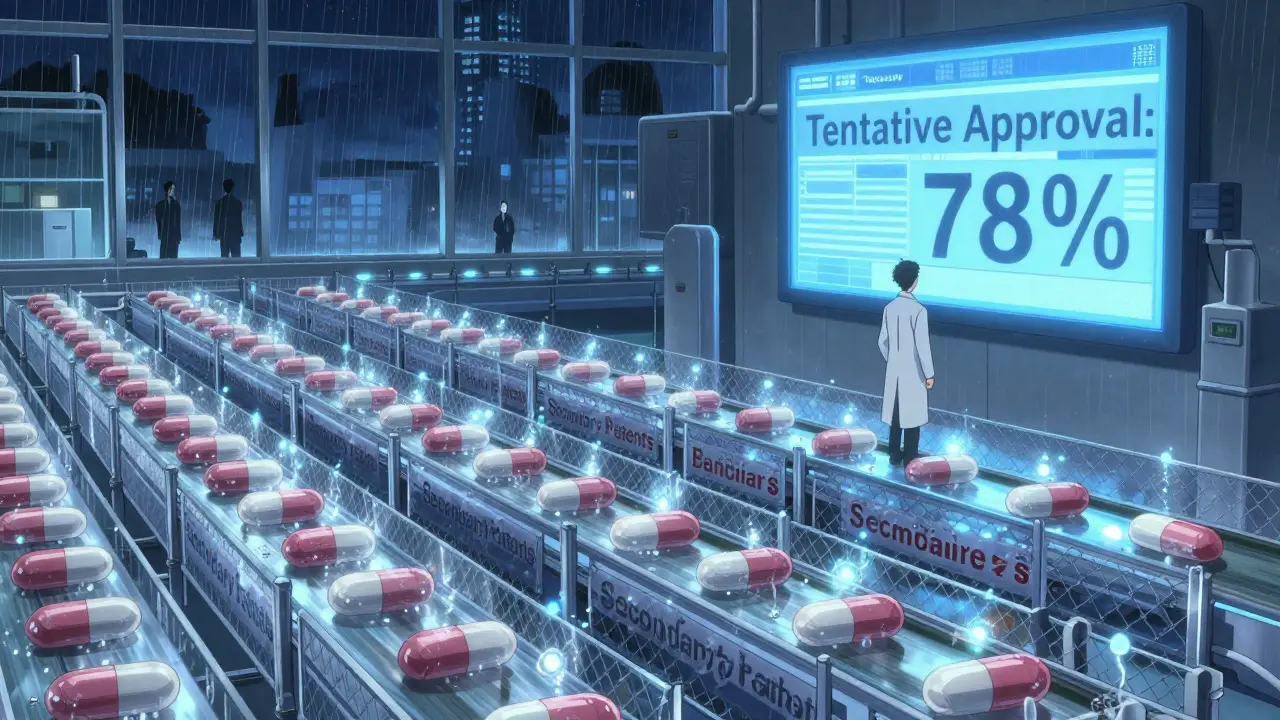
The FDA approved 1,046 ANDAs in 2022. Of those, 78% got tentative approval during patent litigation. That means the FDA was ready to go-long before the courts were.
How Patent Games Extend the Delay
The real problem isn’t the 30-month stay itself-it’s how brand companies use it.
Back in the 1990s, drugmakers listed an average of 1.2 patents per drug in the FDA’s Orange Book. By 2022? That number jumped to 8.3. Most of these aren’t core patents. They’re "secondary" patents-on things like pill coatings, dosing schedules, or delivery methods. These don’t protect the drug’s active ingredient. But under Hatch-Waxman, even a minor patent can trigger a 30-month stay.
A 2019 Brookings study found that 67% of patents listed for top-selling drugs were filed after the original drug was approved. This is called "patent evergreening." It’s legal. And it’s effective.
For example, a drug might have one patent on the molecule, then five more on how it’s taken, how it’s packaged, or what time of day it’s prescribed. Each one can be used to file a new lawsuit, restarting the clock. The 2003 Medicare Act tried to stop this by limiting brand companies to just one 30-month stay per ANDA. But it didn’t stop them from filing multiple lawsuits on different patents across different generic applicants.
That’s why some drugs face 10+ Paragraph IV challenges. The first generic to challenge wins 180 days of exclusive sales. That’s a $500 million prize. So companies race to be first. And brand companies? They respond with more lawsuits, more delays.
How It Compares to Other Countries
The U.S. is the only country with a system like this.
- In the European Union, generic companies can file for approval as soon as the patent expires. No stay. No lawsuit delay. Just regulatory review.
- Canada has a 24-month patent linkage system-shorter than the U.S., and it doesn’t automatically block approval.
- India and China don’t have stay mechanisms at all. Generics launch as soon as they’re approved.
As a result, when a drug loses patent protection in the U.S., generics take an average of 26 months longer to enter than in other wealthy countries, according to the FTC’s 2022 report.
That delay costs Americans billions. The FTC estimates patent litigation delays add $13.9 billion annually to U.S. drug costs. And it’s not just about price-it’s about access. Millions of people with diabetes, heart disease, or cancer wait longer for affordable versions of their meds.
Who Wins? Who Loses?
On one side: brand-name drugmakers. They say the 30-month stay is essential. Without it, they argue, no company would spend $2.6 billion to develop a new drug if generics could flood in the day after approval. Former FDA Commissioner Scott Gottlieb says the system has saved consumers $2.2 trillion since 1984.
But here’s the flip side: generic manufacturers spend $3-5 million per ANDA just on legal fees. A 2022 survey found 78% of generic companies say preparing for litigation adds 6-9 months to their development timelines. That money doesn’t go into making better drugs-it goes into lawyers.
And patients? They pay the price. A 2021 Harvard study found that for blockbuster drugs, the 30-month stay adds a median of 1.8 years to market exclusivity. That’s not patent protection. That’s extended monopoly.
Meanwhile, the top five generic manufacturers-Teva, Viatris, Sandoz, Hikma, and Sun Pharma-control nearly half the market. And 63% of ANDA applications now come from Indian and Chinese companies, who are more willing to fight the legal battles. That’s why U.S. drug prices haven’t dropped as fast as they should.
What’s Changing? And What Could Change Next
The system is under pressure.
In 2023, Congress introduced the Affordable Prescriptions for Patients Act. It proposes cutting the 30-month stay to 18 months and banning stays for secondary patents. The FDA also released draft guidance asking for clearer, more accurate patent listings in the Orange Book.
Industry analysts at Evaluate Pharma predict that if these reforms pass, $78 billion in branded drugs set to lose patent protection by 2028 could see generics enter 9-12 months faster. That could save consumers $195 billion.
But drugmakers aren’t backing down. PhRMA, the industry lobby, warns that weakening the stay could cut U.S. R&D investment by $14 billion a year and delay dozens of new drugs. The argument? Without protection, innovation dies.
The truth? The system was designed to balance innovation and access. But today, it leans too far toward the latter. And patients are paying the cost.
What You Should Know
- The 30-month stay doesn’t stop FDA review-it only blocks final approval.
- Tentative approval is common. It means the FDA is ready. The courts aren’t.
- Most delays happen after the stay ends-not during it.
- Secondary patents are the real delay engine.
- The U.S. is the only country with this system-and it’s the most expensive.
If you’re waiting for a generic version of your medication, don’t assume the patent expiration date is the launch date. It’s just the starting line. The race is still on.


Hariom Sharma
February 21, 2026 AT 22:55Man, I just read this and I’m floored. Generics are supposed to be the great equalizer in healthcare, but this whole system feels like a rigged game. I’ve seen friends skip doses because they couldn’t afford brand meds-this isn’t policy, it’s cruelty dressed up as law.
Nina Catherine
February 23, 2026 AT 14:26i had no idea the fda could give tentative approval but still be blocked by lawsuits?! that’s wild. so the fda’s basically saying ‘you’re good to go’ but the courts are like ‘nah, wait.’ feels so broken.
Amrit N
February 25, 2026 AT 10:31so the real issue isn’t the 30 months-it’s the endless secondary patents. i mean, who even cares about the color of the pill coating? this is patent trolling with a stethoscope.
Taylor Mead
February 27, 2026 AT 07:34Interesting breakdown. I’ve always thought the delay was just about court backlogs, but you’re right-it’s more about business strategy. Companies waiting to launch until after the brand’s exclusivity ends? That’s not innovation, that’s market manipulation.
Scott Dunne
February 28, 2026 AT 21:18Of course the U.S. has the most convoluted system. We’re the only country that turns healthcare into a legal chess match. In Ireland, if a patent expires, the generic is on shelves by Monday. Simple. Efficient. Human.
Jayanta Boruah
March 1, 2026 AT 12:54Let us not misunderstand the mechanism: the 30-month stay was never intended to be a permanent barrier. It was designed as a temporary injunction to allow litigation to proceed without premature market entry. However, the systemic abuse via secondary patent filings-often filed years after initial approval-has transformed this into a deliberate, multi-year delay tactic. The 2022 USC data confirming a median 3.2-year post-stay delay is not a statistical anomaly; it is a structural failure of regulatory oversight. Furthermore, the fact that 67% of patents listed in the Orange Book were filed post-approval demonstrates that the original intent of Hatch-Waxman has been subverted into a profit-maximization engine for brand manufacturers. The FDA’s tentative approval process is not a loophole-it is a testament to the system’s internal contradiction: the regulator is ready, the market is ready, but the courts are weaponized.
Marie Crick
March 1, 2026 AT 22:19THIS IS WHY PEOPLE DIE WAITING FOR MEDS. IT’S NOT A ‘SYSTEM’-IT’S A SCAM. THEY’RE NOT INNOVATING, THEY’RE LAUGHING ALL THE WAY TO THE BANK WHILE GRANDMAS CHOOSE BETWEEN INSULIN AND RENT.
Ashley Paashuis
March 3, 2026 AT 13:46I’ve worked in regulatory affairs for over a decade. The anecdote about Teva’s commercial team being ‘not ready’ after the stay expired? That’s not uncommon. But here’s what no one talks about: many generic companies deliberately delay launch to avoid triggering price wars. They wait for competitors to enter, then coordinate pricing. It’s anti-competitive behavior disguised as market strategy. The law doesn’t punish this. It enables it.
Freddy King
March 4, 2026 AT 01:18Look, the real game here is asymmetric information asymmetry. The brand companies are leveraging regulatory capture via patent thickets-layered IP portfolios designed to create legal friction. The 30-month stay is just the tip of the iceberg. The real value extraction occurs in the 18-36 month window after stay expiration, when generic manufacturers are still navigating supply chain bottlenecks, FDA inspections, and distribution negotiations-all while the brand company runs aggressive loyalty campaigns. It’s not a delay-it’s a monetized inertia.
Irish Council
March 5, 2026 AT 01:31Robin bremer
March 6, 2026 AT 12:24so like… if the fda says ‘you’re good to go’ but the court says ‘wait’… why can’t the generic just launch anyway? 🤔
Laura B
March 6, 2026 AT 18:06My sister takes a generic for her heart condition. She waited 11 months after the patent expired. She had to switch to a more expensive brand because her insurance wouldn’t cover the generic until it was officially approved. This isn’t about innovation-it’s about who gets to profit while people suffer.
Liam Crean
March 8, 2026 AT 09:54It’s wild how the U.S. is the outlier here. Other countries manage to balance access and innovation without turning every patent into a legal grenade. Maybe we need to stop treating drug pricing like a poker game and start treating it like public health.
John Cena
March 10, 2026 AT 02:18One thing I’ve noticed: Indian and Chinese manufacturers are now leading the charge on ANDAs. That’s not a coincidence. They’re more willing to absorb the legal costs because they’re playing a longer game-global market share. Meanwhile, U.S. generics are getting squeezed between litigation costs and shrinking margins. We’re outsourcing our access problem.
Robert Shiu
March 12, 2026 AT 02:16Just want to say-this is why I fight for healthcare reform. I’ve seen too many people choose between their meds and groceries. The 30-month stay sounds technical, but for someone with diabetes or high blood pressure? It’s a death sentence waiting to happen. We need real change-not just studies and stats. Real action.