A Beginner’s Guide to Medication Safety for First-Time Patients
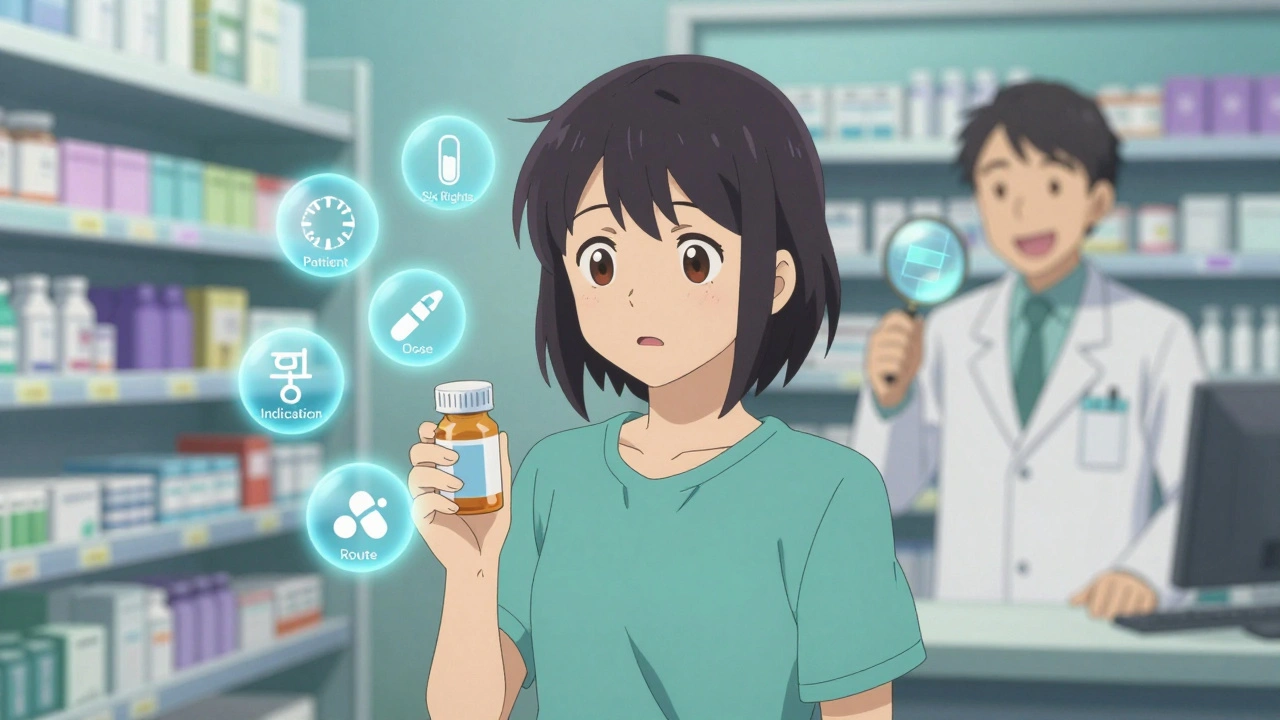
Starting a new medication can feel overwhelming. You’ve got a prescription in hand, maybe a pill bottle with tiny print, and a dozen questions swirling in your head: Do I take this before or after food? What if I miss a dose? Is that weird rash normal? You’re not alone. Nearly half of first-time patients struggle with basic medication routines, and many don’t even know what questions to ask. The truth is, medication safety isn’t about memorizing medical jargon-it’s about building simple, reliable habits that keep you safe.
Know the Six Rights of Medication Safety
Every time you take a pill, inject a shot, or apply a cream, you’re performing a small but critical safety check. Healthcare professionals follow the Six Rights to avoid errors. You should too.- Right patient: Make sure the name on the bottle matches yours. Double-check your date of birth if you’re picking it up at the pharmacy.
- Right medication: Compare the pill to the prescription. If it looks different than last time, ask your pharmacist. Generic versions can change color or shape but work the same.
- Right indication: Ask your doctor or pharmacist: Why am I taking this? If you don’t know the purpose, you can’t spot if it’s working-or causing harm.
- Right dose: Never use kitchen spoons. A teaspoon varies by 25-50% in volume. Use the measuring cup, syringe, or dosing cap that came with the medicine.
- Right route: Is it meant to be swallowed, placed under the tongue, or applied to the skin? Taking a patch orally or injecting a cream can be dangerous.
- Right time: Some meds need to be taken with food to avoid stomach upset. Others must be taken on an empty stomach. Some work best in the morning; others at night. Ask for specifics.
These six steps cut medication errors by up to 50%. You don’t need to be a doctor-you just need to pause and verify each time.
Keep a Complete Medication List
Most people think they remember what they’re taking. They don’t. A 2022 study found patients who kept a full list of all medications-prescription, over-the-counter, vitamins, and supplements-had 27% fewer errors.Your list should include:
- Drug name (brand and generic if different)
- Dose (e.g., 10 mg, 5 mL)
- Frequency (e.g., once daily at bedtime)
- Reason for use (e.g., “for high blood pressure”)
- Prescribing doctor’s name
Keep this list on your phone and in your wallet. Bring it to every appointment-even a quick checkup. Pharmacists and doctors often miss drug interactions if they don’t know what else you’re taking. For example, taking ibuprofen with blood thinners can cause dangerous bleeding. You might not realize it’s a problem unless someone sees your full list.
Never Ignore Labels or Storage Rules
Medication labels aren’t just for show. They’re your safety manual. Read them in good lighting. If you can’t read the fine print, use a magnifying glass or ask the pharmacist to print a larger version.Storage matters more than you think. Insulin must stay between 36-46°F (2-8°C) until opened. Once opened, it’s good for 28 days at room temperature. Most pills should be kept below 86°F (30°C) in a dry place. The bathroom cabinet? Bad idea. Humidity and heat make drugs break down faster.
Expired meds? Don’t risk it. A 2023 Merck report found 18% of medication errors come from using expired drugs-especially antibiotics and liquid suspensions. They lose potency, and in rare cases, become toxic. Check expiration dates every time you refill a prescription.
Ask the Right Questions
Pharmacists are trained to help you, but they won’t know you’re unsure unless you speak up. Only 22% of patients ask what to do if they miss a dose. Only 65% ask about side effects. That’s too low.Here are three questions you must ask every time you get a new medication:
- What should I do if I miss a dose? Some meds need to be taken as soon as you remember. Others should be skipped. Taking a double dose by accident can be dangerous.
- How should I store this? Is it refrigerated? Light-sensitive? Does it need to be kept away from children?
- What side effects should I watch for? Not all side effects are bad. Drowsiness from an antihistamine is expected. But if you feel your heart racing, your face swells, or you develop a rash, stop taking it and call your doctor immediately.
Patients who ask three or more questions in their first pharmacy visit have 34% fewer adverse events in the first month. You’re not being difficult-you’re being smart.
Don’t Share Medications or Take What’s Left
Your friend says their headache medicine helped. Don’t take it. Your child’s fever drops after taking your antibiotic. Don’t give it to them.Sharing medications causes 8% of emergency visits for adverse drug events, according to the FDA. Why? Because drugs are prescribed for specific body types, conditions, allergies, and other meds you’re taking. What’s safe for one person can kill another.
Also, never take leftover pills from old prescriptions. That cough syrup from last winter? The infection is gone. The medicine isn’t. Taking outdated or unnecessary meds increases your risk of side effects and interactions.
Use Tools to Stay on Track
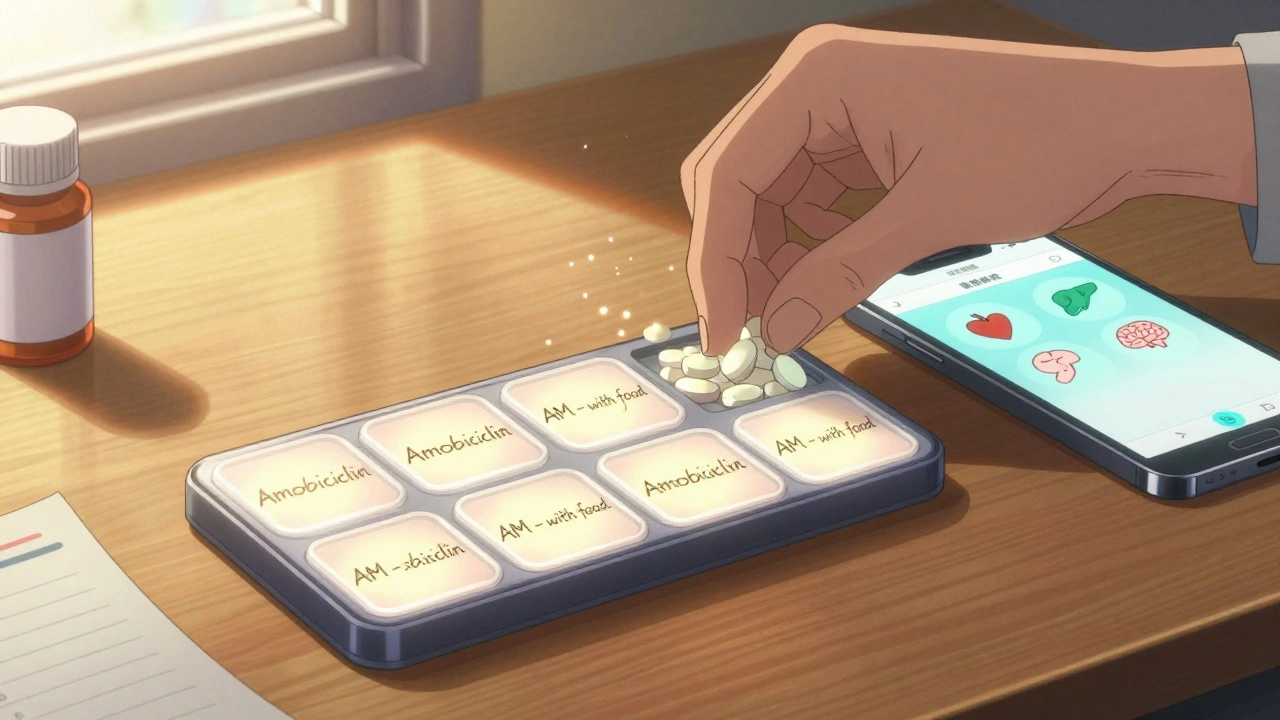
Forgetfulness is the #1 reason people miss doses. It’s not laziness-it’s human nature.Use a pill organizer with compartments for morning, afternoon, and night. Set phone alarms labeled with the drug name: “Amoxicillin - 8 AM - with food.”
Apps like Medisafe and MyMeds have been shown to improve adherence by 28% in first-time users. The best ones let you scan the barcode on your bottle to auto-fill details, send alerts, and even explain what the drug does in plain language. Some even notify your pharmacist if you miss a dose.
Don’t rely on memory. Use tech. It’s not cheating-it’s caring for yourself.
Watch for Changes and Trust Your Gut
Your body talks to you. If something feels off after starting a new drug, listen.Common signs of a bad reaction include:
- Sudden rash or hives
- Swelling in the face, lips, or throat
- Difficulty breathing
- Unusual bruising or bleeding
- Severe nausea, vomiting, or diarrhea
- Confusion, dizziness, or fainting
If you experience any of these, stop the medication and call your doctor or go to the ER. Don’t wait. Don’t hope it goes away.
Also, if your pill suddenly looks different-color, shape, markings-ask your pharmacist. Generic substitutions happen in 90% of prescriptions. They’re safe, but the change can confuse you. Make sure it’s still the right drug.
Transitions Are High-Risk Times
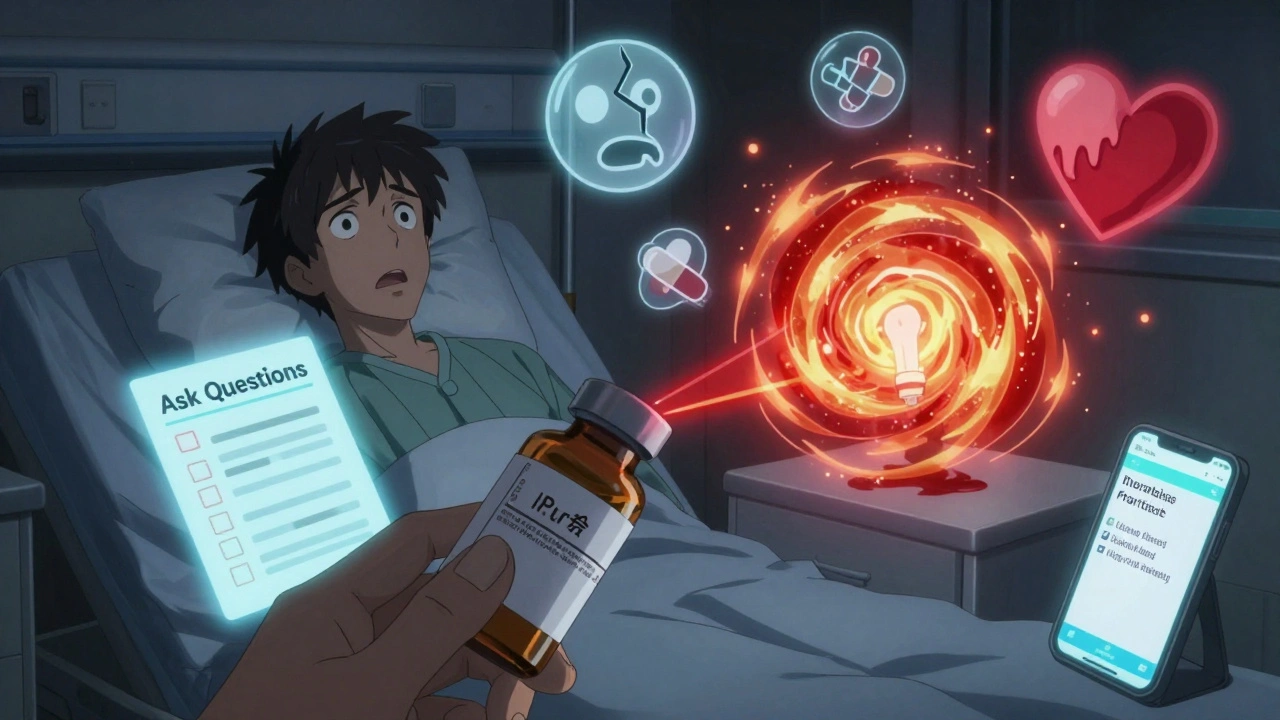
You leave the hospital. You get a new prescription. You’re discharged with instructions you barely understood. That’s when most errors happen.One in five medication errors occur during care transitions-like going from hospital to home. That’s why it’s critical to ask: “What’s changed since I came in?” and “What should I do differently now?”
Ask for a written discharge summary. Read it. If anything’s unclear, call the pharmacy before you leave the hospital. Don’t wait until you get home.
It Gets Easier-But Never Stop Being Careful
The first two to three weeks are the hardest. You’re learning a new routine, remembering names, adjusting to side effects. That’s normal.By the end of month two, most people have built automatic habits: alarms set, pill boxes filled, lists updated. You’ll start to feel confident.
But don’t get complacent. Medication safety isn’t a one-time lesson. It’s a lifelong habit. New drugs come. Doses change. Your body changes. Stay curious. Stay alert. Keep asking questions.
Medication safety isn’t about perfection. It’s about protection. One extra minute checking your label, one more question to your pharmacist, one list updated-those small actions add up. They keep you out of the ER. They keep you alive.
What should I do if I take the wrong dose of my medication?
Don’t panic. Call your pharmacist or doctor immediately. If you took too much, they’ll tell you whether to wait, drink water, or go to the ER. If you took too little, they’ll advise whether to take the missed dose now or skip it. Never double up unless instructed. Keep the medication bottle handy when you call-they may need the exact name and dose.
Can I crush or split my pills?
Only if your pharmacist says it’s safe. Some pills are designed to release slowly over time. Crushing them can cause a dangerous overdose. Others are coated to protect your stomach or prevent bad taste. Always ask before altering your medication. If swallowing is hard, ask for a liquid version or alternative form.
How do I know if a drug interaction is happening?
Symptoms vary but often include unusual drowsiness, rapid heartbeat, nausea, confusion, or sudden changes in blood pressure. If you start a new medication and feel worse than before, it could be an interaction. Keep a symptom journal and share it with your doctor. Always tell your pharmacist every supplement and OTC drug you take-even herbal teas or CBD.
Why do I need to know the difference between brand and generic drugs?
Generic drugs contain the same active ingredient as brand names and work the same way. But they may look different-color, shape, size. This can confuse you into thinking you got the wrong medicine. As long as the name and dose match your prescription, it’s safe. Ask your pharmacist if you’re unsure. Never assume a different-looking pill is wrong without checking.
Should I use a pill organizer?
Yes-if you take more than one pill a day or have a complex schedule. Pill organizers help prevent missed or double doses. Choose one with labeled compartments (morning, afternoon, night). Fill it weekly and check it daily. Some even have alarms. They’re simple, affordable, and proven to reduce errors.
What if my insurance changes my medication?
Insurance companies sometimes switch your drug to a cheaper generic or alternative. That’s legal-but you should still be informed. Ask your pharmacist: Is this the same as before? Will it work the same? Are there side effects I should watch for? Don’t assume it’s safe just because it’s covered. Always verify.
Can I drink alcohol while taking my medication?
It depends. Alcohol can make some drugs too strong-like painkillers, sedatives, or antidepressants-and cause dangerous drowsiness or liver damage. With others, it’s harmless. Always ask your pharmacist. If you’re unsure, avoid alcohol until you get a clear answer. Better safe than sorry.
How often should I update my medication list?
Update it every time you start, stop, or change a medication-even if it’s just a new vitamin. Do it right after your doctor’s appointment. Keep a digital copy on your phone and a printed copy in your wallet. Your list should always reflect what you’re taking today, not what you took last month.
Next Steps: Build Your Safety Routine Today
Start small. Pick one thing to improve this week:- Write down every medication you’re taking-right now.
- Set two phone alarms for your most important pills.
- Call your pharmacy and ask: “What’s the #1 thing I should watch for with my new medication?”
- Check the expiration date on your oldest bottle.
Medication safety isn’t complicated. It’s consistent. It’s attention. It’s asking questions when you’re unsure. You don’t need to be an expert. You just need to care enough to be careful.


Angela R. Cartes
December 9, 2025 AT 17:53Andrea Beilstein
December 11, 2025 AT 17:10Simran Chettiar
December 12, 2025 AT 21:06Anna Roh
December 13, 2025 AT 14:10Jennifer Blandford
December 14, 2025 AT 22:00Christian Landry
December 15, 2025 AT 06:04Sarah Gray
December 16, 2025 AT 01:09Tejas Bubane
December 17, 2025 AT 08:02