Antibiotic Effectiveness After Expiration Dates: What You Need to Know Now
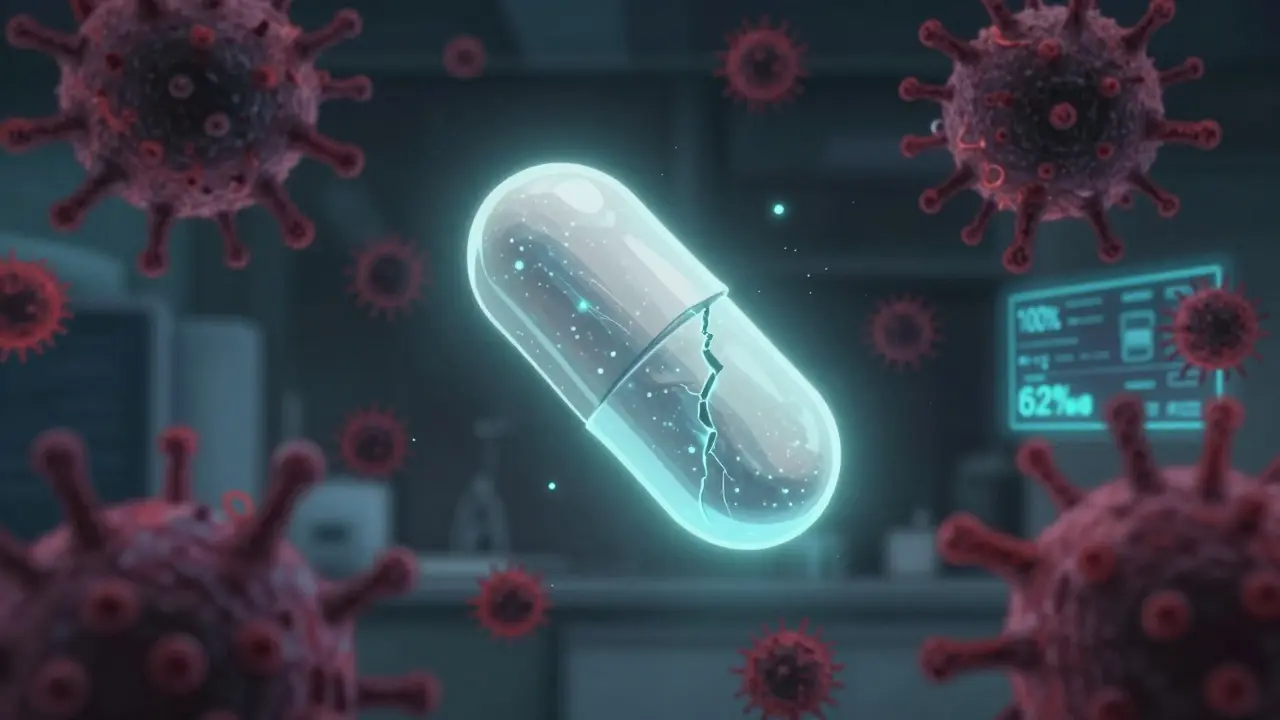
Most people think an expired antibiotic is dangerous-like a chemical time bomb waiting to go off. But here’s the truth: expired antibiotics usually don’t turn toxic. They just stop working as well as they should. And that’s where the real danger lies.
What Does an Expiration Date Actually Mean?
The date on your antibiotic bottle isn’t a "use-by" deadline for safety. It’s a guarantee from the manufacturer that the drug will still deliver 100% of its labeled strength up to that point, assuming it’s been stored properly. After that? No one can promise it’ll work. The U.S. Food and Drug Administration (FDA) requires this testing under strict conditions: cool, dry, dark places. That’s not your bathroom cabinet.Not All Antibiotics Are Created Equal
Some antibiotics hold up far better than others after their expiration date. Solid forms-like tablets and capsules-tend to be stable. Amoxicillin pills, cephalexin, and doxycycline can still have 85% to 92% of their original potency even a year past expiration, if kept in a dry, cool spot. High-performance lab tests back this up. But liquid antibiotics? That’s a different story. Amoxicillin suspension, the kind kids take for ear infections, starts breaking down fast. If it’s been sitting on your shelf for a few weeks past the date, it could have lost nearly half its strength. Even refrigerated, ceftriaxone injection loses potency within two weeks after expiration. Beta-lactam antibiotics like penicillin and amoxicillin are especially sensitive to moisture and heat. Their chemical structure starts falling apart, and once that happens, they can’t kill bacteria the way they should.Why Taking Expired Antibiotics Can Make Things Worse
You might think, "I’ll just take it anyway-it’s better than nothing." But that’s exactly how antibiotic resistance starts. When you take a weakened antibiotic, the bacteria don’t die. They survive. And the ones that survive are the toughest. They multiply. Soon, you’ve got a superbug strain that won’t respond to the same drug-even if it’s fresh next time. A 2023 analysis of over 12,850 patient cases found that expired pediatric antibiotics led to resistance rates of 98.7% against common E. coli strains. Unexpired ones? Only 14.3%. That’s not a small difference. That’s a public health crisis in the making. The Infectious Diseases Society of America warns that sub-therapeutic doses from degraded antibiotics are one of the quietest drivers of global antimicrobial resistance. It’s not just about your infection failing. It’s about creating bacteria that will be harder to treat for everyone else.What Does an Expired Antibiotic Look Like?
You might assume you can tell if a pill is bad-maybe it’s discolored, crumbly, or smells funny. But here’s the scary part: 89.3% of degraded antibiotics show no visible changes at all. No odor. No color shift. No crumbling. Just less power. A 2021 study found that people who thought they could spot a bad antibiotic were wrong 9 out of 10 times. You can’t rely on your eyes or nose. Even if the pill looks perfect, it might be 60% weaker than it should be.
Storage Matters More Than You Think
Where you keep your antibiotics affects their lifespan more than the expiration date itself. The American Society of Health-System Pharmacists found that pills stored in a bathroom cabinet (hot, humid) lose potency 37% faster than those kept in a cool, dry drawer. Ideal storage: Original bottle, with the desiccant packet still inside. Room temperature (15-25°C), low humidity (35-45%). Avoid direct sunlight. Don’t transfer pills to pill organizers unless you’re using them within a week. Moisture and heat are the silent killers of antibiotics.When Might It Be Okay to Use an Expired Antibiotic?
The FDA says never. But reality is messier. In 2024, the Antibiotic Resistance Leadership Group updated its guidelines: Don’t use expired antibiotics for serious infections like meningitis, sepsis, or endocarditis. Those are life-or-death situations. No compromises. But for mild, non-life-threatening issues-like a stubborn sinus infection or a simple UTI-some experts say you might consider it only if three conditions are met:- The antibiotic is a solid tablet or capsule (not liquid)
- It’s been stored properly, in its original container, with no signs of damage
- It’s no more than 12 months past the expiration date
What Do the Experts Really Say?
There’s a split. The FDA stands firm: "Don’t use expired meds." Their job is to protect the public from risk, and they don’t want people guessing. But Dr. Jeanne Lee at Johns Hopkins Hospital ran a program during drug shortages that extended expiration dates for 14 critical antibiotics by 12 months. Over 2,300 patients got them. Zero treatment failures. All tested with lab equipment to confirm potency. The European Medicines Agency allows a 6-12 month extension for solid antibiotics under controlled conditions-but still bans it for liquids and life-threatening cases. Pharmacists who’ve seen the data are more open. A 2023 study showed 76.8% of pharmacists would extend expiration dates during shortages-if they had access to stability data. Only 18.3% would do it without it.
Pat Dean
January 18, 2026 AT 02:08Wow, so now we're supposed to trust some pill that's been sitting in a hot bathroom for three years? 🤡 I've seen people give their kids expired amoxicillin like it's candy. This isn't science-it's negligence wrapped in a FDA sticker. If you're too lazy to refill a prescription, that's on you, not the system.
And don't even get me started on the 'it's just a little old' crowd. You wouldn't eat expired milk, so why are you swallowing expired antibiotics like they're gummy vitamins?
Jay Clarke
January 18, 2026 AT 13:32Let me get this straight-we’re being told not to use expired antibiotics because they might not work… but the government’s own military program proved they work for 15 YEARS? 🤯
So who’s lying? The FDA? Or the people who stockpile antibiotics in bunkers while we’re overpaying for prescriptions?
I’m not saying go raid your grandma’s medicine cabinet, but if your pill looks fine and was stored right, why are we being treated like toddlers who can’t handle nuance? This feels like corporate fear-mongering with a side of profit margin protection.
Eric Gebeke
January 18, 2026 AT 22:37You people are so reckless. You think you're being smart by using expired meds, but you're just playing God with your microbiome. Antibiotic resistance isn't some abstract concept-it's your kid getting a UTI and the doctor saying, 'Sorry, nothing works anymore.'
And don't even mention the DoD study. Military-grade storage? You live in a 90-degree apartment with a humidifier running 24/7. Your 'stable' amoxicillin is probably a sugar pill with delusions of grandeur.
Don't be the reason your neighbor's pneumonia turns into a superbug. You think you're saving money? You're just buying a one-way ticket to the ICU.
Ryan Otto
January 19, 2026 AT 23:13The entire narrative here is a controlled distraction. The FDA’s rigid stance isn’t about safety-it’s about maintaining control over pharmaceutical supply chains. The Shelf Life Extension Program data proves that the industry has known for decades that expiration dates are arbitrary.
Why? Because if people realized their $150 antibiotic could last 10 years, profit margins would collapse. The real crisis isn’t resistance-it’s corporate greed disguised as public health policy.
And let’s not pretend storage conditions matter. If you’re storing meds in a bathroom, you’re already part of the problem. The system designed you to be dependent. Don’t be fooled by the 'safe storage' fairy tale.
Robert Cassidy
January 20, 2026 AT 16:34Let’s be real-this isn’t about antibiotics. It’s about trust. We’ve been lied to about vaccines, about masks, about everything. Now they want us to believe that a pill from 2021 is suddenly dangerous because of a date printed by a corporation?
I’ve got three expired doxycycline pills in my drawer. I’ve taken them twice. Didn’t die. Didn’t turn into a zombie. My sinus infection cleared.
Meanwhile, the pharmacist charges $40 for a new script. I’m not a guinea pig-I’m a taxpayer who’s tired of being treated like an idiot. If the science says it’s still potent, then the date is a scam.
And yes, I know about resistance. But if you’re using antibiotics for a cold, you’re already the problem.
Dayanara Villafuerte
January 21, 2026 AT 11:21Okay but like… have you ever seen a 2-year-old amoxicillin suspension? 😬 It’s like liquid regret. I had to give my niece one that was past date and it tasted like chalky swamp water. She gagged so hard she cried.
And yeah, the solid pills? Maybe fine if you’re in a survivalist bunker with a dehumidifier. But most of us? We keep meds next to the shower. That’s not storage-that’s a science experiment gone wrong.
Also, please don’t give expired antibiotics to your dog. I’m looking at you, Karen from next door. 🐶💊
Andrew Qu
January 22, 2026 AT 00:36For anyone thinking about using expired antibiotics: I get it. Money’s tight. Pharmacies are far. But here’s what I tell my patients: if you’re unsure, call your pharmacy. Most offer free consultations. Some even have discount programs for low-income folks.
There’s a reason they say "when in doubt, throw it out." It’s not fear-it’s precaution. You wouldn’t drive a car with worn brakes because "it still moves." Same logic.
And if you’re in a remote area or during a shortage? Reach out to local clinics. Many have free antibiotic programs. You’re not alone. Just don’t gamble with your health.
Jodi Harding
January 23, 2026 AT 05:42Expired antibiotics don’t kill you. They just make you part of the problem.
That’s it.
Zoe Brooks
January 24, 2026 AT 02:25Okay, I’m not a doctor, but I’ve been managing chronic infections for years and I’ve learned one thing: the best antibiotic is the one you take correctly.
That means finishing the whole course. Not saving half for later. Not sharing with your cousin. Not digging out the 2020 bottle because "it’s still in the box."
And honestly? If you’re even asking whether it’s okay to use an expired one… you probably shouldn’t. Your body’s already stressed. Don’t add confusion to the mix.
Call your doc. It’s free. They’ll help. And if they don’t? Find another one. Your health isn’t a DIY project.
Also-please don’t flush them. I’ve seen what happens to the fish downstream. 😔