When Expired Medications Become Toxic and Dangerous: What You Need to Know
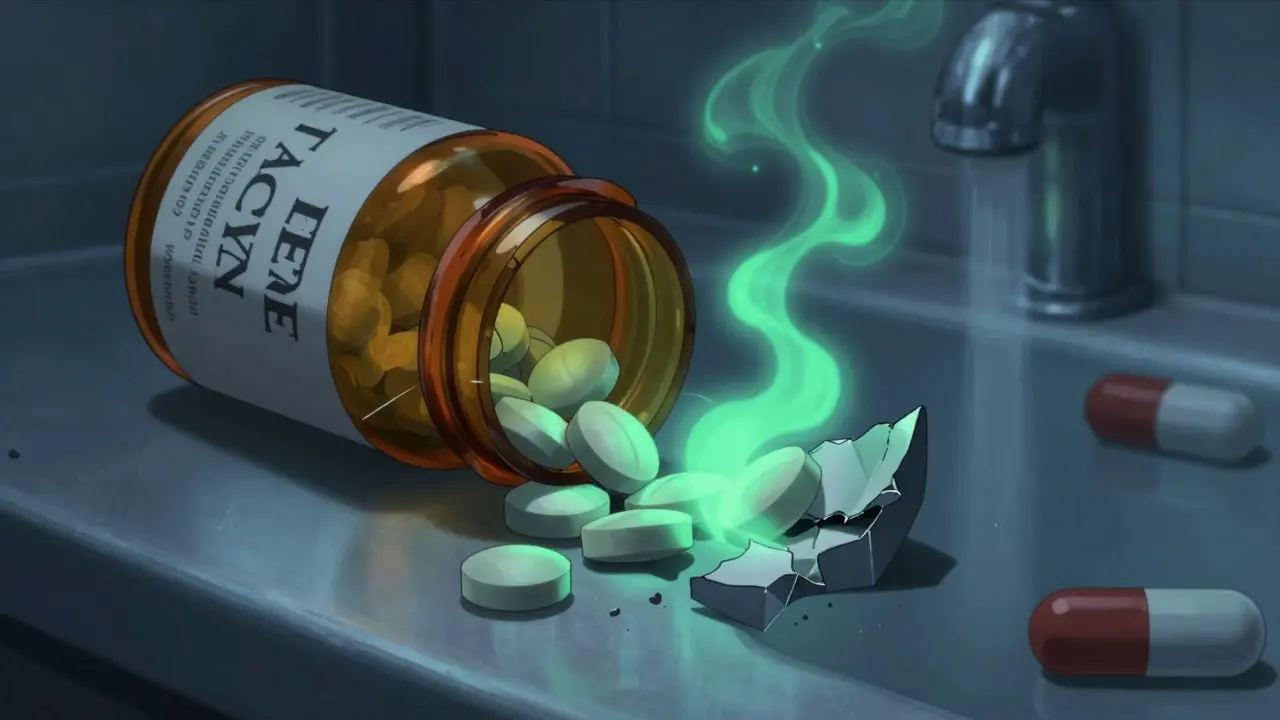
Most people assume that if a pill or liquid medicine is past its expiration date, it’s just weak-maybe it won’t work as well, but it won’t hurt you. That’s not always true. While the vast majority of expired medications don’t turn poisonous, a small group of them can become dangerous, even life-threatening, after they expire. And knowing which ones are risky could save your life-or someone else’s.
What Does an Expiration Date Really Mean?
The expiration date on your medicine isn’t just a marketing tactic or a way for drug companies to push you to buy more. It’s the last day the manufacturer guarantees the drug is both fully potent and safe to use, under proper storage conditions. This requirement has been federal law in the U.S. since 1979, based on stability testing required by the FDA. But here’s the twist: that date doesn’t mean the drug suddenly turns toxic on the next day. In fact, the FDA’s own Shelf Life Extension Program found that 90% of over 100 tested medications were still effective 5 to 15 years past their expiration date-if they were stored in cool, dry places. So why do we still get warned not to use expired drugs? Because some medications don’t just lose strength. They break down into harmful chemicals. And those are the ones you need to watch out for.The Real Danger: When Medications Turn Toxic
Most expired pills are harmless, just less effective. But a few types of drugs undergo dangerous chemical changes when they age. The most well-documented case happened in 1963, when three people developed kidney damage after taking expired tetracycline. The degraded form of the antibiotic, called epitetracycline, is toxic to the kidneys. Even though packaging and manufacturing have improved since then, the same risk still exists for tetracycline and its relatives like doxycycline. Other high-risk medications include:- Nitroglycerin - Used for chest pain. After expiration, it breaks down into unstable nitrogen oxides. A 2019 study from the Cleveland Clinic showed it loses half its potency within three months of expiration. If you’re having a heart attack and your nitroglycerin doesn’t work, you could die waiting for help.
- Insulin - After expiration, insulin molecules clump together, forming fibrils. This cuts its effectiveness by 20-30% per year. A diabetic using expired insulin might not realize their blood sugar is rising until it’s too late.
- Liquid antibiotics - Like amoxicillin-clavulanate. Once expired, they can grow bacteria or break down into allergens. One parent reported their child developed severe diarrhea after taking an antibiotic expired by just three days.
- Epinephrine auto-injectors (EpiPens) - These are critical for anaphylaxis. A 2017 study found they lose 85% of their potency after one year past expiration. In an emergency, that could mean the difference between life and death.
- Eye drops - Preservatives in eye drops break down after 28 days of opening, even if the bottle isn’t expired. That increases the risk of eye infections.
- Aspirin - It degrades into acetic acid (vinegar) and salicylic acid. After two years past expiration, the risk of stomach irritation increases by 50%.
Storage Matters More Than You Think
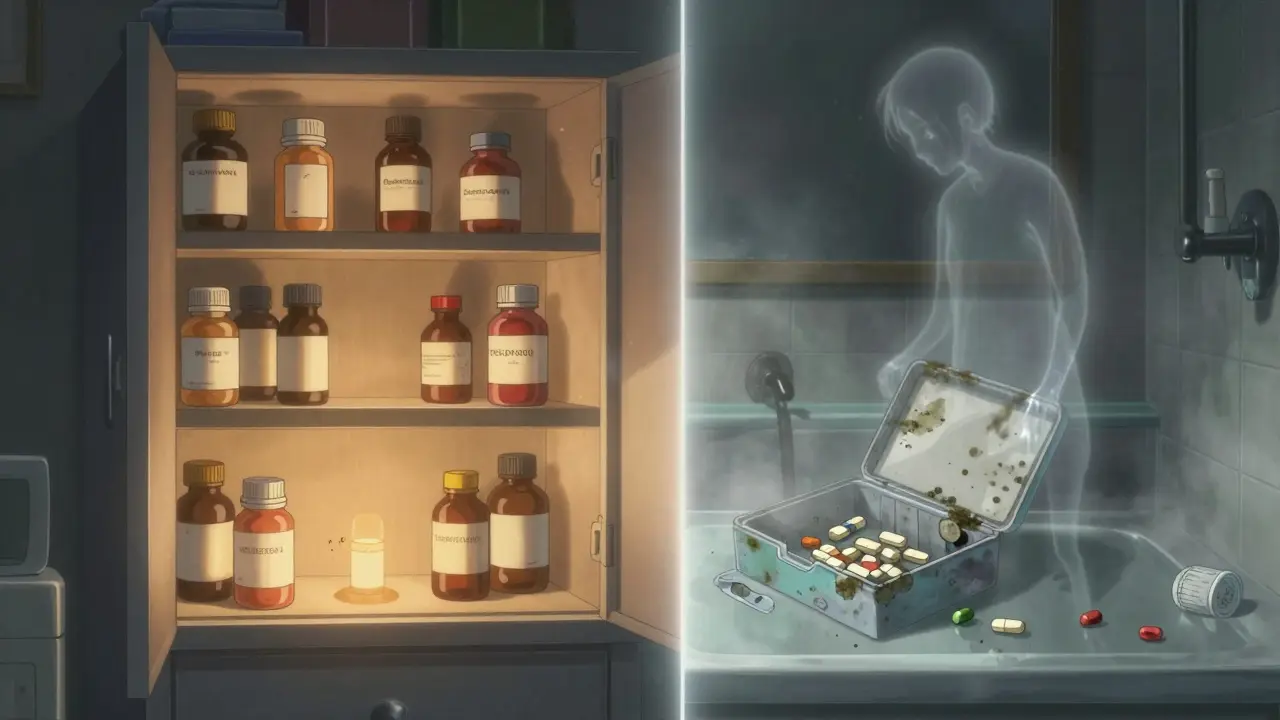
Your medicine’s lifespan isn’t just about the date on the bottle-it’s about where you keep it. The FDA says a “cool, dry place” means between 15°C and 25°C (59°F-77°F) with 35-45% humidity. But how many of us store our meds in the bathroom? That’s usually 32°C (90°F) and 80% humidity. Heat and moisture speed up chemical breakdown. A 2022 study from UCSF found that nitroglycerin tablets stored in their original amber glass bottle lasted six months past expiration with 85% potency. The same tablets in a plastic pillbox degraded completely in three months. Insulin kept in the fridge stays effective much longer than insulin left on the counter. If you want your meds to last, store them in a bedroom drawer or a cabinet away from the sink, shower, or windows. Don’t transfer pills to unlabeled containers. Original packaging protects them from light and moisture.
What About All Those Expired Pills in Your Medicine Cabinet?
A 2023 Consumer Reports survey found 68% of U.S. adults have used at least one expired medication. Most didn’t get sick. But 12% said their treatment failed-like an antihistamine that didn’t stop their allergies, or a painkiller that didn’t touch their headache. The real danger isn’t poison. It’s failure. A 2023 editorial in JAMA Internal Medicine put it bluntly: “The real tragedy isn’t poisoned patients from expired drugs-it’s the untreated heart attack because expired nitroglycerin didn’t work when needed most.” If you’ve taken an expired antihistamine, ibuprofen, or antidepressant, you’re probably fine. But if you’ve used expired insulin, EpiPen, or nitroglycerin, you’ve taken a gamble with your life.What Experts Say
There’s a big gap between what regulators say and what scientists observe. The FDA, CDC, and DEA all tell you: “Never use expired drugs.” But researchers point to data showing most are safe. Dr. Peter J. Embi from the NIH testified in 2022 that the current system causes $3.5 billion in wasted medicine every year. The American Pharmacists Association says it’s “highly unlikely” most expired meds cause harm. But the American College of Medical Toxicology says there have only been two confirmed cases of toxicity from expired drugs in the last 60 years: the 1963 tetracycline incident and a 2001 case of clindamycin causing kidney injury. The takeaway? For most pills, the risk is low. But for the high-risk drugs listed above? The risk is real.What Should You Do?
Here’s a simple rule:- Don’t use expired insulin, EpiPens, nitroglycerin, liquid antibiotics, or eye drops. Replace them.
- Use with caution for aspirin, antihistamines, or antidepressants-only if you have no other option and you’re not treating a life-threatening condition.
- Never use any medication that looks discolored, smells weird, or is crumbly. That’s a sign of degradation, no matter the date.
- Check storage-if your meds were left in a hot car or a steamy bathroom, toss them.
How to Dispose of Expired Medications Safely
Don’t flush pills down the toilet or throw them in the trash where kids or pets can get to them. The DEA’s National Prescription Drug Take-Back Day collected over 930,000 pounds of unused meds in 2023. You can find drop-off locations at pharmacies like CVS and Walgreens, or through your local health department. If no take-back program is available, mix pills with coffee grounds or cat litter in a sealed container before tossing them. That makes them unappealing and harder to misuse.What’s Changing in 2026?
New technology is starting to change how we think about expiration dates. Companies like Pfizer and Merck are investing hundreds of millions in smart packaging that tracks real-time temperature and humidity. By 2027, some prescriptions may have dynamic expiration dates that change based on how you’ve stored them. In January 2024, Senator Bernie Sanders introduced a bill to update FDA expiration rules based on actual stability data-not conservative estimates. The FDA is already testing a pilot program to extend expiration dates for 20 critical drugs. The future might be smarter expiration labels. But until then, stick to the rule: if it’s a life-saving drug and it’s expired, don’t risk it.Can expired medications make you sick?
Most expired medications won’t make you sick-they just won’t work as well. But certain drugs like expired tetracycline, nitroglycerin, insulin, and liquid antibiotics can break down into toxic or allergenic compounds that cause kidney damage, allergic reactions, or treatment failure. The risk is low overall, but it’s real for specific medications.
Is it safe to take expired painkillers like ibuprofen or acetaminophen?
Yes, for the most part. Studies show that solid-dose medications like ibuprofen and acetaminophen retain 70-90% of their potency up to 10-15 years past expiration if stored properly. They’re unlikely to be toxic, but they may not relieve pain as effectively. If you’re relying on them for chronic pain, it’s better to replace them.
What should I do if I took an expired EpiPen during an allergic reaction?
Call 911 immediately, even if you feel better. An expired EpiPen may have lost most of its potency. Epinephrine is time-sensitive-delayed treatment can lead to death. Always carry a fresh, unexpired EpiPen if you have severe allergies.
Why do drug companies set expiration dates so early if the drugs last longer?
Manufacturers are only required to test stability for a limited time-usually 2-3 years. Extending that testing to 10+ years is expensive and not required by law. So dates are set conservatively to ensure safety and avoid liability. The FDA’s own data shows many drugs last much longer, but companies aren’t incentivized to prove it.
Can I tell if a medicine is expired just by looking at it?
Sometimes. Look for changes in color, smell, texture, or consistency. Tablets that are cracked, powdery, or sticky; liquids that are cloudy or have particles; or capsules that are leaking are signs of degradation. If anything looks off, don’t use it-even if it’s before the expiration date.

Candice Hartley
January 27, 2026 AT 14:13Just took my 3-year-old ibuprofen for a headache. Felt fine. 🤷♀️
Harry Henderson
January 29, 2026 AT 03:30Yo, if you’re still using expired EpiPens, you’re one bad bee sting away from becoming a meme. Replace them. Now. Your life isn’t a budget experiment. 🚨
astrid cook
January 30, 2026 AT 23:42People don’t realize how reckless they are. I’ve seen grandparents keep tetracycline from the 90s in their bathroom cabinet. It’s not just negligence-it’s a moral failure. 🙄
suhail ahmed
February 1, 2026 AT 09:48Bro, in India we’ve been using expired meds for decades because we can’t afford new ones. Yeah, some people get sick-but most? They just suffer through. The real tragedy isn’t the expired pill-it’s the system that makes you choose between rent and your insulin. 🫡
Anjula Jyala
February 3, 2026 AT 09:33Stability data shows 90% of pharmaceuticals retain efficacy beyond labeled expiration dates per FDA Shelf Life Extension Program. Manufacturers set conservative dates due to liability avoidance not scientific necessity. Regulatory inertia perpetuates wasteful disposal norms. Cost of overproduction exceeds $3.5B annually. Systemic failure.
Andrew Clausen
February 5, 2026 AT 06:21Correction: The FDA’s Shelf Life Extension Program tested over 100 drugs, not 100+ medications. Also, epitetracycline toxicity was documented in 1963, not 1962. Precision matters when lives are at stake. Your article is otherwise well-researched, but sloppy details undermine credibility.
April Williams
February 6, 2026 AT 12:33My neighbor used her expired nitroglycerin during a heart attack. It didn’t work. She died waiting for an ambulance. Don’t tell me ‘it’s probably fine.’ It’s not. I’ve seen the body. I’ve held the empty bottle. Don’t gamble with your life. Replace it. Always.
Murphy Game
February 8, 2026 AT 02:51Let’s be real-this is all a corporate scam. The FDA, Big Pharma, and pharmacies are in cahoots. They want you to buy new meds every year so they can keep raking in billions. The real danger? The system that profits off your fear. They don’t care if you live or die-they care if you keep buying. 🕵️♂️
Kirstin Santiago
February 8, 2026 AT 17:58Thank you for sharing this. I’m a nurse, and I’ve seen too many people ignore expiration dates because they’re scared of the cost. But you’re right-some meds are worth replacing. I keep a list in my wallet: EpiPen, insulin, nitro, liquid antibiotics. Those get tossed the day after expiration. Everything else? I check for smell, color, texture. If it looks or smells wrong, I don’t risk it. Simple. Smart. Safe.