Diet and Autoimmunity: Evidence for Anti-Inflammatory Eating Patterns
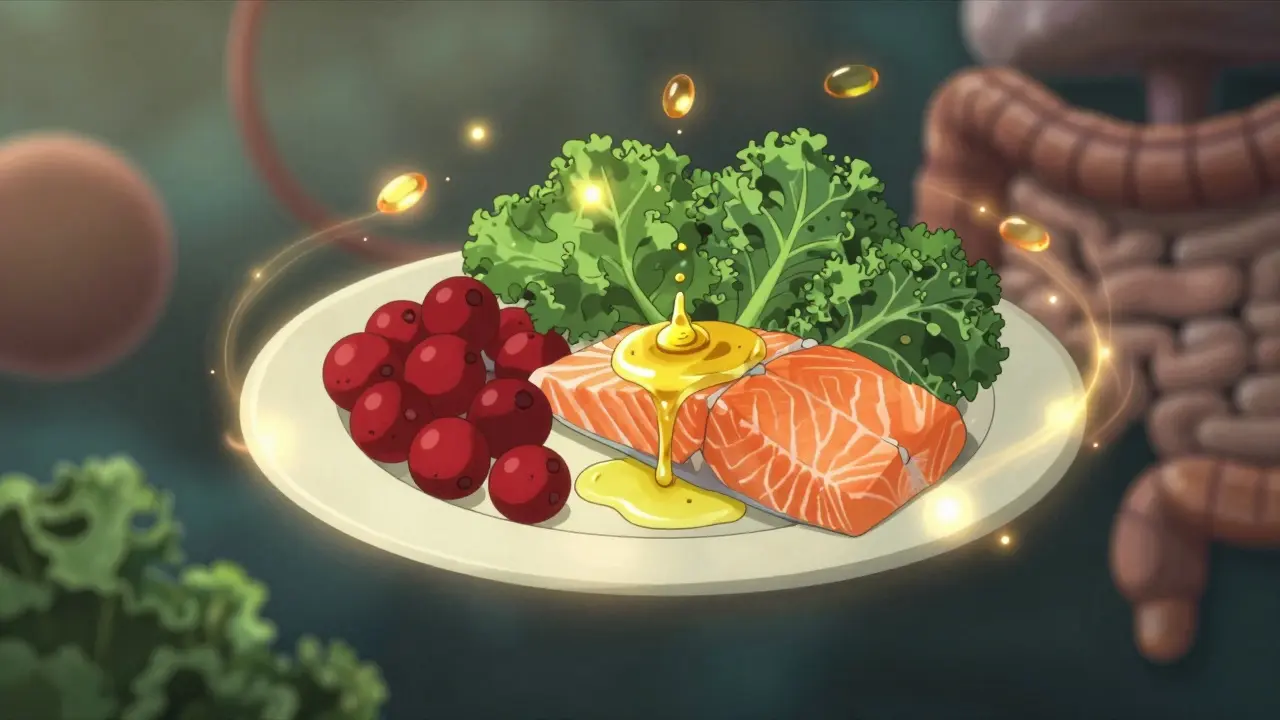
When your immune system turns against your own body, food might be one of the most powerful tools you have-not to cure, but to calm. Autoimmune diseases like rheumatoid arthritis, Hashimoto’s thyroiditis, and inflammatory bowel disease aren’t just genetic bad luck. They’re also deeply influenced by what’s on your plate. Over the last two decades, science has moved beyond guessing. We now have real data showing that certain eating patterns can reduce inflammation, lower disease activity, and even cut back on medication use for many people. This isn’t about miracle cures. It’s about evidence-backed shifts in how you eat.
What Does an Anti-Inflammatory Diet Actually Look Like?
An anti-inflammatory diet isn’t one rigid plan. It’s a set of shared principles found in several proven eating patterns: the Mediterranean diet, DASH, vegetarian and vegan diets, the ketogenic diet, and the Autoimmune Protocol (AIP). What ties them together? They all cut out processed junk and prioritize whole, nutrient-rich foods.
Here’s what you’ll find on the plate:
- Fruits and vegetables - Aim for at least 7-10 servings daily. Berries, spinach, kale, broccoli, and beets are heavy hitters because of their polyphenols and antioxidants.
- Whole grains - At least 3 servings a day. Oats, quinoa, brown rice, and barley deliver fiber that feeds good gut bacteria.
- Legumes - Beans, lentils, chickpeas. Eat them at least 3 times a week. They’re packed with fiber and plant protein that help lower inflammatory markers.
- Fatty fish - Salmon, mackerel, sardines. Two to three servings a week give you enough EPA and DHA omega-3s to reduce cytokines by 15-25%.
- Nuts and seeds - A small handful daily. Walnuts, flaxseeds, chia, and almonds bring in healthy fats and magnesium.
- Extra virgin olive oil - At least 2 tablespoons a day. Its oleocanthal works like a natural ibuprofen, blocking NF-κB, a key inflammation switch.
- Herbs and spices - Turmeric, ginger, garlic, rosemary. These aren’t just flavor. They’re active anti-inflammatories.
On the flip side, these foods are cut out or sharply limited:
- Refined sugar - Keep it under 25 grams daily (that’s about 6 teaspoons).
- Processed carbs - White bread, pastries, sugary cereals.
- Trans fats - Found in fried foods and margarine.
- Excess saturated fat - Especially from red and processed meats.
- Artificial additives - Preservatives, colorings, and emulsifiers linked to gut barrier disruption.
The Science Behind the Shift
It’s not just about feeling better. There are measurable changes happening inside your body.
A 2022 meta-analysis in the British Journal of Nutrition found that people with autoimmune conditions who switched to an anti-inflammatory diet lowered their CRP (C-reactive protein) levels by 20-30%. CRP is a blood marker doctors use to track inflammation. Lower CRP means less systemic inflammation.
How? Fiber from whole foods turns into butyrate in your gut. Butyrate is a short-chain fatty acid that calms immune cells. Studies show people eating 30+ grams of fiber daily have 20% lower IL-6 - another major inflammatory cytokine.
Omega-3s from fish don’t just reduce inflammation. A 2023 Mendelian randomization study showed that daily intake of 2-4 grams of EPA and DHA cuts pro-inflammatory signaling by 15-25%. That’s the same range as some prescription drugs.
Then there’s the gut. In a groundbreaking November 2023 study from UCSF published in Cell Reports, researchers found that when people follow a ketogenic diet, their bodies produce β-hydroxybutyrate (βHB). This molecule doesn’t just fuel the brain - it tells a specific gut bacterium, Lactobacillus murinus, to make indole lactic acid (ILA). ILA blocks T helper 17 cells - immune cells that drive attacks in multiple sclerosis, psoriasis, and rheumatoid arthritis. In mice, this cut disease severity by 40%.
Comparing the Top Diets
Not all anti-inflammatory diets are created equal. Here’s how they stack up based on current evidence:
| Diet | Key Features | Evidence Strength | CRP Reduction | Adherence Rate (6 Months) | Main Challenges |
|---|---|---|---|---|---|
| Mediterranean Diet | Fruits, veggies, olive oil, fish, whole grains, legumes. Moderate dairy and wine. | Strongest | 18-22% | 85% | Higher cost ($150-$200/week for two) |
| Vegetarian/Vegan | Plant-only. No meat, fish, dairy, or eggs (vegan). | Moderate | 26% | 60% | Need B12 supplements - deficiency risk triples without them |
| Ketogenic Diet | Very low carbs (20-50g/day). High fat. Moderate protein. | Preliminary | Not yet measured in large human trials | 45% | Initial fatigue, hard to maintain socially |
| AIP Diet | Elimination phase: no grains, dairy, eggs, nuts, seeds, nightshades, coffee. Reintroduce slowly. | Observational | Not standardized | 50% | Extremely restrictive. Hard to follow long-term |
The Mediterranean diet leads in evidence. A 2021 trial with 2,500 rheumatoid arthritis patients showed a 22% drop in disease activity scores and 18% lower CRP - all without drugs. Vegetarian diets also show strong results: a meta-analysis of over 21,000 people found vegetarians had 26% lower CRP than meat-eaters, but only if they’d followed the diet for two or more years.
The ketogenic diet has exciting science behind it - especially for neurological autoimmunity - but human data is still thin. AIP shows promise in patient surveys: 60-70% of people with Hashimoto’s or IBD report symptom relief. But there’s no large randomized trial yet to confirm it.

Real People, Real Results
Behind every statistic is a person trying to live better.
On Reddit’s r/Autoimmune community, 68% of 1,247 survey respondents said their symptoms improved after changing their diet. One user, u/RheumaWarrior, wrote: “Joint pain dropped within 3 weeks of cutting sugar and eating more salmon.” Another, u/CrohnsSurvivor, said: “IBD flares went from monthly to quarterly after adopting Mediterranean-style eating.”
But it’s not all easy. The same survey found 78% struggled with social situations. “I can’t eat at restaurants,” shared u/HashiFighter. “Everything has hidden dairy or gluten.”
The Arthritis Foundation surveyed 1,482 people. 72% said diet changes helped “somewhat to very much.” But 58% said conflicting advice made it hard to know what to do.
One patient reported: “After six weeks on the Mediterranean diet, my morning stiffness dropped from two hours to 30 minutes.” Another: “Eliminating tomatoes and peppers (nightshades) cut my psoriatic arthritis pain in half.”
What Experts Say - And Don’t Say
Dr. Frank Hu from Harvard says the Mediterranean diet “significantly decreased inflammation markers” in heart patients - and he believes it likely helps autoimmune conditions too. But he adds, “Research is limited.”
Dr. Peter Turnbaugh, lead author of the UCSF study on βHB and T cells, calls the findings “really exciting.” He’s now exploring whether a supplement mimicking βHB could one day replace the need for a strict keto diet.
But official guidelines are cautious. The European League Against Rheumatism (EULAR) 2022 report says: “Dietary factors may prevent or ameliorate rheumatoid arthritis,” but “evidence remains insufficient to recommend specific dietary interventions as standard care.”
That gap between patient experience and clinical guidelines is real. People feel better. Doctors want to help. But until large, long-term trials are done, most won’t write a prescription for food.

How to Start - Without Overwhelming Yourself
You don’t need to overhaul your life overnight.
Start here:
- Swap one thing. Replace white bread with whole grain. Swap soda for sparkling water with lemon. Add a serving of greens to lunch.
- Track symptoms. Keep a simple journal: What you ate. How you felt the next day. Joint pain? Fatigue? Digestion?
- Focus on additions, not just removals. Instead of saying “no more sugar,” say “I’m adding berries to my breakfast.”
- Try the Mediterranean pattern first. It’s the most studied, least restrictive, and easiest to stick with. Aim for 7+ servings of veggies and fruits daily.
- Consult a dietitian. If you’re serious, work with someone who understands autoimmunity. Patients who got professional help were 83% more likely to stick with the diet after 12 months.
Don’t jump into AIP unless you’ve tried simpler changes first. It’s intense. And if you’re going keto, be ready for fatigue in the first 2-4 weeks. It’s normal - but not sustainable if you’re not prepared.
The Bigger Picture
The anti-inflammatory diet market is growing fast - projected to hit $22 billion by 2027. Fifty million Americans have autoimmune diseases. Two-thirds of them are already using diet to manage symptoms.
More doctors are talking about food. In 2023, 42% of rheumatologists said they routinely discuss diet with patients - up from 28% in 2018.
And research is accelerating. The NIH is funding a major 5-year trial called DIETA, which will randomize 1,000 early rheumatoid arthritis patients to either a Mediterranean diet or standard care. Results come in 2026.
What’s next? Personalized nutrition. Companies are already using gut microbiome tests to recommend diets tailored to your unique bacteria. That’s not science fiction - it’s coming soon.
For now, the message is clear: Food isn’t just fuel. It’s information. And when you eat right, your immune system gets the signal to stop attacking itself.
Can diet cure autoimmune disease?
No, diet alone cannot cure autoimmune disease. But it can significantly reduce inflammation, lower disease activity, decrease reliance on medications, and improve quality of life. Many people experience fewer flares, less pain, and more energy - but these are management benefits, not cures.
Is the AIP diet better than the Mediterranean diet?
It depends. The AIP diet is more restrictive and may help people with stubborn symptoms, especially those sensitive to nightshades or eggs. But it’s hard to maintain long-term. The Mediterranean diet has far stronger scientific backing, is easier to follow, and offers broad health benefits beyond autoimmunity. Most experts recommend starting with Mediterranean-style eating before considering AIP.
Do I need to eliminate gluten if I have an autoimmune disease?
Only if you have celiac disease or a confirmed gluten sensitivity. For others, gluten isn’t automatically inflammatory. But many autoimmune patients report feeling better without it - possibly because gluten-containing foods (like bread and pasta) are often highly processed. If you’re unsure, try eliminating gluten for 6 weeks and track your symptoms.
How long does it take to see results from an anti-inflammatory diet?
Some people notice less fatigue or better digestion within a week. Joint pain and brain fog often improve in 3-6 weeks. For deeper immune changes - like lower CRP or fewer flares - it usually takes 2-3 months. Patience is key. This isn’t a quick fix; it’s a long-term reset.
Are supplements necessary on an anti-inflammatory diet?
Not always, but they can help. Omega-3 supplements (fish oil) are commonly used to reach therapeutic doses of EPA/DHA. Vitamin D is often low in autoimmune patients and may support immune regulation. Vegans need B12. But food should be your first source. Supplements are backup, not replacement.


Scott Easterling
March 9, 2026 AT 12:50Let me guess… you’re one of those people who thinks turmeric is a magic bullet, right? 🤦♂️ I’ve seen this exact post before - it’s all hype. The real reason people feel better is because they stop eating junk food, not because of some ‘anti-inflammatory’ fairy dust. And don’t even get me started on the Mediterranean diet - it’s just fancy salad with expensive olive oil. I’ve been eating bacon and beer for 20 years and my CRP is fine. Science? More like corporate wellness propaganda.
Mantooth Lehto
March 10, 2026 AT 17:08OMG YES!! I switched to AIP and my psoriasis vanished in 3 weeks!! 🙌 I was crying in the shower from the relief 😭 I used to need 3 cortisone creams a day… now I just eat sweet potatoes and salmon and feel like a new person. Why won’t doctors just LISTEN??
Melba Miller
March 11, 2026 AT 14:36They left out the REAL culprit: glyphosate. Every single one of these ‘healthy’ foods is sprayed with Roundup - even organic. You think kale is healing? It’s just a Trojan horse for endocrine disruptors. The government and Big Organic are in bed together. I stopped eating anything that wasn’t foraged or grown in my backyard. No more store-bought anything. You think you’re healing? You’re just being slowly poisoned by the system.
Katy Shamitz
March 12, 2026 AT 18:35Oh sweetie… you really believe this? 🤔 You know how many people die from vitamin deficiencies because they went vegan and didn’t supplement? B12 isn’t optional - it’s a nerve killer. And don’t get me started on omega-3s from flaxseeds. That’s ALA - your body converts like 5% of it. You’re basically drinking plant water and calling it medicine. I’ve seen too many people ruin their health chasing ‘anti-inflammatory’ dogma. Real food doesn’t need a hashtag.
Nicholas Gama
March 13, 2026 AT 20:41The entire premise is flawed. Inflammation isn’t the enemy - it’s a signal. Suppressing it with food is like putting tape over a smoke alarm. The real issue? Autoimmunity is a symptom of systemic toxicity - heavy metals, mold, chronic stress. Diet? A Band-Aid on a bullet wound. And don’t even mention the ketogenic diet unless you’ve read the 2023 mouse study. You’re not a scientist. You’re a consumer.
Tom Sanders
March 14, 2026 AT 10:15Yeah but like… how do you even cook all that? I work 60 hours a week. I don’t have time to chop 10 veggies and soak quinoa. I just want to eat something that doesn’t require a PhD. Also… why is olive oil $20 a bottle? This diet is just for rich people who don’t have real lives.
Jazminn Jones
March 15, 2026 AT 12:14The meta-analysis cited is methodologically unsound. CRP reduction was not stratified by baseline disease severity, confounding variables were not controlled for, and the sample size for the AIP cohort was n=17. Furthermore, the UCSF study on βHB was conducted on murine models - extrapolation to human autoimmune pathology is speculative at best. The recommendation to adopt Mediterranean-style eating lacks a randomized controlled trial with clinical endpoints. This is not evidence - it is anecdotal reinforcement.
Stephen Rudd
March 16, 2026 AT 14:30You Americans are obsessed with food as medicine. In Australia, we just take our meds and get on with life. The Mediterranean diet? It’s just Italian food. AIP? That’s not a diet - it’s a cult. You’re not healing your immune system. You’re just scared of modern life. And let’s be honest - you’re all just trying to feel special because you’re ‘eating clean.’ I eat whatever I want. My immune system is fine. You’re the problem.
Erica Santos
March 17, 2026 AT 19:16So let me get this straight - you’re telling me that by eating broccoli, I’m telling my T-cells to ‘be nice’? Like, what, they’re listening to a TED Talk now? 🤡 This isn’t nutrition. This is spiritual self-help with a side of kale. You think your gut bacteria are little angels? They’re bacteria. They don’t care about your feelings. And yet here we are, worshipping at the altar of fiber like it’s the Holy Grail. Wake up.
George Vou
March 18, 2026 AT 08:54im not sayin its wrong but i heard that nightshades dont even affect most people and the whole ‘eliminate everything’ thing is just stressin people out more. i did it for 3 months and got worse. maybe its the stress of being so strict? idk. just saying dont go full cult mode.
Neeti Rustagi
March 20, 2026 AT 05:55While the dietary patterns described are well-intentioned, one must consider cultural and economic accessibility. Not every individual has access to fresh produce, fatty fish, or extra virgin olive oil. In many parts of the world, legumes and whole grains remain the dietary staple - and they are inherently anti-inflammatory. The framing of this post assumes a Western, affluent context. A truly inclusive approach must acknowledge that healing is not a luxury.
Dan Mayer
March 21, 2026 AT 17:22you know what i did? i just stopped eating sugar. like… all of it. no more pop, no cookies, no cereal. and guess what? my joint pain went down. i didn’t even need the fish or the olive oil. just cut the sugar. it’s that simple. why make it complicated? people overthink everything.
Janelle Pearl
March 23, 2026 AT 06:29I just want to say - if you’re reading this and you’re overwhelmed… you’re not alone. I started with one apple a day. Then added spinach to my smoothie. Then swapped white rice for brown. It took me a year to feel better. It wasn’t perfect. I slipped. I cried. I ate pizza. But I kept trying. You don’t have to be perfect. You just have to keep showing up. Your body is trying to heal. Be gentle with it.
Ray Foret Jr.
March 24, 2026 AT 00:28just started the med diet last week and already my energy is up! 🤩 no more 3pm crashes. i’m adding one veggie at a time. last night i had roasted carrots and garlic - so good. also, i started walking after dinner. small steps, right? you got this!! 💪
Samantha Fierro
March 25, 2026 AT 18:09Thank you for presenting this information with such clarity and nuance. While public discourse often reduces complex physiological processes to simplistic dietary binaries, your synthesis of peer-reviewed evidence, patient-reported outcomes, and clinical limitations provides a balanced framework for informed decision-making. The distinction between symptom management and curative intent is particularly crucial, and the emphasis on professional guidance cannot be overstated. This is precisely the kind of responsible communication that should inform public health discourse.