How to Clear Security with Liquid Medications and Supplies at Airports
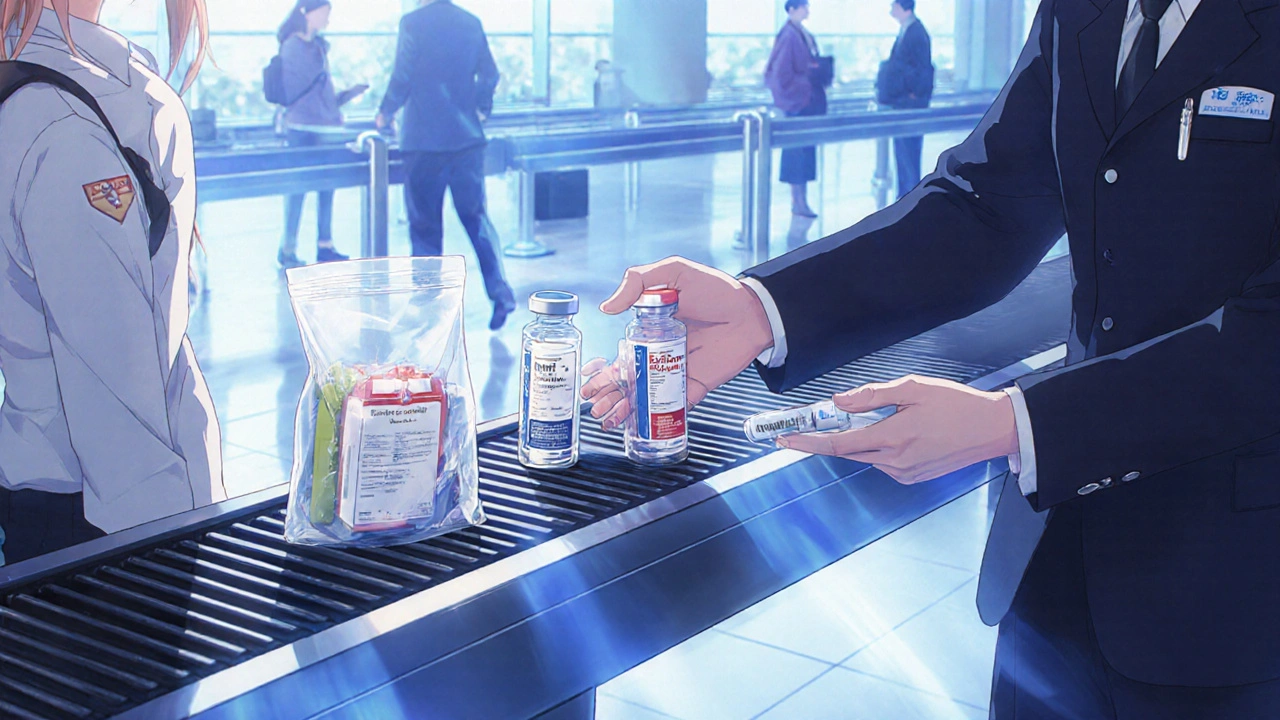
Traveling with liquid medications doesn’t have to be stressful-if you know the rules. Millions of people fly every year with insulin, chemotherapy drugs, EpiPens, or other essential liquids. But too many travelers get held up at security because they didn’t prepare properly. The good news? Liquid medications are exempt from the standard 3.4-ounce limit. The bad news? Many TSA officers still aren’t trained well enough to know that. You can avoid delays, confusion, and unnecessary stress by following a few simple, proven steps.
What Counts as a Medication?
Not everything in your bag that’s liquid qualifies as a medical exemption. The TSA allows exemptions for prescription medications only. That includes:- Insulin and other injectable drugs (including glucagon emergency kits)
- Oral liquids like liquid antibiotics, cough syrups, or seizure medications
- Topical creams and gels for eczema, psoriasis, or pain relief (if prescribed)
- EpiPens and auto-injectors (even though they’re not "liquid" in the traditional sense, they’re treated as medical devices)
Over-the-counter liquids like cough syrup, baby formula, or sunscreen? Those still fall under the 3-1-1 rule. Only prescription items get the exemption. If you’re unsure, check the label: if it has your name, the pharmacy’s name, and the prescribing doctor’s info, you’re good.
Declaration Is Non-Negotiable
You can’t just toss your meds into your carry-on and hope for the best. The TSA requires you to declare all medical liquids before screening. That means telling the officer as soon as you approach the checkpoint. Don’t wait until they ask. Don’t assume they’ll see it on the X-ray. Say it out loud: "I have liquid medications that need to be screened separately." This simple step cuts your screening time in half. According to Johns Hopkins research, travelers who declare upfront move through in under 2 minutes on average. Those who don’t? Often wait 5 to 10 minutes while officers consult supervisors or call in specialists.Keep Everything in Original Containers
This is the #1 mistake people make. Transferring insulin vials or liquid pills into unlabeled travel bottles might seem convenient, but it’s risky. In 2024, 63% of all medication-related delays at U.S. airports happened because the container didn’t have a prescription label.TSA officers aren’t pharmacists. They can’t guess what’s in a small clear bottle without a label. If they can’t verify it’s your medication, they’ll have to X-ray it, swab it, or even call in a supervisor. That’s a 15-minute delay you didn’t need.
Keep your meds in their original pharmacy bottles. If you’re worried about bulk, bring the bottles as-is. TSA doesn’t care if you’re carrying 10 vials of insulin or 20 ounces of liquid antibiotic. As long as they’re labeled, you’re allowed to bring them all.
Use a Separate Clear Bag-Not the 3-1-1 One
Don’t mix your meds with your shampoo and toothpaste. Pack all your liquid medications in one clear, resealable plastic bag-separate from your 3-1-1 liquids bag. This makes it easy for TSA to spot and screen them quickly.Place this bag in an outer pocket of your carry-on, where you can grab it without digging. Many travelers keep it in a side pocket of their jacket or purse. That way, when you’re asked to remove liquids, you’re not fumbling through your bag at the belt. TSA’s internal data shows this cuts screening time from 4.7 minutes down to just 1.8 minutes.
Bring Documentation-Even If You Think You Don’t Need It
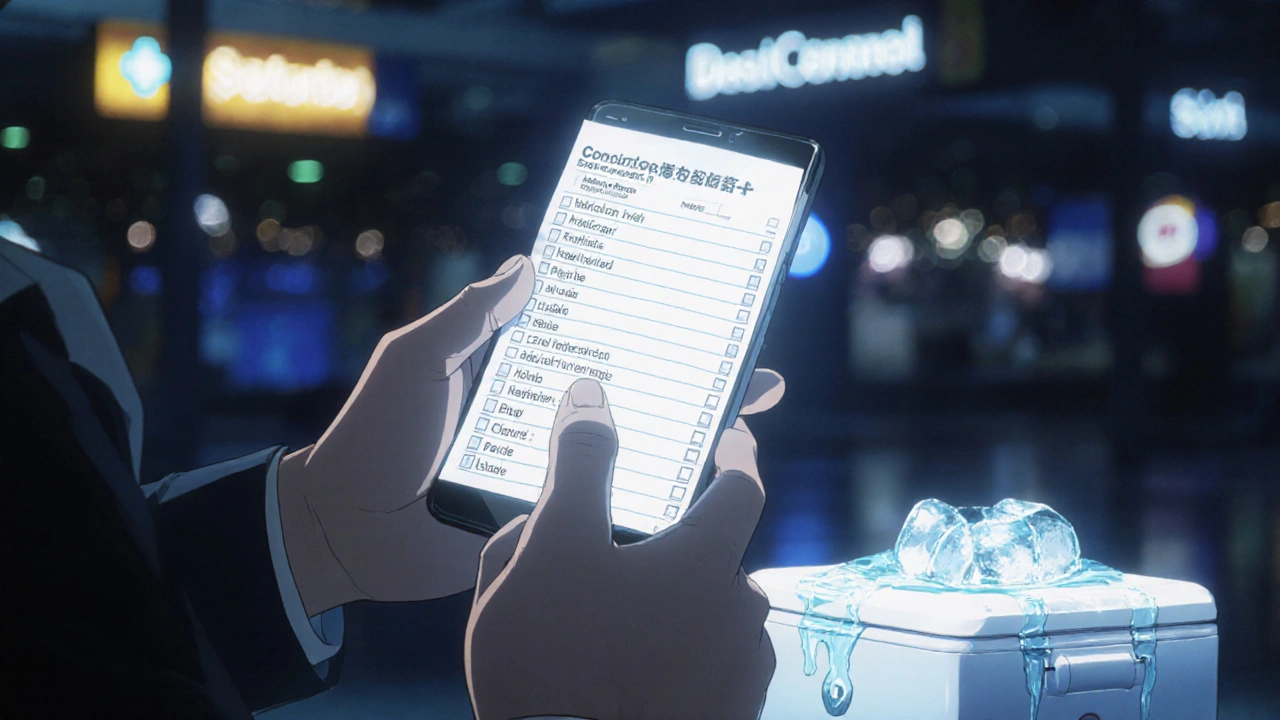
You don’t legally need a doctor’s note to fly with prescription meds in the U.S. But here’s the reality: if an officer is unsure, they’ll ask for proof. And if you don’t have it, you’ll get stuck.Print out or save on your phone a simple list with:
- Medication name
- Dosage
- Prescribing doctor’s name and phone number
- Pharmacy name and phone number
- Prescription number
This takes 5 minutes to make. It saves you 30 minutes if things go sideways. The American Medical Association recommends this for every traveler with chronic conditions. It’s not about suspicion-it’s about speed.
Ice Packs and Coolers: What’s Allowed?
If you need to keep insulin or other meds cold, you can bring ice packs. But they have rules:- Frozen ice packs are allowed, but they must be completely melted by the time they hit the X-ray machine.
- Any liquid from melted ice packs counts as a liquid medication-so if it’s pooling in your cooler, it’s subject to the same rules as your insulin.
- Coolers must be under 8x6x2 inches (per JDRF guidelines) and must be declared.
Don’t try to sneak in a full-size cooler. TSA will ask you to open it. If it’s leaking, they’ll have to screen the liquid inside. If it’s still frozen, they’ll let you keep it-but you’ll be asked to declare it. Be ready.
Controlled Substances and Medical Cannabis
If you’re carrying opioids, benzodiazepines, or other controlled substances, you’re still allowed to bring them-but you’re more likely to get questioned. Carry your original prescription bottle and your documentation. If you’re flying internationally, check the laws of your destination country-many ban even common U.S. prescriptions.Medical cannabis? Even if it’s legal in your state, it’s still federally illegal. TSA officers are required to report it. Don’t risk it. If you need cannabis-based medication, get a prescription alternative like Epidiolex (FDA-approved CBD) and bring that instead.
What If You Get Delayed?
Sometimes, despite doing everything right, you’ll still get held up. Maybe the officer didn’t know the rules. Maybe they were having a bad day. Here’s what to do:- Stay calm. Raise your voice or argue, and you’ll make it worse.
- Ask to speak to a supervisor. They’re trained on medical exemptions.
- Request a visual inspection instead of X-ray. You’re allowed to ask.
- Have your documentation ready. Don’t wait to be asked.
Reddit users report that at major hubs like Atlanta, Chicago, and Dallas, delays are more common. Smaller airports? Often smoother. Why? Because officers there see fewer travelers with complex medication needs. Don’t assume you’ll get the same treatment everywhere.
New TSA Program: Medical Traveler Pre-Check
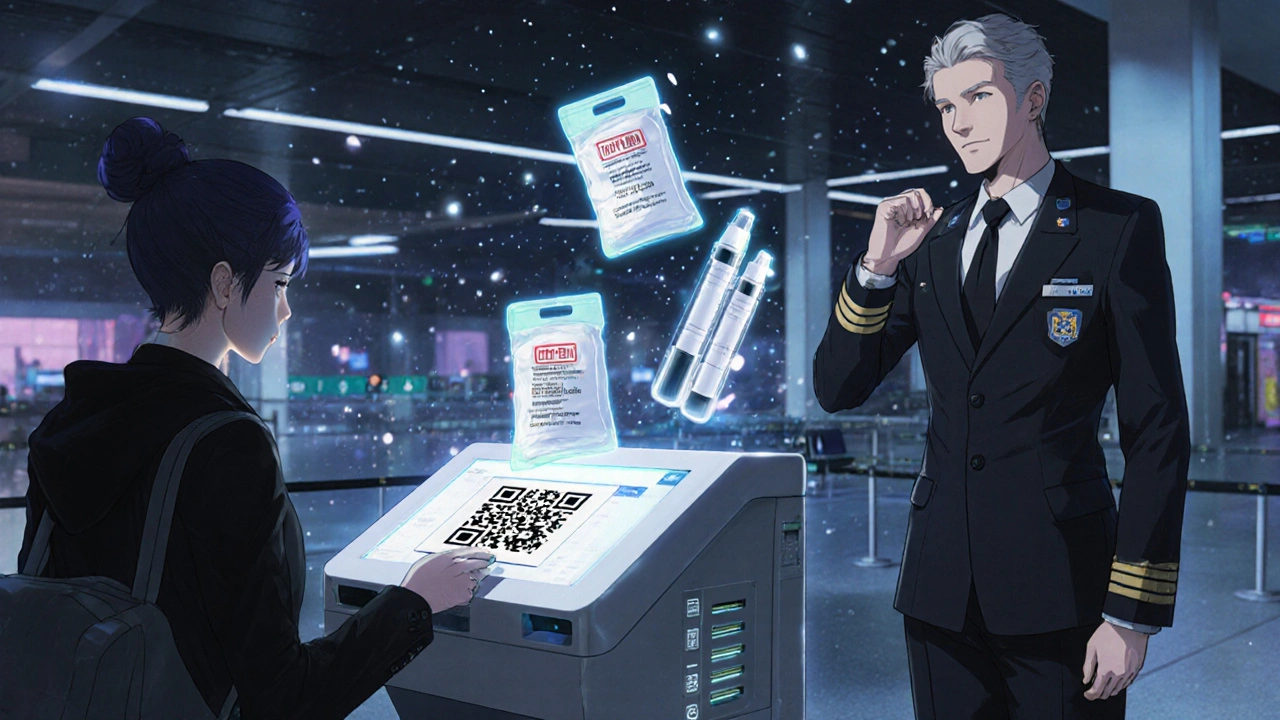
Starting September 1, 2025, the TSA will pilot a new program called Medical Traveler Pre-Check. It’s voluntary. You sign up online, submit your medication info, and get a QR code. At 12 major airports, you’ll get a dedicated screening lane with officers trained specifically for medical items. Screening time drops from 3.2 minutes to under 1.1 minutes.It’s not available everywhere yet. But if you fly often with meds, it’s worth signing up. The TSA plans to expand it nationwide by 2027.
Real Stories: What Works
One traveler, u/TravelMedNurse, posted on Reddit after flying from Toronto to Miami in April 2025: "I had 12 insulin vials, 3 EpiPens, and a 4-ounce liquid steroid. I declared everything, kept it in original bottles, and had my list printed. Walked through in 90 seconds. No questions." Another, u/DiabeticTraveler, had a different experience in Atlanta: "I had my glucagon kit in the original box, but the officer didn’t recognize it. Took 22 minutes. I had to call my doctor to confirm it was real." The difference? One had documentation ready. The other didn’t.Final Checklist
Before you leave for the airport, run through this:- ✅ All liquids in original pharmacy-labeled containers
- ✅ Medications packed in one clear bag, separate from 3-1-1 liquids
- ✅ Printed or digital medication list with names, doses, doctor, and pharmacy
- ✅ Ice packs melted or declared
- ✅ Controlled substances? Double-check destination country rules
- ✅ Know your rights: You can request a visual inspection
Follow this, and you’ll breeze through security. No panic. No delays. Just get on your flight with your meds safely in hand.
Can I bring liquid medication in quantities larger than 3.4 ounces?
Yes. Prescription liquid medications are exempt from the 3.4-ounce (100 mL) limit. You can bring as much as you need for your trip, as long as it’s declared and in its original labeled container. This includes insulin, chemotherapy liquids, oral syrups, and topical creams.
Do I need a doctor’s note to fly with liquid meds?
No, it’s not legally required in the U.S. But having a printed list with your medication names, dosages, prescribing doctor, and pharmacy contact info can save you hours of delays. TSA officers are more likely to clear you quickly if you can show proof of legitimacy.
Can I transfer my meds to a pill organizer or travel bottle?
Avoid it. Transferring prescription liquids to unlabeled containers is the leading cause of security delays. In 2024, 63% of medication-related issues at airports happened because the container wasn’t labeled. Keep everything in original pharmacy bottles to avoid being flagged.
Are ice packs allowed for refrigerated medications?
Yes, but they must be declared. Frozen ice packs are allowed, but they must be completely melted by the time they go through the X-ray. Any liquid from melted ice packs counts as a medical liquid and must be screened separately. Keep coolers under 8x6x2 inches.
What if a TSA officer doesn’t know the rules?
Stay calm and ask to speak to a supervisor. Supervisors are trained on medical exemptions and have access to official TSA guidelines. You can also request a visual inspection instead of X-ray. Don’t argue-just be prepared with your documentation. Most delays happen because travelers don’t know their rights.
Can I bring medical cannabis on a plane?
No. Even if it’s legal in your state, cannabis is still federally illegal, and TSA officers are required to report it. Don’t risk it. If you need cannabis-based treatment, ask your doctor for an FDA-approved alternative like Epidiolex, which is legal and screened like any other prescription.
Is there a faster way to go through security with meds?
Yes. Starting September 1, 2025, the TSA will pilot a Medical Traveler Pre-Check program at 12 major airports. Sign up online, submit your medication info, and you’ll get a dedicated lane with trained officers. Screening time drops from over 3 minutes to under 1.1 minutes. It’s free and worth it if you fly often with meds.
Diana Askew
November 30, 2025 AT 19:58King Property
December 1, 2025 AT 05:41Yash Hemrajani
December 2, 2025 AT 03:03Pawittar Singh
December 3, 2025 AT 00:38Josh Evans
December 3, 2025 AT 16:18Allison Reed
December 4, 2025 AT 12:53Jacob Keil
December 5, 2025 AT 05:31Rosy Wilkens
December 5, 2025 AT 23:37Andrea Jones
December 7, 2025 AT 00:31Justina Maynard
December 7, 2025 AT 06:17Evelyn Salazar Garcia
December 7, 2025 AT 08:52Clay Johnson
December 8, 2025 AT 07:28Jermaine Jordan
December 9, 2025 AT 15:00