How to Coordinate Mail-Order and Local Pharmacy to Save Money
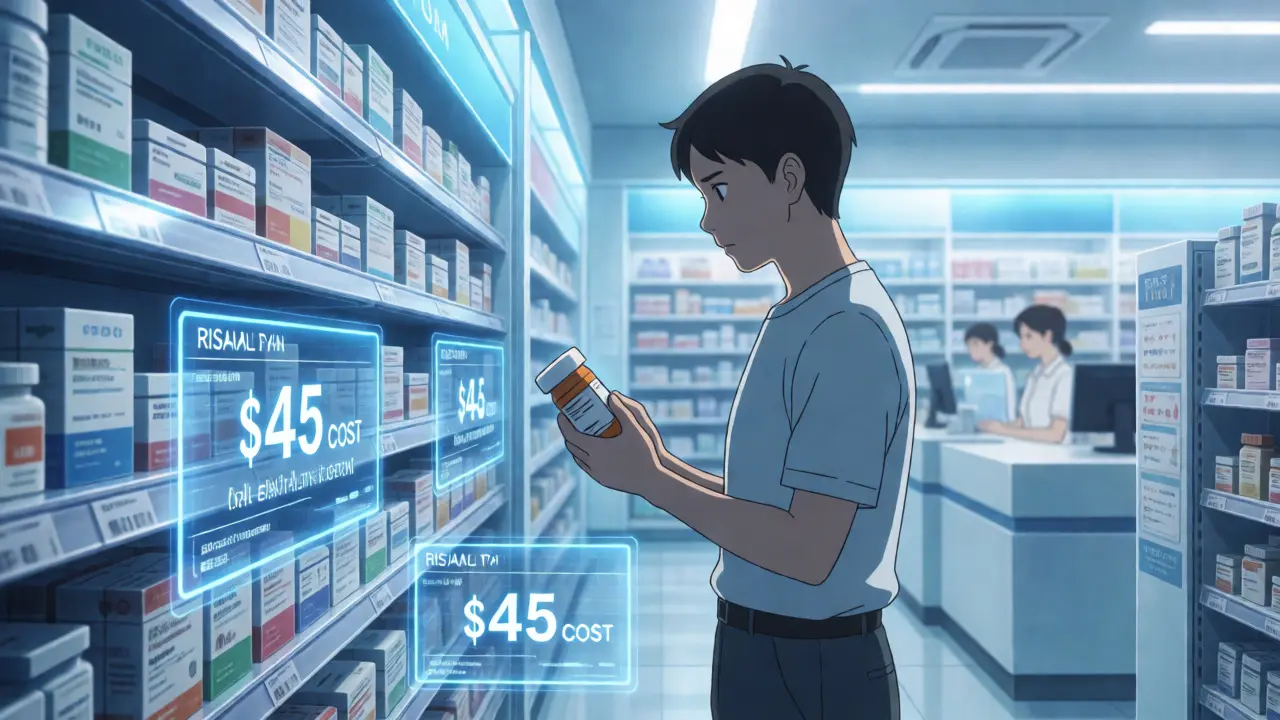
You’re standing in line at your local pharmacy, watching the total tick up. It’s $45 for a month of blood pressure meds. You know you could get it cheaper, but where? The answer isn’t just "go online." It’s about playing both sides of the fence. Coordinating mail-order and local pharmacies is the smartest way to cut drug costs without sacrificing convenience or care. Most people pick one lane and stick with it, leaving hundreds of dollars on the table every year. By splitting your prescriptions between these two channels based on what you actually need, you can save significantly while keeping a pharmacist nearby when things get complicated.
The Big Idea: Split Your Prescriptions
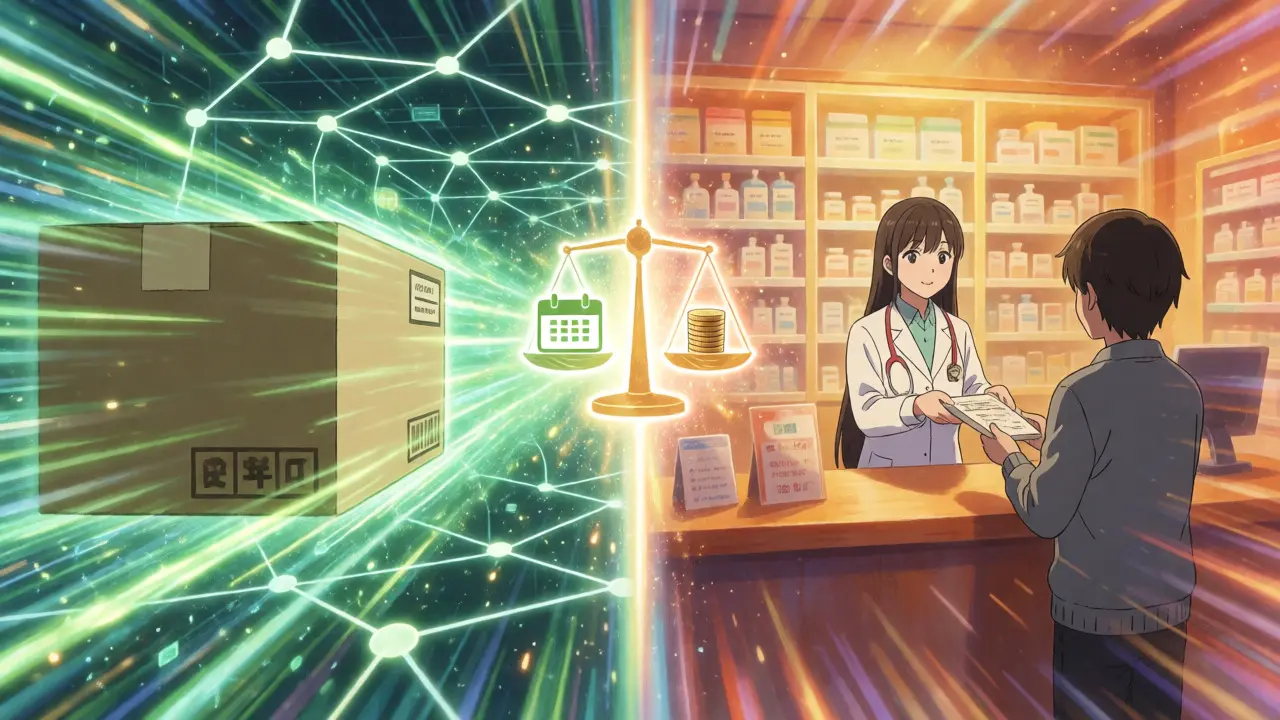
Here’s the core strategy: use mail-order for boring, stable, long-term medications. Use your local pharmacy for anything new, urgent, or tricky. Why? Because insurance plans love stability. They reward you for buying 90-day supplies of maintenance drugs through mail order because it saves them administrative hassle. A study published in the Journal of Managed Care Pharmacy found that mail-order fills cost 29% less than retail fills for these types of drugs. That’s not a rounding error; that’s real money staying in your pocket.
But mail-order has a fatal flaw: speed. If you catch pneumonia on a Tuesday, you can’t wait seven days for antibiotics to arrive by post. That’s where your local corner pharmacy shines. They give you immediate access and, crucially, face-to-face advice. You don’t want to be stuck on hold with a call center trying to explain why your new antidepressant makes you dizzy. You want to look someone in the eye. So, stop treating all pills the same. Categorize them, then assign them to the right channel.
Understanding Insurance Tiers and Pricing
To make this work, you need to speak the language of your insurance company. Most plans use a tiered system. Tier 1 is usually cheap generics. Tier 2 might be preferred brands. Tier 3 is non-preferred brands or specialty drugs. Here’s the secret many consumers miss: insurance formularies often offer better copays for 90-day supplies via mail order, but some allow the same price at retail. For example, Medicare Part D might charge $45 for a 30-day supply at retail but only $115 for a 90-day supply via mail. That’s a 24% saving per day of medication. But wait-some commercial plans are reversing this trend. A 2022 RAND Corporation study showed that 28% of plans now charge higher copays for mail-order specialty drugs than for retail pickups. Always check your specific plan documents before assuming mail-order is always cheaper.
| Medication Type | Local Retail (30-Day) | Mail-Order (90-Day) | Best Channel |
|---|---|---|---|
| Generic Statin (Cholesterol) | $15 | $12.50 (total for 3 months) | Mail-Order |
| Brand Name Inhaler (Asthma) | $60 | $150 (total for 3 months) | Tie / Convenience |
| Antibiotics (Acute Infection) | $20 (immediate) | N/A (too slow) | Local Retail |
| New Antidepressant (Dose Adjusting) | $45 | $120 (risk of waste) | Local Retail |
When to Stick with Your Local Pharmacist
Don’t let cost savings blindside you to safety risks. Your local pharmacist is a clinical resource, not just a pill dispenser. According to the American Pharmacists Association, nearly 40% of patients could save over $200 annually by optimizing their fill locations, but only if they maintain a relationship with a human expert. This is critical for three scenarios:
- New Prescriptions: When your doctor changes your dose or switches your medication, keep it local. Mail-order systems often lag behind electronic health records. One Reddit user reported losing $65 because a mail-order service kept sending the old strength of his antidepressant after his doctor updated the prescription. Don’t risk wasting weeks of expensive meds due to a sync error.
- Temperature-Sensitive Drugs: Insulin, biologics, and certain vaccines require strict temperature control. Shipping them across the country in August heat or January cold is risky. While mail-order services use insulated packaging, local pickup guarantees the chain of custody was never broken.
- Complex Interactions: If you take five or more medications, have a pharmacist review them in person. They can spot dangerous interactions that automated mail-order alerts might miss or bury in a pamphlet you’ll never read.
Building Your Coordination System
Setting this up takes about an hour, but it pays off for years. Here is a step-by-step guide to getting started:
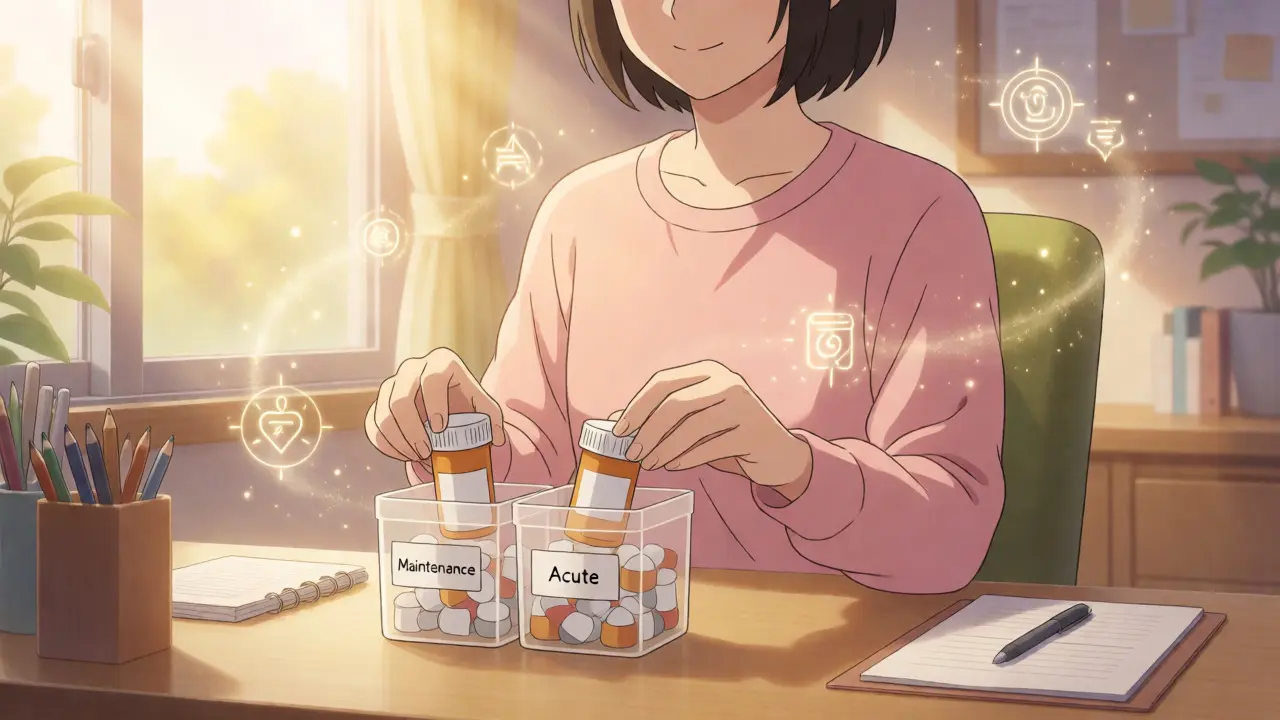
- Audit Your Meds: List every prescription you take. Mark each one as "Maintenance" (stable, long-term), "Acute" (short-term, like antibiotics), or "Variable" (dose changes often).
- Check Your Plan: Call your insurer or log into their portal. Ask specifically: "What is my copay for a 90-day supply of [Drug Name] via mail order versus retail?" Do not guess. Write down the numbers.
- Set Up Mail Order: For your Maintenance list, sign up for your insurer’s preferred mail-order pharmacy (often Express Scripts, CVS Caremark, or Optum). Set up auto-refills.
- Create a Buffer Calendar: Mail order takes 7-14 business days. Set a calendar reminder 14 days before you run out of your last mail-order med. This prevents the panic-buying scenario where you have to pay full retail price for a 5-day bridge supply.
- Designate a Local Hub: Pick one local pharmacy for your Acute and Variable meds. Build a relationship there. Tell them, "I use mail order for my chronic meds, so I’m here for everything else." They will appreciate the clarity and may help manage your overall regimen.
Pitfalls to Avoid
It’s not all smooth sailing. There are traps that can erase your savings quickly. First, beware of "split-fill" rules. Some insurers won’t cover a 90-day supply at retail unless you’ve already used mail order for that specific drug. Check your plan’s fine print. Second, watch out for shipping delays. During holidays or weather events, mail order can stall. If you live in Halifax or other areas with harsh winters, factor in potential delivery disruptions. Third, remember that switching pharmacies mid-year can reset your deductible in some plans. Time your switches carefully, preferably at the start of a new plan year.
Another common mistake is ignoring generic alternatives. Whether you go mail-order or local, ask your doctor if a generic exists. A Kaiser Permanente study found that patients using mail-order for generics saved an average of $18.75 per prescription compared to retail brand-name fills. If your doctor says yes, switch to the generic first, then apply the coordination strategy.
The Future of Pharmacy Coordination
The landscape is shifting. We are moving toward integrated networks where the distinction between mail and local blurs. UnitedHealthcare’s "Optum Perks" and Express Scripts’ "Pharmacy Choice" programs are examples of insurers trying to let you switch seamlessly between channels without penalty. Epic Systems even launched a "Pharmacy Navigator" tool that recommends the best fill location based on your history. However, don’t wait for tech to solve this for you. Until those tools are universal, you are the project manager of your own health budget.
By taking control, you aren’t just saving money-you’re improving adherence. Studies show that when patients feel in control of their care logistics, they are more likely to take their medications correctly. So, grab your list, call your insurer, and start splitting those fills. Your wallet-and your peace of mind-will thank you.
Is mail-order pharmacy always cheaper than local?
No, not always. While mail-order typically offers lower copays for 90-day supplies of maintenance medications, some insurance plans charge higher rates for specialty drugs via mail order. Additionally, local discount programs (like Walmart’s $4 list) can sometimes beat mail-order prices for specific generics. Always compare the exact cost for your specific drug and plan.
How long does mail-order delivery take?
Standard mail-order delivery usually takes 7 to 14 business days. Expedited options may be available for an extra fee. Because of this lead time, you must order refills well in advance-typically 10 to 14 days before you run out-to avoid gaps in medication coverage.
Can I use my HSA or FSA card at both mail-order and local pharmacies?
Yes, generally you can use Health Savings Account (HSA) or Flexible Spending Account (FSA) cards at both mail-order and local retail pharmacies for eligible medical expenses, including prescription copays. Just ensure the transaction code processes as a medical expense rather than a general retail purchase.
What happens if my doctor changes my prescription while I'm using mail-order?
There is a risk of delay or error. Mail-order systems may not update immediately from your doctor's office, leading to shipments of the old dosage. To mitigate this, confirm the change directly with the mail-order pharmacy before the next refill ships, or consider switching that specific medication back to local retail until the dosage stabilizes.
Do I need separate accounts for mail-order and local pharmacies?
Usually, yes. You will likely need to set up a profile with the mail-order provider (e.g., CVS Caremark, Express Scripts) and a separate account with your local pharmacy chain (e.g., Shoppers Drug Mart, Rite Aid). Ensure both have your current insurance information to prevent billing errors.

Stuart Lorne
September 1, 2026 AT 20:27you people are so naive thinking this actually works in the real world where insurance companies change rules every tuesday
i tried splitting my meds last year and ended up with three different copay structures that made no sense and i lost more money on shipping than i saved on the drugs themselves its all a scam to get you to sign up for their specific mail order service which is usually owned by the same parent company as your insurer anyway
Patrick van der Velde
September 3, 2026 AT 06:02The premise of this article relies heavily on the assumption that consumers possess the cognitive bandwidth to manage complex logistical puzzles while dealing with chronic health issues. It is a privilege to have the time to audit medications and call insurers.
Furthermore, the suggestion to maintain a relationship with a local pharmacist ignores the reality of modern retail pharmacy staffing models where pharmacists are often rushed and underpaid. The idea that they can provide deep clinical insight during a two-minute interaction is somewhat idealistic at best.
Marc-David Mayer
September 3, 2026 AT 15:07Hey everyone! 👋 Just wanted to jump in and say that even if it feels overwhelming at first, taking small steps makes a huge difference! 🌟
If you start with just one maintenance med moving to mail order, you'll see the savings add up quickly. Don't stress about doing everything at once. You've got this! 💪😊
Anderson Miller
September 4, 2026 AT 22:02Well, well, well... look who's talking about saving money. 💸
Let's be honest here, folks. The system isn't designed for you to save money; it's designed for them to maximize profit. You think calling your insurer is going to give you straight answers? Ha! They'll keep you on hold for forty-five minutes just to tell you what's already in your plan documents.
But hey, good luck with that "coordination" thing. Maybe you'll find the unicorn copay. 🦄
Pearl Richardson
September 5, 2026 AT 15:25It is crucial to note that the data presented regarding cost savings does not account for the hidden administrative costs imposed on the patient. 😐
One must consider the potential for pharmaceutical supply chain disruptions which are exacerbated by centralized mail-order systems. When a single distribution center goes down, thousands of patients are left without medication. This vulnerability is a systemic risk that individual coordination strategies cannot mitigate. 📉
Kimberly Thomas
September 6, 2026 AT 00:35Your entire strategy falls apart if you live in an area with poor postal service or if your doctor refuses to send electronic prescriptions to the mail-order vendor correctly.
I spent six months fighting with Express Scripts because they kept filling the wrong dosage despite my doctor confirming the update twice. That $200 "saving" turned into a $400 loss when I had to pay out-of-pocket for emergency refills at retail. Stop pretending this is easy for everyone.
Sarah Kinch
September 7, 2026 AT 15:41honestly this whole post feels like corporate propaganda disguised as advice
they want us fragmented so we cant compare prices easily
also nobody has time to "audit meds" when theyre sick
its performative wellness culture
Lolo Del
September 9, 2026 AT 02:38Friendly tip from someone who learned the hard way: always check if your local pharmacy honors the mail-order price for 90-day supplies.
Some chains like Costco or certain independents will match the mail-order rate if you ask nicely. It saves you the wait time and keeps your records in one place. Definitely worth a phone call before you commit to switching everything.
hareesh kumar
September 10, 2026 AT 17:28wait until you realize that the "mail order" pharmacies are often owned by the PBM (Pharmacy Benefit Managers) which are the same entities that set the formulary tiers meaning they are literally rigging the game against you from both sides!!
and dont even get me started on how they use your data to predict when youll run out and send those annoying reminder texts that are really just marketing ploys to keep you locked in their ecosystem instead of letting you shop around freely!!!
fred eden
September 11, 2026 AT 01:15This is such a helpful breakdown for anyone feeling stressed about healthcare costs. 🩺❤️
I know how exhausting it is to navigate these systems alone. Remembering to take care of yourself includes advocating for your wallet too. Sending good vibes to everyone managing multiple prescriptions right now. 🙏✨
Gurjit Singh
September 12, 2026 AT 22:30It is morally irresponsible to suggest that individuals should bear the burden of navigating these complex systems when the root cause is corporate greed.
We should be demanding universal healthcare coverage rather than celebrating minor savings achieved through bureaucratic gymnastics. True health equity means no one has to choose between food and medicine based on pharmacy logistics.
Venkatesan V.K.
September 13, 2026 AT 10:12The article fails to address the emotional toll of managing fragmented care.
Patients feel abandoned when their medical history is split across two platforms. The anxiety of waiting for a package while running low on medication is a significant quality-of-life issue that dollar amounts do not capture. We need holistic solutions, not just financial ones.
Tobi Oyewole
September 13, 2026 AT 11:31I appreciate the nuanced approach suggested here.
In many developing contexts, the concept of "local" versus "mail-order" is less distinct due to infrastructure limitations. However, the principle of leveraging stable supply chains for chronic conditions remains valid globally. It requires adaptation to local realities but the core logic holds true.
Vivek Chaturvedi
September 15, 2026 AT 09:11this is just common sense wrapped in jargon
if its boring take it slow
if its urgent go fast
done
kishhore kumar
September 16, 2026 AT 09:44Great insights! 🤔 I never thought about the temperature-sensitive drugs aspect before.
Does anyone else find that their local pharmacist is more willing to negotiate if you mention you're using mail order for other meds? It seems to create a bit of leverage! 📈💬