How to Prevent Medication Errors During Care Transitions and Discharge
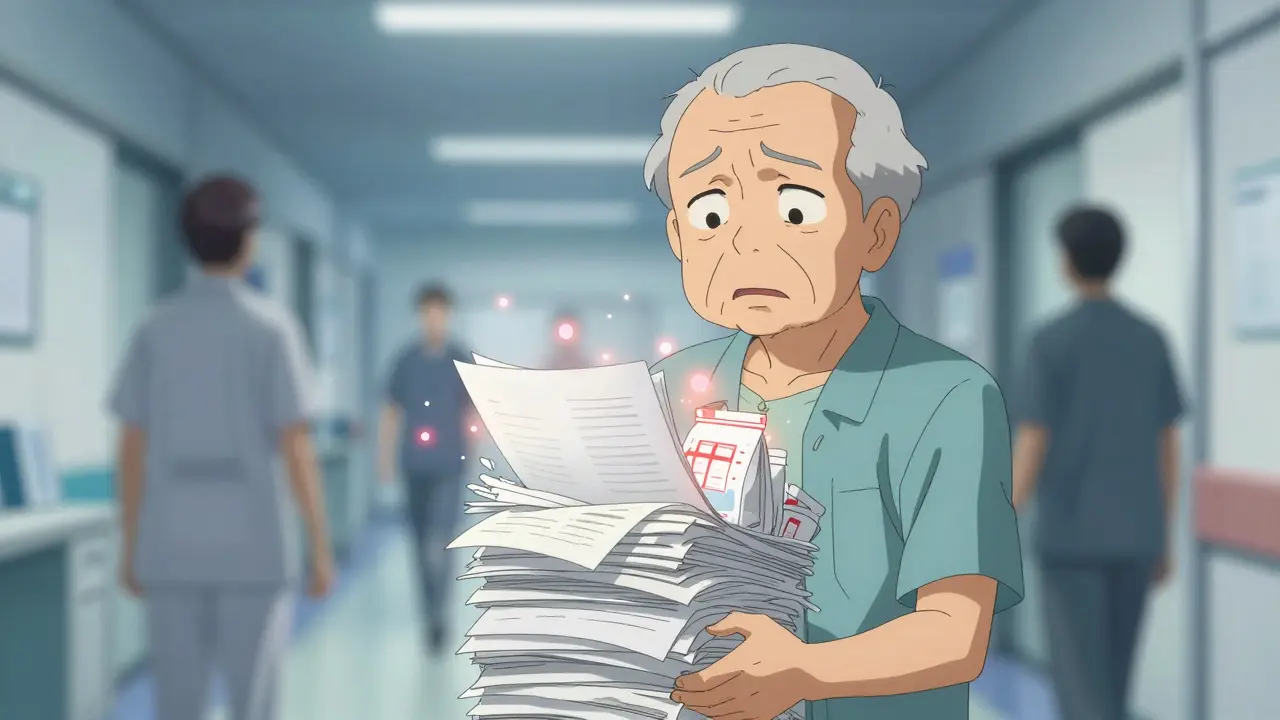
Imagine leaving the hospital with a stack of papers in hand. You are relieved to be home, but your new medication list is confusing. Maybe it lists a drug you stopped taking years ago. Or perhaps it’s missing the blood pressure pill you’ve relied on for a decade. This isn’t just an administrative headache; it is a dangerous gap that puts lives at risk.
Medication errors during care transitions are the moment patients move between healthcare settings, providers, or levels of care represent one of the biggest threats to patient safety today. According to the Agency for Healthcare Research and Quality (AHRQ), roughly 60% of all medication errors happen right when you are moving from one place to another. These mistakes lead to avoidable hospital readmissions, prolonged stays, and severe health complications. The World Health Organization (WHO) recognized this crisis in its Global Patient Safety Challenge: Medication Without Harm, aiming to cut severe medication-related harm by half globally. But how do we actually stop these errors before they happen?
The Core Problem: Why Transitions Are So Risky
The root cause of most transition errors is not malice or incompetence; it is broken communication. When Dr. Tejal Gandhi, President of the National Patient Safety Foundation, testified before the Senate Committee on Health, Education, Labor, and Pensions in 2023, she highlighted a stark statistic: 78% of medication errors during transitions stem from information gaps between providers.
Think about what happens during a typical discharge. A doctor writes orders, a nurse prints a summary, and a pharmacist checks them off. If any link in that chain snaps, the patient pays the price. For example, if a community pharmacy system doesn't talk to the hospital's electronic health record (EHR), the pharmacist might not see that a patient was switched from Warfarin to Apixaban. The result? The patient takes both, risking a major bleed. This is why medication reconciliation-the formal process of creating the most accurate list of a patient's current medications-is considered the single most impactful intervention for preventing harm during transitions.
| Method | Error Reduction Potential | Key Limitation |
|---|---|---|
| Paper-Based Lists | Low | Handwriting errors, lost documents |
| EHR-Only Systems | 41% | Poor interoperability with outside pharmacies |
| Pharmacist-Led Reconciliation | 57% | Requires dedicated staff time |
| MATCH Toolkit Implementation | 63% | Complex workflow changes required |
Understanding Medication Reconciliation: The Four Steps
You might have heard the term "medication reconciliation" thrown around in hospitals, but what does it actually look like in practice? It is not just copying a list from one sheet to another. According to standards set by The Joint Commission and detailed in technical specifications, effective reconciliation involves four critical steps:
- Create a Best Possible Medication History (BPMH): This means gathering every medication the patient is currently taking, including over-the-counter drugs, supplements, and herbal remedies. This should happen before the first dose is administered, unless it is an emergency.
- Develop a Plan of Care: The treating team decides which medications to continue, which to start, and which to stop based on the current diagnosis.
- Compare the Lists: Clinicians explicitly compare the BPMH against the new admission or discharge orders to identify discrepancies.
- Make Clinical Decisions: Resolve any differences found. If a drug is omitted, was it intentional? If a new drug is added, is it necessary?
The American Data Network emphasizes that skipping even one of these steps compromises the entire process. For instance, if a nurse assumes the old list is correct without verifying with the patient, they might miss that the patient stopped taking their statin due to side effects. That omission could lead to unnecessary liver stress upon discharge.

The Role of Technology: Helping or Hurting?
We often assume that technology solves everything, but the reality of Electronic Health Records (EHRs) are digital systems that store patient medical records and facilitate data exchange among healthcare providers is more complex. On one hand, Computerized Physician Order Entry (CPOE) systems and Clinical Decision Support Systems (CDSS) have reduced medication errors by 48% in acute hospital settings, according to a 2022 Cochrane review. Barcode medication administration (BCMA) ensures the right patient gets the right drug at the right time.
However, there is a catch. A 2021 study published in JAMA Internal Medicine, part of the MARQUIS project, found that while EHR implementations can reduce overall errors by 32%, they may paradoxically increase medication discrepancies by 18% during the initial rollout phase. Why? Because staff often copy-paste old data without verifying it, a habit known as "cloning." Furthermore, interoperability remains a nightmare. As of Q2 2024, only 37% of U.S. hospitals could electronically exchange medication information with community pharmacies. This means pharmacists still spend hours manually calling other facilities to get accurate histories.
Newer tools are emerging to bridge this gap. AI-powered reconciliation tools like MedWise Transition, which received FDA clearance in August 2024, use algorithms to flag high-risk discrepancies. In a 12-hospital pilot, these tools reduced discrepancies by 41%. Yet, technology is only as good as the workflow surrounding it. The AHRQ’s Medication at Transitions and Clinical Handoffs (MATCH) toolkit, updated in 2023, provides 159 specific recommendations across 11 workflow phases. Organizations that implement the full MATCH toolkit see a 63% reduction in errors, compared to just 41% for those relying solely on EHR upgrades.
The Human Factor: Pharmacists and Patient Engagement
Technology cannot replace human judgment, especially when dealing with complex cases. Pharmacist-led medication reconciliation is consistently shown to be one of the most effective strategies. A 2023 study in the Journal of the American Pharmacists Association found that involving pharmacists reduces post-discharge medication errors by 57% and hospital readmissions by 38% within 30 days.
Dr. Robert M. Wachter, Chair of UCSF's Department of Medicine, noted in a 2023 Health Affairs article that while medication reconciliation is crucial, implementation fidelity averages only 42% across U.S. hospitals. This gap exists because many hospitals lack dedicated transition pharmacists. Facilities that do invest in these roles see 53% fewer adverse drug events, according to the American Society of Health-System Pharmacists (ASHP) 2024 guidelines.
But the most overlooked stakeholder in this process is you-the patient. Only 28% of facilities consistently involve patients in the reconciliation process, according to The Joint Commission's 2023 survey. This is a missed opportunity. A 2024 Kaiser Family Foundation survey revealed that while 72% of patients don't understand why medication lists matter, 85% of those who actively participated in reconciliation felt significantly more confident about their meds. Patients are the only constant in their own care journey. They know if they stopped taking a pill because it made them dizzy or if they bought a supplement at the grocery store last week.

Practical Steps for Safer Discharges
If you are a healthcare professional looking to improve your unit's safety culture, or a patient advocate wanting to ensure safe transitions, here are actionable steps grounded in current best practices:
- Define Clear Roles: The MARQUIS study warned that training staff to take medication histories without proper role definition increased harmful discrepancies by 15%. Ensure nurses, doctors, and pharmacists know exactly who is responsible for each step of the reconciliation process.
- Allocate Sufficient Time: Comprehensive reconciliation takes 15-20 minutes per patient. While busy wards often squeeze this into 8-10 minutes, rushing leads to errors. Embed reconciliation into existing workflows rather than treating it as an add-on task.
- Verify High-Risk Medications: The 2025 National Patient Safety Goals will mandate verification with at least two information sources for high-risk medications (like anticoagulants, insulin, and opioids). Start doing this now.
- Engage the Patient Early: Ask open-ended questions. Instead of "Are you taking your pills?" try "Can you show me how you take your medicines at home?" Bring all bottles to the appointment or discharge interview.
- Use Standardized Tools: Implement checklists like those found in the ISMP Best Practice 21 guide, released in February 2024. This practice specifically targets transitions of care across the continuum.
Regulatory Landscape and Future Outlook
The push for safer transitions is no longer optional; it is regulatory. The Centers for Medicare & Medicaid Services (CMS) Conditions of Participation mandate medication reconciliation. Non-compliance can trigger payment reductions of 0.5-1.5% under Hospital Value-Based Purchasing programs. Similarly, The Joint Commission Standard MM.09.01.01 requires reconciliation at admission, transfer, and discharge.
Internationally, the momentum is growing. The Australian Commission on Safety and Quality in Health Care prioritized reconciliation in its 2020 Medication Safety Standards. The European Union’s 2023 iPRI Medication Safety Framework establishes similar requirements across member states. The WHO announced Phase 2 of Medication Without Harm in October 2024, focusing specifically on transitions with measurable targets to reduce harm by 30% in high-risk scenarios by 2027.
The economic argument is equally compelling. AHRQ projects that full implementation of evidence-based transition practices could prevent 800,000 medication errors annually in the U.S. alone. Based on 2024 CMS cost-per-error calculations, this represents $2.1 billion in annual healthcare savings. Investing in safety is not just ethical; it is financially prudent.
What is the most common type of medication error during discharge?
The most common errors include omissions (forgetting to prescribe a home medication), duplications (prescribing a new drug that serves the same purpose as an existing one), and dosing errors (incorrect frequency or amount). Omissions are particularly dangerous as they leave chronic conditions untreated immediately after leaving the hospital.
How can patients help prevent medication errors?
Patients should maintain an up-to-date list of all medications, including vitamins and herbs. Bring physical bottles to appointments. Ask questions if a medication looks different or has a new name. Verify the discharge instructions with a pharmacist before leaving the facility. Finally, never hesitate to call the provider if something feels wrong after going home.
Why do electronic health records sometimes increase errors?
While EHRs reduce handwriting errors, they can lead to "copy-paste" fatigue where clinicians blindly accept previous data without verification. Additionally, poor interoperability between hospital systems and community pharmacies creates data silos, forcing manual workarounds that introduce new risks during the transition phase.
What is the MATCH toolkit?
The Medication at Transitions and Clinical Handoffs (MATCH) toolkit is a comprehensive resource developed by AHRQ. Updated in 2023, it offers 159 specific recommendations across 11 workflow phases. It addresses human factors and system design, helping organizations implement robust reconciliation processes beyond simple software updates.
Is pharmacist involvement mandatory for medication reconciliation?
It is not legally mandatory in all jurisdictions, but it is strongly recommended by leading bodies like ASHP and The Joint Commission. Evidence shows that pharmacist-led reconciliation reduces errors by 57% and readmissions by 38%. Many hospitals now employ dedicated transition pharmacists to meet quality metrics and improve patient outcomes.
Cecilia McGuinness
June 14, 2026 AT 08:10honestly this is so scary but also kinda makes sense why my mom got confused last time she was in the hospital. i remember her coming home with like 5 different pills and no idea which ones were new or old. we just had to call the doctor back twice before it made any sense. its wild how much trust we put in these systems when they are basically broken.
rebecca torres
June 15, 2026 AT 05:01the copy paste issue is real though. doctors are overworked and they just hit enter on the previous list because they have 20 patients to see that day. its not malice its just systemic laziness disguised as efficiency. if you want safety you need to pay for more time per patient which nobody wants to do.
Hailey Dunston
June 16, 2026 AT 01:56Oh, please. Do not blame the 'system' for your own lack of agency. The article explicitly states that patients are the only constant in their care journey. If you cannot be bothered to maintain an accurate list of your own supplements and prescriptions, you are complicit in your own medical negligence. It is quite pretentious to expect healthcare providers to perform detective work for individuals who refuse to engage in basic self-management. One would think that reading a discharge paper is within the cognitive capacity of the average adult, yet here we are, whining about administrative headaches instead of taking responsibility for our own health data. :/
Erin Livengood
June 16, 2026 AT 17:36that’s a harsh take hailey. look most people aren’t trying to be negligent they’re just overwhelmed. when you’re sick and scared and leaving a place that feels like a maze of white coats and beepers your brain isn’t in ‘executive function’ mode. it’s in survival mode. expecting someone to meticulously track every vitamin while recovering from surgery is asking too much. we need better systems not more judgment. empathy matters here.
Emily Barnhill
June 17, 2026 AT 22:14I am going to stop you right there because this attitude is exactly what kills people. You are gaslighting patients into thinking their confusion is a moral failing rather than a systemic failure designed by institutions that prioritize billing codes over human clarity. I have seen families destroyed by these errors and it is infuriating to see you dismiss the complexity of navigating a fragmented healthcare landscape as mere laziness. Your elitism is showing and it is unhelpful. We need to demand better workflows and pharmacist involvement not shame the victims of poor design. Get educated on patient safety before you lecture others on their 'agency'. It is dangerous nonsense.
Glenn Davis
June 18, 2026 AT 03:21america needs to fix its healthcare infrastructure first. other countries don't have this problem because they actually regulate interoperability properly. we are behind because we treat medicine like a business transaction instead of a public service. simple as that.
Callie Skipper
June 19, 2026 AT 18:42i mean glenn has a point about the tech side but honestly i just wish hospitals would give us a printed card with big bold letters saying what to take and when. all this ehr stuff is great for them but useless for me if i cant read the font size they use. just keep it simple please.
Cici arya Arya
June 20, 2026 AT 11:31You know what really gets me? The fact that pharmacists are underutilized. In India, we rely heavily on community pharmacists for guidance because the doctor visits are rushed. Here in the US, you have this huge resource sitting there doing nothing during transitions. It is absolutely tragic that only 28% of facilities involve patients properly. I have personally had to correct my own discharge papers three times in the last year. It is exhausting and frankly insulting to my intelligence that I have to act as the quality control officer for my own life-saving medications. Why is this even a debate?
Christina S.
June 22, 2026 AT 06:14Cici you are totally right about the pharmacists. I worked in a clinic where we tried to implement the MATCH toolkit and it was tough at first but once the pharmacists got involved in the discharge process things smoothed out a lot. They catch so many interactions that doctors miss because they are focused on the acute issue. It takes extra time yes but it saves so much heartache later. Support those transition pharmacists!
Ganesh Honikol
June 23, 2026 AT 21:41Indeed, the integration of pharmacist-led reconciliation is paramount. As highlighted in the study mentioned, the reduction in adverse drug events is substantial when these professionals are actively engaged in the handoff process. It is not merely about checking boxes; it is about applying clinical expertise to ensure continuity of care. We must advocate for policies that mandate such involvement rather than leaving it to the discretion of individual hospital administrators who may prioritize short-term cost savings over long-term patient outcomes. :)
Daniella Renzon
June 25, 2026 AT 00:09love this thread. it reminds me to always bring my pill bottles to appointments. i used to just write a list but sometimes i forget the dosage or the brand name. seeing the actual bottle helps the nurse verify everything instantly. small step but it feels safer knowing they can check the label against the system.
AnneKatherine Stiekes
June 26, 2026 AT 05:38peace out everyone but seriously lets not fight. we all want safe meds. maybe the solution is just more communication between all parties including us the patients. no blame just better habits.