Immunocompromised Patients and Medication Reactions: Special Risks
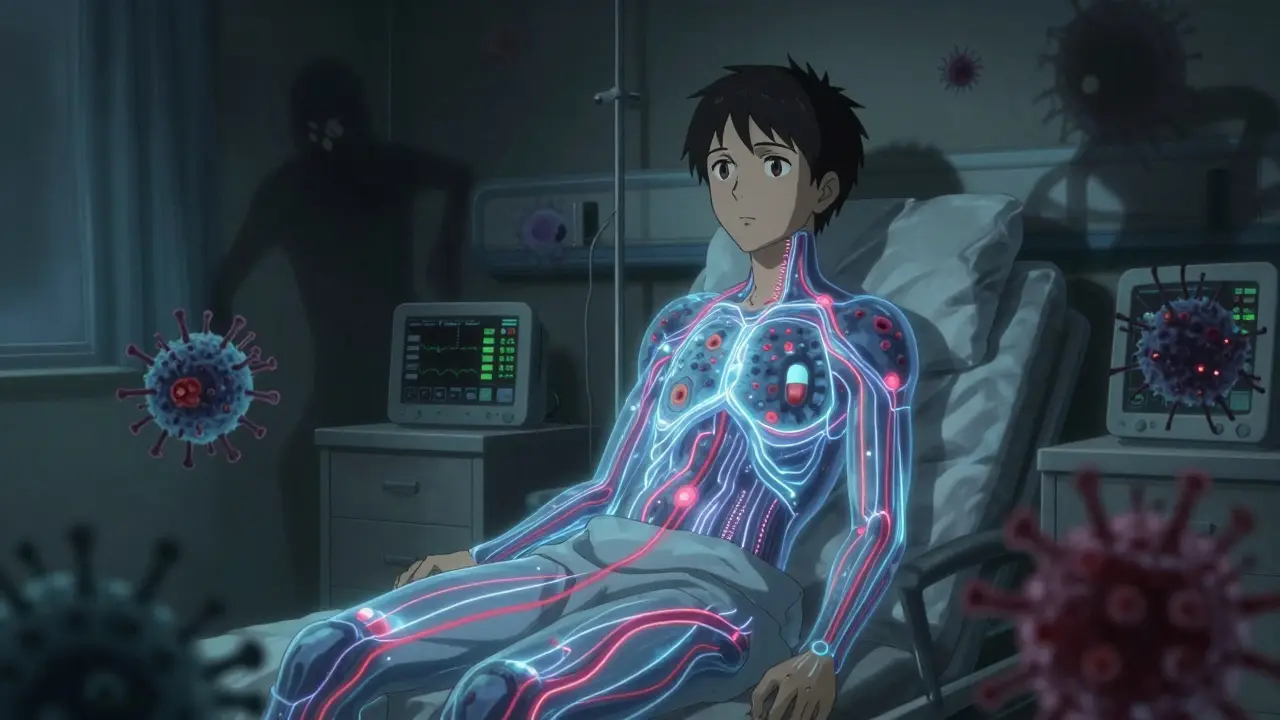
Immunocompromised Medication Risk Calculator
Select Your Medications
>20mg prednisone equivalent: 60% higher infection risk
70% effectiveness but 50% stop within 1 year due to side effects
Risk of Pneumocystis pneumonia and tuberculosis reactivation
Higher infection risk than traditional drugs; common shingles reactivation
Virus reactivation risks (EBV, Hepatitis B)
Risk increases by over 200% compared to single drug
Risk Assessment Results
Key Risks
Selected medications:
Critical Safety Information
Remember:
- Atypical Symptoms: Infections often lack fever or redness due to suppressed immune response.
- Vaccines: Only inactivated vaccines (flu shot, pneumonia shot) are safe. Avoid live vaccines.
- Monitoring: Monthly blood tests are essential for early detection of complications.
- Immediate Action: If you feel "off" (fatigue, confusion, achiness), contact your doctor immediately.
When your immune system is already struggling, taking medication can become a high-stakes game. For immunocompromised patients, common drugs meant to treat autoimmune diseases or prevent organ rejection don’t just help-they can also put you at serious risk. It’s not about avoiding treatment. It’s about understanding exactly how these medications change your body’s defenses-and what that means when you get sick.
What Does "Immunocompromised" Really Mean?
Being immunocompromised isn’t a single condition. It’s a state. Your immune system isn’t working the way it should. You might not get a fever when you have an infection. You might not feel sick until it’s too late. This happens because of disease-like HIV, lupus, or leukemia-or because of the very drugs meant to control those conditions. Think of your immune system like a security team. In a healthy person, it spots trouble fast and reacts hard. In someone on immunosuppressants, that team is understaffed, confused, or even on vacation. A simple cold can turn into pneumonia. A small cut can get infected. And sometimes, you won’t even know something’s wrong until it’s serious.The Big Players: How Common Medications Work (and What They Do to You)
Not all immunosuppressants are the same. Each class attacks the immune system differently, and each brings its own set of risks. Corticosteroids like prednisone are everywhere. They’re used for asthma flares, allergic reactions, and autoimmune flare-ups. But they don’t just calm inflammation-they shut down whole parts of your immune response. At doses over 20 mg a day (prednisone equivalent), your risk of infection jumps. A 2012 study of over 4,000 patients showed steroid users had a 60% higher chance of getting infected than those on placebo. And here’s the scary part: steroids can hide the signs of infection. No fever? No redness? That doesn’t mean you’re fine. It might mean your body can’t fight back at all. Methotrexate is the most common drug for rheumatoid arthritis and psoriasis. About 70% of people find it effective. But nearly half stop taking it within a year because of side effects: fatigue, nausea, mouth sores, liver stress. Monthly blood tests are non-negotiable. Liver enzymes and white blood cell counts can crash without warning. One patient in Halifax told their rheumatologist they felt "just tired"-turns out their white blood cell count was below 1,000. They ended up in the ER with pneumonia. Azathioprine (Imuran) cuts down on T and B cells. That’s good for stopping autoimmune attacks. But it also leaves you open to bacteria, viruses, and even rare fungi. People on azathioprine have developed Pneumocystis pneumonia, tuberculosis reactivation, and progressive multifocal leukoencephalopathy (PML)-a rare, deadly brain infection caused by the JC virus. It’s rare, but when it happens, it’s often too late. Biologics like Humira, Enbrel, and Remicade are targeted. They block specific parts of the immune system, like TNF-alpha. That sounds smart. But they’re also the most dangerous when it comes to infection. Studies show biologics carry a higher infection risk than traditional drugs like methotrexate. Herpes zoster (shingles) is common. So is tuberculosis. One Reddit user in r/RheumatoidArthritis shared they got shingles three times in two years while on a TNF inhibitor. "The first time, I thought it was a bug bite. The third time, I had to be hospitalized. No one warned me how easily it could come back." Calcineurin inhibitors like cyclosporine and tacrolimus are life-saving after transplants. But they’re notorious for reactivating viruses. Epstein-Barr virus can lead to lymphoma. Hepatitis B can flare up. Polyomavirus can damage kidneys. These drugs don’t just suppress-they create blind spots in your immune system.Combination Therapy: When Risks Multiply
Many patients take more than one immunosuppressant. Steroid + methotrexate. Biologic + azathioprine. It’s common. But it’s not safe. The risk isn’t just added. It’s multiplied. A 2021 review in the Journal of Clinical Immunology found that combining steroids with another immunosuppressant raised the risk of serious infections by over 200% compared to single-drug therapy. One patient in a Halifax clinic developed invasive aspergillosis-a fungal lung infection-after being on prednisone and mycophenolate for lupus. They didn’t have a fever. They didn’t cough. They just got progressively weaker. By the time they were diagnosed, the infection had spread to their brain.
What You Can’t See: Atypical Infections
In healthy people, infections show up with clear signs: fever, chills, swelling, pain. For immunocompromised patients, those signs often vanish. A UTI might just mean confusion in an older adult. Pneumonia might look like fatigue. A skin infection might look like a rash. Doctors call this "masking." Corticosteroids blunt the body’s natural alarm system. That’s why the CDC and Cleveland Clinic both stress: if you’re immunocompromised and feel "off," even a little, get checked. Don’t wait. This is why routine monitoring matters. Monthly CBCs. Liver and kidney function tests. Regular skin checks. Even if you feel fine. One study found that 40% of immunocompromised patients with bacterial infections had normal temperatures. They didn’t know they were sick until their organs started failing.Vaccines: Help or Hazard?
Vaccines are tricky. Some are lifesavers. Others are dangerous. Live vaccines-like MMR, varicella (chickenpox), and the nasal flu spray-are off-limits. They contain weakened viruses that your immune system can’t handle. One patient in Toronto got shingles from the chickenpox vaccine because they weren’t told it was unsafe. Inactivated vaccines-flu shot, pneumonia shot, COVID-19 shot-are generally safe. But they don’t always work. Studies show immunocompromised patients often don’t build strong immunity from vaccines. That’s why extra doses are now recommended. The CDC advises three doses of the COVID-19 vaccine for most immunocompromised people, not two. And even then, protection might be partial.
Real-Life Risks: Beyond the Lab
It’s not just drugs. Your environment matters. The CDC warns that immunocompromised people are more likely to get sick from mosquitoes and ticks. Lyme disease, West Nile virus, and tick-borne encephalitis can be far more severe. Gardening, hiking, or even walking the dog in spring can carry hidden dangers. Handwashing isn’t optional. It’s survival. Wash for 20 seconds-long enough to sing "Happy Birthday" twice. Use sanitizer when soap isn’t around. Avoid crowds during flu season. Wear a mask. These aren’t "precautions." They’re your new daily routine. And yes, some people do fine. Johns Hopkins researchers found in 2021 that immunocompromised patients on biologics had similar COVID-19 outcomes as healthy people. That surprised everyone. But it doesn’t mean the risk is gone. It just means your body’s response isn’t always predictable.What You Need to Do Now
If you’re immunocompromised, here’s what actually works:- Know your meds. Ask your doctor: "What does this drug do to my immune system? What infections should I watch for?"
- Get tested regularly. Blood work isn’t optional. It’s your early warning system.
- Get the right vaccines. No live vaccines. Get extra doses of flu and COVID shots. Ask about pneumococcal and hepatitis B vaccines.
- Watch for "off" feelings. If you’re tired, achy, or just not yourself-call your doctor. Don’t wait for a fever.
- Protect yourself daily. Handwashing, masks, avoiding sick people, and clean wound care aren’t suggestions. They’re your armor.
There’s no perfect solution. Every drug has trade-offs. But knowledge turns fear into control. You don’t have to live in fear. You just have to be informed.
Can I still get vaccinated if I’m on immunosuppressants?
Yes-but only certain vaccines. Live vaccines like MMR, varicella, and the nasal flu spray are dangerous and should be avoided. Inactivated vaccines like the flu shot, pneumonia shot, and COVID-19 vaccines are safe and recommended. However, your immune system may not respond as strongly, so extra doses are often needed. Always check with your doctor before getting any shot.
Do immunosuppressants make you more likely to get cancer?
Yes, some do. Long-term use of drugs like azathioprine, cyclosporine, and certain biologics increases the risk of skin cancer and lymphoma. This is why regular skin checks and avoiding excessive sun exposure are critical. The FDA requires black box warnings on many of these drugs for this very reason. Monitoring isn’t just about infection-it’s about catching cancer early.
Why don’t I get a fever when I’m sick?
Corticosteroids and other immunosuppressants suppress the body’s ability to raise its temperature as a defense. Fever is a signal-your body’s way of telling you something’s wrong. When that signal is turned off, infections can grow unnoticed. That’s why symptoms like fatigue, confusion, chills, or a general "off" feeling are more important than fever in immunocompromised patients.
Can I travel if I’m immunocompromised?
Yes-but plan carefully. Avoid areas with high risks of vector-borne diseases like malaria or dengue. Skip destinations with poor sanitation. Get travel vaccines approved for immunocompromised patients. Carry a letter from your doctor explaining your condition. Always have access to clean water and medical care. Many hospitals now have travel clinics specifically for immunocompromised travelers.
Is it safe to be around pets if I’m immunocompromised?
Generally, yes-but with limits. Avoid reptiles, birds, and young animals-they carry higher risks of salmonella, psittacosis, and toxoplasmosis. Clean litter boxes daily (wear gloves). Don’t let pets lick your face. Wash your hands after petting. Most healthy dogs and cats are fine, but always check with your doctor if you’re on strong immunosuppressants.
Prateek Nalwaya
February 18, 2026 AT 04:04Man, this post hits different. I’ve been on methotrexate for psoriatic arthritis for five years, and yeah, I’ve had my fair share of scary moments. One time I got a UTI and just felt like I’d been run over by a truck-no burning, no fever, just this deep, bone-deep exhaustion. My doctor said, "You’re not imagining it. Your immune system’s on mute." That’s when I started treating every weird feeling like a red flag. No more "I’ll sleep it off."
Also, the part about vaccines? So true. I got my third COVID shot last month. Felt like I’d been hit by a bus for three days. But I’d take that over ending up in the ICU with a lung infection any day. Knowledge isn’t power here-it’s survival.
And yes, I wash my hands like I’m trying to scrub off a curse. Twice. Every time. Even if I just touched my own damn couch.
Carrie Schluckbier
February 19, 2026 AT 22:02Okay but let’s be real-this whole thing is a government cover-up. They don’t want you to know that biologics were originally developed from experimental military immunosuppression programs during the Cold War. The CDC? They’re just the PR arm of Big Pharma. You think they really care if you get PML? Nah. They’re too busy pushing 5G towers into hospitals so they can track your white blood cell count remotely. I’ve seen the documents. I’ve seen the patterns.
And don’t even get me started on the "extra vaccine doses." That’s not medicine. That’s a tracking chip delivery system. You think they want you to live? They want you to be monitored. Always monitored.
Wear a tin foil hat. It’s not paranoid. It’s precautionary.
Philip Blankenship
February 20, 2026 AT 23:06Just wanna say-this is some of the most useful, clear-headed medical writing I’ve read in ages. No fluff. No jargon. Just straight facts with real stories behind them.
I’m a nurse in a transplant unit, and I see this stuff every day. Patients come in thinking "I feel fine, so I’m good." Then boom-three weeks later, they’re on a ventilator because they got a simple sinus infection and their body didn’t even bother to scream.
One guy I remember-he was on tacrolimus and kept saying, "I’m not sick, I just need more coffee." Turns out he had a fungal brain abscess. We found it because his wife noticed he’d stopped recognizing his own dog. That’s not a joke. That’s what masking looks like.
So yeah. Wash your hands. Get the shots. Listen to your body-even when it’s whispering. And if your doctor doesn’t talk to you like you’re a person, not a chart, find a new one.
Thanks for writing this. People need to hear it.
Adam Short
February 21, 2026 AT 13:58British here. I’ve been on azathioprine since I was 22. Now I’m 43. I’ve had two bouts of shingles, a nasty case of MRSA from a mosquito bite (yes, really), and a fungal lung infection that nearly killed me. I didn’t even know I was sick until I collapsed on the train.
But here’s the thing no one talks about: the loneliness. You stop going to pubs. You cancel holidays. You stop hugging your nieces. Your friends think you’re being dramatic. Your family says "you’re overreacting."
And then you read a post like this and you think-finally. Someone gets it. Not the science. The *weight* of it. The daily calculus of living with a body that’s been turned against you. It’s not just about infection risk. It’s about grief. Grief for the person you were before the drugs.
So yeah. Wash your hands. Get the shots. But also? Let yourself be angry. Let yourself be tired. You’re not weak. You’re just surviving.
Digital Raju Yadav
February 22, 2026 AT 18:15India has the highest number of immunocompromised patients in the world because our government lets pharmaceutical companies dump toxic drugs here like they’re selling expired chai. You think they care if you get PML? They care if you buy the next pack of prednisone.
And don’t even mention vaccines. Our "inactivated" flu shots? Half of them are counterfeit. I’ve seen the reports. The WHO doesn’t even test them properly. They’re too busy shaking hands with Pfizer executives in Geneva.
Stop being naive. This isn’t medicine. It’s exploitation. And you? You’re the target market.
Linda Franchock
February 23, 2026 AT 18:01Wow. So you’re telling me that if I feel "off," I should panic? And if I don’t get a fever, I’m definitely dying? Cool. Thanks for the encouragement, Dr. Doomsday.
Look-I’m immunocompromised too. I’ve been on Humira for 7 years. I’ve had one cold in that time. One. Because I wash my hands. I get my shots. I don’t go to concerts. I don’t hug strangers. I don’t need a 2000-word essay to remind me to be careful.
But I also don’t need to live like a monk in a biohazard suit. You know what? I still go to the grocery store. I still pet my cat. I still laugh with my friends. And guess what? I’m still alive.
So chill. Be smart. Don’t be terrified. There’s a middle ground between "I’m gonna die" and "I’m invincible." It’s called living.
Geoff Forbes
February 24, 2026 AT 16:51Let me just say-this post is *so* 2021. The whole "vaccines don’t work as well" narrative? Been debunked. The CDC updated their guidelines in 2023. We now have monoclonal antibody boosters specifically for immunocompromised populations. You’re citing 2012 studies? That’s like using a rotary phone to call for help.
Also, "avoid crowds"? That’s not advice. That’s surrender. We’ve got better tools now. JAK inhibitors. T-cell modulators. Personalized dosing algorithms. You’re still stuck in the pre-pandemic mindset. This isn’t 2020. We’re not all just waiting to die.
And yes, I know you’re scared. But fear doesn’t help. Innovation does.
Logan Hawker
February 26, 2026 AT 11:04Let’s not pretend this is just about infection risk. Let’s be real: this entire system is a Ponzi scheme. The pharmaceutical-industrial complex doesn’t want you healthy. They want you *dependent.* They want you on three drugs, getting monthly blood tests, paying $800 for a single vial of biologic, and begging for insurance approval. The real danger isn’t the drug-it’s the *economy* built around your vulnerability.
And don’t even get me started on the vaccine industry. They’re not trying to save you. They’re trying to monetize your fear. Every extra dose? A profit center. Every hospital admission? A revenue stream. You think they want you to live? They want you to *consume.*
This isn’t medicine. It’s capitalism with a stethoscope.
James Lloyd
February 26, 2026 AT 12:19Just wanted to add one thing the post didn’t mention: gut microbiome. Studies from Mayo Clinic and Karolinska show that immunosuppressants alter your gut flora-sometimes permanently. That affects everything: inflammation, vaccine response, even mental health. A 2022 study found that patients on long-term azathioprine had 40% less microbial diversity than healthy controls.
So yes-wash your hands. Get your shots. But also: eat fiber. Eat fermented foods. Avoid antibiotics unless absolutely necessary. Your gut is your second immune system. And if you’re not nurturing it, you’re leaving a door wide open.
Also-don’t ignore sleep. Poor sleep = higher infection risk. Even if you’re not on steroids. Even if you feel fine. Your immune system doesn’t clock out at 5 PM.
Tony Shuman
February 26, 2026 AT 16:03I get what you’re saying. But here’s the thing-what if the real problem isn’t the drugs? What if it’s the *diagnosis?* What if we’re overdiagnosing autoimmune diseases? What if half of these people don’t even have real conditions? What if their "lupus" is just chronic stress? What if their "RA" is just vitamin D deficiency?
I’ve seen people on biologics for 10 years who never had a single flare. Who never had an infection. Who never even had a cold.
Maybe we’re treating symptoms we don’t understand. Maybe we’re overprescribing. Maybe we’re creating problems we’re then selling cures for.
Just saying… maybe the real risk isn’t the drug. Maybe it’s the belief that you need it.
Liam Earney
February 28, 2026 AT 10:49Oh my god. This. This is exactly what I’ve been trying to tell everyone. I’m on cyclosporine post-transplant. I’ve had EBV reactivation. I’ve had CMV. I’ve had shingles. I’ve had three hospitalizations. And you know what no one ever says? That you’re not just fighting infection-you’re fighting the *system.*
The doctors don’t have time. The insurance won’t cover the test. The pharmacy won’t fill the prescription. The nurse says "come back next month." And meanwhile, your body is silently collapsing. You’re not just immunocompromised. You’re *systemically abandoned.*
I’ve cried in parking lots after appointments. I’ve Googled symptoms at 3 a.m. I’ve begged my sister to take me to the ER because I felt "off" and no one believed me.
This post? It’s not just information. It’s validation. And I didn’t even know I needed it.
Jonathan Ruth
February 28, 2026 AT 15:33My wife is on prednisone. She had pneumonia last year. No fever. No cough. Just couldn’t get out of bed. We thought it was depression. Turns out her WBC was 800. She almost died. Now she checks her temps twice a day. We keep hand sanitizer in every room. We don’t go to restaurants. We don’t hug anyone outside the family. We live like we’re in a quarantine zone.
And you know what? It’s worth it. I’d rather be boring than bury her.
guy greenfeld
March 2, 2026 AT 15:02There’s a deeper layer here. Not just biological. Not just medical. Existential. We live in a world that equates health with productivity. But what happens when your body can’t be productive? When it can’t even *signal* that it’s in danger? You become invisible. Not just to doctors. To society. To your own sense of self.
You’re not just managing a disease. You’re managing the silence. The absence of fever. The absence of pain. The absence of a body that still knows how to scream.
And yet-you still get up. You still wash your hands. You still take the pills. You still love. You still laugh.
That’s not compliance. That’s heroism.
Logan Hawker
March 3, 2026 AT 23:21James Lloyd said it best: "Your gut is your second immune system."
But let me go further. Your gut is your *soul.*
Every fiber you eat. Every probiotic you swallow. Every moment you choose rest over hustle-that’s not just biology. That’s spiritual resistance. Against a system that wants you broken, dependent, and docile.
So eat your greens. Sleep like you’re in a monastery. And don’t let anyone tell you you’re being dramatic.
You’re not sick.
You’re awake.