Pharmacodynamic Drug Interactions: Mechanisms, Risks, and Clinical Examples
Imagine taking two medications that are perfectly safe on their own. You swallow them at the recommended doses. Yet, within hours, you experience severe dizziness, a dangerous drop in blood pressure, or even a life-threatening reaction. This isn't magic; it's pharmacodynamics. While most people worry about how long a drug stays in their system (pharmacokinetics), fewer understand what happens when drugs meet at the cellular level to fight for control of your body's receptors.
Pharmacodynamic drug interactions occur when one drug alters the effect of another drug at the site of action, without changing the concentration of the drug in the bloodstream. According to research by Rowland et al. (2008), this means the drugs are physically present in normal amounts, but their combined biological impact is drastically different from what you'd expect. In hospital settings, these interactions account for approximately 40% of all clinically significant drug-drug issues, based on an analysis of over 12,000 patient records from European teaching hospitals between 2015 and 2017.
The Three Main Types of Pharmacodynamic Effects
To understand why your body reacts unpredictably, we need to look at how drugs talk to each other. There are three primary ways they interact: additive, synergistic, and antagonistic. Each has distinct clinical implications.
- Additive Effects: The combined effect equals the sum of individual effects. If Drug A lowers blood pressure by 10 points and Drug B lowers it by 10 points, together they lower it by 20 points. This is predictable but can still lead to overdose if not monitored.
- Synergistic Effects: The combined effect exceeds the sum of individual effects. One plus one equals three. This is often seen in antibiotic combinations where the partnership destroys bacteria more effectively than either drug alone.
- Antagonistic Effects: One drug reduces or blocks the effect of another. This is common when a patient takes a medication to treat a symptom while simultaneously taking another drug that causes that same symptom.
Understanding these categories helps clinicians predict outcomes. For instance, the 2023 CICM Primary Syllabus explicitly requires medical professionals to classify these mechanisms because misidentifying a synergistic interaction as merely additive can lead to severe toxicity.
Receptor Competition: The Battle for Binding Sites
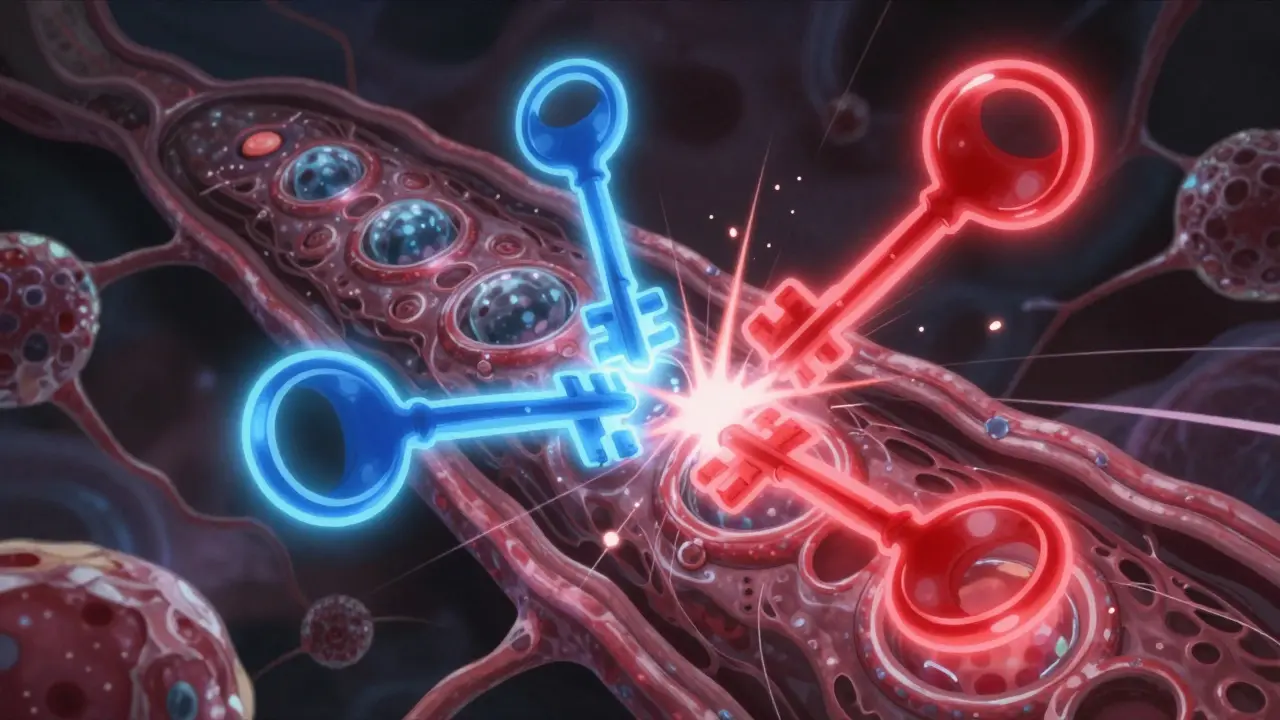
At the molecular level, many drugs work by binding to specific receptors on cells. Think of these receptors as locks and the drugs as keys. When two drugs compete for the same lock, you get receptor competition.
A classic example involves beta-agonists and beta-blockers. Albuterol, a beta-2 agonist used to open airways in asthma patients, works by binding to beta-2 receptors in the lungs. Propranolol, a non-selective beta-blocker used for heart conditions, binds to both beta-1 and beta-2 receptors. If taken together, propranolol can completely negate albuterol’s bronchodilatory effects. According to the Merck Manual (2023), the drug with higher receptor affinity-often measured in nanomolar ranges-will dominate the interaction. In this case, the blocker wins, potentially triggering a severe asthma attack despite the patient having taken their rescue inhaler.
This mechanism highlights why knowing receptor subtypes matters. Differentiating between beta-1 (heart) and beta-2 (lung) receptors allows doctors to prescribe cardioselective beta-blockers like metoprolol, which spare the lungs, avoiding this dangerous antagonism.
| Drug Pair | Interaction Type | Clinical Consequence |
|---|---|---|
| Albuterol + Propranolol | Antagonistic | Reduced asthma relief; potential bronchospasm |
| Ibuprofen + Lisinopril | Physiological Antagonism | Reduced blood pressure control; kidney stress |
| Morphine + Naloxone | Direct Antagonism | Precipitated withdrawal symptoms |
| Trimethoprim + Sulfamethoxazole | Synergistic | Enhanced bacterial killing; lower doses needed |
| SSRI + MAOI | Synergistic (Dangerous) | High risk of serotonin syndrome |
Physiological Antagonism: Opposing Body Systems
Sometimes drugs don’t fight for the same receptor but instead trigger opposing physiological responses. This is known as physiological antagonism. A prime example is the combination of Non-Steroidal Anti-Inflammatory Drugs (NSAIDs) like ibuprofen and Angiotensin-Converting Enzyme (ACE) inhibitors like lisinopril.
ACE inhibitors lower blood pressure by relaxing blood vessels and reducing fluid volume. NSAIDs, however, inhibit renal prostaglandin synthesis. Prostaglandins help keep blood vessels in the kidneys dilated. When NSAIDs block them, renal blood flow can drop by approximately 25%, as shown in a 2019 NIH study of 347 hypertensive patients. This constriction counteracts the blood pressure-lowering effect of the ACE inhibitor and strains the kidneys. The NHS Specialist Pharmacy Service catalogs thousands of such interactions, with nearly 300 classified as 'potentially harmful' based on UK adverse reaction reports from 2018-2022.
This type of interaction is insidious because it doesn’t always cause immediate symptoms. Instead, it leads to therapeutic failure-your blood pressure remains high, increasing long-term cardiovascular risk-while silently damaging kidney function.

The Danger Zone: Serotonin Syndrome and CNS Depressants
Not all synergistic interactions are beneficial. Some are deadly. The most feared pharmacodynamic interaction in psychiatry and general medicine is the combination of Selective Serotonin Reuptake Inhibitors (SSRIs) and Monoamine Oxidase Inhibitors (MAOIs). Both classes increase serotonin levels in the brain, but through different mechanisms. When combined, they can cause serotonin syndrome, a condition characterized by agitation, rapid heart rate, high blood pressure, and seizures.
A 2021 meta-analysis of 18 clinical studies found that this combination increases the risk of serotonin syndrome by 24-fold. Real-world cases underscore this danger. In a widely discussed thread on r/Pharmacy, a hospital pharmacist described a near-fatal case where linezolid (an antibiotic with MAOI properties) was prescribed to a patient already taking sertraline. The result was severe serotonin syndrome requiring 72 hours of intensive care.
Similarly, combining multiple Central Nervous System (CNS) depressants-such as opioids, benzodiazepines, and alcohol-creates additive respiratory depression. A 2022 survey of 1,247 physicians found that 63% encountered potentially dangerous pharmacodynamic interactions monthly, with CNS depressant combinations accounting for 29% of those cases. Unlike pharmacokinetic interactions, which can sometimes be managed by adjusting doses, pharmacodynamic interactions often require complete avoidance of the combination.
Beneficial Synergy: When Two Are Better Than One
Pharmacodynamic interactions aren't always bad. In fact, intentional synergy is a cornerstone of modern therapy. The combination of trimethoprim and sulfamethoxazole (co-trimoxazole) is a textbook example. These two antibiotics inhibit sequential steps in bacterial folic acid synthesis. By blocking two stages of the same pathway, they create a synergistic antibacterial effect that reduces the required individual doses by 75% compared to monotherapy, according to a 2018 study in *Antimicrobial Agents and Chemotherapy*.
Another emerging area is the use of low-dose naltrexone alongside antidepressants for treatment-resistant depression. A 2021 trial published in the *Journal of the American Pharmacists Association* showed that this combination improved outcomes in 68% of patients, compared to 42% with antidepressants alone. Here, the pharmacodynamic interaction enhances efficacy rather than causing harm.
Managing Polypharmacy in an Aging Population
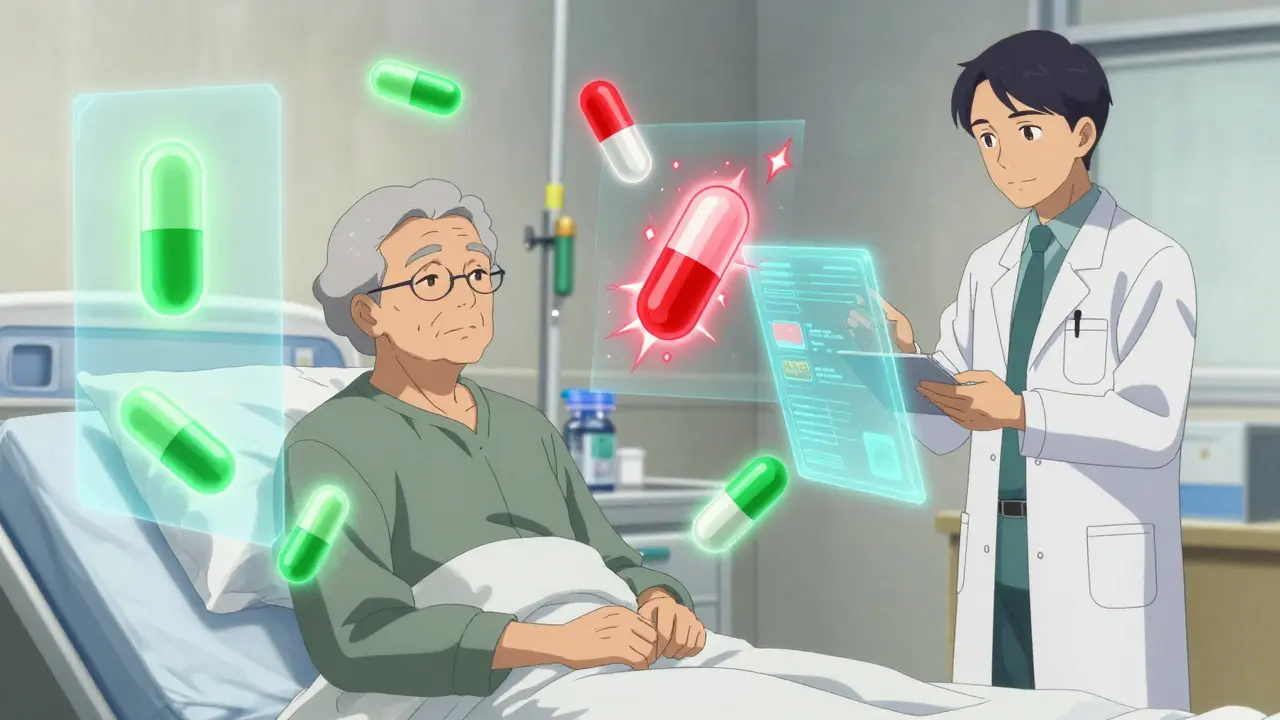
The challenge of pharmacodynamic interactions grows with age. The global population aged 65+ is expected to reach 1.5 billion by 2050. Older adults typically take 4.8 prescription medications simultaneously, according to 2022 data from the National Council on Patient Information and Education. This phenomenon, known as polypharmacy, exponentially increases the risk of complex interactions.
Professor David E. Geller of Massachusetts General Hospital noted in a 2021 *JAMA Internal Medicine* review that the most clinically significant interactions involve drugs with narrow therapeutic indices-medications where a small change in effect can lead to toxicity or failure. Eighty-three percent of life-threatening pharmacodynamic interactions involved at least one such drug.
To mitigate these risks, healthcare systems are turning to technology and human expertise. Clinical decision support systems have reduced pharmacodynamic interaction errors by 37% in US hospitals, yet they still miss 22% of significant interactions due to oversimplified algorithms. Human oversight remains critical. A 2021 systematic review in *BMJ Quality & Safety* found that pharmacist-led medication reviews reduced adverse events from pharmacodynamic interactions by 58% in elderly patients, particularly preventing antihypertensive and NSAID combinations.
Future Directions: Predictive Modeling and AI
The future of managing these interactions lies in better prediction. Traditional methods rely on static databases, but new approaches use quantitative modeling and machine learning. Dr. Rada Savic’s team at UCSF developed an algorithm that achieved 89% accuracy in predicting serotonin syndrome risk from polypharmacy regimens in a 2022 validation study. The FDA now requires specific pharmacodynamic interaction studies for new Central Nervous System drugs, reflecting a shift toward proactive prevention.
As electronic health records integrate real-time interaction checks, the goal is to move from reactive identification to personalized medicine. However, until then, understanding the basic principles of pharmacodynamics-receptor competition, physiological opposition, and synergy-remains the best defense against unexpected drug reactions.
What is the difference between pharmacokinetic and pharmacodynamic interactions?
Pharmacokinetic interactions affect how the body absorbs, distributes, metabolizes, or excretes a drug, changing its concentration in the blood. Pharmacodynamic interactions occur at the site of action, altering the drug's effect without changing its concentration. For example, CYP450 enzyme inhibition is pharmacokinetic, while receptor competition is pharmacodynamic.
Can pharmacodynamic interactions be beneficial?
Yes. Synergistic interactions are often used therapeutically. Antibiotic combinations like trimethoprim-sulfamethoxazole work better together than alone, allowing for lower doses and reduced side effects. Similarly, some cancer therapies combine drugs to target multiple pathways simultaneously.
Why are NSAIDs dangerous with blood pressure medications?
NSAIDs inhibit prostaglandins, which help maintain kidney blood flow and sodium excretion. This can reduce the effectiveness of ACE inhibitors, ARBs, and diuretics, leading to uncontrolled hypertension and potential kidney damage. It is a form of physiological antagonism.
What is serotonin syndrome, and which drugs cause it?
Serotonin syndrome is a potentially life-threatening condition caused by excessive serotonin activity. It is commonly triggered by combining SSRIs, SNRIs, MAOIs, or certain antibiotics like linezolid. Symptoms include confusion, rapid heart rate, high blood pressure, and muscle rigidity.
How can patients avoid dangerous drug interactions?
Patients should maintain an updated list of all medications, including over-the-counter drugs and supplements, and share it with every healthcare provider. Regular medication reviews by a pharmacist can identify risky combinations. Never stop or change doses without consulting a doctor, as sudden changes can also be dangerous.

John Anderson
July 11, 2026 AT 21:34Just check your meds.
ANINDA GHOSH
July 12, 2026 AT 04:52It is fascinating how the molecular dance of receptors dictates our physical reality. The concept of physiological antagonism, particularly with NSAIDs and ACE inhibitors, serves as a profound reminder that the body is an interconnected ecosystem rather than a collection of isolated parts. When we interfere with prostaglandin synthesis, we are not merely treating pain; we are altering the hydraulic pressure of our entire circulatory system. This requires a holistic view of pharmacology that respects the delicate balance of homeostasis. We must approach medication with the reverence due to such powerful chemical agents. The synergy between trimethoprim and sulfamethoxazole is a beautiful example of cooperative action in nature, mirrored in medicine. It shows us that collaboration can yield results greater than the sum of individual efforts. I believe this principle applies beyond biology, extending into social and philosophical realms. Let us learn from these mechanisms to foster better harmony in our own lives. The future of AI in predicting these interactions is promising but must be guided by ethical wisdom. We should never lose sight of the human element in healthcare. Technology is a tool, but empathy is the foundation. Thank you for sharing this insightful article. :)
Charles PINSON
July 13, 2026 AT 16:47The average layperson would struggle to grasp the nuance here without a degree in pharmacokinetics. It is amusing how people think reading a blog post qualifies them to understand receptor affinity measurements in nanomolar ranges. Most doctors barely get it right half the time, so why do you expect the general public to suddenly become experts? The data cited from European teaching hospitals is likely outdated or misinterpreted by those who lack the statistical rigor to analyze it properly. Clinical decision support systems fail because they are built on oversimplified algorithms designed by committee, not by true specialists. Pharmacist-led reviews are a band-aid solution for a systemic failure in medical education. Patients need to stop trusting their instincts and start trusting the hierarchy of medical expertise. Until then, we will continue to see preventable errors driven by ignorance and overconfidence.
Crystal Tadlock
July 15, 2026 AT 07:14This is all part of the big pharma scam to keep us sick and dependent. They want you taking multiple drugs so they can make more money. The serotonin syndrome stuff is just fear mongering to sell more supplements. Big Pharma knows exactly what they are doing and they don't care about you. Wake up people! The government is hiding the real cures. Linezolid was prescribed because they wanted to test something on you. It's not an accident. It's a conspiracy. Stop trusting these doctors. They are all in on it. Your blood pressure meds are poison. The NSAIDs are poison. Everything is poison. Just eat kale and pray. Don't let them control your mind with their chemicals. You are being experimented on every day. It's terrifying when you realize the truth. They profit from your suffering. It's evil. Pure evil. Stay away from all pills. Save yourself before it's too late.
Trey Newkerk
July 16, 2026 AT 00:25You think you know everything about receptors? Ha! You are missing the bigger picture entirely. The soul does not bind to beta-2 receptors. The spirit transcends the lock and key model. You reduce life to chemistry and call it science. It is pathetic. I have seen things in the shadows of hospital corridors that no textbook can explain. The dizziness you feel is not just blood pressure dropping. It is your aura leaking out. Propranolol blocks the chakras. Albuterol tries to open them. They fight not for binding sites but for your spiritual energy. And you sit there talking about nanomolar ranges like it matters. It doesn't matter. The universe is chaotic and cruel. Your drugs are just shackles. Break free from the matrix of medicine. Embrace the void. The silence is where the truth lies. Not in your little charts and graphs. Go ahead, take your pills. See if they save you from the darkness within.
Tad Cronn
July 17, 2026 AT 19:33I bet Crystal Tadlock has a stash of unregulated herbs in her closet while preaching about kale. Typical hypocrite. And Charles Pinson, you elitist jerk, clearly thinks his nose is too high for actual patient interaction. But seriously, the point about clinical decision support systems missing 22% of interactions is huge. I've seen patients die because the computer said 'safe' and the doctor didn't double-check. It's lazy practice. We need stricter regulations on algorithm transparency. Also, Trey Newkerk, your dramatic flair is exhausting. Nobody cares about your spiritual aura theory. Stick to facts or shut up. The data on polypharmacy in the elderly is alarming. 4.8 medications is a recipe for disaster. We need mandatory pharmacist consultations for anyone over 65. It's not optional. It's survival.
Sean Allwurden
July 18, 2026 AT 10:01Great breakdown of the pharmacodynamic mechanisms. As a fellow professional in the field, I appreciate the clarity on synergistic vs additive effects. The distinction is crucial for therapeutic optimization. The example of trimethoprim-sulfamethoxazole is indeed a classic case of sequential blockade leading to enhanced efficacy. We often leverage this principle in oncology protocols as well. However, I would add that the role of pharmacogenomics cannot be overstated in predicting individual susceptibility to these interactions. Genetic variations in receptor subtypes can significantly alter the clinical outcome. For instance, polymorphisms in beta-adrenergic receptors can change the response to both agonists and antagonists. Integrating genomic data with traditional pharmacodynamic models could revolutionize personalized medicine. Looking forward to seeing more research in this area. Let's collaborate on pushing these boundaries further.
Deva Vidya
July 19, 2026 AT 04:48This is such important information for everyone to know. It gives me hope that with better awareness, we can prevent many health issues. The way you explained the receptor competition makes it so much easier to understand. I always worry about my mom taking so many pills. Now I know I should ask her doctor to review them regularly. It feels good to have some control over our health decisions. Thank you for writing this. It really helps people like me who just want to stay safe. Keep spreading the knowledge. You are making a difference. I am sure many readers will benefit from this insight. Let's all look out for each other. Health is wealth after all. Stay positive and informed.
Najmunisa Govender
July 19, 2026 AT 13:38I completely agree with the points raised regarding the dangers of combining CNS depressants. It is truly heartbreaking to hear about cases of respiratory depression. My heart goes out to the families affected by these preventable tragedies. We must be so careful with our prescriptions. The statistics mentioned are quite alarming. It is essential that we advocate for safer practices in healthcare. Please, everyone, talk to your pharmacist. Do not hesitate to ask questions. Your safety is paramount. Let us support one another in this journey towards better health management. Kindness and caution go hand in hand. Take care of yourselves and your loved ones. The world needs more compassion in medicine.
MiMi Stanley
July 19, 2026 AT 22:24I've been quietly observing this thread and found the discussion on physiological antagonism particularly interesting. It's easy to overlook how NSAIDs can undermine blood pressure medication. I started noticing this pattern in my own family history. My uncle had uncontrolled hypertension despite being compliant with his meds. Later, we discovered he was taking ibuprofen daily for arthritis. It made perfect sense once we connected the dots. The silent damage to kidneys is especially concerning. It doesn't announce itself until it's too late. I'm going to share this with my primary care provider next week. Small changes in understanding can lead to big improvements in outcomes. Thanks for the detailed explanation.
Kevin Burke
July 21, 2026 AT 22:12Let us reflect on the deeper meaning of these interactions. Is it merely chemistry, or is it a metaphor for human conflict? We compete for resources, for attention, for love. Like drugs fighting for receptors, we fight for our place in the world. Sometimes we add to each other's joy, sometimes we cancel each other out. The antagonist in your life may seem like an enemy, but perhaps they teach you resilience. The synergist brings out your best self. We must choose our companions wisely. Just as a doctor chooses medications, we choose our influences. Be mindful of what you allow into your system. Whether it is a pill or a person, ensure it serves your highest good. Wisdom lies in selection. Discernment is key. Live intentionally. Meditate on this. The path to enlightenment is paved with conscious choices. Do not sleepwalk through your existence. Wake up. Choose well.