Vaccinations While on Immunosuppressants: Live vs Inactivated Guidance

Vaccine Safety Checker for Immunosuppressants
Please select your medication and vaccine type to get results
This tool provides guidance based on IDSA 2025 guidelines
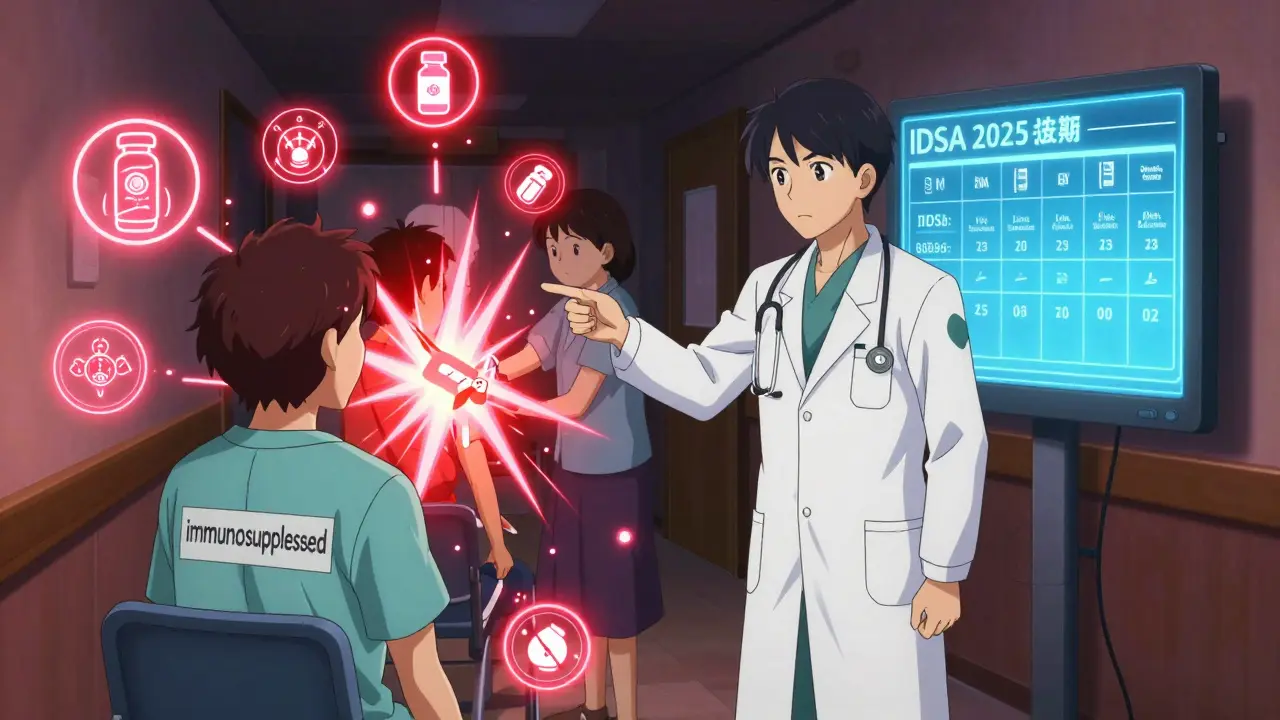
Getting vaccinated while on immunosuppressants isn’t just about checking a box-it’s a high-stakes balancing act. Too early, and the vaccine won’t work. Too late, and you’re unprotected. Give someone a live vaccine by accident, and you could make them seriously ill. The rules aren’t complicated, but they’re precise. And they’ve changed. In 2025, the Infectious Diseases Society of America (IDSA) and the CDC updated their guidelines to reflect new data on how immunosuppressants affect vaccine responses. If you’re on steroids, rituximab, methotrexate, or any drug that dampens your immune system, this isn’t general advice. This is your playbook.
Live vs Inactivated: The Core Difference
Not all vaccines are created equal. The biggest split is between live attenuated vaccines and inactivated ones. Live vaccines contain a weakened version of the virus. Inactivated vaccines use killed virus particles or pieces of the virus. That tiny difference changes everything for someone on immunosuppressants.Live vaccines like MMR (measles, mumps, rubella), varicella (chickenpox), and the old Zostavax shingles shot are contraindicated for anyone moderately or severely immunocompromised. Why? Because your immune system can’t control even a weakened virus. There are documented cases of patients developing full-blown measles or chickenpox from the vaccine itself. The nasal spray flu vaccine (LAIV) is also live-and banned for this group. Even if you feel fine, your immune system is still on hold.
Inactivated vaccines, on the other hand, are safe. That includes the flu shot (not the nasal spray), hepatitis B, pneumococcal (PCV20, PPSV23), and all current COVID-19 vaccines (Pfizer-BioNTech, Moderna, Novavax). These can’t cause the disease. But they’re not foolproof. Your body might not respond strongly. That’s why timing and extra doses matter.
Timing Is Everything
The best time to vaccinate isn’t random. It’s calculated around your treatment cycle. For patients on cyclical drugs like cyclophosphamide or rituximab, the goal is to vaccinate when your immune system is least suppressed.If you’re starting immunosuppressants, get all needed vaccines at least 14 days before your first dose. If you’re already on them, work with your doctor to find the sweet spot. For rituximab or ocrelizumab-B-cell depleting drugs-you need to wait at least six months after your last infusion before getting vaccinated. The ideal window? Three to six months after the last dose, when your B-cells start coming back. If you’re on ongoing therapy, get your shot about four weeks before your next infusion.
For patients on daily steroids like prednisone, the rule is simple: if you’re on 20 mg or more per day for two weeks or longer, delay non-emergency vaccines until your dose drops below that level. If you’re on methotrexate for rheumatoid arthritis, skipping your dose for one week after each vaccine dose has been shown in clinical reports to boost antibody production.
COVID-19 Vaccines: Extra Doses Are the Norm
For immunocompromised people, the standard one- or two-dose COVID-19 schedule doesn’t cut it. The IDSA 2025 guidelines say: if you’re moderately to severely immunocompromised, you need two doses of the 2025-2026 updated mRNA or protein-based vaccine as part of your primary series-regardless of prior vaccination history. After that, additional doses are recommended based on your condition and response.Studies show antibody responses in this group range from 15% to 85%, compared to over 90% in healthy people. That’s why extra doses aren’t optional-they’re necessary. The CDC and ACIP recommend these additional doses be given at least two months apart. Don’t assume your doctor will bring it up. Bring it up yourself. Ask: “Am I on the list for extra doses? When’s my next one?”
Other Critical Vaccines You Can’t Skip
Beyond COVID-19, there are three other vaccines you need to be current on:- Influenza: Get the inactivated flu shot every year. No exceptions. No nasal spray. Even if you’ve had the flu before, your immune system needs a fresh reminder.
- Hepatitis B: The standard three-dose series (Engerix-B, Recombivax HB) is recommended. There’s also a two-dose option (Heplisav-B) for adults, which may work better in people with weaker immune systems.
- Pneumococcal: You need both PCV20 and PPSV23. Give them at least one year apart. PCV20 first, then PPSV23. This combo protects against the most dangerous strains of pneumonia.
Don’t forget tetanus, diphtheria, and pertussis (Tdap). You need one dose as an adult, then Td boosters every 10 years. These are inactivated and safe.
What About Your Family?
Your protection doesn’t end with you. The IDSA guidelines strongly recommend that everyone living with or regularly near you-spouse, kids, caregivers-be fully vaccinated. This is called “cocooning.”Studies show that when household contacts are up to date on their vaccines, transmission of diseases like flu and whooping cough drops by up to 57%. That means your child getting their MMR shot isn’t just protecting them-it’s protecting you. Your partner getting the flu shot? That’s a shield for you.
Important note: household members can safely receive live vaccines like MMR and varicella. You don’t have to avoid them after they’re vaccinated. The risk of you catching the virus from them is negligible.

Real-World Problems and How to Solve Them
The guidelines are clear. But the system isn’t always aligned.Patients report being given the wrong flu vaccine-nasal spray instead of shot-by clinics that didn’t check their medication list. Others waited months for updated COVID-19 vaccines because their pharmacy ran out. One kidney transplant patient missed her booster window because the clinic didn’t coordinate with her oncology team.
Solutions exist. Use the IDSA’s free online decision tool, launched in November 2025. It lets you input your drug, dose, and schedule and generates a personalized vaccination timeline. Many hospitals now have immunocompromised vaccine clinics. Epic’s electronic health record system now flags immunocompromised patients and auto-suggests due vaccines based on their meds.
If your doctor doesn’t know the guidelines, ask for a referral to an infectious disease specialist. Bring printed copies of the IDSA 2025 guidelines. Don’t be afraid to advocate. Your life depends on getting this right.
What to Do Next
Here’s your action plan:- Make a list of every immunosuppressant you take, including doses and when you last received them.
- Check your vaccination record. Which vaccines have you had? When?
- Call your doctor and ask: “Based on my current meds, which vaccines do I need now? Which ones are safe? When should I get them?”
- Ask if your pharmacy carries the updated 2025-2026 COVID-19 vaccine and whether they can hold a dose for you.
- Make sure your household members are up to date on all vaccines-especially flu, COVID-19, and pertussis.
There’s no room for guesswork. The science is solid. The tools are available. What’s left is for you to take control.
Can I get the flu shot while on steroids?
Yes, you can get the inactivated flu shot while on steroids-but timing matters. If you’re on 20 mg or more of prednisone (or equivalent) daily for 14 days or longer, wait until your dose drops below that level. If you’re on lower doses or intermittent steroids, the shot is safe at any time. Always avoid the nasal spray flu vaccine (LAIV)-it’s live and unsafe.
Is the COVID-19 vaccine safe if I’m on rituximab?
Yes, but only if timed correctly. You must wait at least six months after your last rituximab infusion before getting vaccinated. The best window is three to six months after your last dose, when your B-cells begin to recover. If you’re on ongoing rituximab, schedule your vaccine four weeks before your next infusion. The mRNA vaccines (Pfizer or Moderna) are preferred. You’ll also need two doses of the 2025-2026 updated vaccine as part of your primary series.
What if I accidentally got a live vaccine while immunosuppressed?
Contact your doctor immediately. If you received MMR, varicella, or LAIV while severely immunocompromised, you’re at risk for vaccine-derived disease. Symptoms like fever, rash, or swollen glands could appear days to weeks later. Your provider may monitor you closely or give immune globulin to help your body fight off the weakened virus. This is rare but serious-always confirm vaccine type before getting any shot.
Do I need to get vaccinated if I’ve had COVID-19 before?
Yes. Natural immunity from prior infection doesn’t replace vaccine-induced protection in immunocompromised people. Your immune system doesn’t respond as strongly to the virus, so you’re more likely to get reinfected. The CDC and IDSA recommend following the full vaccination schedule for immunocompromised individuals, regardless of past infection.
Can I get the shingles vaccine if I’m on immunosuppressants?
You can get Shingrix, but not Zostavax. Zostavax is a live vaccine and is contraindicated. Shingrix is inactivated and safe. It’s a two-dose series given two to six months apart. It’s highly effective even in people on immunosuppressants and is recommended for all adults 50 and older who are immunocompromised.

lorraine england
January 22, 2026 AT 15:49Okay but let’s be real-most doctors don’t even know the 2025 IDSA updates. I got the nasal flu spray last year because the nurse just clicked ‘flu shot’ without checking my meds. Lucky I didn’t end up in the ER. 🙃
Kevin Waters
January 24, 2026 AT 13:53Biggest thing I learned after my transplant: timing beats urgency. I waited 7 months after rituximab to get my first COVID booster. Felt weird being the only one in the clinic with a 6-month waitlist, but my titers came back solid. Don’t rush it-your immune system isn’t on clock time.
Himanshu Singh
January 25, 2026 AT 18:42Life’s a balance, no? We take meds to live longer… but then we gotta fight to stay protected. 😊 Vaccines aren’t just shots-they’re tiny acts of rebellion against chaos. Shingrix over Zostavax? Yes. Asking questions? Also yes. You’re not being annoying-you’re being alive.
Izzy Hadala
January 27, 2026 AT 16:35While the guidelines are well-documented, the implementation remains inconsistent across healthcare systems. A 2024 multicenter audit revealed that only 38% of immunocompromised patients received appropriately timed vaccinations, primarily due to EHR misclassification and lack of specialist coordination. The IDSA tool is a step forward, but systemic gaps persist.
Elizabeth Cannon
January 28, 2026 AT 21:53my dr told me to wait 6 months after rituximab but never told me to ask for extra doses. i had to google it myself. why is it on us to be doctors? 🤦♀️ also-yes, skip methotrexate for a week after shots. my antibody levels doubled. it’s not magic, it’s math.
Gina Beard
January 29, 2026 AT 02:32Protection is an illusion. We just rearrange the odds.
Don Foster
January 30, 2026 AT 02:42Everyone’s overcomplicating this. Live vaccines bad. Inactivated good. Wait 6 months after rituximab. Get extra doses. Done. Stop reading 20-page PDFs and just call your pharmacy. They know more than your PCP anyway
siva lingam
January 31, 2026 AT 08:21So we’re supposed to be scientists now? Cool. Next they’ll ask us to calculate our own drug half-lives and B-cell recovery curves. Meanwhile my insurance denied the third COVID shot. Again.
Phil Maxwell
February 1, 2026 AT 06:59Got my Shingrix last month. Didn’t tell anyone. Just sat there in the chair like it was a dentist appointment. Felt weirdly proud. Not because I’m brave. Just because I remembered to show up.
Tiffany Wagner
February 2, 2026 AT 04:02my mom got the live shingles shot before she started her chemo and ended up with a rash that lasted 3 months. dont let it happen to you. always check. always ask. its not being difficult its being smart
Dolores Rider
February 3, 2026 AT 06:17what if the CDC is lying? what if the vaccines are just making us more vulnerable? i heard someone on a podcast say Big Pharma wants us sick so they can sell more drugs… and my doctor won’t even look me in the eye when i ask about the 2025 updates 😔
venkatesh karumanchi
February 4, 2026 AT 13:08When I was on methotrexate, I skipped my dose after each shot. Felt like a rebel. My rheumatologist laughed… then checked my titers. They were higher than his healthy patients. Sometimes the quietest actions save you.
Jenna Allison
February 5, 2026 AT 21:25Just got my PCV20 + PPSV23 one year apart like the guidelines said. My immunologist said it’s the gold standard. Honestly? I didn’t know PCV20 even existed until I read this. If you’re on anything that suppresses you-go get this list printed. Don’t wait. Your future self will thank you.