Contamination Controls: Preventing Adulteration in Generic Pharmaceutical Manufacturing
When you take a generic pill, you expect it to work just like the brand-name version. But what if that pill was contaminated? Not with dirt or dust you can see-something far more dangerous. Tiny chemical residues, microbial growth, or even traces of another drug from a previous batch. These aren’t hypotheticals. In 2020, a single contaminant-nitrosamines-triggered global recalls across 22 generic drug makers. The cost? Over $1.2 billion in lost product. And it wasn’t an accident. It was a failure of contamination control.
Why Contamination Control Isn’t Optional
The FDA doesn’t just recommend contamination controls. They require them. Under 21 CFR 210.3(b)(3), a drug is adulterated if it’s made under unsanitary conditions that could make it harmful. In fiscal year 2022, nearly 37% of all FDA Warning Letters to drug manufacturers were for contamination violations. That’s not a glitch. That’s systemic. Generic drug makers don’t have the luxury of billion-dollar R&D budgets. They compete on price. But that doesn’t mean they can cut corners on safety. In fact, the opposite is true. Because generics are used by millions-90% of prescriptions in the U.S. are filled with generics-they bear a heavier responsibility. One contaminated batch can affect thousands of patients. And regulators know it.How Contamination Happens
Contamination doesn’t come from nowhere. It creeps in through people, equipment, air, or raw materials.- Human error: A technician forgets to change gloves. A gown tears during a shift. A cleaning log is skipped because the team is behind schedule. In one study, 47% of contamination events traced back to people.
- Cross-contamination: The same line makes two different drugs. If cleaning isn’t perfect, even a nanogram of the previous product can end up in the next batch. The European Medicines Agency says exposure limits must be set as low as 1 nanogram per square centimeter for high-potency drugs.
- Equipment and environment: A filter leaks. A ventilation system doesn’t maintain pressure. A surface isn’t cleaned to the required 10 parts per million residue limit. Even a small lapse can turn a batch into a recall.
- Raw materials: A supplier in India sends a batch with higher microbial load than expected. That’s 22% more common than with EU-sourced materials, according to EDQM data.
The Infrastructure That Keeps Drugs Safe
Modern generic manufacturing isn’t just about machines. It’s about controlled environments. Cleanrooms are the backbone. They’re not just clean-they’re engineered. ISO Class 5 (Grade A) rooms for sterile filling must have no more than 3,520 particles larger than 0.5 micrometers per cubic meter. That’s stricter than most hospital operating rooms. HVAC systems must push 20 to 60 air changes per hour. Pressure between rooms must be 10-15 Pascals higher in cleaner zones to stop dirty air from flowing in. Physical separation matters too. Dedicated corridors. Airlocks. Color-coded equipment. One facility reduced mix-ups by 65% just by painting blenders red for Drug A and blue for Drug B. And then there’s cleaning. It’s not just wiping down a surface. It’s validation. Swabs. Rinse samples. Microbial limits must be under 10 colony-forming units per 25 cm². Chemical residue? Under 10 ppm. Traditional methods take five to seven days for results. Now, rapid microbiological methods cut that to 24-48 hours. ATP bioluminescence gives results in five minutes-with 95% accuracy compared to cultures.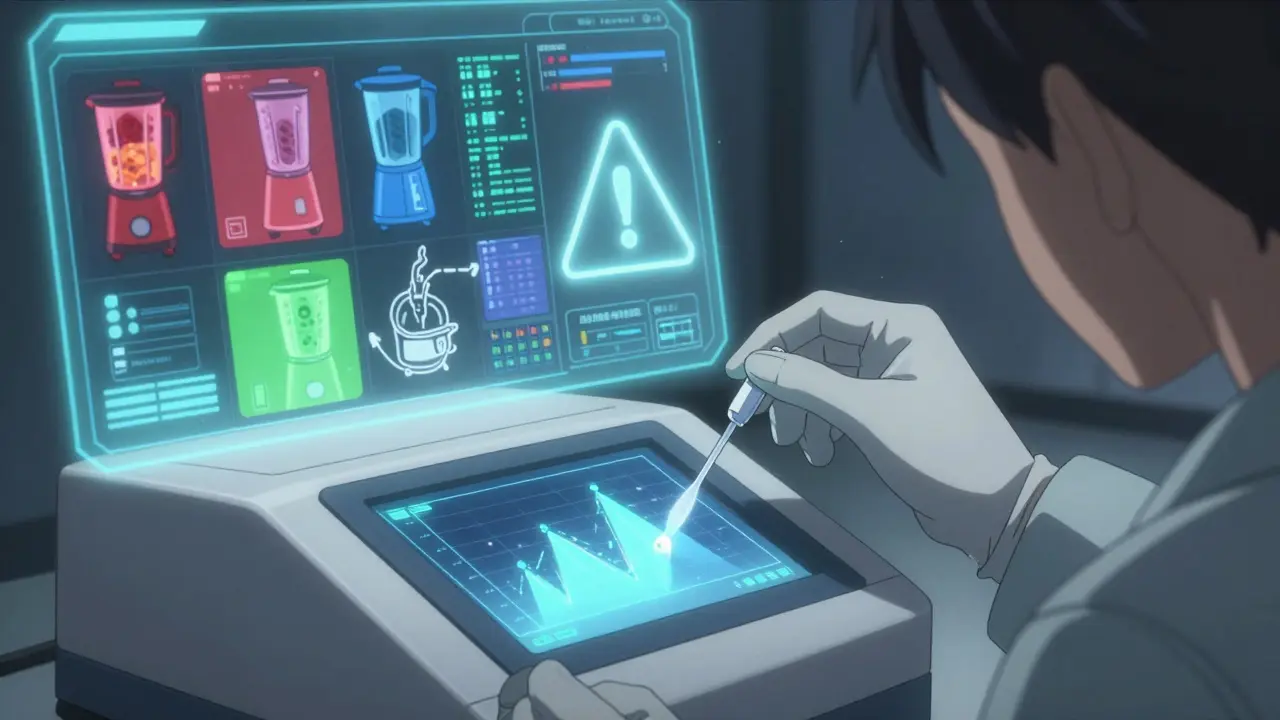
Real-Time Monitoring: The Game Changer
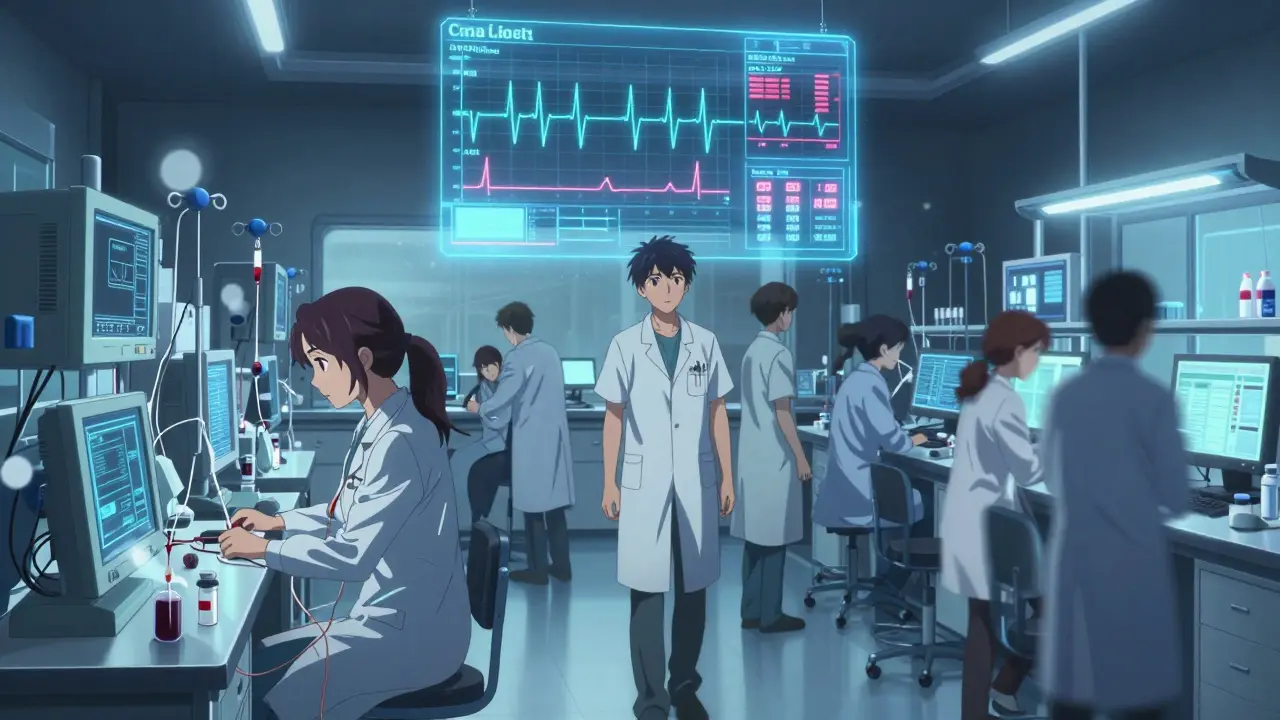
The old way? Someone walks through the cleanroom every hour with a handheld device, takes a sample, and sends it to a lab. By the time they get results, the contamination is already in the product. New systems? Real-time particle counters like the MetOne 3400+ monitor air continuously. They detect spikes in particles the moment they happen. A 2022 ISPE study found facilities using these systems reduced contamination incidents by 63%. Why? Because manual checks miss 78% of transient events-those brief bursts of contamination from a door opening or a person turning too fast. The catch? These systems cost $15,000 to $25,000 per unit. For small manufacturers, that’s a big investment. But the cost of one recall? Far higher.Human Factors: The Biggest Risk
Technology helps. But people still cause most problems. Dr. Michael Gamlen, a top industry consultant, says 83% of contamination events start with human behavior. Not because workers are careless. Because systems aren’t designed for humans.- After 8 hours, gowning compliance drops by 40%. Long shifts make people tired. Mistakes happen.
- A senior validation specialist at Teva reported a 30% spike in gowning violations after switching to reusable gowns. The fix? $185,000 in upgraded air showers.
- One Reddit user shared that Dycem CleanZone mats-sticky floor mats that trap dirt from shoes-cut foot-borne contamination by 72% in their facility.
Regulatory Pressure Is Rising
The FDA isn’t waiting. In 2023, they announced a 27% increase in inspection frequency for facilities with past contamination issues. The EMA issued deficiency letters on 41% of generic drug applications due to contamination controls. And the rules are tightening. FDA’s September 2023 draft guidance requires all generic manufacturers to establish Health-Based Exposure Limits (HBELs) for every product by 2025. That means knowing exactly how much of a contaminant is safe-even if it’s a trace of another drug. Implementing HBELs costs about $1.2 million per facility. For a small generic maker, that’s a huge burden. But skipping it? That’s a one-way ticket to a shutdown.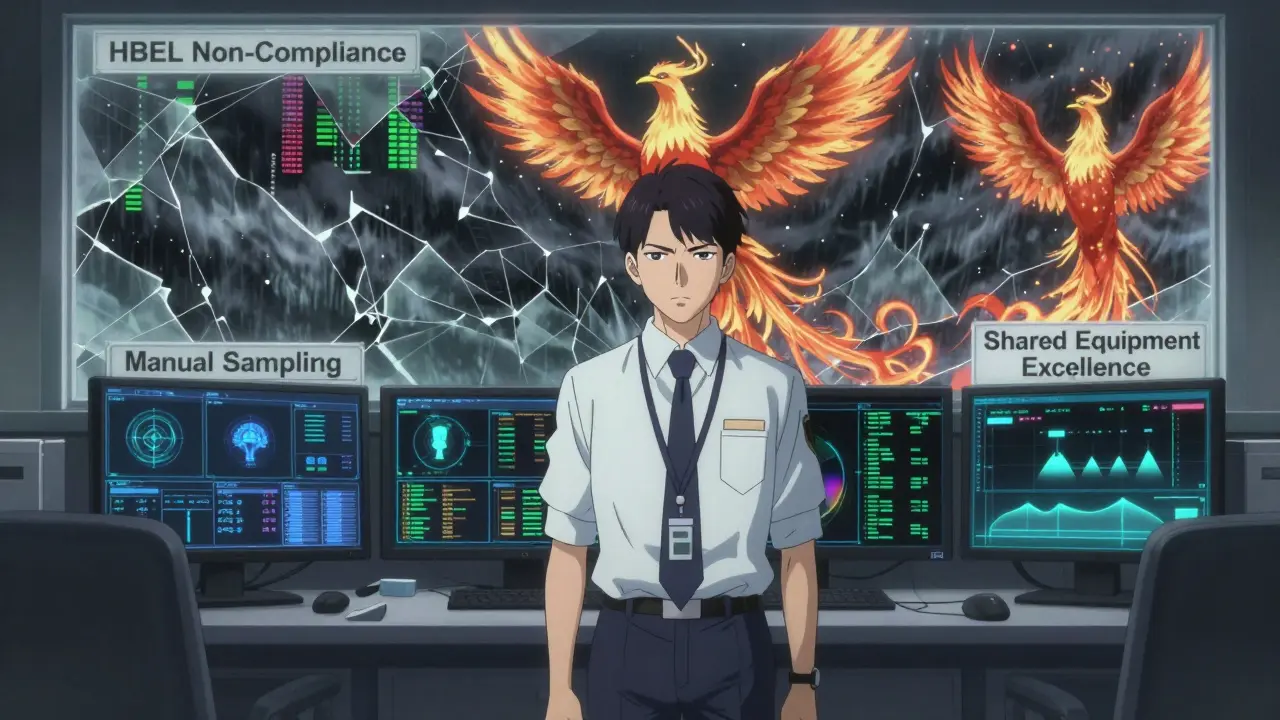
What Works: Proven Strategies
Not every solution needs a million-dollar upgrade. Some of the most effective fixes are simple:- One batch at a time: Facilities that only make one drug per run reported 53% fewer cross-contamination incidents.
- Staggered shifts: Avoiding rush hours in the cleanroom cuts personnel traffic and reduces particle spikes.
- Waterless cleaning: GlaxoSmithKline cut utility costs by 22% with new cleaning tech that doesn’t use water-perfect for sensitive equipment.
- AI prediction tools: Honeywell’s Forge Pharma system reduced false alarms by 68% in a Merck pilot. It learns patterns and tells you when something’s actually wrong.
The Cost of Inaction
Contamination control isn’t a cost center. It’s a business survival tool. The global market for contamination control systems is $4.7 billion and growing at 8.3% per year. Why? Because the alternative is worse. A single recall can wipe out a year’s profit. Regulatory delays add months to market entry. Reputation damage? Hard to fix. McKinsey found that companies investing in integrated contamination management systems get 3.2x ROI over five years. How? Fewer batch failures. Faster inspections. Fewer warning letters. For small manufacturers, the path isn’t easy. But it’s clear: don’t try to match Big Pharma’s $185 million facilities. Focus on operational excellence. Train your people. Use simple, smart tools. Monitor continuously. Validate rigorously.What’s Next?
The future of generic manufacturing won’t be about who makes the cheapest pill. It’ll be about who can prove theirs is the safest. ICH Q13, the new continuous manufacturing guidelines finalized in June 2023, integrates contamination controls into every step of production. That means real-time monitoring, automated data logging, and predictive analytics will soon be standard-not optional. The companies that adapt now will thrive. The ones that wait? They’ll be the ones FDA shuts down next.What is considered adulteration in generic drugs?
Adulteration occurs when a drug is prepared, packed, or held under unsanitary conditions that could make it harmful. This includes contamination from filth, chemical residues, microbes, or cross-contamination from other drugs. The FDA defines this under 21 CFR 210.3(b)(3), and it’s one of the most common reasons for Warning Letters.
How do cleanroom classifications work in generic drug manufacturing?
Cleanrooms are rated by ISO 14644-1 standards. For sterile filling, ISO Class 5 (Grade A) is required-limiting particles to 3,520 per cubic meter at 0.5μm or larger. Background areas use ISO Class 7 (Grade C), and less critical zones use ISO Class 8 (Grade D). Airflow, pressure differentials (10-15 Pascals), and air changes per hour (20-60) are tightly controlled to prevent contamination.
What’s the difference between cleaning validation for innovator and generic drugs?
Innovator companies often spend more on facility design-up to $185 million for equivalent capacity-while generics focus on procedural rigor. Both must meet the same standards: ≤10 ppm chemical residue and ≤10 CFU per 25cm². But generics rely more on automated systems, real-time monitoring, and strict change control to compensate for lower capital investment.
Why is real-time monitoring better than manual sampling?
Manual sampling misses 78% of transient contamination events-brief spikes caused by people moving, doors opening, or equipment starting. Real-time counters like the MetOne 3400+ detect these instantly, reducing contamination incidents by 63%. They also provide continuous data for regulatory audits, making compliance easier to prove.
What are Health-Based Exposure Limits (HBELs), and why do they matter?
HBELs are the maximum safe amount of a contaminant that can remain in a product without causing harm. By 2025, the FDA requires all generic manufacturers to establish HBELs for every product. This ensures even tiny traces of previous drugs-like a nanogram-are accounted for. Skipping HBELs risks regulatory action and product recalls.
Can small generic manufacturers afford modern contamination controls?
Yes-but not by trying to copy Big Pharma. Focus on high-impact, low-cost solutions: color-coded tools, Dycem mats, staggered shifts, and one-batch-at-a-time production. Use rapid microbiological methods instead of long culture tests. Invest in one real-time particle counter for critical areas. The goal isn’t perfection-it’s proving you’re in control. FDA rewards consistency, not just equipment.