How to Manage Medication Costs During Medicare Part D Coverage Gaps (Donut Hole)
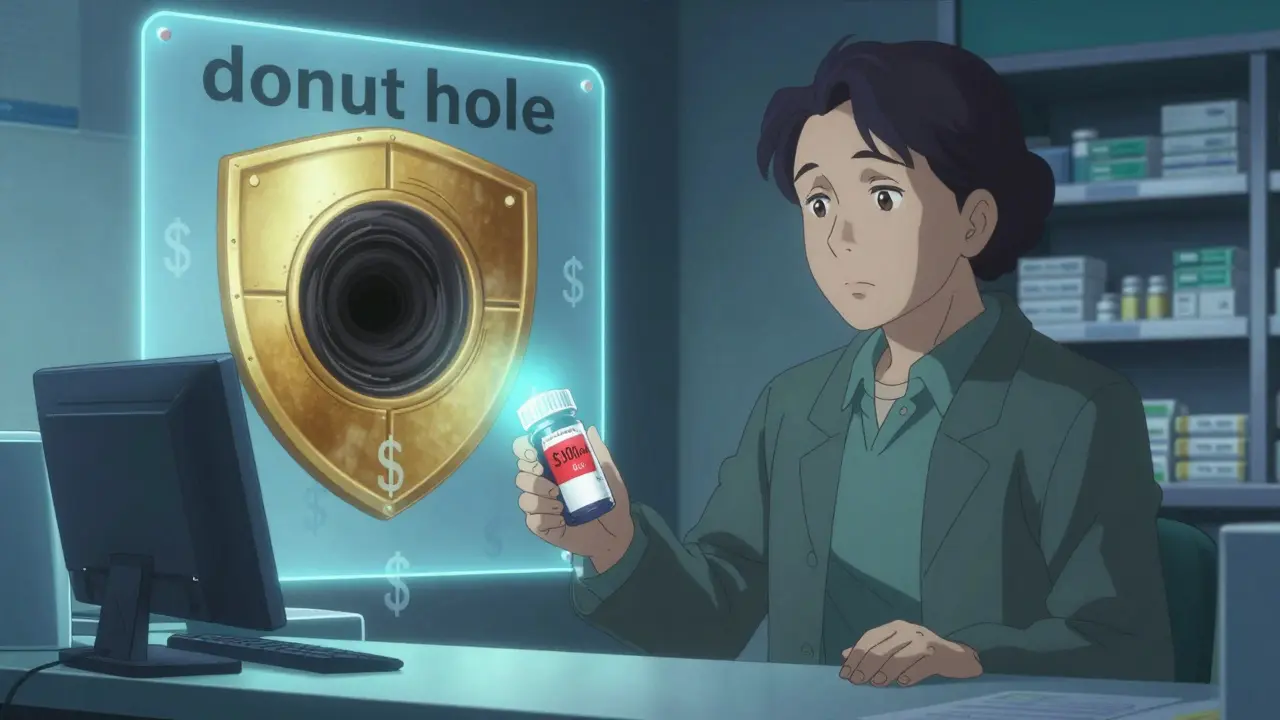
If you're on Medicare and take prescription drugs, you've probably heard the term donut hole. It’s not a hole you fall into - it’s a gap in your drug coverage that can leave you paying way more out of pocket than you expected. Right now, in 2024, this gap still exists. But by January 1, 2025, it will disappear completely. That’s a big change. And whether you’re already in the gap, heading toward it, or just trying to avoid it, knowing how to manage your medication costs now can save you hundreds - even thousands - of dollars.
What Is the Medicare Part D Donut Hole?
The donut hole, officially called the coverage gap, is a phase in Medicare Part D where you pay more for your prescriptions after your plan and you have spent a certain amount on covered drugs. It doesn’t mean you lose coverage - it means your cost-sharing changes.
In 2024, once you and your plan have spent $5,030 on covered drugs combined, you enter the coverage gap. At that point, you pay 25% of the cost for both brand-name and generic drugs. Sounds manageable, right? But here’s the catch: while you’re paying 25%, your plan is only covering 75% of generic drugs. For brand-name drugs, the manufacturer gives you a 70% discount, and your plan covers 5%. That means you’re still paying 25%, but the $70 discount doesn’t count toward your out-of-pocket spending. Only what you actually pay out of your pocket counts.
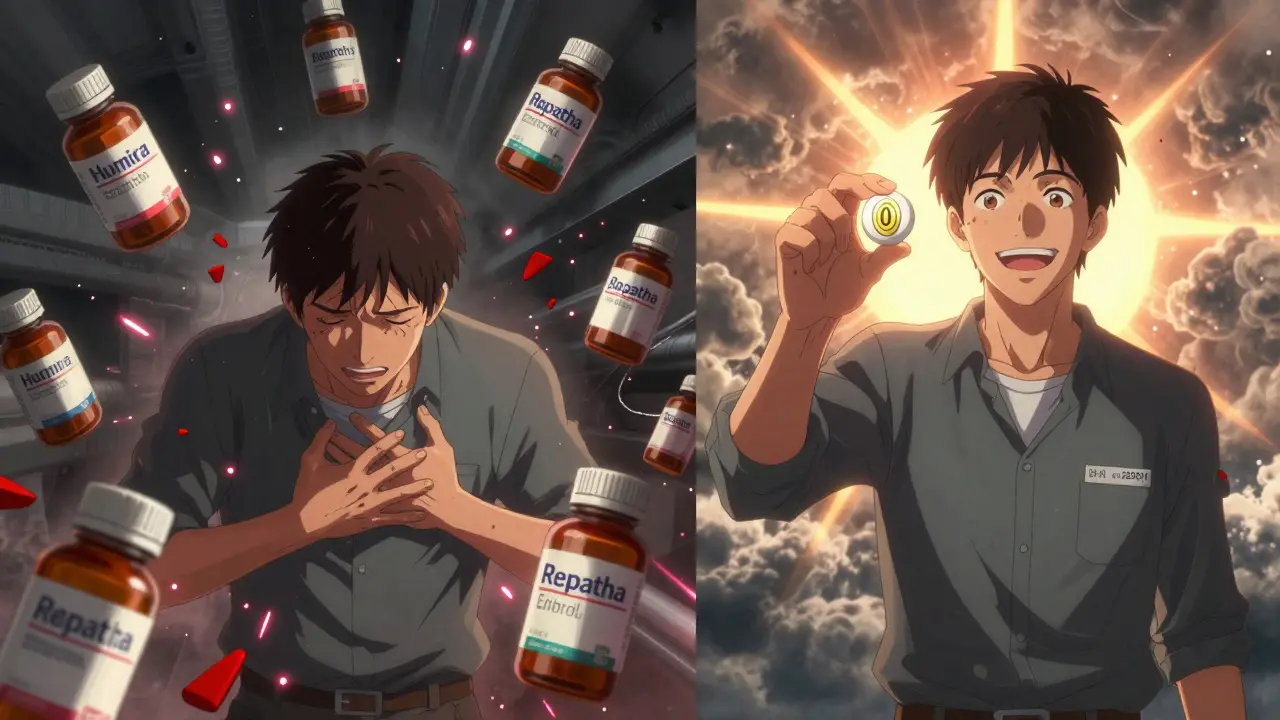
That’s why people get stuck. If you’re taking expensive medications - like Humira, Repatha, or Enbrel - you might pay $1,000 or more per month. Even at 25%, that’s $250 a month. After a few months, you’ve paid thousands. And you still have to keep paying until you hit the catastrophic coverage threshold: $8,000 in total out-of-pocket spending in 2024. That’s not just expensive - it’s unsustainable for many.
Why the Donut Hole Is Disappearing in 2025
The Inflation Reduction Act of 2022 changed everything. Starting January 1, 2025, the coverage gap will be gone. Instead of four phases, Medicare Part D will have three:
- Deductible phase: You pay up to $590 before coverage starts.
- Initial coverage phase: Your plan pays most of the cost until you hit $2,000 in out-of-pocket spending.
- Catastrophic coverage phase: Once you hit $2,000, you pay $0 for covered drugs for the rest of the year.
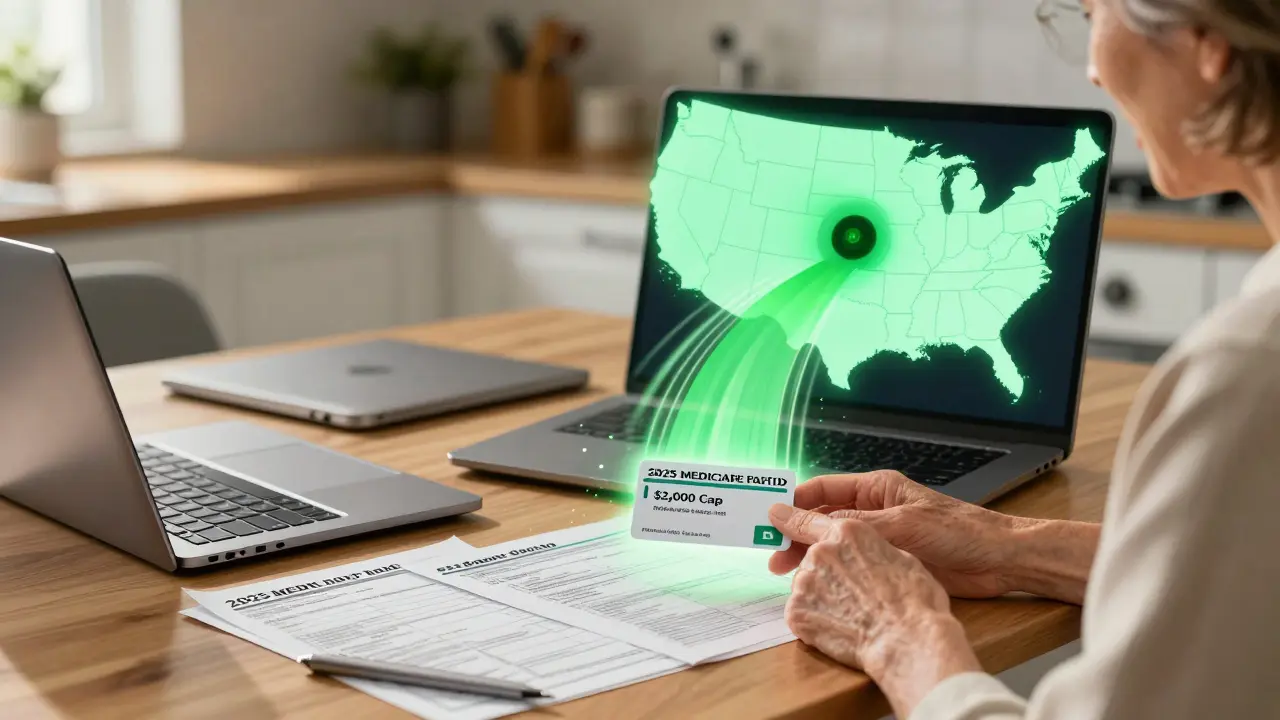
This means no more surprise bills. No more choosing between medication and groceries. If you need a $600 drug in 2025, you pay $2,000 total for the year - and then it’s free. That $2,000 cap includes what you pay, what your plan pays, and manufacturer discounts. It’s simpler. It’s fairer. And it’s coming.
But until then - and for those who may still face gaps under new plan designs - knowing how to cut costs now is essential.
How to Lower Your Drug Costs Before 2025
You don’t have to wait for 2025 to save money. Here’s what actually works:
1. Check Your Plan’s Drug Tier
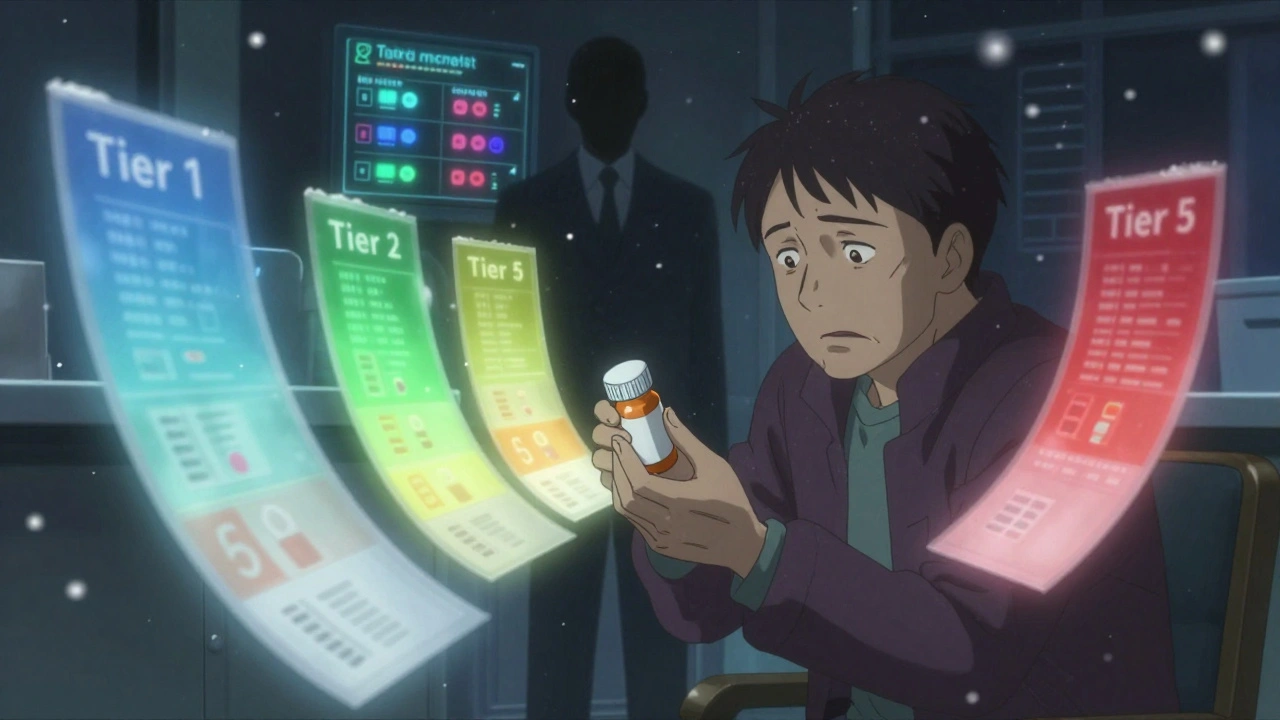
Not all drugs cost the same. Medicare Part D plans put drugs into tiers. Tier 1 is usually generics, Tier 2 is preferred brand-name drugs, and Tier 3 or 4 are non-preferred or specialty drugs. If your medication is on Tier 3, you’re paying 25% coinsurance. If it’s on Tier 4, you might pay 33% or more.
Go to your plan’s formulary (the list of covered drugs) and check where your meds stand. If your drug is on a higher tier, ask your doctor if there’s a similar drug on a lower tier. Sometimes, switching to a different brand - even if it’s the same medicine - can cut your monthly cost by hundreds.
2. Use Manufacturer Patient Assistance Programs
Pharmaceutical companies have programs to help people who can’t afford their drugs. These aren’t just for low-income people. If you’re in the donut hole, you’re eligible. Companies like Amgen, AbbVie, and Eli Lilly offer co-pay cards, discounts, or even free drugs for qualifying patients.
For example, one woman on Repatha was paying $560 per month. Through her manufacturer’s program, she dropped to $5. That’s not a typo. The 2023 Journal of Managed Care & Specialty Pharmacy found these programs reduced out-of-pocket costs by 63% to 92% for brand-name drugs.
Start here: Pharmaceutical Research and Manufacturers of America (PhRMA) has a tool to search by drug name. Or ask your pharmacist - they often know which programs are active.
3. Switch to Generic When Possible
Generics are chemically identical to brand-name drugs. The only difference? Price. A 2023 GoodRx analysis showed that switching from brand to generic can save $1,200 to $2,500 a year.
Ask your doctor: “Is there a generic version of this drug?” If they say no, ask why. Sometimes it’s because the generic isn’t covered. Other times, it’s outdated advice. New generics come out all the time. In 2024 alone, 12 major brand-name drugs went generic.
4. Get a 90-Day Supply
Many plans charge less per pill if you get a 90-day supply through a mail-order pharmacy. Instead of paying a $50 copay every 30 days, you pay $100-$120 for three months. That’s a 15% to 25% savings.
It’s not always an option - some drugs can’t be mailed. But for maintenance medications like blood pressure pills, statins, or diabetes drugs, it’s a no-brainer.
5. Apply for Extra Help (Low-Income Subsidy)
If your income is under $22,590 (individual) or $30,660 (couple) in 2024, you may qualify for Extra Help. This federal program covers your Part D premiums, deductibles, and copays. It also eliminates the donut hole entirely.
12.6 million people qualified in 2023. But many don’t apply because they think they make too much. The truth? The limits are higher than most people think. Apply at Social Security’s website. It takes 10 minutes. If you qualify, you’ll get a letter in the mail. If you don’t, you haven’t lost anything.
6. Use the Medicare Plan Finder
You don’t have to stay on the same plan forever. Every fall, plans change their costs, formularies, and networks. The Medicare Plan Finder lets you type in your exact drugs and see which plan costs the least.
NCOA found that people who switch plans based on their medications save $1,047 a year on average. If you’re taking three expensive drugs, this could mean the difference between staying in the donut hole and avoiding it.
What to Do If You’re Already in the Donut Hole
If you’ve already hit the gap, don’t panic. You’re not alone. In 2022, 24% of Medicare Part D enrollees entered the coverage gap. Here’s what to do:
- Don’t stop taking your meds. Skipping doses or splitting pills can cause serious health problems. A 2023 survey found 32% of people in the gap skipped doses - and 19% split pills.
- Call your plan. Ask if they have a cost-sharing program for the gap. Some plans offer temporary discounts.
- Check for state programs. 37 states run Medicare Savings Programs that help with drug costs. Search your state’s Medicaid website or call the National Council on Aging at 1-800-510-2020.
- Spread out your purchases. If you have a large supply of meds, try to time refills so you don’t hit the gap too early. For example, if you’re close to $5,030 in June, delay a refill until August. This isn’t a loophole - it’s a strategy. But be careful: don’t go without your meds.
What to Expect in 2025
By next year, the donut hole will be history. The $2,000 cap means no one will pay more than that for prescriptions. The manufacturer discount program will change too - instead of 70% off during the gap, manufacturers will give 10% off during initial coverage and 20% during catastrophic coverage.
Some experts warn premiums might rise slightly for lower-income beneficiaries who used to benefit from the old discount system. But overall, the change is a win. The Medicare Payment Advisory Commission predicts prescription abandonment will drop by 18% to 22%. That means fewer hospital stays, fewer ER visits, and better health.
Start preparing now. Review your 2024 Annual Notice of Change - it should arrive in September 2024. Compare your current plan to next year’s options. If you’re taking high-cost drugs, you’ll likely save hundreds or more.
Real Stories, Real Savings
One man in Ohio was paying $1,200 a month for Humira. He was in the donut hole. His out-of-pocket cost was $300 a month. He applied for the manufacturer’s program - it cut his cost to $20. He also switched to a plan with better coverage. His annual drug cost dropped from $3,600 to $240.
A woman in Florida was taking three brand-name drugs. She didn’t know about Extra Help. She applied after her husband’s hospitalization. She qualified. Her monthly drug bill went from $850 to $0.
These aren’t rare cases. They’re common. And they’re possible for you too.
Final Thoughts
The donut hole was designed as a cost-control measure - but it became a financial trap for too many. The good news? It’s being fixed. The better news? You don’t have to wait until 2025 to start saving.
Use the tools available. Talk to your pharmacist. Ask your doctor. Apply for help. Don’t assume you can’t afford your meds. The system is rigged to make you think that - but there are real ways out.
By the end of 2024, you’ll have a clearer picture of what’s coming. By then, you’ll know if you’re eligible for Extra Help. You’ll know which drugs are covered best. And you’ll be ready for a future where your medication costs are predictable - not unpredictable.
Don’t wait until you’re in crisis. Start now. Your health - and your wallet - will thank you.

Kendrick Heyward
March 17, 2026 AT 05:32Ryan Voeltner
March 18, 2026 AT 22:26Lauren Volpi
March 19, 2026 AT 20:36Shameer Ahammad
March 20, 2026 AT 09:43Alexander Pitt
March 21, 2026 AT 06:59Manish Singh
March 22, 2026 AT 16:31Jeremy Van Veelen
March 22, 2026 AT 21:22Kyle Young
March 23, 2026 AT 09:03Aileen Nasywa Shabira
March 25, 2026 AT 00:59