Language Barriers and Medication Safety: How to Get Help
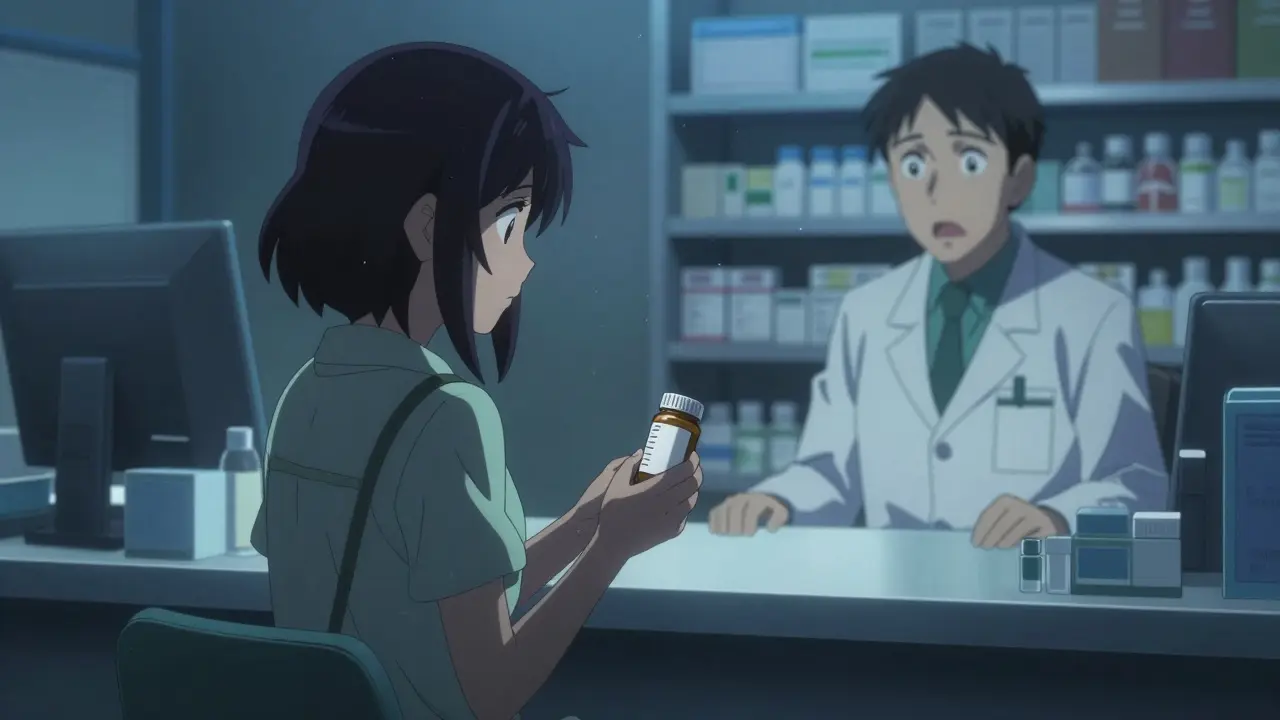
Imagine standing at a pharmacy counter, holding a prescription for a medication that could save your life or harm it if taken wrong. The pharmacist speaks quickly, using terms like "take with food" or "avoid grapefruit," but you don't fully understand the instructions because English isn't your first language. You nod, smile, and leave, hoping you got it right. This scenario is not just hypothetical; it is a daily reality for millions of people with Limited English Proficiency (LEP) in the United States.
The stakes are incredibly high. Research from the Children's Hospital of Philadelphia shows that adverse drug events occur at twice the rate for children with LEP families compared to English-proficient families-17.7% versus 9.6%. These aren't just statistics; they represent hospitalizations, emergency room visits, and sometimes permanent harm. The core problem isn't a lack of care; it's a breakdown in communication. When language barriers intersect with complex medical instructions, the risk of error skyrockets. But there are concrete steps you can take to bridge this gap and ensure your safety.
Understanding the Scope of the Problem
You might think that if you can speak some English, you're fine. However, medical terminology is dense and specific. A simple misunderstanding of dosage frequency or contraindications can lead to serious consequences. According to the 2023 KFF Survey on Racism, Discrimination, and Health, approximately 50% of adults with LEP encounter at least one language barrier in healthcare settings within a three-year period. Medication-related errors are among the most dangerous outcomes of these interactions.
Consider the experience of Maria, a Spanish-speaking patient who shared her story online. Her mother received incorrect insulin dosing instructions because the pharmacy relied on Google Translate instead of a professional interpreter. The result was a preventable hospitalization. This highlights a critical issue: technology alone is not enough. Automated translation tools often fail to capture the nuance required for medical safety, especially when dealing with terms like "dropperful" or specific timeframes.
The financial impact is also staggering. A 2017 analysis by Quality Health estimated that communication failures cost the healthcare system $1.7 billion annually due to irreparable patient harm. For individuals, the cost includes not just medical bills, but lost wages, pain, and anxiety. Understanding that this is a systemic issue, not a personal failure, is the first step toward seeking better help.
Your Legal Rights to Language Assistance
Many patients do not realize they have legal protections. Under Title VI of the Civil Rights Act of 1964, any healthcare organization receiving federal funds-including most hospitals, clinics, and pharmacies-is legally required to provide free language assistance services to LEP patients. This means you have the right to an interpreter. It is not a favor; it is a mandate enforced by the Office for Civil Rights, with penalties up to $100,000 per violation for non-compliance.
Despite these laws, implementation is inconsistent. A national survey cited in the Quality Health report found that 68% of hospitals struggle to identify LEP patients before their arrival, and 62% cite cost concerns as a barrier to providing robust language services. As a patient, you must advocate for yourself. If you feel unsure about your understanding, explicitly state that you need an interpreter. Do not accept vague assurances or gestures. Your safety depends on clear, precise communication.
Furthermore, the National Council on Interpreting in Health Care emphasizes that interpretation should be provided for all clinical encounters, not just initial consultations. This includes follow-up appointments, medication refills, and discharge instructions. Knowing your rights empowers you to demand the standard of care you deserve.
Professional Interpreters vs. Family Members
A common temptation is to ask a family member or friend to interpret. While well-intentioned, this practice is fraught with danger. Studies indicate that up to 25% of interpretation done by untrained personnel contains errors. Family members may lack the medical vocabulary, filter out information they find uncomfortable, or add their own opinions. They may also feel pressured to prioritize loyalty over accuracy.
Professional interpreters, on the other hand, are trained in medical terminology, cultural nuances, and ethical standards. They act as a neutral conduit, ensuring that every word is translated accurately. Research demonstrates that professional interpretation services can decrease medical error rates by up to 50% for LEP patients. In pharmacy settings, where precision is paramount, the difference between a professional interpreter and a layperson can mean the difference between health and harm.
If a professional interpreter is not immediately available, ask for a telephone or video remote interpretation service. Many healthcare providers use services like LanguageLine Solutions, which offer interpreters for hundreds of languages. These services are designed to be quick and efficient, minimizing wait times while maximizing accuracy. Never settle for "good enough" when your health is on the line.

Navigating the Pharmacy Experience
The pharmacy is a critical checkpoint in medication safety. Unfortunately, it is also a place where language barriers often persist. A study cited in the Agency for Healthcare Research and Quality (AHRQ) materials revealed that approximately 50% of pharmacies in Milwaukee never or only sometimes could print non-English prescription labels or prepare non-English information packets. Similarly, 31% of pharmacies in the Bronx could not provide Spanish labels despite serving a large Spanish-speaking population.
To navigate this safely, take proactive steps. First, request that your prescription label be printed in your preferred language if the pharmacy's system allows it. Second, ask for written instructions in your language. If the pharmacy cannot provide these, ask them to call a professional interpreter to explain the dosage, side effects, and administration method. Third, use the "teach-back" method. Ask the pharmacist to explain the instructions, then repeat them back in your own words. This confirms understanding and catches errors early.
Directly observed dosing is another powerful tool. This involves demonstrating how you will take the medication under the supervision of a clinician or pharmacist. A 2017 study in the Journal of General Internal Medicine showed that this technique enhances safety and accuracy even in the presence of language barriers. It transforms abstract instructions into concrete actions, reducing the risk of misinterpretation.
Leveraging Technology and Digital Tools
Technology offers promising solutions, but it comes with caveats. Video remote interpretation (VRI) has become increasingly popular, allowing face-to-face communication with an interpreter via tablet or computer. VRI averages $4.00-$6.00 per minute and is particularly effective for complex medication discussions where visual cues matter. However, access varies widely. A 2023 University of Michigan Medicine study found that 29% of hospitals do not offer access to online language services, creating a digital divide.
Patient portals are another area of growth. A 2022 American Medical Informatics Association survey found that 72% of Spanish-speaking respondents believed stronger relationships with providers would develop through bilingual online patient portals. These platforms allow you to read messages, view test results, and request refills in your native language. Check if your provider offers a multilingual portal and activate it.
Be cautious with AI-powered translation apps. While convenient, they are not yet reliable for high-stakes medical decisions. The National Institutes of Health is currently developing AI tools specifically for medication instructions, but widespread adoption is still in progress. Until then, treat app translations as supplementary aids, not primary sources of truth. Always verify critical information with a human interpreter or bilingual healthcare professional.
Practical Steps for Patients and Families
Taking control of your medication safety starts with preparation. Here are actionable steps you can implement today:
- Identify Your Language Needs Early: At every appointment, clearly state your preferred language. Ask staff to document this in your electronic health record (EHR). This ensures that future providers know to arrange interpretation.
- Carry a Language Card: Create a small card in your native language that says, "I speak [Language]. Please provide an interpreter." Show this to receptionists, nurses, and pharmacists.
- Use Professional Services: Insist on professional interpreters for all medical discussions. Do not rely on family members, especially for complex topics like surgery or chronic disease management.
- Practice Teach-Back: After receiving instructions, repeat them back to the provider. Say, "Let me make sure I understood correctly..." This forces clarity and exposes misunderstandings.
- Ask for Written Materials: Request brochures, instruction sheets, and labels in your language. If they are unavailable, ask the staff to contact a translation service or community resource.
- Document Everything: Keep a log of your medications, dosages, and any issues you experience. Share this with your providers to create a continuous record of your care.
For families, educate younger members about the risks of informal interpretation. Encourage them to seek professional help rather than attempting to translate themselves. Support groups and community organizations can also provide valuable resources and advocacy training.
The Role of Healthcare Providers
While patients must advocate for themselves, healthcare systems bear the responsibility of creating safe environments. Providers should implement universal language identification at intake, as recommended by The Joint Commission. This involves asking every patient about their preferred language and documenting it prominently in their chart.
Hospitals and clinics should invest in comprehensive cultural competency training for staff. The National CLAS Standards suggest 4-8 hours of initial training plus ongoing reinforcement. Staff need to understand that slowing down for interpretation is not a delay; it is a necessary part of quality care. Scheduling longer appointments for LEP patients can help accommodate this need without disrupting workflow.
Pharmacies play a crucial role too. Pharmacists should be trained to recognize signs of confusion and proactively offer interpretation services. Integrating language preference fields into EHR systems can automate reminders for staff to arrange interpreters. Additionally, partnering with local interpretation consortia can reduce costs and improve availability.
Looking Ahead: Trends and Innovations
The landscape of language access is evolving. The market for healthcare language services was valued at $1.2 billion in 2022, with projected growth of 7.5% annually through 2028. This expansion reflects growing recognition of the importance of health equity. Recent developments include the 2022 CMS requirement for health plans to collect and report data on language access, and the 2023 expansion of telehealth interpretation reimbursement under Medicare.
Technological advancements continue to emerge. Epic and Cerner, major EHR providers, announced enhanced language preference modules in their 2024 releases. The FDA plans to issue guidance on multilingual prescription labeling in 2024, aiming to standardize safety communications across languages. These changes promise to make language access more seamless and integrated into routine care.
However, challenges remain. Funding models are still fragile, with hospitals spending approximately $2.5 billion annually on language services with limited reimbursement mechanisms. Advocacy for policy changes is essential to ensure sustainability. As the U.S. Census Bureau projects that 25% of the population will speak a language other than English at home by 2030, the demand for robust language access solutions will only increase.
Is it illegal for a pharmacy to refuse an interpreter?
Yes, if the pharmacy receives federal funding, which most do. Title VI of the Civil Rights Act mandates free language assistance for Limited English Proficiency (LEP) patients. Refusal can result in significant fines and legal action. You have the right to demand professional interpretation.
Can I use my child as an interpreter?
It is strongly discouraged. Children lack the medical vocabulary and emotional maturity to handle complex health information. Studies show high error rates with family interpreters. Use professional services to ensure accuracy and protect your child from inappropriate content.
How much does professional interpretation cost?
For patients, it should be free. Healthcare providers are responsible for covering the cost. Telephone services range from $3.50-$5.00 per minute, and video remote interpretation averages $4.00-$6.00 per minute. Hospitals typically pay $50-$100 per hour for in-person interpreters.
What is the "teach-back" method?
Teach-back is a communication technique where you repeat instructions back to the provider in your own words. It confirms understanding and identifies gaps. For example, after hearing dosage instructions, say, "So I take two pills in the morning and one at night?" This simple step significantly reduces errors.
Are translation apps safe for medication instructions?
Not for critical decisions. Apps like Google Translate can miss nuances, context, and medical terminology. They may produce dangerous inaccuracies. Use them only for basic navigation or casual conversation. Always verify medical advice with a professional interpreter or bilingual healthcare worker.
What should I do if my doctor doesn't speak my language?
Request a professional interpreter immediately. Do not proceed with the consultation without one. If the office refuses, file a complaint with the hospital's patient relations department or the Office for Civil Rights. Your safety is paramount, and clear communication is non-negotiable.
How can I find bilingual healthcare providers?
Contact your insurance company for a list of bilingual providers. Local community health centers often employ staff who speak multiple languages. Online directories and patient portals may also filter by language. Building a relationship with a language-concordant provider improves continuity and trust.
What is directly observed dosing?
Directly observed dosing involves demonstrating how you take your medication under the supervision of a clinician or pharmacist. This ensures you understand the correct technique and timing. It is highly effective for preventing errors, especially for complex regimens or high-risk drugs.